
 +965 2292 4888


Daily Economic Update
18.02.2026
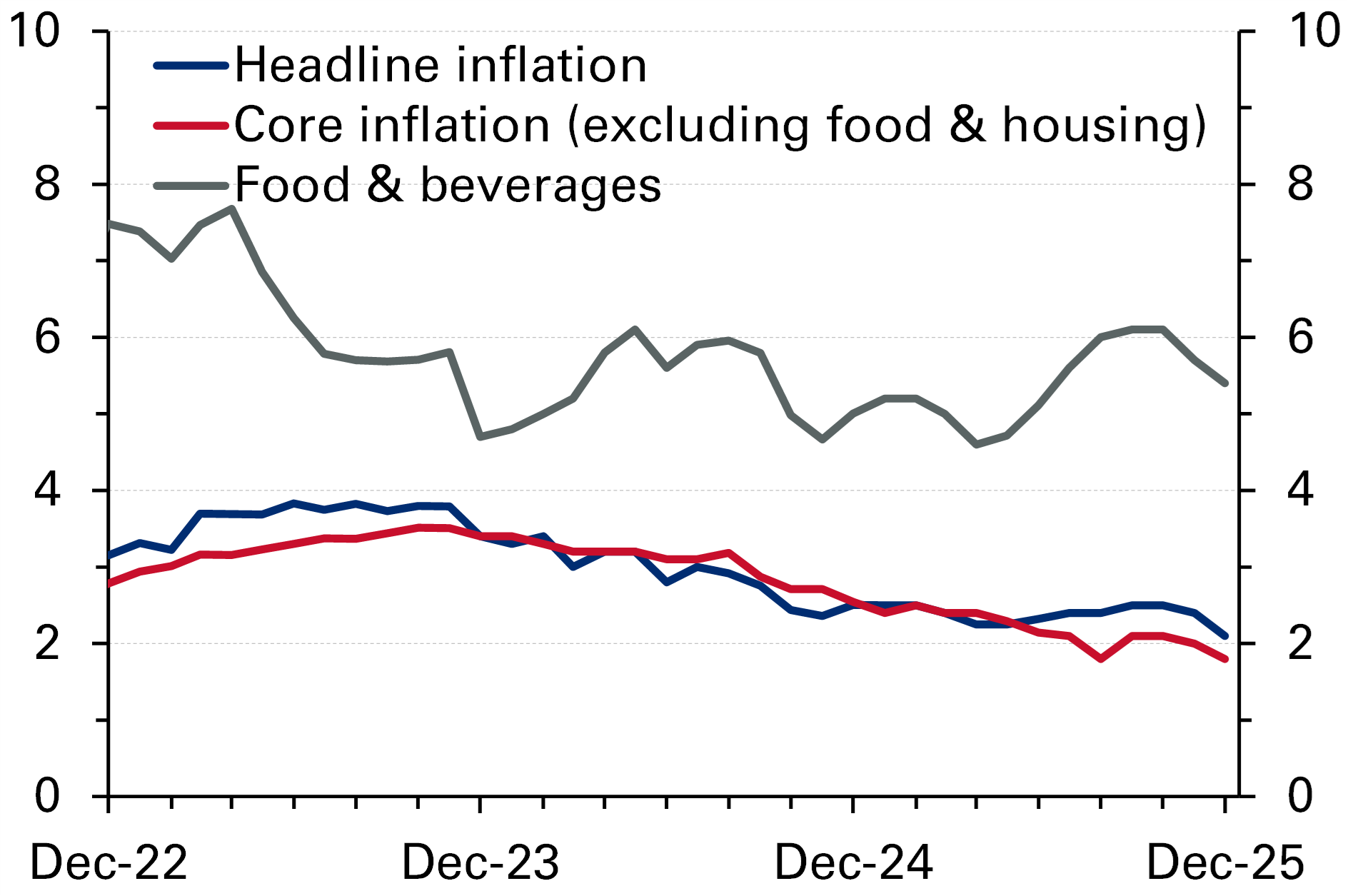
Kuwait: Inflation drops to a five-year low of 2.1% y/y in December. CPI inflation softened further in December to 2.1% y/y, the lowest reading since September 2020. The deceleration was driven by broad-based easing across the index’s largest components including housing, food & beverages, and other core inflation components. Housing services inflation, which reflects mostly rents, moderated to 0.5% y/y, a four-year low; also, a m/m increase in housing rents were not observed in December, which is atypical. Price growth in food and beverages, meanwhile, also decelerated, to a six-month low, though it remains relatively elevated at 5.4% y/y, with the moderation linked to softer increases in the volatile fish & seafood subcomponent. Excluding food and housing, core inflation eased to 1.7% y/y, a multi-year low, reflecting a sustained disinflationary trend observed across many subcomponents. Notably, the two subcategories contributing the most to core inflation in 2024 and 2025 – furnishings & household maintenance and clothing & footwear – have slowed to 1.7% and 1.8% y/y, respectively. Additional softness was recorded in the restaurants & hotels and healthcare categories, while the transportation subindex returned to deflation following a four-month period of positive readings. By contrast, only education (+1.1% y/y) and communication (+0.4%) saw stronger price rises, though both remain modest. Inflation in the services & miscellaneous goods category held at a record 6.5% y/y, reflecting higher precious metals prices. Given the sharp increase in gold and silver prices last month, this component is likely to show a faster pace of growth in January and February as well. For 2025 overall, headline CPI inflation averaged 2.4% y/y, the softest annual print since 2020. Core inflation slowed to 2.2%, the lowest since 2018. We see inflation broadly steady in 2026, reflecting incremental gains in consumer activity and the non-oil economy more broadly, but with upside risks revolving around repricing of government services, such as electricity and water tariffs.
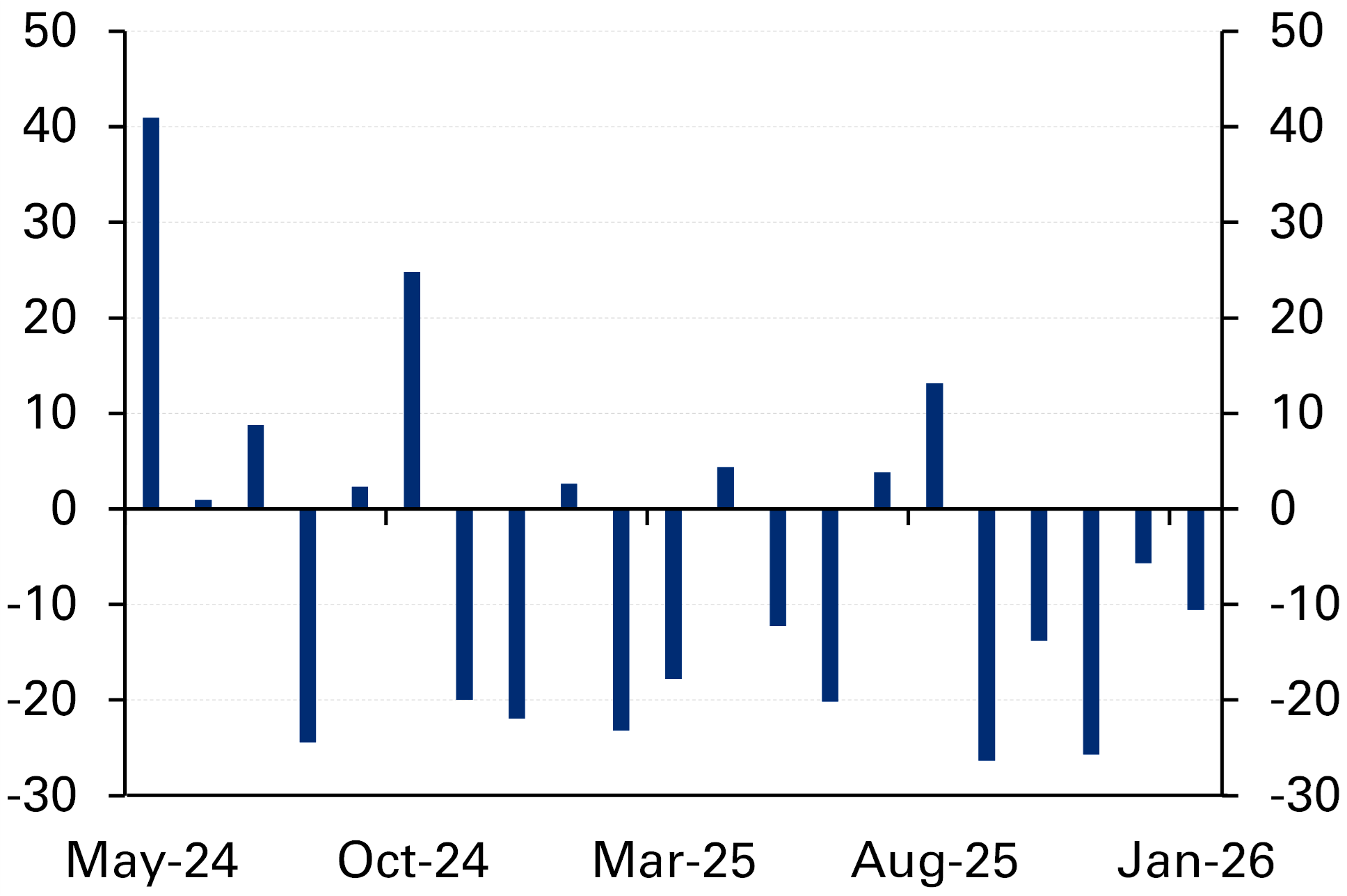
Oil: Risk premium pared back on positive Iran-US negotiations. Brent futures slid 1.8% yesterday to $67.4/bbl amid easing tensions between the US and Iran after the latter’s Foreign Minister Abbas Araqchi said the two countries had reached an understanding on the main “guiding principles” of their nuclear talks. This second round of talks, held in Geneva, appears to have established the scope of discussions, an important step forward given that earlier efforts stalled over disagreements on both the venue and the agenda. Iran had insisted on limiting talks to the nuclear file, while the US sought to broaden the discussion to also include Iran’s regional proxies and its ballistic missile program. Although the agreed-upon agenda was not disclosed publicly, Iranian negotiators are expected to return with a new proposal in two weeks. The news of this diplomatic progress erased oil’s earlier gains which were triggered by Iran’s military announcement that it would temporarily close part of the Strait of Hormouz for several hours due to military drills. Despite the drop in prices, the situation remains far from fully de-escalated, especially with the US continuing its military build-up in the region. Recent developments also echo the failed negotiations in June 2025, when talks in Rome collapsed after Israel launched the “12-day war” against Iran, which the US then followed up with its own airstrikes on the country’s nuclear infrastructure. This historical context helps explain why Brent, despite the latest diplomatic developments, has only seen moderate decreases and remains up 10.8% year-to-date.
US: Fed Governor Barr cautious on further interest rate cuts, does not see AI a reason to lower rates. Fed Governor Michael Barr, striking a cautious tone, said it would “likely be appropriate to hold rates steady for some time as we assess incoming data,” and “to see evidence that goods price inflation is sustainably retreating.” He highlighted that the labor market is now stabilizing but remains in “a delicate balance” and could be vulnerable to negative shocks. He also emphasized that the impact of AI would be profoundly positive in the long term but could deeply disrupt jobs and harm some workers in the near term, while AI investments could be inflationary. Unlike Treasury Secretary Bessent and Fed Chair nominee Kevin Warsh, who both have floated the idea of lower policy interest rates on AI-driven labor productivity improvements, Barr underscored that higher productivity would imply a higher neutral interest rate and thus, “the AI boom is unlikely to be a reason for lowering policy rates.” Recent commentary from several Fed officials indicates that the bank now looks set to maintain policy rates for the time being. However, new data to be released on inflation/job market and Warsh succeeding Powell in May as Fed Chair (if confirmed by the Senate) may change the dynamics.
UK: Employment data continues to be weak, boosting BoE rate cut bets. UK payrolls fell by 11K (based on real-time payroll data) after a smaller drop of 6K in December (revised down from an initially reported 43K drop), signaling sustained weakness in the UK labor market. Monthly jobs data is usually subject to outsized revisions in subsequent periods. For example, prior months’ payroll figures were revised higher to show a smaller drop of 121K in the twelve months through December 2025 versus 184K reported initially. The unemployment rate ticked up to 5.2% in the October-December period from 5.1% in the prior three-months period, a five-year high, with the participation rate unchanged at 64%, the highest level since the start of the pandemic. Reflecting this softness, total wage growth slowed to 4.2% y/y (in the October-December period) from 4.6% (in September-November) while regular pay growth also moderated to 4.2% from 4.4%, respectively, the softest increase in nearly four years. Finally, job vacancies also slightly dropped to 726K in the November-January period, staying close to a near five-year low. Overall, despite some upward revisions to headcount data in 2025, job conditions have remained largely weak in recent quarters, taking a toll on economic activity. Following the latest employment prints, the futures market boosted the chance of a 25 bps interest rate cut at the MPC’s meeting in March to almost 80%, with a total of two cuts priced in by the end of 2026.
Japan: January exports surge on strong demand from Asia. Exports grew by 17% y/y in January, significantly beating consensus forecasts (12%) and December’s 5.1% rise. Growth was mainly driven by Asian trade partners, with exports to China and Taiwan soaring 32% y/y and 35%, respectively. Total exports to Asian partners grew 26%, driven by strong demand linked to the Chinese New Year celebrations. Meanwhile, exports to Japan’s second-largest trade partner (US) declined by 5% as demand remains muted following the 15% tariff imposed by Washington. Meanwhile, imports fell by 2.5% y/y in January (versus consensus estimates of a 3% increase), a first decline since August. While only one month, the trade data for January along with the solid PMI released previously augur well for GDP growth in Q1 after disappointing 0.1% q/q growth in Q4 of last year.