
 +965 2292 4888


Daily Economic Update
18.12.2025
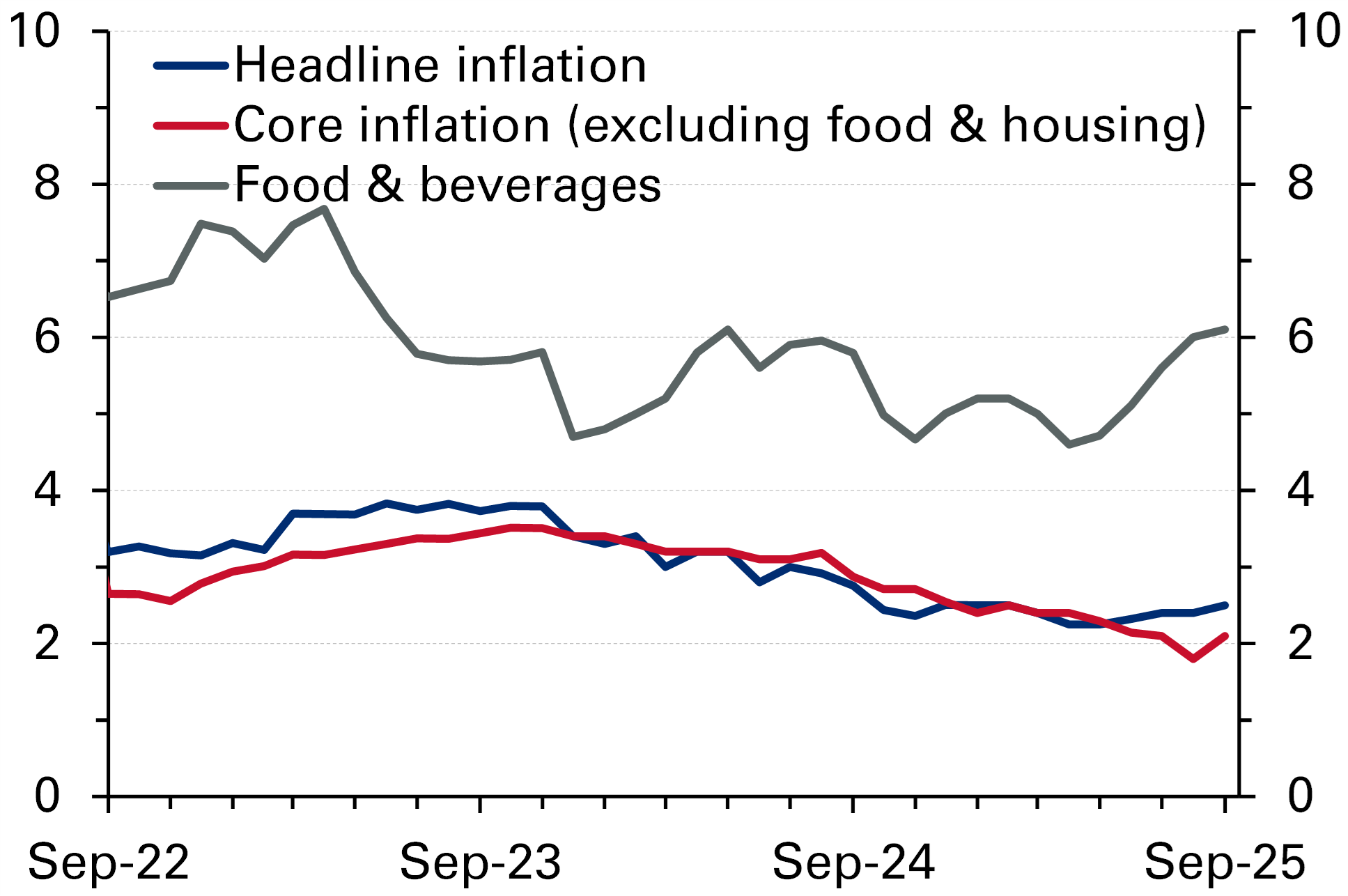
Kuwait: Inflation ticked up in September; core rate edges above 2% amid surging jewelry prices. CPI inflation rose to 2.5% y/y in September from 2.4% in August, driven by faster price rises in food & beverages, transport, and services & miscellaneous goods. Food & beverage prices posted their fifth consecutive monthly acceleration, reaching 6.1% y/y, the fastest pace since May 2024 on a sharp 23% y/y increase in fish & seafood. Housing services inflation, the largest CPI component by weight, eased to 0.9% y/y from 1%. Meanwhile, growth in transport prices returned to positive territory (+0.4% y/y) after a year of deflation as base effects from lower air transport charges faded. Precious metals prices, particularly for gold and silver, also surged during the month, boosting jewelry costs and pushing inflation in services & miscellaneous goods to 6.2% y/y, the highest since March 2018. These gains lifted core inflation (excluding food and housing) to 2.1% y/y from 1.8% in August, offsetting the disinflation recorded in other core components. On current trends, full-year inflation is likely to match or settle very close to our forecast of 2.4%.
Egypt: $35 billion gas deal reshapes the country’s energy outlook and FX inflows. Egypt has secured a long-term energy agreement after Israel approved a landmark $35 billion natural gas export agreement, the largest in Israel’s history. Under the deal, Chevron and its partners in the Leviathan field (NewMed Energy and Ratio Energies) will export around 130bcm of gas to Egypt between 2026 and 2040. This agreement is strategically important for Egypt at a time when domestic gas production has struggled to keep pace with rising demand, partly due to technical challenges at the Zohr field. Securing long-term pipeline gas helps stabilize supply, reduce reliance on more expensive spot LNG imports, and improve energy planning visibility over the medium and long term. From a cost perspective, the deal is highly favorable. At current global prices, importing these volumes from Israel could be up to $28 billion cheaper than sourcing equivalent LNG cargoes from international markets. This comes on top of Egypt already locking in LNG supplies through 2026 at an estimated cost of $8 billion via agreements with six international energy companies. Beyond energy security, the deal strengthens Egypt’s external position. Imported Israeli gas can be processed through Egypt’s underutilized liquefaction plants and re-exported to Europe. Authorities estimate that up to 60% of the imported volumes could be liquefied and exported, potentially generating around $22 billion in revenues over the contract period that would make Egypt a main energy hub in the region. In a nutshell, this agreement supports energy security, lowers import costs, revives LNG re-export capacity, and creates a durable source of foreign currency inflows, all key pillars for Egypt’s medium-term macro and external stability.
Qatar: Inflation picks up to 21-month high in November. CPI inflation rose 1.4% y/y in November, up from 1.1% in October, marking the fastest annual increase since February 2024. The acceleration was driven primarily by the “Miscellaneous Goods & Services” subcomponent, which surged to a series high of 16.2% y/y, reflecting higher precious metals prices. Recreation & culture also contributed significantly, with inflation climbing to 3.3% y/y, an 11-month high and on pace to be sustained in December on higher tourism due to the FIFA Arab Cup. Meanwhile, housing services inflation, the largest subindex by weight, eased slightly to 0.5% y/y, but remained positive for the second month after a 25-month deflation streak. Partly offsetting these gains were deeper deflation in the transport (-1.8% y/y) and food and beverages (-1.7% y/y) categories – the second and third largest CPI subindices, respectively.
Saudi Arabia: Decision to cancel fees on industrial workers. Saudi Arabia has cancelled expatriate worker fees for licensed industrial establishments following a recommendation from the Council of Economic and Development Affairs. The decision aims to reduce operational costs, enhance competitiveness, attract foreign investment, and support Vision 2030’s economic diversification goals. While it entails a short-term revenue loss, the policy is expected to deliver long-term benefits through industrial growth, increased exports, and stronger economic activity.
US: CPI inflation in November seen at 3% y/y matching September while October’s headline and core rates will not be published. The BLS will release November CPI inflation data today and the consensus forecast is for a 3% y/y increase in both headline and core prices, matching September’s figures. Because of the now-ended government shutdown, October headline and core CPI will not be published, but the BLS will provide a small set of data for some October inflation series. It is unclear at this stage if the quality of the November inflation print has been compromised by the shutdown. The rise in inflation in recent months has been softened by lower energy costs and a sustained deceleration in the heavyweight shelter component, with the latter at 3.6% y/y in September, a four-year low. However, tariffs have sharply lifted goods inflation, especially core goods (to 1.5% y/y in September from -0.1% in March) and durable goods (to 1.8% from -1% in March) with signs of tariffs being passed through to consumers in many commodities including apparels, appliances, and furniture, posting accelerated m/m increases. Meanwhile, Fed Governor Christopher Waller, who is on the shortlist to be the next Fed Chair, said in a speech that there is room to cut interest rates further given that they are still 50 to 100 bps above neutral as the “jobs market is very soft and current payrolls growth not good” but also cautioned that the "Fed can go at a moderate pace, doesn't need dramatic action." He vowed to “absolutely” emphasize Fed independence in his interview for the position with President Trump that was expected following his comments yesterday.
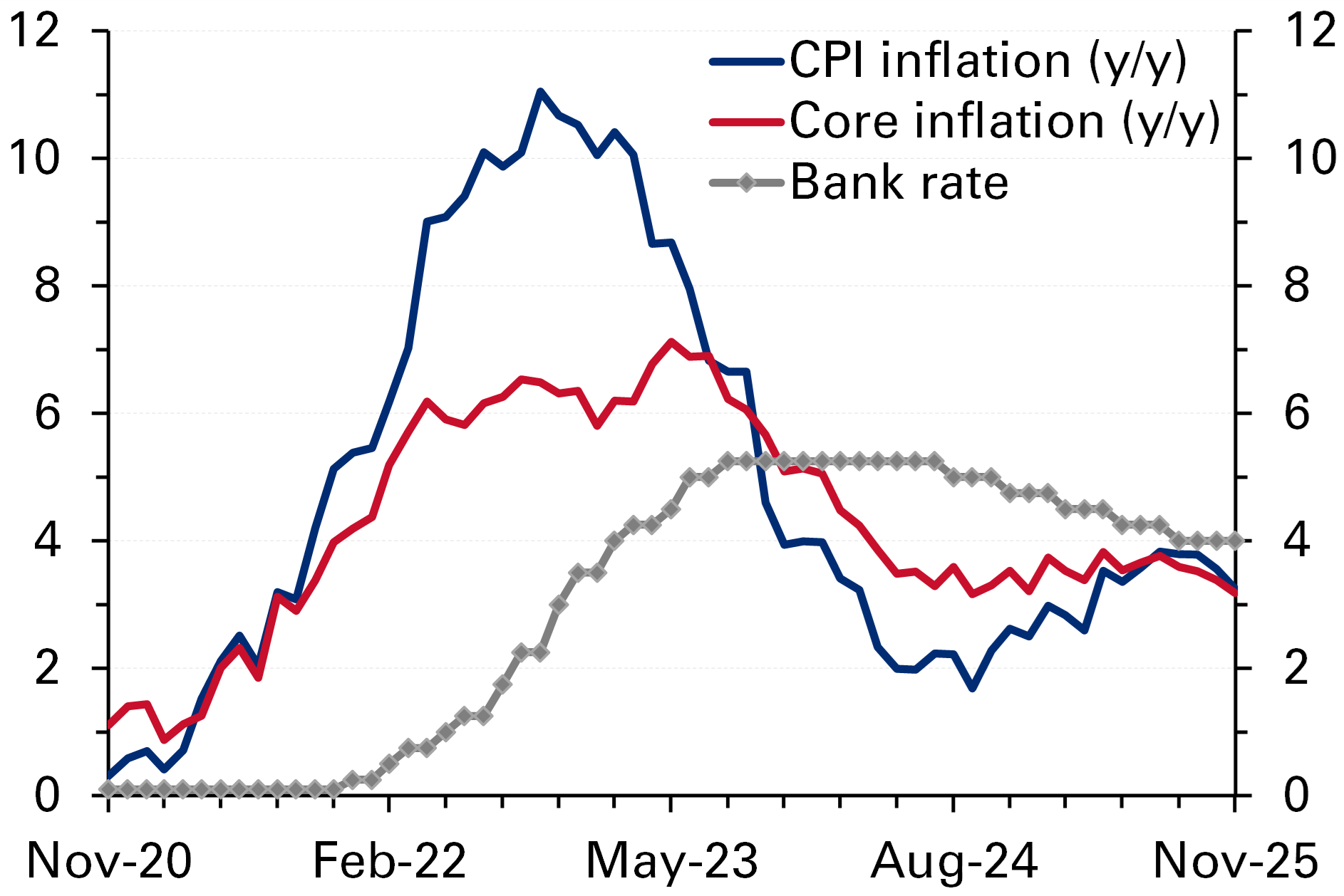
UK: CPI inflation slows more than forecast in November; BoE set to cut the bank rate by 25 bps today. CPI inflation in November eased more than expected, with both headline and core rates softening to 3.2% y/y (headline at an eight-month low, core at an 11-month low) from 3.6% and 3.4%, respectively, in October. Most components of the CPI basket showed a y/y deceleration in price rises and a few saw deflation, with food & beverages, alcohol & tobacco and clothing delivering the biggest downward contributions in November. While goods inflation moderated to 2.1% y/y from 2.6%, the generally stickier services inflation slowed to 4.4% from 4.5%. For two months in a row now, inflation has been softer than the BoE’s projections, suggesting that the worst of the inflation resurgence seen earlier this year may be behind us. The bank is widely expected to deliver its fourth 25 bps interest rate cut of this year later today, taking the bank rate to 3.75%. Attention will be on the MPC vote split. In November, the vote was a close 5-4, with Governor Bailey casting the decisive vote for a pause. Measures seen in the recent Autumn budget (such as a freeze on fuel duties and rail fares and a cut to household energy bills) will further help keep a lid on inflation starting April next year, which, along with ongoing weakness in the labor market and generally muted growth prospects should support the decision to ease monetary policy further in 2026.
Eurozone: ECB set to keep rates steady later today, providing new projections. The ECB concludes its two-day meeting later today and is expected to leave its benchmark interest rate unchanged at 2%. That would be the fourth time that the ECB has kept rates steady since June, following an aggressive eight 25bps rate cuts that brought the policy rate down from 4% last year. With inflation close to the 2% target (latest at 2.1% y/y in November) and recent GDP growth better than expected, monetary policy remains at a “good place” as ECB President Lagarde has repeatedly mentioned. Attention will be on any high-level views about the rate outlook further out in 2026 and on a new set of GDP and inflation projections.
Japan: BoJ poised to raise interest rates by 25 bps on Friday, the first hike since January. The Bank of Japan is expected to increase interest rates by 25 bps on Friday, marking the first-rate hike since January, raising the benchmark rate to 0.75%. This will be in line with the BoJ’s plans to continue normalizing policy, especially with inflation remaining above the 2% target for over three years (latest at 3% y/y in October). Attention will be on BoJ governor Ueda’s comments, including any hints for the rate outlook in 2026. The futures market currently expects one to two 25 bps rate hikes in 2026.
Note: This will be the final Daily Economic Update of 2025. The Update will resume on Sunday 4th January, 2026. We wish all our readers a Happy New Year!