
 +965 2292 4888


Daily Economic Update
23.04.2026
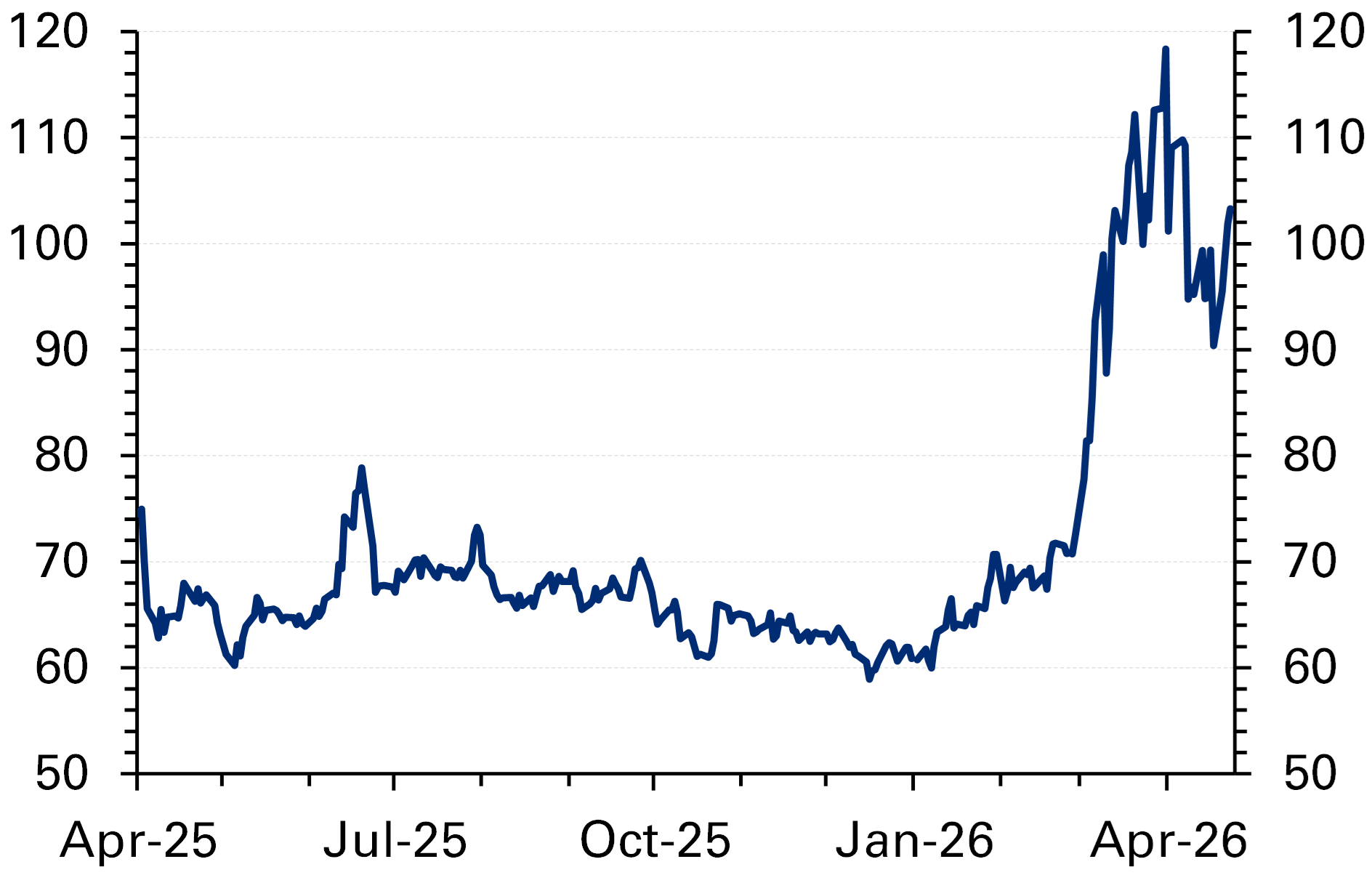
Oil: Prices maintain positive streak for third consecutive session. Brent futures settled back above the $100/bbl mark on Wednesday, closing at $101.9/bbl (+3.5% d/d) and extending gains for a third consecutive session. The streak has fully reversed last week’s decline, which was triggered by expectations around the reopening of the Strait of Hormuz. The rally yesterday was driven by reports that the IRGC fired on three container ships and seized two others attempting to transit the Strait, underscoring Iran’s effective control over the chokepoint and its ability to severely disrupt shipping. Support was further reinforced by EIA inventory data, which showed a significant draw in petroleum stocks, with the SPR down 4 mb w/w in the week ending April 17, more than offsetting a build in commercial crude inventories. Refined product balances also tightened materially, with gasoline and distillate stocks falling by 4.6 mb and 3.4 mb, respectively, signaling resilient end user demand and constrained supply availability. Price strength has carried into today’s session, with Brent trading around $103/bbl in Asian markets, as uncertainty surrounding the ceasefire framework continues to heighten the risk premium. While no clear deadline has been set, President Trump indicated that the ceasefire would remain in place at least until Iran submits a proposal, leaving markets focused on headline risk.
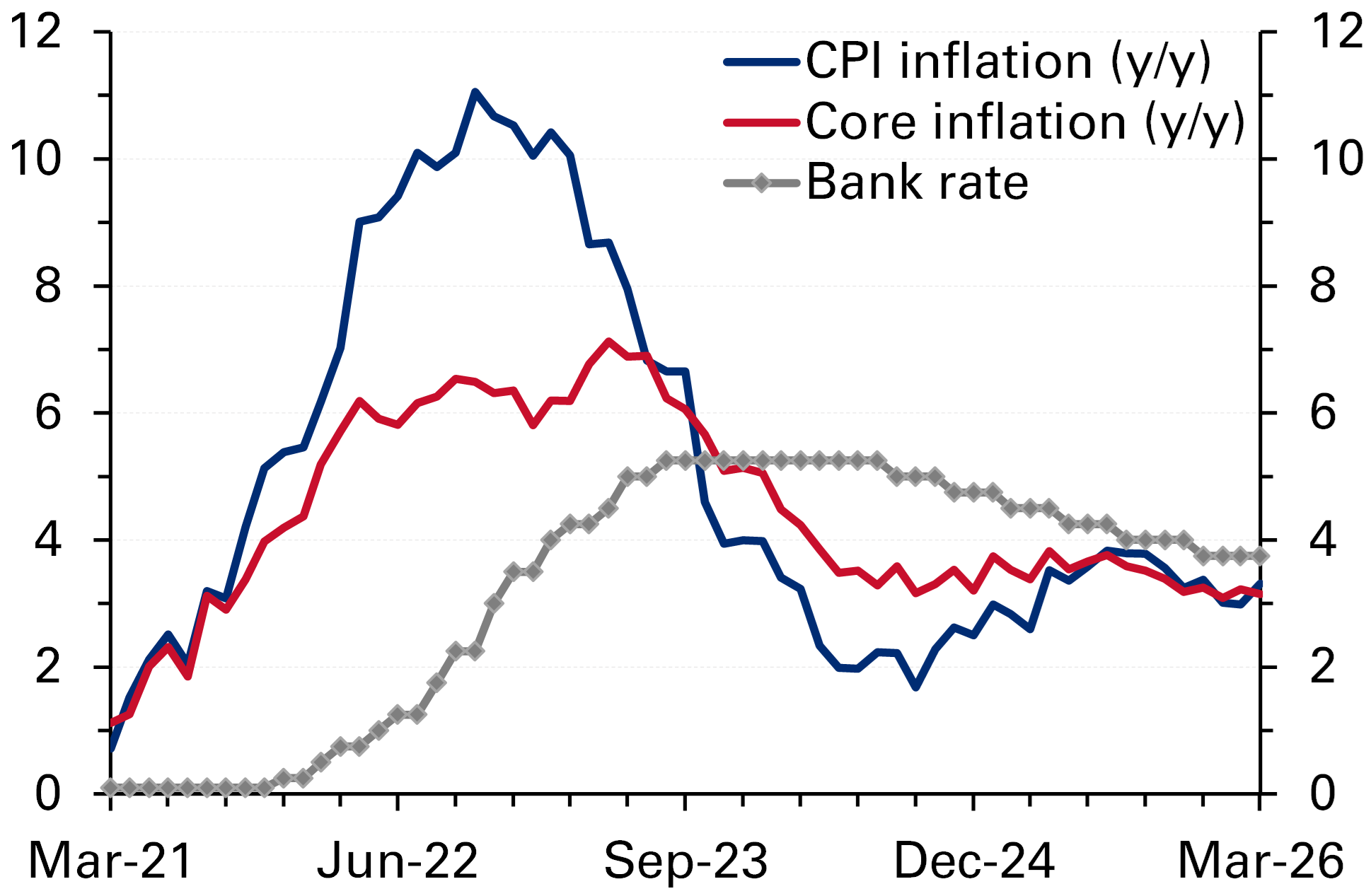
UK: CPI inflation in March rises on surging energy prices, but the core rate ticks down. CPI inflation in March rose to 3.3% y/y (+0.7% m/m), in line with the consensus forecast, up from 3% in February. Motor fuel prices climbed by 4.9% y/y, reversing from the 4.6% decline seen in February, reflecting the initial impact of the Middle East war on energy prices. Still, the core rate edged down to 3.1% y/y (+0.4% m/m) from 3.2% in February, below the consensus forecast of 3.2%, as the 14.5% y/y jump in airfares was offset by deflation in clothing & footwear and furniture & household goods. Meanwhile, PPI input inflation in March surged to a three-year high of 5.4% y/y (+4.4% m/m), suggesting that despite the relatively small increase in CPI inflation, price pressures in the supply chain strengthened rapidly, which may exert sustained upward pressure on overall consumer price inflation over the coming months. The futures market currently signals one to two 25-bps interest rate hikes in 2026 by the BoE, but the latest Reuters poll of economists showed that around half of respondents predict no change in the policy interest rate this year. Amid a soft UK labor market and slowing wage growth, the BoE may look through the current spike in energy prices, adopting a wait-and-watch stance for now, pending clarity about the outcome of the Middle East war.
Eurozone: Budget deficit narrows slightly in 2025, while debt/GDP inched up to around 88%. The latest figures for 2025 suggest the Eurozone’s public finance position was broadly steady in 2025 compared to 2024. The overall budget deficit narrowed to 2.9% of GDP in 2025 from 3.0% in 2024, a small step in the right direction and just below the EU’s 3% benchmark—even as some large member states, especially France, continued to run deficits above 3%. This was helped by the fading of crisis era support and some revenue resilience. That said, government debt continued to creep up, reaching 87.8% of GDP in 2025 from 87% in 2024, driven by higher interest costs and defense spending as well as relatively subdued economic growth, which highlights the difficult balancing act governments face between supporting growth and re-establishing fiscal discipline. Some of the large economies, such as Italy and France, had ratios exceeding 100%.
Japan: Composite PMI drops in April amid Middle East war-related worries. The S&P Global flash composite PMI in April fell to a four-month low of 52.4 from March’s 53 as the expansion in services activity eased to the softest rate since May 2025 at 51.2 from 53.4. The slowdown in the services component offset the unexpected surge in the manufacturing component, which reached an over four-year high of 54.9 from 51.6, possibly driven by frontloading given worries about widening disruptions to supply chains. Japanese firms were generally concerned about the impact of the Middle East war and the supply chain disruptions that contributed to the steepest rise in input costs since January 2023 along with wage pressures and a falling yen, while output prices dropped at the fastest pace in the series’ history. The gauge of new orders ticked up modestly, but business confidence slipped further to hit the lowest level since the pandemic, signaling uncertain demand conditions and an overall cloudy economic outlook over the coming months.
Qatar: Trade balance turns negative for first time on record in March due to conflict disruptions. Qatar posted its first ever trade deficit last month, with the balance turning negative in March to QR4.4 billion ($1.2 billion) from a surplus of QR12.9 billion ($3.5 billion) in February. The shift underscores the severity of trade disruptions at the Strait of Hormuz caused by the ongoing regional conflict. Exports collapsed by 95% y/y to QR1.7 billion, reflecting the near halt in LNG and hydrocarbon shipments and the sharp reduction in maritime activity through the chokepoint. QatarEnergy declared force majeure on LNG contracts in early March, amid a broader suspension of operations spanning LNG, urea, polymers, methanol, and other chemicals that are mostly exported. Gas flows did not halt completely, however, with LNG shipments to Kuwait and pipeline exports to the UAE via the Dolphin pipeline reportedly continuing. Imports also declined sharply, down 43% y/y to QR6.1 billion, as seaborne cargoes were likely rerouted via land through Saudi Arabia. The data highlight Qatar’s high exposure to Hormuz related shipping disruptions and limited alternative export routes, with spillovers extending beyond trade. The country’s tourism push has suffered a major setback, with visitor arrivals down 85% m/m in March and likely to take considerable time to recover to recent peaks. On the fiscal front, the absence of LNG exports alone in March & April could cost roughly $7 billion (about 8% of annual revenues) – notwithstanding the impact of reduced LNG output from Ras Laffan, associated repair costs, and foregone revenues from delays to LNG expansion projects originally slated for later this year. Nevertheless, while near-term prospects are clearly pressured by the current crisis, Qatar’s fiscal buffers, modest debt-to-GDP ratio, and medium-term LNG expansion plans provide meaningful capacity to absorb the shock and support recovery once trade routes normalize.
Egypt: FY26/27 budget targets stronger revenues and lower deficit amid rising spending needs. Egypt’s Finance Minister presented the FY26/27 budget to the House of Representatives yesterday, outlining a plan to balance fiscal consolidation with increased social and economic spending. The government is targeting EGP 4 trillion in total revenues, up 29% y/y, alongside EGP 5.1 trillion in expenditures, reflecting a more moderate 13.2% y/y increase. This would bring the overall budget deficit down to 4.9% of GDP, compared to 6.1% expected by the end of the current fiscal year. A notable feature of the budget is the allocation of buffers to manage uncertainty, including EGP 73.6 billion for potential wage increases and EGP 65.2 billion to absorb higher energy costs, reflecting ongoing external volatility. The wage bill is projected to rise by 21% y/y to EGP 821 billion, supporting the new higher minimum wage of EGP 8,000, while subsidies and social protection allocations are set at EGP 832 billion, including EGP 120 billion dedicated to energy subsidies. At the same time, fiscal policy remains focused on debt sustainability, with plans to reduce the debt-to-GDP ratio to around 78% by June 2027, alongside a strategy to cut external debt by $2 billion annually. Overall, the budget reflects a dual approach, maintaining fiscal discipline while preserving social support and building resilience against external shocks.