 +965 2292 4888


Daily Economic Update
04.12.2025
US: Private sector payrolls fall in November, but ISM services activity strengthens. Private sector employment dropped again in November after a brief rebound in October, as data from ADP showed firms unexpectedly shedding 32K jobs following an upwardly revised increase of 47K in October. As per ADP, employment has fallen in four out of the past six months, underscoring a continued weak backdrop. November’s decline was mainly due to a sharp reduction in jobs across small businesses. But positively, the ISM services PMI in November ticked up to 52.6, a nine-month high, from 52.4 in October, signaling a resilient economy going into 2026. The survey showed firms continued to cut jobs, but at the softest pace since May (at 48.9 from 48.2 in October). The gauge of input prices moderated from October’s three-year high of 70 to a seven-month low of 65.4, but which is still elevated versus the pre-tariff trend. However, the expansion in new orders was significantly milder than in October (52.9 versus 56.2). The weaker employment figures and potential signs of moderating inflation headwinds further cemented the expectation of interest rate cuts ahead of the FOMC meeting next week, with the futures market signaling an almost 90% chance of a 25 bps cut. Meanwhile, President Trump stated that he would announce his pick for the Fed Chair “probably early next year,” and referred to National Economic Council Director Kevin Hassett as “a potential Fed chair.” White House press secretary Karoline Leavitt clarified that a final decision was yet to be made. The period between the end of January 2026, when the new presumptive incoming Fed Chair will be appointed as Fed Governor, and May 2026 (when Chair Powel’s term ends) will be an interesting one and also a challenging one for the Fed. During this time, the outgoing and incoming Fed Chairs will sit side-by-side, and most likely will have differing views about monetary policy. This may widen the split among FOMC members and weaken the Fed’s credibility.
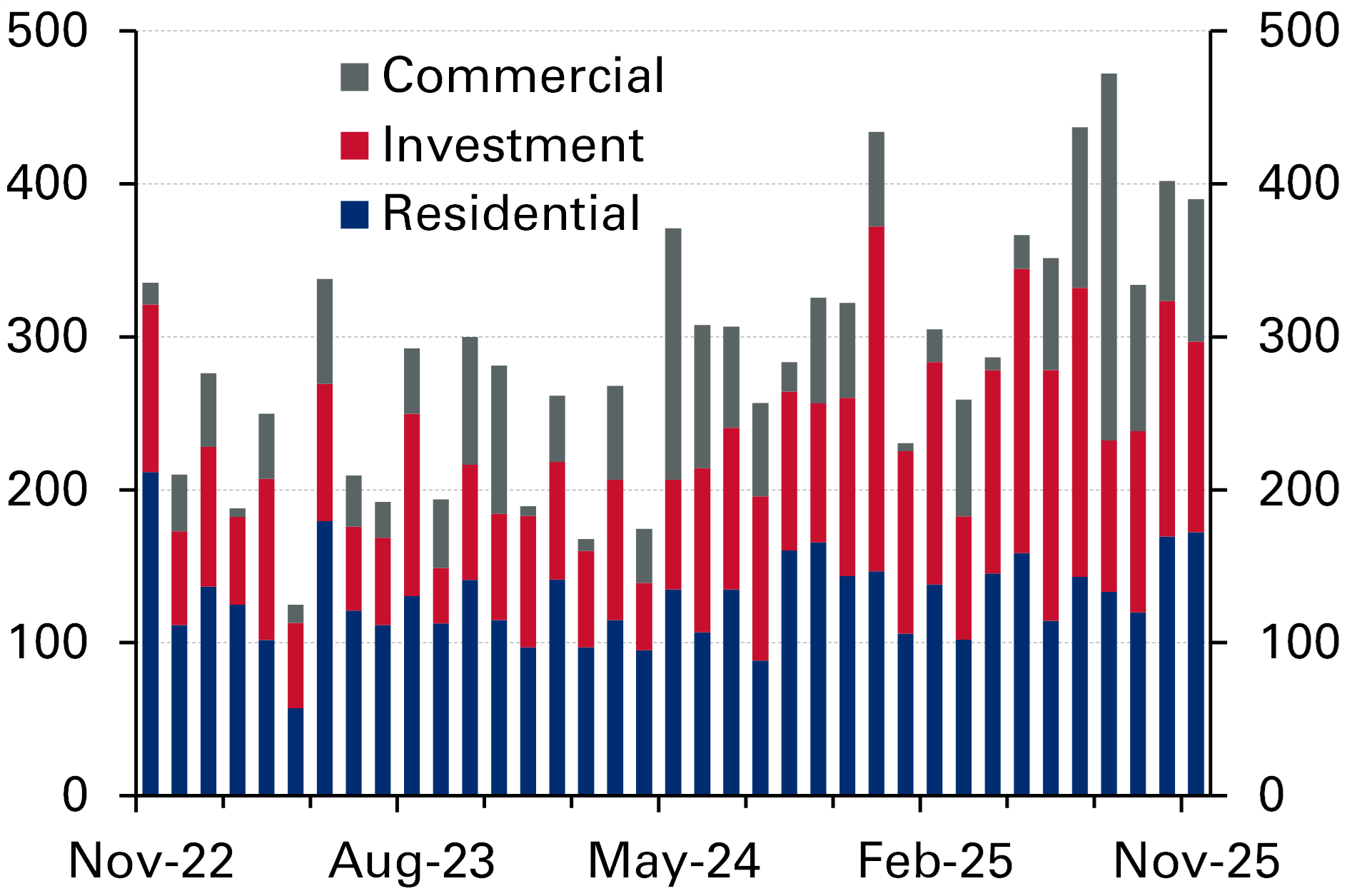
Kuwait: Residential property sales hit a 30-month high in November. Total real estate sales came in at KD390 million in November, down from KD402 million in October (-3% m/m) but still well above the 2025 monthly average (KD348 mn) and +21% y/y. This was the sixth consecutive month of double-digit y/y gains, on the back of robust residential (+19.9% y/y to KD172 mn) and especially commercial sector sales (+49% y/y to KD93 mn). November’s figure for residential sales was also the highest since May 2023. On the other hand, investment property sales declined 19% m/m to KD125 mn, though remained up 7.1% y/y. Year-to-date sales reached a cumulative KD3.8 billion, a strong 26% increase on last year’s performance over the same period, and driven primarily by strong investment sector sales (+55% vs 11M2024). Meanwhile, the real estate financing law is in its final review stage, according to the Minister of State for Housing Affairs. A reported new detail in the law allows for the combining of Kuwaiti household salaries to allow for higher mortgage limits. Furthermore, the minister also stated that the initial study for the first three projects under the “Real Estate Developer Law” includes 5,000 housing units in the first phase in prime locations (Mirqab and Sulaibikhat beach) with pricing aligned to loan limits under the new framework. Looking ahead, the strong real estate sales momentum witnessed in 2025 is expected to continue through 2026, supported by potentially lower interest rates, improved optimism ahead of the soon-to-be-approved real estate financing law and keen implementation of the developer law.
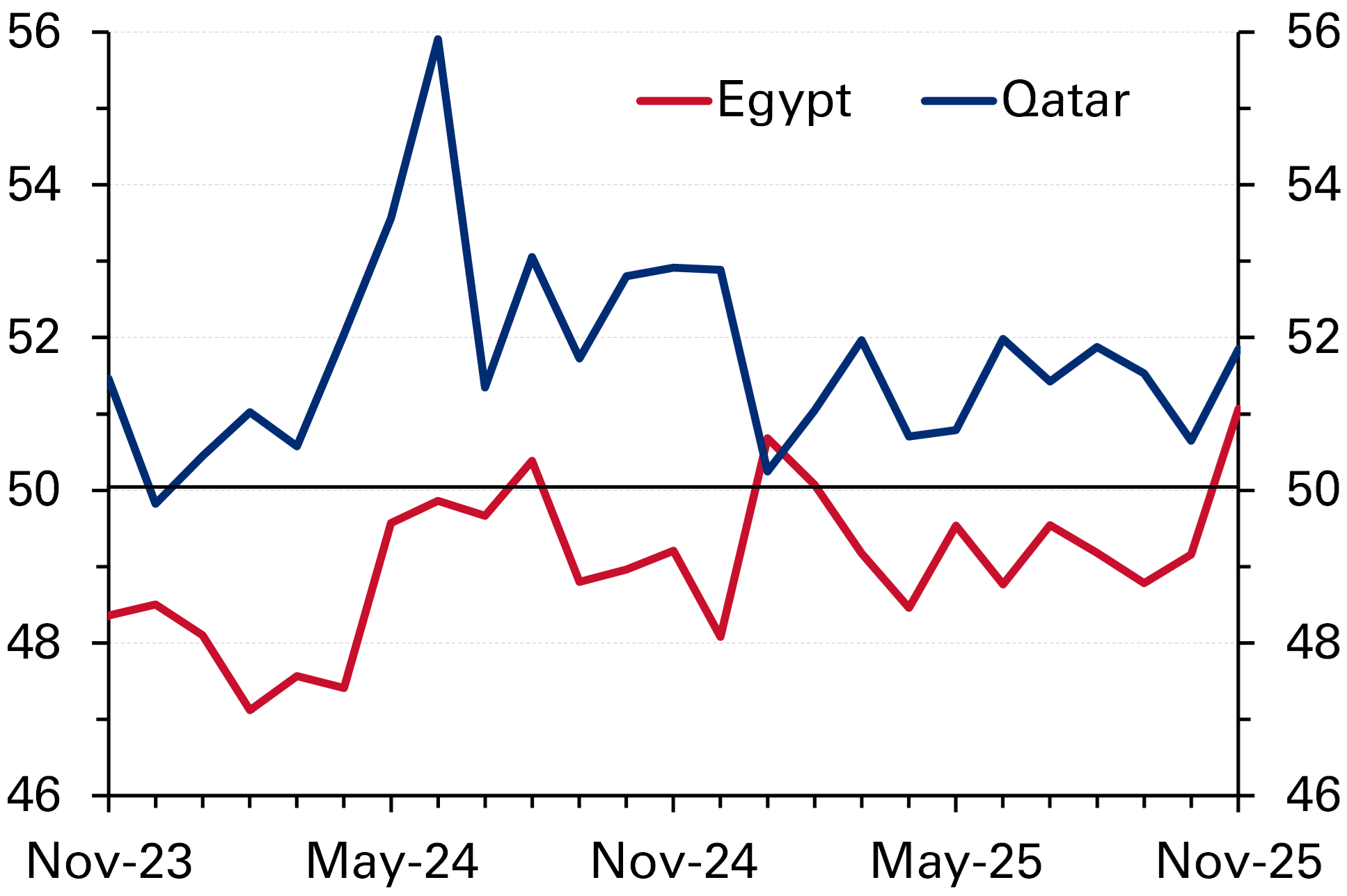
Qatar: Non-energy private sector activity improves in November. Business activity strengthened in November, with the non-energy private sector PMI rising to 51.8 from 50.6 in October – the best performance since August. New orders increased for the first time since May. Output also rose in November following a temporary contraction the previous month, boosted by stronger market demand and ongoing investment in technology and resources. Employment growth remained robust, softening marginally from October, with recruitment mostly linked to new projects and hiring in sales. Growth in staff costs slowed to the weakest in a year, though was still relatively elevated. Firms’ overall input costs and output prices continued to fall in November, though the latter was at a less steep pace compared to October. Overall, business sentiment remains robust, boosted by improving market conditions, population growth, and government initiatives.
Egypt: Private sector activity expands for the first time in 9 months, according to November’s PMI. Private sector activity improved significantly in November, with the headline PMI rising to 51.1 from 49.2 in October. November’s reading is the highest since October 2020, marking a first return to expansion territory for the Egyptian private sector since February this year. The rise reflects new-found growth in both output and new orders, supported by stronger market conditions and improved demand dynamics. Output increased for the first time since January 2025 and at the fastest pace in five years, with the manufacturing, construction, and services sector all expanding. Wholesale and retail sector activity, however, was reported to have declined. New business expanded for the first time in eight months, helped by easing price pressures. Cost inflation fell to an eight-month low, largely due to a stronger EGP reducing import costs, although wage-related pressures persisted. On the supply side, firms kept employment unchanged despite rising workloads, leading to a further buildup in backlogs, while purchasing activity softened and inventories stabilized. Selling prices saw their slowest rise in seven months. Overall, the November PMI reading offers an encouraging start to the second quarter (S&P correlates a PMI reading of 51.1 with GDP growth of more than 5% y/y), which builds on the meaningful shift in operating conditions and improvements in FX stability, inflation expectations and domestic demand observed in recent quarters and which resulted in GDP expanding by 5.3% in Q1 FY25/26 (July-September).