
 +965 2292 4888


Daily Economic Update
07.07.2026
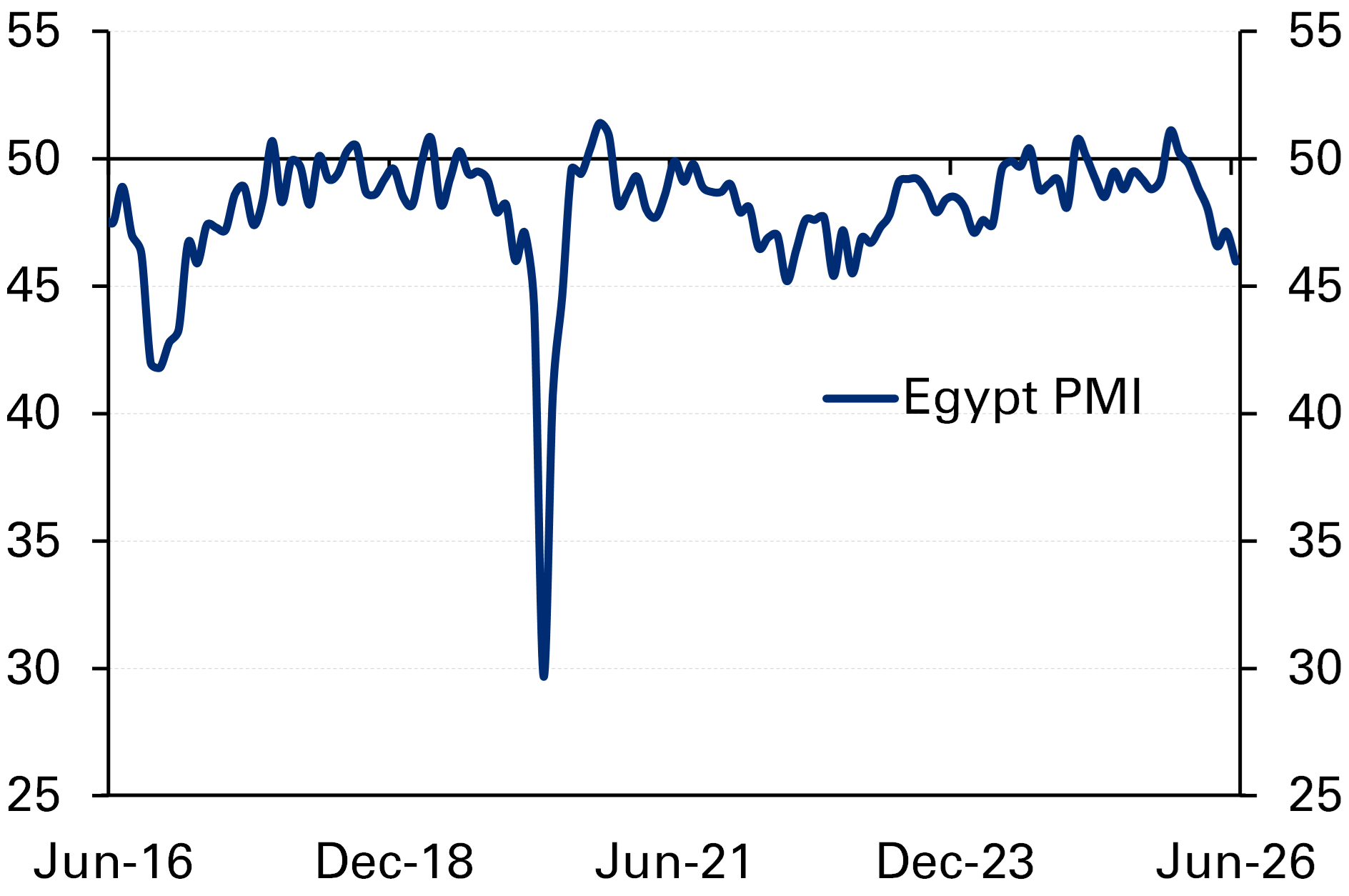
Egypt: Non-oil business activity remains under pressure in June. Egypt’s Purchasing Managers’ Index (PMI) fell to 46.0 in June, down from 47.1 in May, remaining below the 50-point expansion threshold for the sixth consecutive month. The latest reading is the lowest since January 2023, highlighting the continued challenges facing the non-oil private sector and pointing to annual GDP growth of approximately 3.8% at the end of the second quarter. The survey showed a broad-based slowdown, with businesses reporting weaker demand, declining new orders, lower output, and further reductions in employment and purchasing activity. Firms also cited supply chain disruptions, liquidity constraints, and shortages of raw materials, while the recent regional conflict continued to weigh on business sentiment. On a positive note, both input cost and selling price inflation eased from the multi-year highs recorded in May, suggesting that cost pressures may be starting to moderate. Businesses also became more optimistic about the outlook, expecting an improvement in economic activity if regional tensions continue to ease. Overall, the June PMI suggests that Egypt’s non-oil economy remains under pressure despite recent signs of easing inflation, reinforcing the need for a gradual recovery in domestic demand and improved business confidence over the coming months.
UAE: Current account surplus remains solid in 2025 despite rising imports. Preliminary balance of payments data released by the Central Bank of the UAE showed that the current account recorded a surplus of AED 300 billion ($82 billion) in 2025, or 13.3% of GDP, down from 15% in 2024. Despite the relative moderation, the surplus remained substantial, supported by robust trade, tourism, transport, and investment income performance. Merchandise exports increased sharply (20%) to reach AED 2.1 trillion, despite the decline in oil prices, which was partially offset by the increase in oil production by 6.9% to 3.1mb/d. Import growth was faster at 25%, reaching AED 1.8 trillion reflecting robust domestic demand and investment activity. In addition, the services trade surplus rose to AED 238 billion, supported by higher travel and transport receipts. Meanwhile, the primary income surplus expanded significantly to AED 127 billion, reflecting stronger returns on the UAE's growing stock of foreign investments. On the other hand, the financial account logged a higher net outflow of AED 363 billion due to an increase in portfolio investments abroad while foreign direct investment inflows remained robust at AED 177 billion. Finally, reserve assets increased by AED 167 billion in 2025 to reach AED 1.07 trillion, covering well more than three months of imports of goods and services and further strengthening the country's external buffers.
US: Fed Governor Waller stresses the importance of communicating the Fed’s reaction function; ISM Services PMI in-line with expectations. In a speech, Fed Governor Waller mentioned that providing forward guidance about the future path of monetary policy can be useful as it can speed up policy transmission, but only if done properly, saying that “I continue to believe that forward guidance can be a valuable tool that has, at times, significantly strengthened policymaking and will continue to be useful”. However, his concern is that forward guidance should not be rigid so that it does not hinder policymaking. Importantly, on Fed communications in general, he mentioned that “If your reaction function is not well defined and markets don’t understand it, then you do need to talk,” adding that “It’s important to communicate your reaction function — be clear about what your objectives are and how you would respond to the data.” The above is a different perspective than Chair Warsh’s, who not only is against providing forward guidance, but he is also stretching that position by not giving any color on what is the Fed’s reaction function in general. Meanwhile, the ISM Services PMI edged down to 54.0 in June from 54.5 in May, coming in line with expectations as both new orders and business activity fell, but remained comfortably in expansion territory. The employment sub-index increased to 51.2 in June after being below 50 for three months. The prices gauge fell to a still-elevated 67.7 in June, down from a near four-year high of 71.3 in May.
Eurozone: Retail sales inched up in May after falling in April, broadly in-line with expectations. Retail sales increased by 0.2% m/m in May, following an upwardly-revised 0.3% decline in April. Performance remained mixed across categories. Growth was driven by food, drinks and tobacco sales (+0.6% m/m in May) and non-food sales (+0.1%) while automotive fuel sales continued to drop (-0.5% m/m after -3.6% in April) likely reflecting the impact of higher fuel prices due to the Middle East war. On an annual basis, retail sales increased by 1.6% in May (+0.9% in April), coming in-line with expectations.
Japan: Household spending easily beat expectations in May as real wage growth remained positive. Real household spending fell by 0.4% y/y in May (-0.5% in April), but beat consensus estimates (-2.5%) by a wide margin as spending on food items increased by 2.4% y/y (-0.6% in April). Despite the improvement, May marked the sixth consecutive month of declining household spending, driven by a 16% y/y decline in transportation expenditure and a 7.6% fall in utility spending, despite ongoing government subsidies. Meanwhile, employees’ cash earnings increased by 3.2% y/y in May, easing from an upwardly-revised 3.6% growth in April and falling short of the 3.4% consensus forecast. Real wage growth remained positive for a fifth consecutive month at 1.4% y/y, although softened from April’s 2.0% increase.
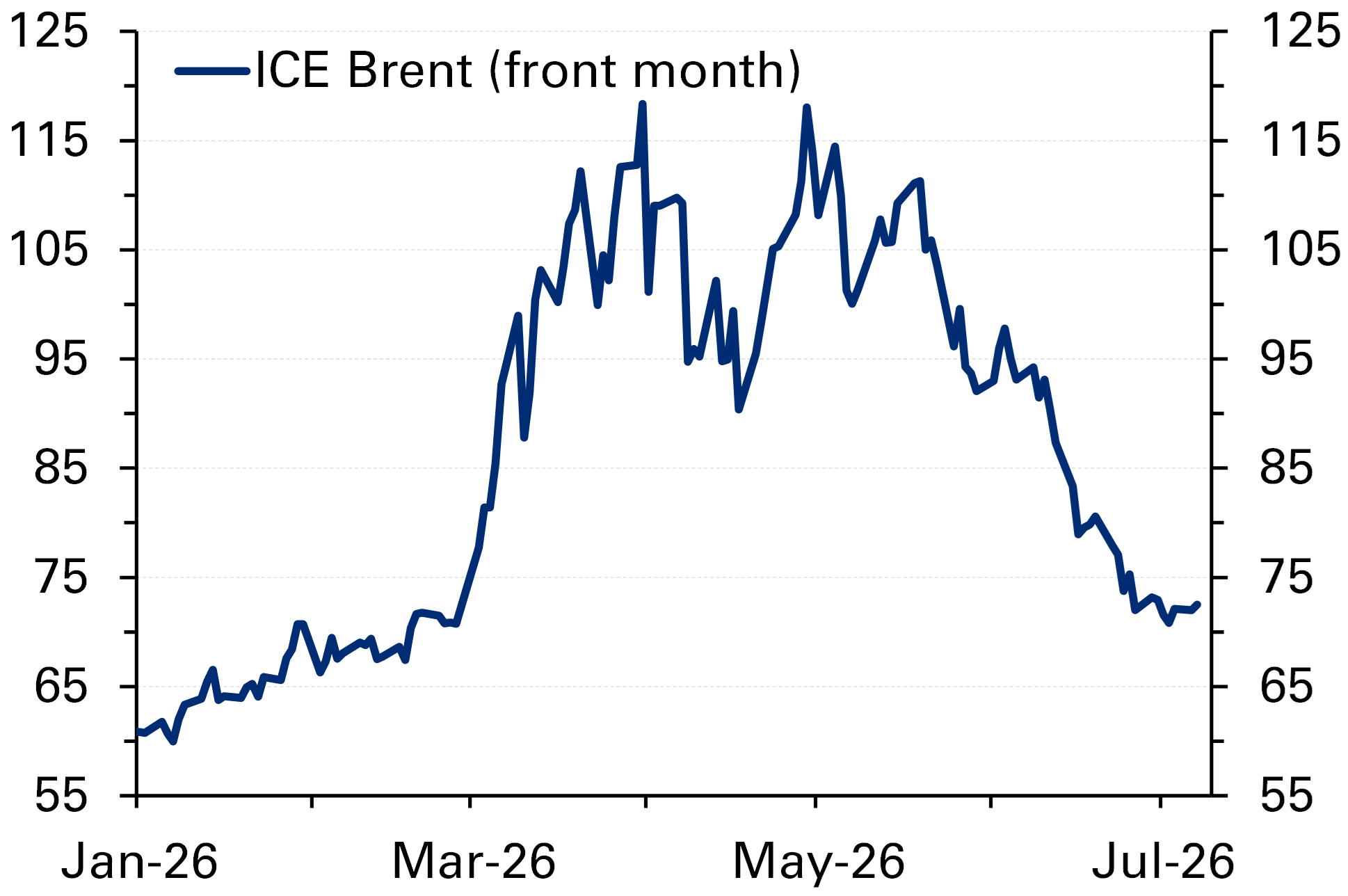
Oil: Prices up following an Iranian strike on ships in the Strait, but movement remains subdued overall. Brent futures are up 0.7% this morning to $72.5/bbl after Iran fired missiles at commercial ships transiting the Strait of Hormuz, though prices remain largely around pre-war levels. Last week, Brent closed at $71.9/bbl, largely unchanged in week-over-week terms despite volatile trading. Prices had fallen to a four-month intraday low on Thursday, as optimism surrounding the gradual reopening of the Strait of Hormuz weighed on the geopolitical risk premium. While the market recovered part of those losses into the weekly close, sentiment remains increasingly focused on the prospect of a sharp rebound in regional oil supplies. This was further exacerbated by OPEC+’s decision on Sunday to raise August production targets by an additional 188 kb/d m/m. As exports through the Strait head towards normalization, the increase reinforces expectations of a sizeable recovery in Middle Eastern supply in the short- and medium-terms, adding to concerns that the market could move into surplus during the second half of the year. Supporting this view, a Reuters survey showed OPEC crude production (excluding the UAE) rebounding by 3.3 mb/d m/m to 19.43 mb/d in June, highlighting the pace at which previously shut-in production is returning to the market. Taken together, the reopening of the Strait and the acceleration in OPEC+ supply are likely to strengthen the emerging glut narrative, particularly if demand continues to recover only gradually.