 +965 2292 4888


Daily Economic Update
16.04.2026
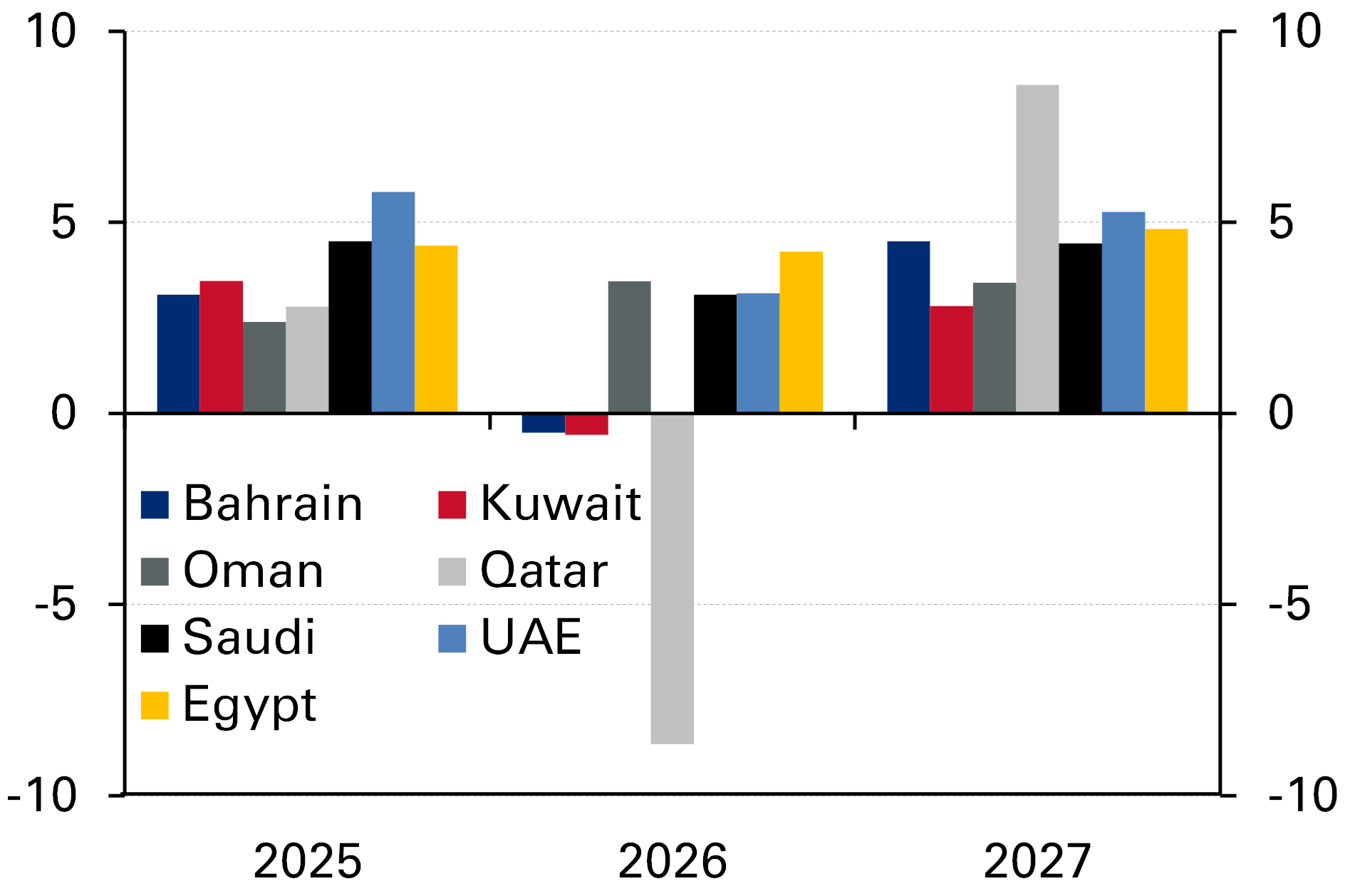
GCC & Egypt: IMF projects a sharp slowdown amid war shock while inflation pressures persist. The IMF, in its April 2026 World Economic Outlook, downgraded the economic growth outlook for the GCC and Egypt this year, citing the impact, both direct and indirect, of the ongoing conflict in the Gulf centered around the Strait of Hormuz. Economic growth should rebound in 2027, however, based on the assumption that the region’s energy exports, transportation and overall trade ‘normalize’ over the next few months and longer-term disruption is avoided. For 2026, the IMF estimates the contraction in real GDP to be steepest for Qatar (to -8.6%) followed by Kuwait (-0.6%) and Bahrain (-0.5%), while economic activity in Saudi Arabia (+3.1%), the UAE (+3.1%) and Oman (+3.5) holds up better on account of these energy exporters being less reliant on the Strait of Hormuz. Inflation across the GCC remains contained despite upward revisions, with 2026 inflation expected to range between 1.7% in Oman and 3.9% in Qatar, reflecting higher energy and transport costs. Egypt, meanwhile, as a net commodity importer, is particularly exposed to energy price volatility, but growth is forecast at 4.2% in 2026 (-0.3 % pt revision) with inflation still elevated at 13.2%, despite being on a downward trajectory. Overall, the IMF stresses that regional outcomes remain highly sensitive to oil market disruptions and conflict duration, with risks in 2026 firmly skewed to the downside.
Saudi Arabia: Inflation little changed in March despite regional tensions. Saudi inflation showed only a marginal uptick in March, indicating that the recent regional escalation has had limited immediate impact on domestic price dynamics. Consumer prices rose by 1.8% y/y (0.3% m/m), up slightly from 1.7% y/y in February, according to GASTAT. The modest increase was mainly driven by the food & beverages component, which rose 0.3% y/y (0.5% m/m). As the largest category in the CPI basket, accounting for 22%, this uptick includes the seasonal impact of Ramadan, which typically leads to higher food prices. A similar pattern was observed in restaurants & hotels, which also tend to see seasonal increases. At the same time, housing & utilities inflation continued to moderate, easing to 3.9% y/y from 4.1% in February, marking the slowest pace since October 2022. This reflects the gradual impact of policy measures, including the rent freeze introduced in Riyadh last year. Partly offsetting this moderation, miscellaneous goods & services remained elevated, rising 8.2% y/y, higher than the 2025 average, and continuing to exert upward pressure on the headline figure. Despite the slight increase, there is as yet no clear evidence of inflationary pressures stemming from the regional conflict. Saudi Arabia’s ability to maintain stable supply chains, supported by diversified trade routes through land and air, as well as steady operations at key ports such as Jeddah and Yanbu Ports, has helped contain price pressures even as disruptions affected other parts of the region. Overall, inflation remains low and stable, underscoring the Kingdom’s resilience in absorbing external shocks.
US: Fed’s Biege Book notes heightened war-related uncertainty as business activity edges up modestly; S&P 500 hits a record-high. The regional Feds’ business survey of their respective districts (Beige Book, published eight times a year) indicated that the Middle East war-related uncertainty has impacted “decision-making around hiring, pricing and capital investment, with many firms adopting a wait-and-see posture.” The report highlighted that “input cost pressures beyond energy-related increases were also widespread” particularly in transportation, shipping, plastics, fertilizers, and other petroleum-based products. Labor market conditions were broadly stable, although several districts reported increased temporary or contract hiring as firms remained cautious about committing to full time payrolls. However, economic activity increased at a slight-to-modest pace across most districts, with consumer spending rising slightly. While hopes persist for further deescalation between the US and Iran, elevated energy prices and ongoing shipping disruptions are likely to weigh on US economic activity in the coming months. Separately, President Trump renewed his threat to remove Fed Chair Powell, saying, “I’ll have to fire him,.. if he’s not leaving on time.” As a reminder, Powell’s terms as Fed Chair ends next month though he has indicated a willingness to serve as chair pro tempore until his successor is confirmed. Powell has also stressed that he does not intend to step down from his role as a Fed Governor—set to expire in 2028—until the Department of Justice’s criminal investigation involving him is “well and truly over.” Meanwhile, the S&P 500 hit a new record high on continued optimism about a US-Iran deal and strong corporate earnings, closing 0.8% up yesterday and breaking the previous high seen in late January. The Nasdaq was also up 1.6% to hit a new high.
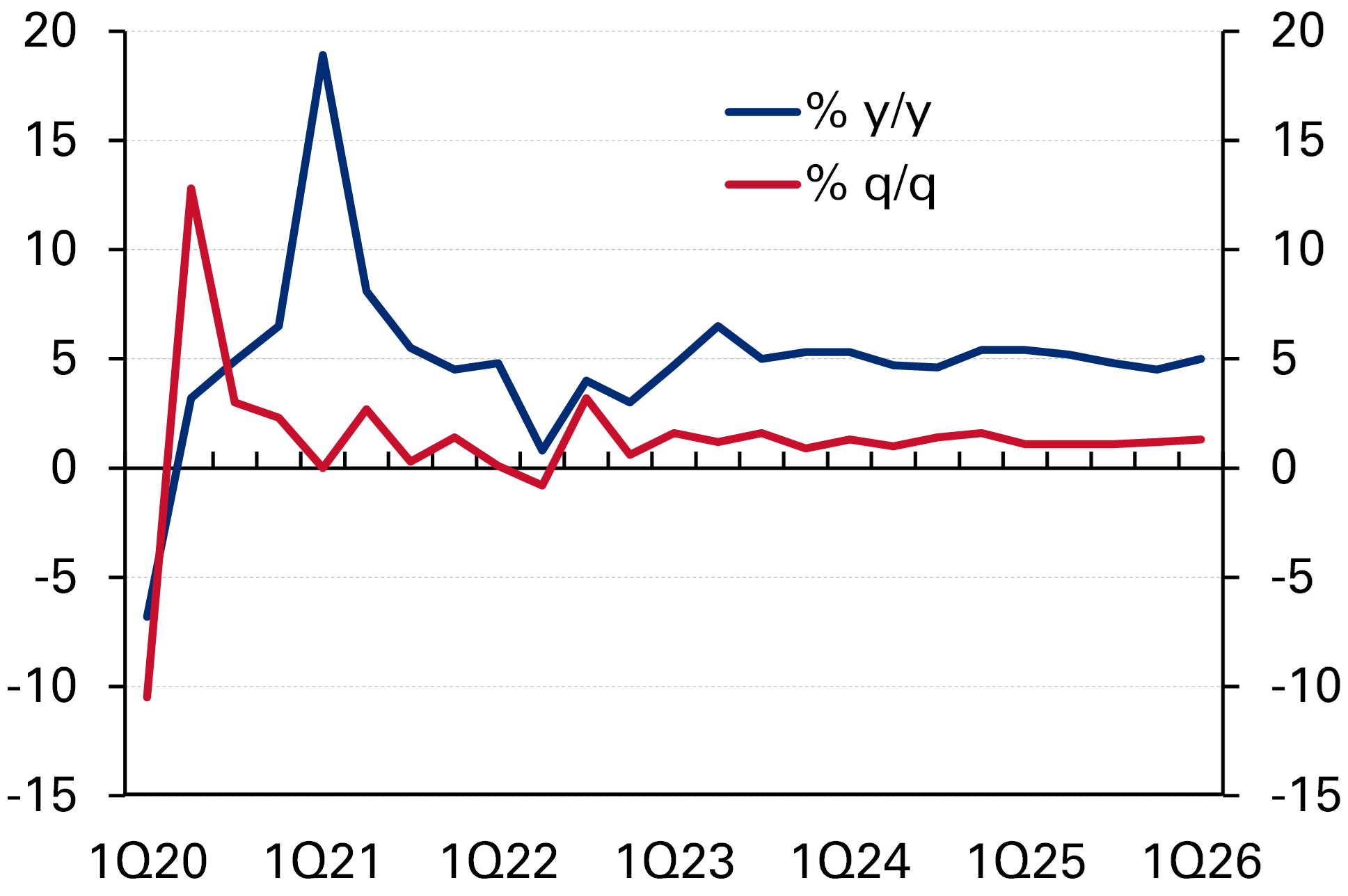
China: First quarter GDP growth at 5% y/y, beating expectations, but external risks loom into Q2. GDP expanded by 5.0% y/y in Q1, beating expectations of 4.8% and accelerating from 4.5% in Q4, supported by manufacturing and exports amid still weak domestic demand. The reading marked the fastest growth in three quarters, but with policymakers bracing for possible fallout from the Middle East war in Q2. So far, the economy has absorbed the shock with limited disruption, aided by ample strategic reserves, diversified energy sources, and controls that curb price swings. Separate data showed that industrial production rose by a higher-than-expected 5.7% y/y in March, but undershooting January-February’s pace while retail sales increased by a lower-than-expected 1.7% y/y in March, slower than earlier in the quarter and indicating subdued household consumption. Additionally, fixed asset investment grew 1.7% y/y in Q1, missing expectations, with real estate investment contracting 11% y/y, underscoring the ongoing drag from the property sector. New home prices fell 3.4% y/y in March, extending the downturn from February’s 3.2% decline and indicating that stabilization efforts by policymakers have not managed to arrest the decline in the property market. Overall, the data point to an economy meeting near-term growth objectives through supply-side strength, while imbalances between strong production and weak demand persist, leaving the outlook sensitive to external shocks and the pace of policy support.
Eurozone: Industrial production better than expected in February; Lagarde sees the current outlook tracking between the ECB’s base-line and adverse scenario. Industrial production increased 0.4% m/m in February after an upwardly revised 0.8% contraction in January (from -1.5%). The recovery was uneven, led by non-durable consumer goods (+2.6% m/m), capital goods (+1.0%) and intermediate goods (+0.5%) while energy output (-2.1%) and durable consumer goods (-1.3%) remained a drag. On an annual basis, industrial production fell 0.6% in February, unchanged from January but beating expectations of a 1.0% decline. Separately, ECB President Christine Lagarde said that higher energy costs have pushed the current outlook for the euro area to be tracking between the ECB’s baseline and adverse scenario. She stressed that uncertainty remains high, cautioned against overconfidence on the rate path, and reaffirmed the need to be completely agile and data dependent given the unclear pass through of energy shocks to inflation and activity.