
 +965 2292 4888


Daily Economic Update
19.02.2026
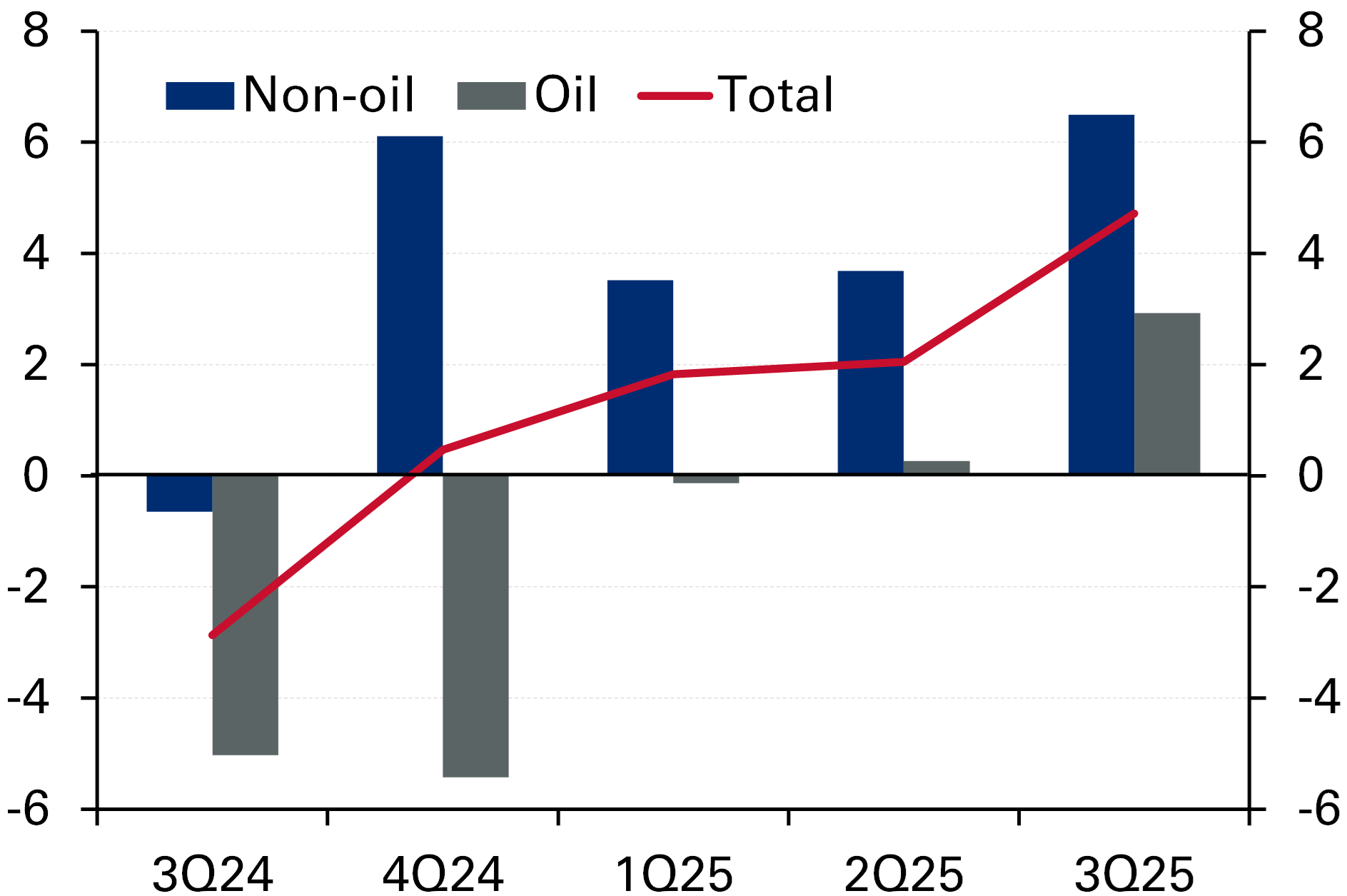
Kuwait: GDP growth in Q3 2025 accelerates on oil and non-oil sector gains, 2024 data revised up. Preliminary estimates from the Central Statistical Bureau (CSB) reveal that Kuwait’s economy expanded by 4.7% y/y in Q3 2025, the fastest pace since Q4 2022 and a notable acceleration from the upwardly revised 2% recorded in the previous quarter. The improvement was driven by a very strong performance in the non-oil sector, which expanded by 6.5% y/y from an upwardly revised 3.7% in Q2. The expansion was broad-based, led by robust growth in telecommunications (+13.2% y/y), real estate & renting activities (+11.5%), and health & social work (+8.8%). Financial intermediation and insurance also rebounded, posting 3.8% growth after contracting in the previous quarter. Smaller sectors, such as transportation and hotels & restaurants both registered double-digit increases, though the electricity, gas & water and other community & personal services sectors posted declines. In the oil sector, output grew 2.9% y/y, in line with the increase in crude oil production recorded over the same period (+70 kb/d to 2.483 mb/d on average), made possible by the OPEC-8 decision to accelerate the unwinding of supply cuts from 2024. The CSB report also included significant revisions to earlier GDP estimates, which resulted in non-oil GDP growth being revised up from 1.7% to 3.7% for 2024. Notable revisions were applied to manufacturing output, leading to a sizable growth upgrade from the previous 0.7% to 6.3%. We have for some time noted that significant refining gains from the completion of the New Refinery Project did not seem reflected in the data, so these revisions might go some way to addressing this. Output gains in the transport sector were also revised up (from 4.8% to 13.7%), and growth in both the construction and wholesale & retail trade sectors—previously negative—was revised into positive territory. Oil GDP for 2024 was also adjusted, showing a slightly smaller decline of 6.6%, compared with 6.9% in earlier estimates. As a result, headline GDP growth for 2024 was revised to -1.5% from the previously reported -2.6%, indicating that total GDP returned to positive growth in Q4 2024, one quarter earlier than initially thought.
Kuwait: Trade decline eases in Q3 on a lower decrease in oil prices. External trade continued to decline in Q3 2025 (-0.8% y/y), but logged its softest decline since Q1 2023, compared with a fall of 4.5% in Q2. The improvement was driven primarily by a moderation in oil export declines. Oil exports—still the dominant component of the trade balance—registered a softer decline of 8.0% y/y (-19% in Q2), supported by a combination of higher oil production (2.9% y/y to 2.48 mb/d) and smaller drop in KEC oil prices (-10.4% versus -21% in Q2) to an average of $71.4/bbl. On the other hand, non-oil exports (domestic exports plus re-exports) increased by 21% y/y (13.9% in Q2). The UAE, India, and Saudi Arabia were the top trading partners of Kuwait, accounting for about 53% of total non-oil exports. On the other hand, the increase in imports slowed to 7.3% y/y, easing from a thirteen-quarter high of 22% registered in the previous quarter. China, UAE, US, and Japan were the main exporting countries to Kuwait constituting 46% of total imports. As for the first three quarters of 2025, total trade declined by 2.1% y/y to reach KD25.6 billion, mainly due to a decline of 9.2% in total exports on the back of a 10.2% decline in oil exports. Non-oil exports, on the other hand, saw a 16.7% increase during the same period while imports rose by 12.9%. Total trade is expected to have remained under pressure in Q4 amid a further 13.4% decline in KEC crude prices, though the 6.9% increase in oil production (2.57mb/d in Q4) and continued strength in non oil exports should have helped mitigate the overall drag.
US: FOMC members concerned about inflation risks amid a stabilizing labor market, January Fed meeting minutes show. Minutes from the FOMC’s January meeting showed that most participants cautioned that the progress on inflation falling towards the 2% target “might be slower and more uneven than generally expected”, while “the pace and timing of this decline remained uncertain”. The minutes highlighted that “almost all members no longer judged that downside risks to employment had risen in recent months,” and suggesting that “labor market conditions may be stabilizing.” Striking a more hawkish bias than what markets generally anticipated, several members indicated an interest rate hike “could be appropriate if inflation remains at above-target levels.” In contrast, several other officials supported further rate cuts if inflation were to decline in line with their expectations, underscoring the divide among FOMC members. Interestingly, several participants expected that higher tech-driven productivity growth could put downward pressure on inflation, echoing views floated by the Trump administration as well as Fed Chair nominee Kevin Warsh. As a reminder, in January, the FOMC voted 10-2 in favor of keeping the Fed Fund target rate unchanged at the 3.5-3.75% range after cutting it by a cumulative 75 bps in the previous three meetings. The futures market currently signals an over 70% probability of two 25-bps rate cuts by the end of 2026.
US: Manufacturing activity shows more signs of improvement, with production accelerating and core capital goods orders rising. Industrial production in January rose by a higher-than-expected 0.7% m/m following a downwardly revised 0.2% increase in December as manufacturing output expanded by 0.6% after no change in December, the fastest growth since February 2025. Separately, core capital goods orders (non-defense and excluding aircraft) in December increased by 0.6% m/m after a rise of 0.8% in November, extending gains for the sixth straight month, indicating improving confidence among businesses. Though overall durable goods orders, which tend to be very volatile on a m/m basis, fell 1.4% in December after a large increase of 5.4% in November. The latest readings follow the previously-reported solid ISM manufacturing PMI for January, which rose to the highest level (52.6) since August 2022, exiting a 10-month long slump. As trade and government policy uncertainty has diminished over the past few months, US manufacturing activity has been showing some signs of renewed optimism, which, if sustained, should support the currently robust consumer spending and help drive economic growth further in 2026.
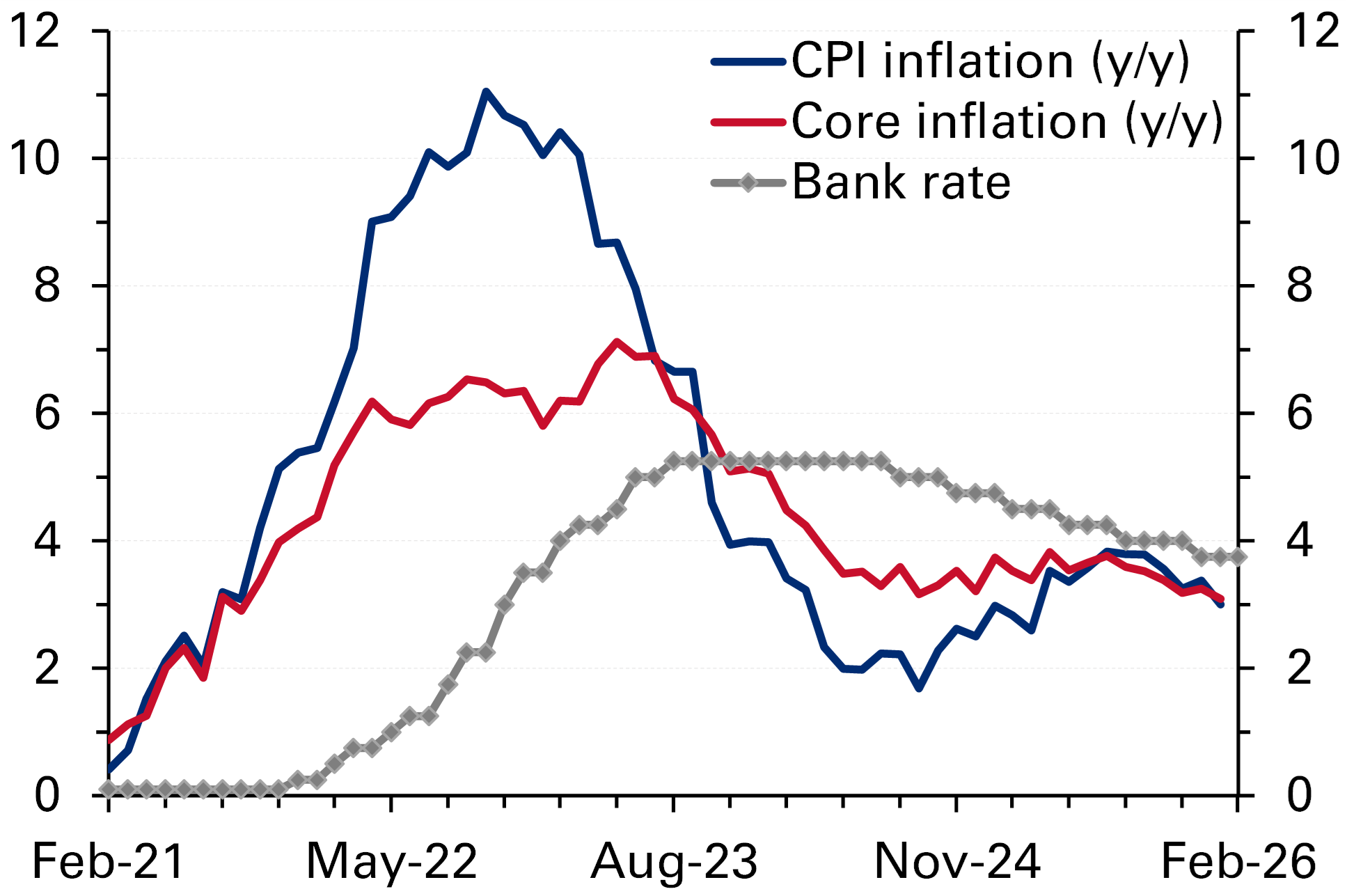
UK: January’s CPI inflation eases to 3%, matching the consensus forecast but slightly above the BoE’s. CPI inflation fell to a 10-month low of 3% y/y in January from 3.4% in December, helped by a decline in fuel prices and slower increases in food and non-alcoholic beverage prices and airfares. The core rate also moderated to the lowest level since September 2021 at 3.1% (3.2% in December) but was above the BoE’s forecast of 2.9%. Goods inflation fell to 1.6% from 2.2% and services inflation ticked down to a still-sticky 4.4% (4.5% in December), higher than the BoE’s 4.1% forecast. January’s inflation print underlines that broader disinflation progress is continuing but at a slower pace than the BoE’s projections; the bank expects inflation to fall to around its 2% target in April. The futures market pricing continued to indicate more than 80% probability of a policy rate cut at the MPC meeting in March.