
 +965 2292 4888


Daily Economic Update
13.05.2026
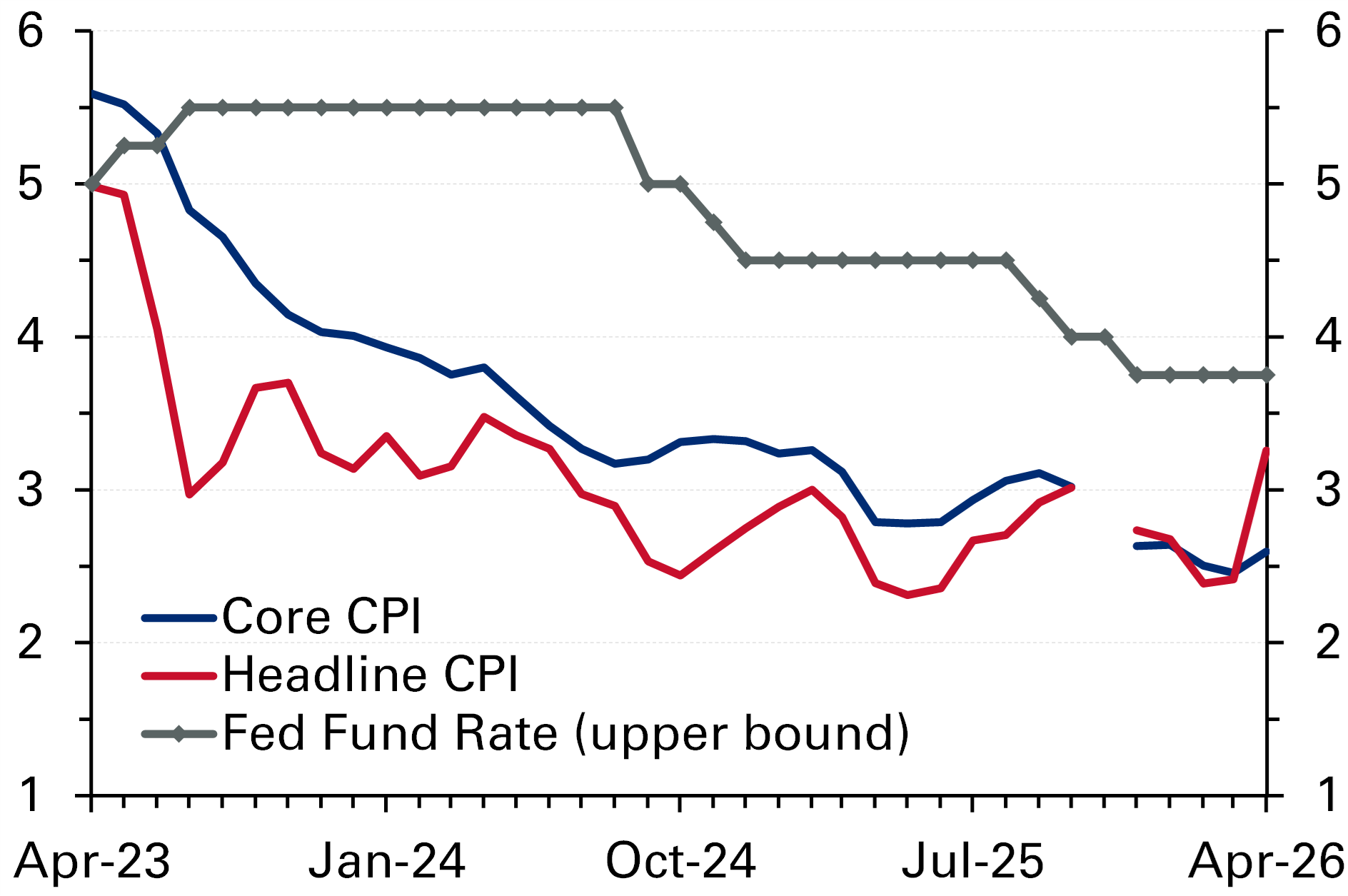
US: CPI inflation in April climbed to a nearly three-year high on surging energy prices; UST 10-year yield rises to the highest since July. CPI inflation in April spiked to a nearly three-year high of 3.8% y/y from 3.3% in March, slightly above the 3.7% consensus forecast. Energy goods prices increased by 5.6% m/m (29% y/y) following a 21% m/m surge in March. The core rate also came in at an above-consensus 2.8% y/y, the highest level since September, after 2.6% in March. Given rising jet fuel costs, airfares increased by 2.8% m/m (21% y/y), building on a 2.7% m/m increase in March. The heavyweight shelter component, meanwhile, rose 3.3% y/y (0.6% m/m), up from 3% y/y in March, partly boosted by data distortions related to the government shutdown in October-November last year. Since November, such data distortions have been artificially deflating shelter inflation, and that effect is now being unwound, resulting in an outsized increase in April. Excluding food, energy and shelter, CPI inflation was steady at 2.3%, but above the 2.1% seen in January-February. The important super core services measure (i.e. core services excluding shelter), which is closely monitored by the Fed, continues to be elevated, rising 0.45% m/m and driving up the y/y increase to 3.3%. Durable goods prices fell for the first time in one year (-0.1% y/y) while core goods inflation slowed to 1.1% from 1.2% in March, indicating an easing impact of tariffs. Nonetheless, the transmission of current high energy prices is still to be fully seen through other CPI basket components, which will likely keep core CPI inflation elevated over the coming months. Greater risks of higher inflation, along with steady signs of improvement in the labor market recently, would complicate incoming Fed Chair Warsh’s plan to reduce policy interest rates soon. After the release of the latest CPI print, the futures market bumped up the probability of a 25bps interest rate hike this year to over one-third, with no change remaining the most likely outcome. Amid signs of cracks in the US-Iran ceasefire and a fresh increase in oil prices, yields on UST bonds rose, with the 10Y yield hitting the highest since July. Finally, the Senate voted to confirm Kevin Warsh as a Fed Governor for a 14-year term, paving the way for a vote on his confirmation as Fed Chair soon.
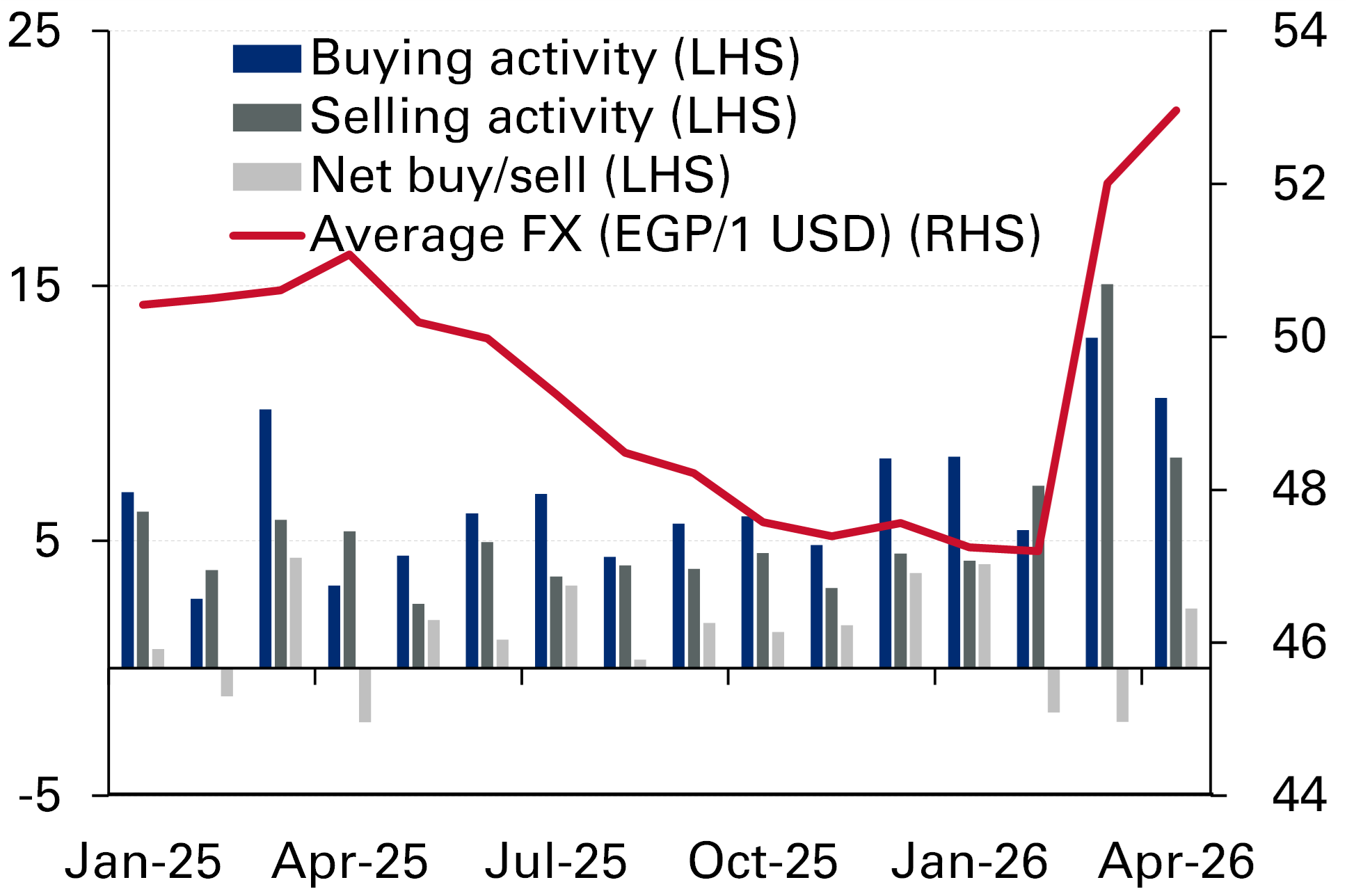
Egypt: Carry trade flows continue to drive EGP volatility. The pound continued to experience sharp volatility this week as carry trade flows shifted rapidly. The EGP weakened during Tuesday’s trading session to around EGP53.2/$1 before recovering part of its losses to close near EGP52.9/$1. The currency had already depreciated by around 0.8% last week, following net foreign outflows estimated at $172 million from the local debt secondary market. However, sentiment improved again this week after foreign investors recorded approximately $1.1 billion in net inflows into Egyptian debt instruments on Tuesday alone. Reflecting the strong movement in foreign currency flows, interbank market volumes surged by 187% d/d to around $600 million, compared to $209 million in the previous session. The recent movements highlight how sensitive the EGP remains to changes in global risk appetite and carry trade positioning, especially amid continued uncertainty in international markets. As a result, the EGP is likely to remain volatile in the near term as investors continue to reassess exposure to emerging markets, including Egypt.
UAE: Abu Dhabi launches a pipeline of 24 new PPP projects worth AED55 billion. The Abu Dhabi Investment Office and Abu Dhabi Projects and Infrastructure Centre have launched a new pipeline of Public Private Partnership (PPP) projects with a total value of AED 55 billion ($15 billion), compared with AED25 billion in projects launched in 2025. The 24 projects will be tendered during 2026–2027, as part of the UAE’s wider PPP program, covering the transport, infrastructure, and social sectors. The transport sector, which represents the largest share, came at AED35 billion allocated across 11 major road projects and upgrades of existing road networks. AED11 billion was allocated for five core infrastructure projects including dams, water storage facilities, flood control systems, drainage upgrades, and urban landscaping works. Social infrastructure, which accounts for the remaining AED9 billion, included investments in sports facilities, schools, and universities. The rising dependence on PPP projects reflects the UAE’s strategic expansion of private sector participation in economic development, improving investment efficiency, easing long-term fiscal pressures, and supporting sustainable growth.