
 +965 2292 4888


Daily Economic Update
05.05.2026
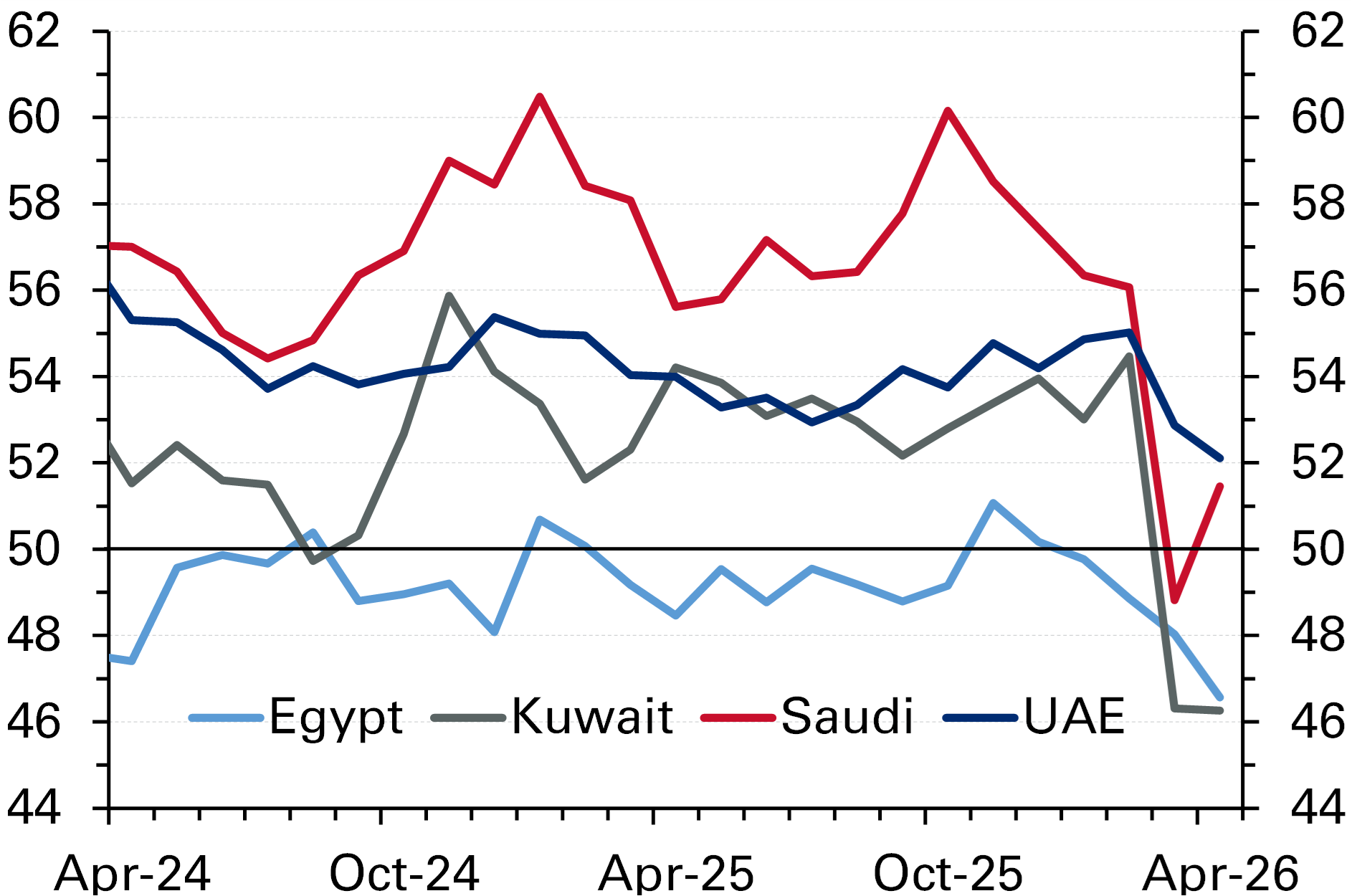
Kuwait: PMI shows business activity continued to decline in April. The non-oil private sector PMI registered 46.3 in April, unchanged from March, reflecting the second consecutive month of deterioration in business conditions. The reading is the lowest in more than four years, as output and new orders continued to decline sharply with the latter falling at the fastest pace since May 2021. Continued shipping disruptions, the airport closure (for the majority of the month) and online schooling were cited as weighing on business activity. Employment, work backlogs, and inventory levels also declined due to the weaker operating conditions and softer demand. Despite falling input costs, driven by lower purchase prices and staff costs, supplier delivery times lengthened due to sourcing difficulties. Meanwhile, there are as yet few signs of material inflationary pressure with companies increasing output prices but at a modest pace. In terms of business sentiment, one-year-ahead optimism worsened to its lowest level since June 2020, reflecting concerns that regional instability will continue to dampen activity.
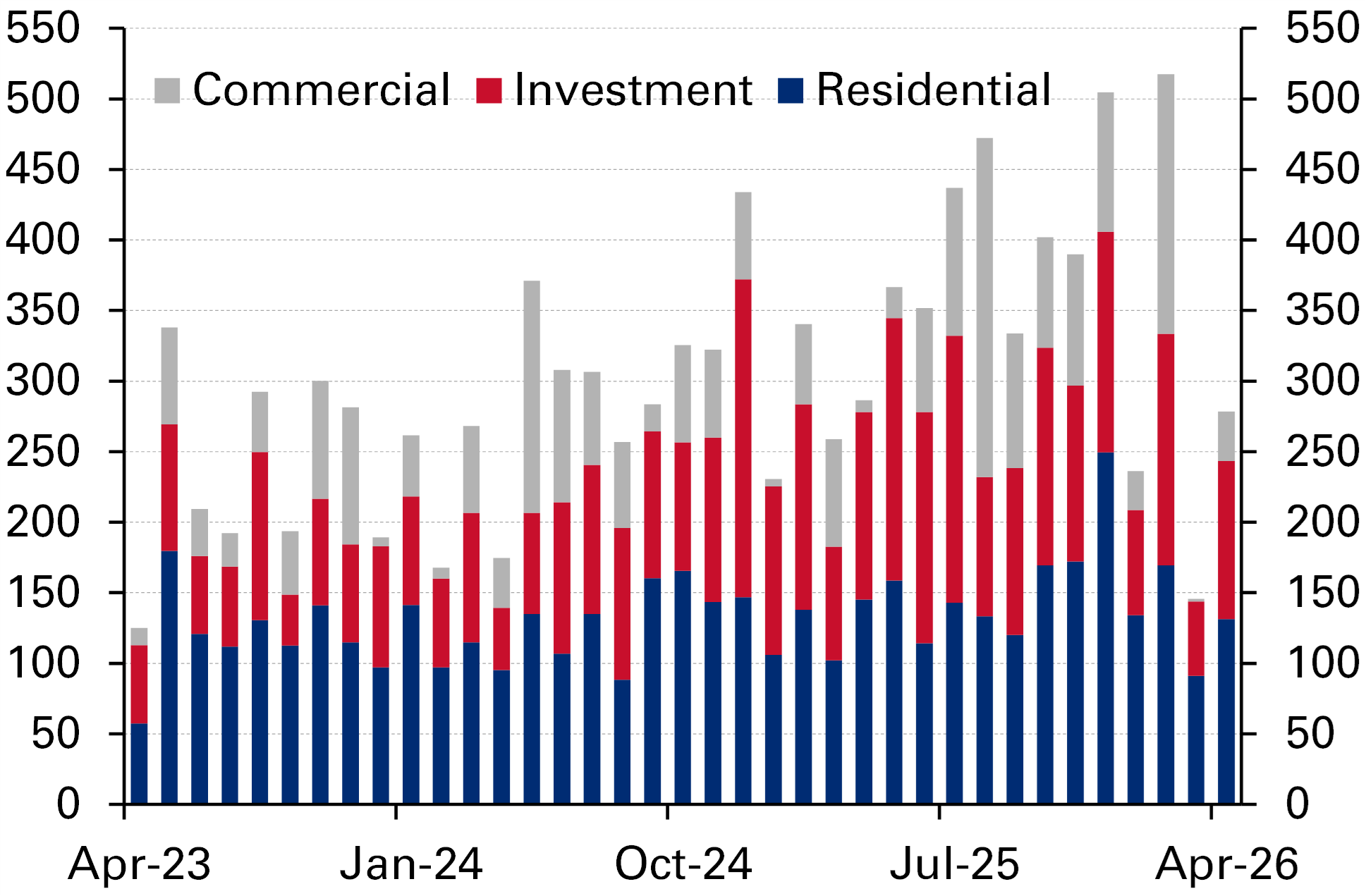
Kuwait: Property sales see partial recovery in April after March slump. Total real estate sales rebounded in April from the three-year low sales recorded in March, though remained subdued relative to pre-conflict and last year’s average levels. According to the Ministry of Justice data, total sales rose to KD278 million, representing a 91% m/m jump, though still slightly lower on an annual basis (-2.8% y/y), underscoring that the market had yet to fully regain its footing after March’s sharp drop. April’s rise was across all segments. Residential sales climbed to KD131 million (-9.6% y/y; +44% m/m), improving from March subdued levels linked to the US-Iran conflict. Meanwhile, investment sales more than doubled to reach KD112 million (-15.7% y/y; +112% m/m). Commercial sales logged the most notable improvement as sales surged to KD35 million (+322% y/y; +1,667% m/m), reversing the near standstill in March. Overall, April data points to only a partial recovery in sales after the conflict-related slowdown seen in March, with the pace of recovery reflecting lingering uncertainty. Looking ahead, the real estate market is likely to remain sensitive to regional geopolitical developments. A de-escalation or resolution of the conflict would support investor confidence and sales, especially in the investment and commercial segments.
Saudi Arabia: Non-oil business activity rebounds in April, but cost pressures surge. Saudi Arabia’s non-oil private sector returned to expansion in April, signaling an early recovery after the sharp disruption caused by regional tensions in March. The PMI rose to 51.5 in April from 48.8 in March, moving back above the 50 neutral threshold that separates expansion from contraction. The improvement reflects a modest rebound in operating conditions, with firms increasing output as new business volumes recovered and existing workloads progressed. However, the pace of recovery remained measured, as delays in client spending and investment decisions continued to weigh on sales growth. The rebound was largely supported by domestic demand, while new export orders declined at the fastest pace on record, highlighting the ongoing impact of regional trade disruptions. Some firms also reported delays in import shipments, prompting a more cautious approach to input purchases and inventory management. A key concern in April was the sharp acceleration in cost pressures. Survey data showed the fastest rise in input costs since the PMI survey began nearly 17 years ago, driven mainly by higher raw material prices and transportation expenses. In response, companies raised selling prices at the second-fastest pace on record, as businesses attempted to pass through rising costs to customers. These pricing pressures have yet to appear in official inflation data, as March’s CPI remained relatively stable. However, the April PMI suggests that some upward pressure could begin to emerge in upcoming inflation readings. Despite near-term challenges, business sentiment improved from March levels, with firms remaining optimistic about future activity, supported by domestic infrastructure spending and longer-term expansion plans. Overall, April’s data points to a gradual recovery in business activity, though one increasingly accompanied by rising cost pressures that will need close monitoring in the months ahead.
UAE: April PMI still in expansionary territory but price pressures rise. The PMI gauge of business activity lost further momentum in April, easing to 52.1 in April from 52.9 in March and its lowest reading since February 2021 amid ongoing regional geopolitical tensions and supply disruptions. Output growth remained solid, though slowing from previous readings, reflecting slower inflows of new businesses and weaker tourism activity while new orders growth slowed to its weakest pace in more than five years. In contrast, employment continued to expand, though at its slowest pace in 2026 as cost cutting efforts intensified. Supply conditions remain challenging with shipping disruptions linked to the Middle East conflict weighing on export orders and constraining procurement. Input prices rose at the fastest pace since July 2024, driven mainly by higher oil and transport costs, prompting companies to raise selling prices at the sharpest rate in 15 years. Despite these pressures, business confidence improved modestly in April as firms became more optimistic about output growth in the next 12 months, supported by infrastructure activity, project pipelines, and productivity gains from technological innovation. On the emirate level, Dubai PMI also weakened in April, falling to 51.6 from 53.2 in March as output and new business growth softened while input price pressures intensified due to higher oil prices and shipping costs.
Egypt: PMI signals sharp slowdown as regional tensions fuel cost pressures. Egypt’s non-oil private sector came under renewed pressure in April, with the PMI falling to 46.6, down from 48.0 in March, marking the steepest contraction since January 2023 and signaling a notable deterioration in business conditions. Based on the PMI’s historical correlation with economic activity, the latest reading suggests GDP growth could slow toward 3.9% y/y, pointing to softer momentum in the non-oil economy. The main driver behind the slowdown was a sharp acceleration in cost pressures, as regional geopolitical tensions pushed up the prices of key inputs, particularly fuel and imported raw materials. This led to the fastest overall input cost inflation in more than three years. In response, businesses raised selling prices at the quickest pace since August 2024, which weighed heavily on customer demand and triggered a marked decline in sales volumes. At the same time, firms also reported input shortages and supply disruptions, forcing many businesses to scale back output. As a result, business activity recorded its largest decline in over two years. Employment conditions weakened modestly, with some firms reducing headcounts amid softer demand, although the pace of job cuts remained relatively limited. Looking ahead, business sentiment showed a slight improvement from March’s record low reading, but overall confidence remains subdued as firms continue to navigate elevated uncertainty and persistent cost pressures.
Oil: Prices rally on fresh wave of Iranian attacks. Brent futures surged 5.8% d/d on Monday to settle at $114.4/bbl, as a renewed escalation in regional tensions injected a fresh geopolitical risk premium into prices. The move followed a new wave of Iranian missile and drone strikes targeting the UAE’s Fujairah and Jebel Ali ports, with Oman also reportedly affected. Iran denied it was behind the attacks. Earlier in the session, prices were briefly propelled higher on unconfirmed reports that the IRGC had struck two US Navy warships, before subsequent clarification revealed the vessels were in fact commercial ships, including an ADNOC owned oil tanker. The developments serve as a reminder that the reigniting of hostilities remains a key upside risk for oil prices, highlighting heightened nervousness in markets and the speed with which headline risk can drive price action. Meanwhile, President Trump’s “Project Freedom” initiative has so far yielded minimal improvement in actual shipping activity through the Strait of Hormuz, offering little relief to physical markets and leaving prices highly sensitive to further escalation.
US: Fed’s Williams does not see evidence to support rate hikes; UST bond yields rise on renewed Middle East war concerns. New York Fed President John Williams (an FOMC voting member) highlighted the case for lower interest rates eventually, saying, “we will at some point need to be lowering interest rates to reflect the fact that inflation is lower.” He also added that given higher than previously expected inflation this year, rate cuts would be delayed but “the basic story” remains unchanged as he doesn’t “see anything in the day-to-day” to support rate hikes in the short term. He mentioned that outside of imported goods and energy, underlying inflation remains stable. However, we note that, even before the Middle East war, the inflation problem was still not resolved in the US with for example still stubbornly-high core services inflation. Moreover, it may be too early to assume that core inflation will be immune to the current energy price shock and the disruption to global supply chains. On tariffs, Williams believes the effects will continue to be “borne overwhelmingly by domestic producers and consumers, and they have not yet fully played out”. He anticipates the pass-through of current tariffs to prices “to be mostly completed in the next few months and therefore their effects on the inflation rate to fade”. However, he also expects “a new round of tariffs in the coming months, which would put additional upward pressure on import prices.” On US GDP growth, Williams predicts 2-2.25% this year and in 2027, with inflation reaching 3% in 2026 (up from his 2.75% to 3% prediction two weeks ago) before falling towards the Fed’s 2% goal in 2027. About the labor market, he noted recent mixed signals, while adding that the current slowdown in hiring partly reflects an aging population and falling immigration, which would drive fewer job gains. Meanwhile, amid concerns about renewed hostilities in the Middle East and a spike in oil prices, UST bond yields rose steeply, with the 10Y one rising by over 6bps to hit around 4.43%, near the highest close since July.