
 +965 2292 4888


Daily Economic Update
21.06.2026
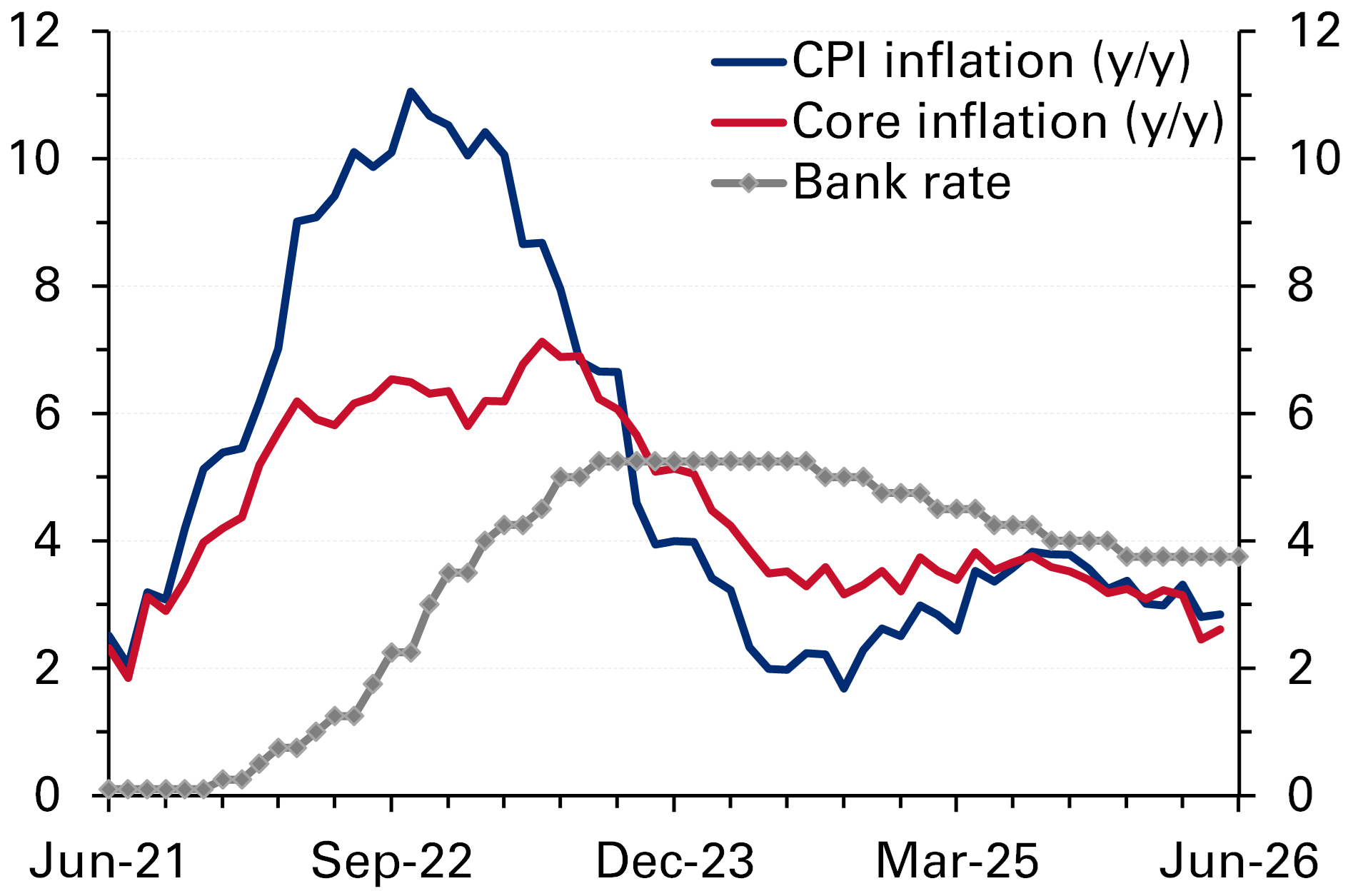
UK: BoE maintains bank rate at 3.75% seeing uncertainty ahead; PM Starmer faces renewed pressure to step down. The MPC kept the bank rate unchanged at 3.75% in a 7-2 vote, with two members voting for a 25bps rate hike. The policy statement highlighted an uncertain impact of the energy shock on the UK economy, saying energy prices remain higher than the pre-conflict levels despite the drop since the previous policy meeting. The bank expects CPI inflation to rebound from 2.8% y/y in May to around 3% in Q3 and to over 3.25% by Q4, and expressed the risk of material second-round effects but mentioned that the labor market continued to loosen, which should help mitigate inflation risks. The bank also emphasized that “the appropriate policy response would depend primarily on the outlook for second-round effects.” The futures markets continue to indicate one to two 25bps rate hikes by the end of 2026. Meanwhile, on the data front, the latest labor data prints came in stronger than expected as payrolls increased by 2K in May after a smaller-than-initially reported drop of 53K (versus 100K fall reported initially) in April. The unemployment rate also unexpectedly declined to 4.9% in the February-April period from 5% in the January-March period. Wage growth was flat at 4.4% y/y and 3.4% for total pay and regular pay, respectively, beating expectations of a further slowdown. Adding to the positive labor data, retail sales volumes rebounded by a much stronger than forecast 1.2% m/m in May from a smaller than previously reported decline of 1% in April, signaling consumer resilience. Finally, Andy Burnham, ex-Mayor of Greater Manchester, was elected as an MP in a by-election held on Thursday, and he looks set to challenge PM Starmer’s premiership. Amid increasing dissent within his own party over his personal performance and policy missteps, Starmer has come under renewed pressure to resign or face a tough contest to defend his leadership, with media reports speculating that he may be preparing to step down soon. Following the latest political developments as well as the evolving economic backdrop and given their implications for the UK fiscal position, gilt yields rose on Friday.
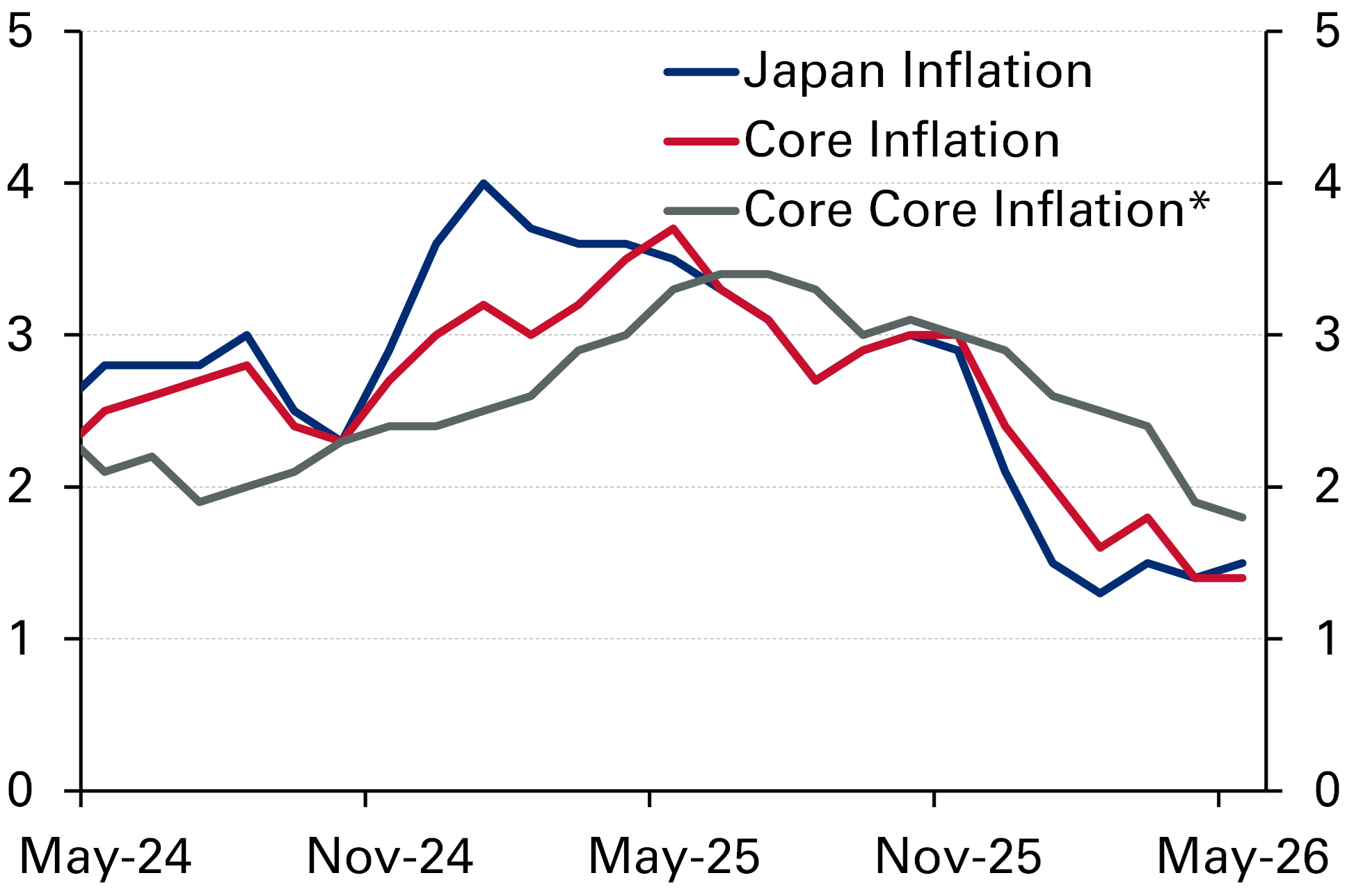
Japan: Inflation remains under target and the yen continued to weaken. CPI inflation rose to 1.5% y/y in May from 1.4% in April but remained below the BoJ’s 2% target for the fifth consecutive month as subsidies offset upward price pressures related to the Middle East conflict and situation in the Strait of Hormuz. Electricity and gas inflation remained negative at 2.3% and 1.6%, respectively. Food inflation hovered near a two-year low of 3.5% as rice prices fell for the first time in more than three years. Core CPI (excluding fresh food) was unchanged at 1.4%, in line with consensus estimates and at its lowest level in over four years. The tame inflation report comes as key government officials stated that they are ready to “respond appropriately” to movements in the currency, as the yen remained above the JPY160/$1 threshold for the second week in a row. Separately, media reports indicate that the Takaichi government is targeting JPY 350tn (~$2.3tn) in combined public and private investments by 2040, focused on strategic sectors including AI and space.
US: Jobless claims remain modest overall, signaling stable layoff conditions. Initial weekly jobless claims (w/e June 13) dropped to 226K from 230K the previous week, but continuing claims (w/e June 6) rose to 1.81mn from 1.79mn for the w/e May 30. Though unemployment claims have trended higher in recent weeks, they remain modest overall, signaling a stable unemployment backdrop. Moreover, the general increase in weekly claims in the last three weeks may have been influenced by seasonal distortions including early school summer holidays in certain places. The broader labor market data, including non-farm payroll growth, has shown an improving trend this year, which is helping tilt the Fed’s bias towards combating higher inflation risks.
Saudi Arabia: Hormuz disruptions accelerate plans to expand global oil storage capacity. The recent disruptions in the Strait of Hormuz are reinforcing Saudi Arabia’s efforts to strengthen the resilience of its energy supply chain through the expansion of oil storage facilities across key global markets. According to Yasir Al-Rumayyan, Governor of the Public Investment Fund (PIF) and Chairman of Saudi Aramco, the Kingdom is studying the development of additional large-scale crude oil storage facilities around the world, particularly in Asia, to reduce reliance on the Strait of Hormuz and enhance supply security for its customers. Al-Rumayyan noted that Aramco’s long-term strategic planning, including the construction of the East-West Pipeline in the 1980s and the establishment of strategic storage facilities in countries such as China, Japan, South Korea, and the US, helped mitigate the impact of the recent regional conflict. These alternative routes and storage hubs ensured the continued flow of Saudi crude even during periods of heightened geopolitical risk. The latest comments signal a broader shift among Gulf oil exporters toward strengthening energy security and reducing exposure to potential disruptions in critical maritime chokepoints. Saudi Arabia recently signed a memorandum of understanding with South Korea covering cooperation in oil, gas, refining, and petrochemicals, with a particular focus on expanding Saudi crude storage within South Korea’s strategic petroleum reserves. The deal enables Saudi Arabia greater proximity to key Asian demand centers, reduced delivery times and improved supply reliability, while South Korea, the world’s fifth-largest oil importer and one of Saudi Arabia’s largest customers, secures faster access to crude supplies during periods of disruption. Overall, the initiative reflects how the recent Hormuz crisis is accelerating Saudi Arabia’s efforts to build a more flexible and geographically diversified energy infrastructure, strengthening its position as a reliable supplier to global energy markets.
Egypt: Remittances continue to hit record levels in FY25/26. Remittances from Egyptians working abroad maintained their strong momentum during the current fiscal year, providing a significant source of foreign currency inflows for the economy. According to the latest data from CBE, remittances increased by 33% y/y during the first 10 months of FY25/26 (July 2025 to April 2026), reaching a record $39.2bn, compared to $29.4bn during the same period a year earlier. On a monthly basis, remittances rose by 44% y/y in April to approximately $4.3bn, up from $3bn in April 2025. The continued surge in remittance inflows highlights the positive impact of Egypt’s exchange rate reforms. Together with tourism revenues, exports, and foreign investment, remittances continue to play an important role in strengthening foreign currency liquidity and supporting overall economic stability.