
 +965 2292 4888


Daily Economic Update
03.05.2026
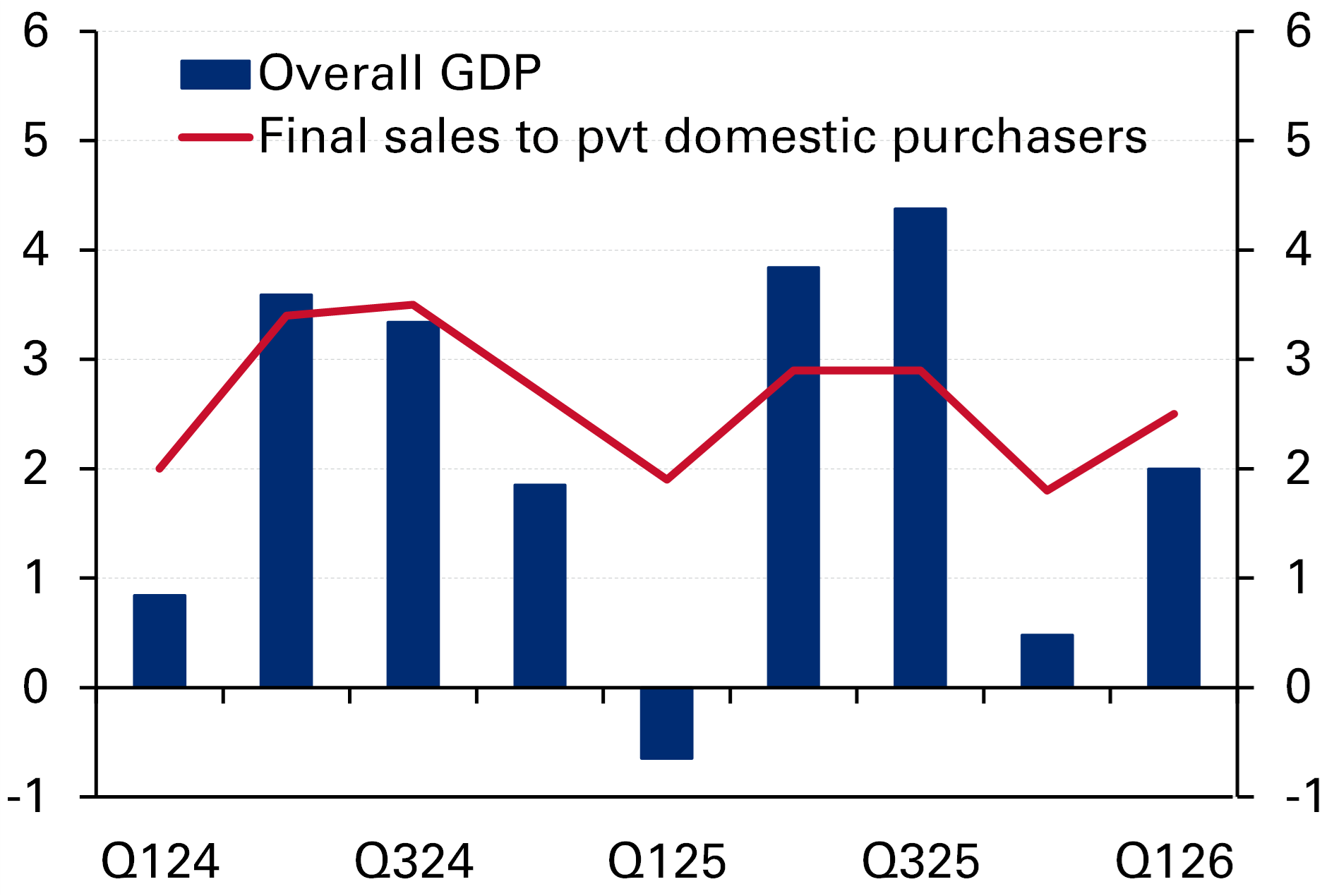
US: Underlying GDP growth robust in Q1 but price pressures intensify sharply. The US economy in Q1 grew by a less-than-expected 2% (annualized), rebounding from the government shutdown impacted growth of 0.5% in Q4 but below the consensus forecast of a 2.3% rise. However, the underlying economy was still robust as the measure of domestic demand, final sales to private domestic purchasers rose by 2.5%, accelerating from 1.8% in Q4. It was mainly helped by ongoing spending on AI as business equipment expenditure increased by a solid 10.4%, the fastest pace since Q2 2023. Resilient household spending and sustained AI-related outlays as signaled by major US corporations should help the economy stay strong. However, a sharp spike in energy prices and supply chain disruptions given the Middle East war have raised uncertainty. Indeed, underscoring intensifying price pressures, April’s ISM manufacturing survey showed the input price gauge jumping to the highest level in four years at 84.6 (78.3 in March) versus just 59 at the beginning of the year. Though the overall manufacturing PMI was steady at 52.7, helped by expansion in new orders, employment shrank at an accelerated rate of 46.4 versus 48.7 in March. Meanwhile, PCE inflation in March rose to a nearly three-year high of 3.5% y/y from 2.8% in February, while the core rate also hit the highest level since November 2023 at 3.2% from 3%, showing the impact of surging gasoline and other energy prices. Finally, President Trump announced that the US would raise tariffs on auto imports from the EU to 25% from 15% starting next week, citing the bloc’s non-compliance with the terms of the bilateral trade deal signed last year. It is unclear under which authority Trump will use to raise the tariffs given the prior Supreme Court decision. The EU is currently in the process of finalizing that deal. No further details were provided, but the move came amid Trump’s growing frustration with the response of many large European countries including Germany, France, Spain and Italy, on the Middle East war and these countries’ unwillingness to support the US military operations.
Eurozone: ECB holds rates with growth weak in early 2026 while inflation pressures firmed. Preliminary data showed euro area flash GDP expanding a less-than-expected 0.1% q/q in Q1 (0.2% q/q in Q4), highlighting fragile growth as tighter financing conditions, softening consumption momentum, and weak investment continued to weigh on activity. Momentum remains uneven across countries and sectors, with services holding up better than manufacturing, but overall growth dynamics remain subdued. Meanwhile, headline inflation rose to a higher-than-expected 3.0% y/y in April (2.6% in March), driven largely by higher energy prices (+11% y/y), while core inflation eased to a lower-than-expected 2.2% y/y (from 2.3% in March), suggesting that underlying price pressures are yet to feel the impact of much higher energy prices. Against this backdrop, and in line with expectations, the ECB kept policy rates unchanged on Thursday. President Lagarde mentioned that “we made an informed decision on the basis of yet insufficient information,” adding that “we debated the decision that we have unanimously taken today, but we also debated at length, and in depth, a decision to possibly hike”, with markets currently expecting the ECB to hike in June.
UK: BoE keeps the bank rate steady seeing uncertain energy price impact, but several MPC members lean towards tightening ahead. The Bank of England, as expected, left the bank rate unchanged at 3.75% in an 8-1 vote, with Chief Economist Huw Pill alone voting for a 25bps hike. The MPC cited uncertain global energy price prospects with risks of “material second-round effects in price and wage-setting,” but noted that “monetary policy cannot influence energy prices.” The MPC also highlighted that the continued soft labor market and a weakening economy along with tightened financial conditions could help contain inflationary pressures. Besides Pill, four other MPC members, despite voting for no change in the policy rates, leaned towards supporting rate hikes in the coming months on seeing greater risks of higher inflation. Governor Bailey stated that the call for maintaining rates is in a “reasonable place” for now given the uncertainty surrounding the impact of the Middle East war. Instead of publishing its central case inflation projections, the bank provided three scenarios, A, B, and C, expecting inflation to continue rising at least until Q4 in all scenarios, while seeing CPI inflation hitting 3.3% in Q3 (+1.4% points higher than the forecast made in February before the war began). Most MPC members, including Bailey, placed their present assessment closer to Scenario B, which assumes oil prices to peak at around current levels but remain elevated for longer with modest second-round effects and CPI inflation reaching 3.7% in Q4. GDP growth in 2026 is seen at 0.7-0.8% and between 0.8-1% in 2027 under various scenarios. The UK bond market rose following a relatively less hawkish message from the MPC as bond yields dropped across the curve, with 10Y gilt yields falling by around 5 bps on Thursday. The future markets currently signal two to three 25bps bank rate hikes by the end of 2026.
Japan: Tokyo inflation edges up; authorities intervene to support the Yen. Tokyo’s CPI inflation ticked up to 1.5% y/y in April after recording a nearly four-year low of 1.4% in March. Meanwhile, core inflation (excluding fresh food) fell to 1.5%, lower than the previous month’s 1.7% print and consensus estimates of 1.8% y/y. This reading marks the fourth consecutive month where prices remained below the Bank of Japan’s 2% target as government subsidies caused electricity prices to fall 8% y/y in April and continued to counter the effects of rising oil prices. The Tokyo data release comes after the BoJ released its quarterly outlook report, where it forecasted core CPI rising to 2.8% in FY2026 (ending in March 2027), driven by higher import costs and a weaker yen, which are expected to compress corporate profits and real household incomes. The weak yen has been a source of stress on the Japanese economy, causing the BoJ and Ministry of Finance to intervene in currency markets on Thursday after the yen weakened to 160/$. Media reports indicated that Japan spent around ¥5.4 trillion ($34.5 billion) defending the currency.
China: Beijing pushes back against U.S. sanctions targeting Chinese domestic oil refiners. Chinese authorities have instructed firms and financial institutions not to comply with recent US sanctions on five Chinese refining companies accused of purchasing Iranian crude, formally rejecting the measures as unlawful and lacking a basis in international law. The move, led by the Ministry of Commerce, effectively provides domestic legal cover to refiners such as Hengli Petrochemical alongside several smaller, privately owned refineries, which Washington says helped channel revenues to Tehran. That said, Beijing’s response marks one of its clearest challenges yet to unilateral US sanctions and comes amid heightened geopolitical tensions and ahead of planned high-level US–China talks in May.
Oil: Prices score a second weekly gain amid US-Iran stalemate. Brent futures for July delivery settled at $108.2/bbl on Friday, up 2.7% w/w but down 2% on the day, after reports late in the session indicated that Iran had sent a revised proposal to the US, prompting some profit taking. Earlier today, Iran’s official news agency revealed that Tehran had formally submitted a separate 14 point proposal, outlining a set of conditions that reportedly included resolving outstanding issues within 30 days, guarantees against future military action, the lifting of the naval blockade, and the release of frozen Iranian assets. President Trump stated that he would review the submission but expressed doubts about its prospects, highlighting persistent differences between the two sides. Attention now shifts to OPEC 7, which meets today to set output policy for June. The group is widely expected to approve another headline increase of around 188 kb/d (reflecting a 206 kb/d adjustment less the UAE’s 18 kb/d offset). As with previous decisions, however, the increase will be largely notional, with limited near-term impact on physical supply given ongoing shipping disruptions in the Strait of Hormuz.
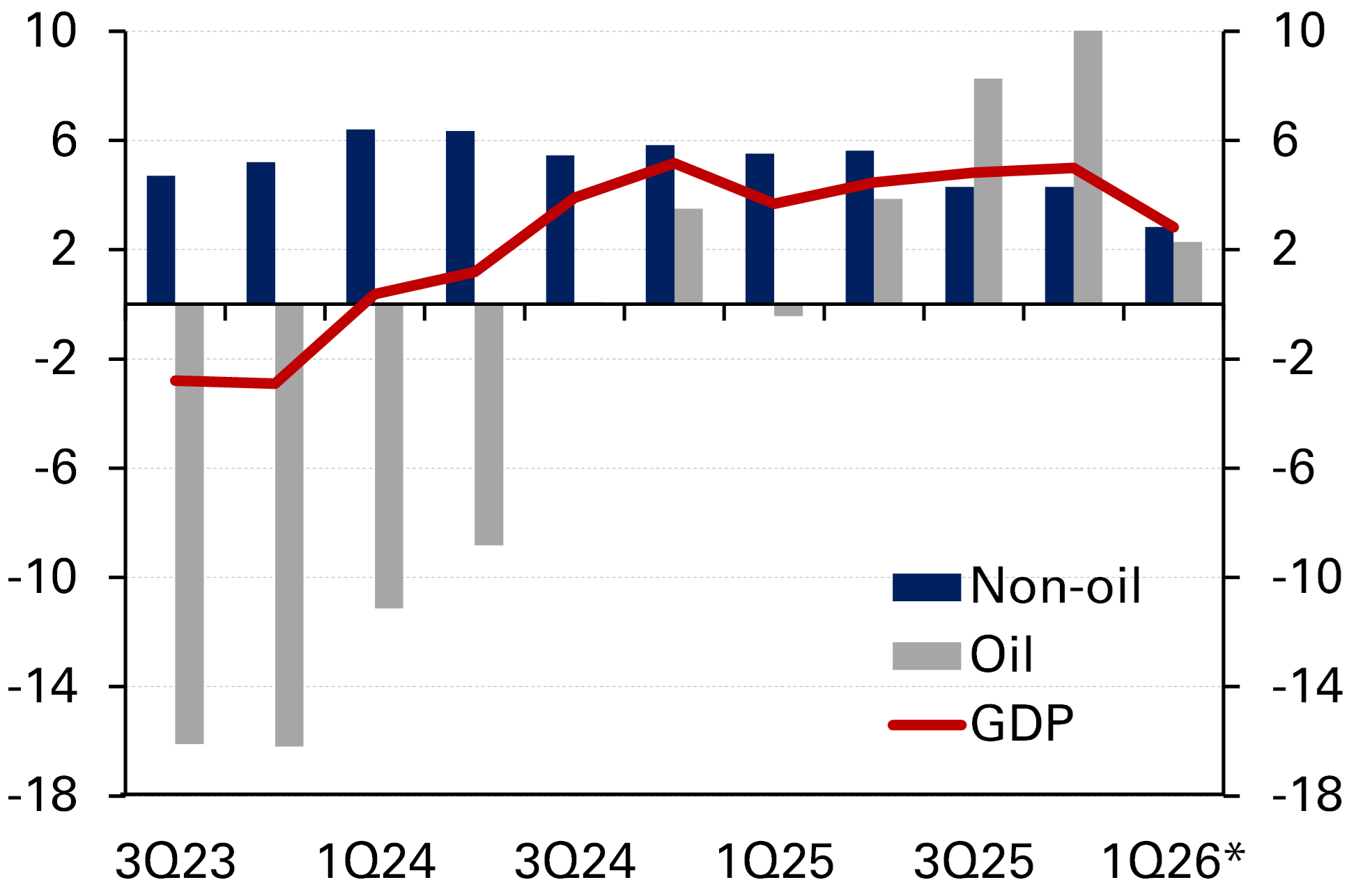
Saudi Arabia: Economic growth slows in Q1 2026 amid regional tensions. The economy continued to expand in Q1 2026, though at a notably slower pace as regional geopolitical tensions weighed on overall activity. According to flash estimates from GASTAT, real GDP grew by 2.8% y/y in Q1 2026, the slowest pace of expansion in seven quarters. This compares with 5.0% growth in Q4 2025 and 3.7% in Q1 2025. On a quarterly basis, GDP contracted by 1.5% q/q, largely due to weaker oil sector performance. Oil activities grew by just 2.3% y/y, dropping sharply from 10.8% in the previous quarter, while contracting 7.2% q/q. The moderation reflects disruptions to regional energy flows and shipping constraints linked to the recent US-Iran escalation, which reduced the sector’s contribution to overall growth to just 0.7 percentage points. Meanwhile, non-oil activities were the main growth driver, expanding by 2.8% y/y and contributing 1.7 percentage points to headline GDP growth. However, this also marked a slowdown from the 4.3% growth recorded in Q4 2025, suggesting that regional uncertainty is beginning to weigh on broader economic momentum. Despite the softer reading, the data points to continued resilience in the Saudi economy. The Kingdom’s ability to sustain positive growth, supported by policy flexibility and diversified export routes, highlights its capacity to absorb external shocks even as regional tensions continue to pressure activity.
Egypt: Higher energy bill as government allocates $10.7 billion for gas imports in FY26/27. The government has allocated around $10.7 billion to secure Egypt’s natural gas and LNG needs in FY26/27, reflecting rising demand and elevated global energy prices. The planned import bill represents an increase of roughly $2.2 billion compared to the current fiscal year, which is estimated at $8.5 billion, marking a 26% y/y rise. The increase is driven by higher international prices, with LNG cargo costs rising from around $40 million to nearly $60 million per shipment. Gas imports will be sourced through a diversified mix, including pipeline supplies from Eastern Mediterranean fields such as Leviathan gas field and Tamar gas field, where pricing is linked to global oil and gas benchmarks. Under the FY26/27 plan, Egypt aims to import approximately 18.7 million tons of gas to meet domestic demand, which is projected to average around 7 billion cubic feet per day. Overall, the higher allocation underscores the growing pressure on the energy bill, as Egypt works to balance rising consumption needs with volatile global energy markets.