
 +965 2292 4888


Daily Economic Update
06.05.2026
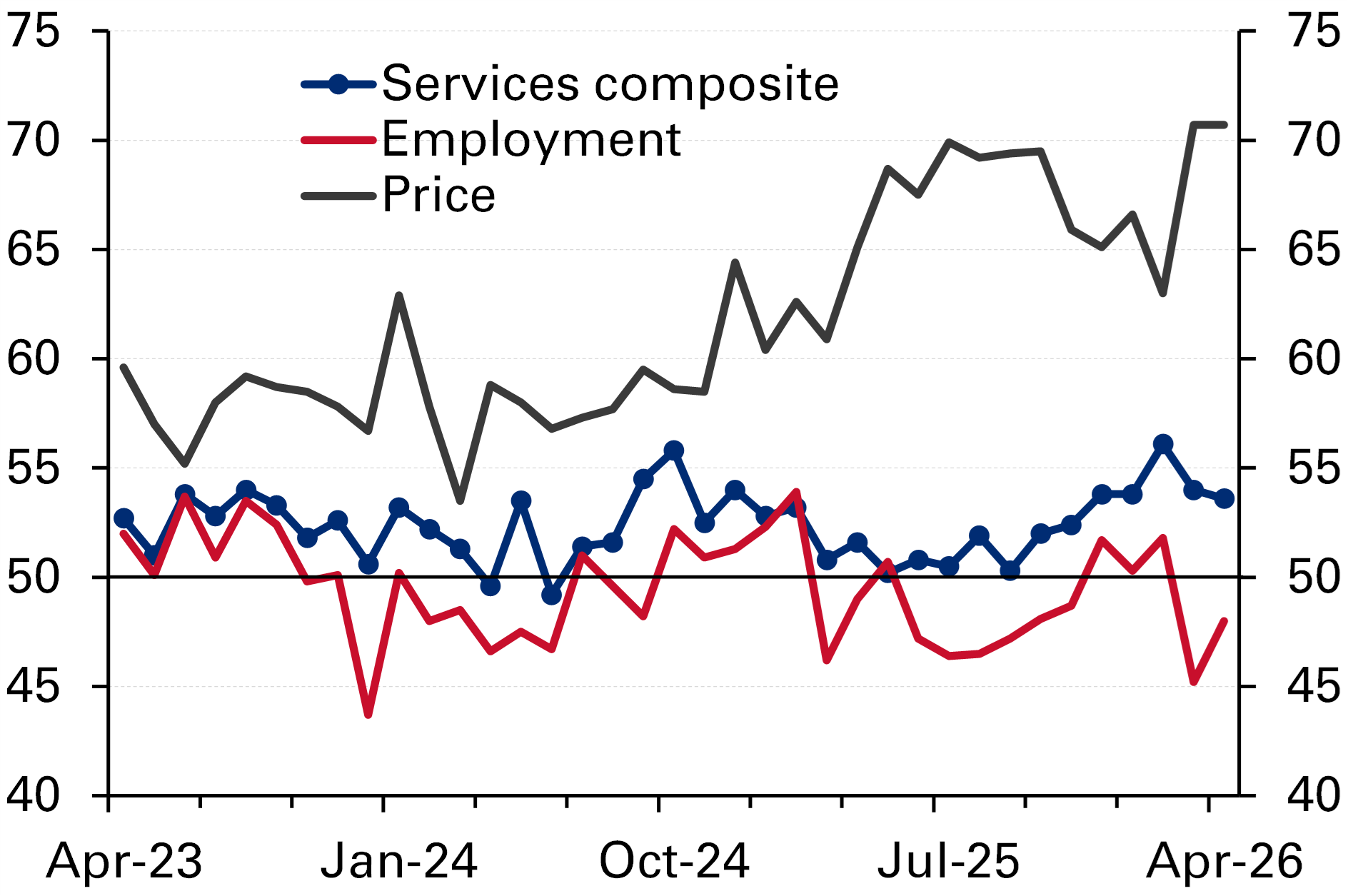
US: JOLTS hiring rate increased to the highest in nearly two years in March, as the April ISM services indicated sharp price pressures. Job openings in March ticked down very slightly to 6.87 million from 6.92 million in February, as the broader trend remains modestly downward. Other indicators in March’s JOLTS report were mixed, with the hiring rate increasing from 3.1% to 3.5%, the highest level since May 2024, but the layoff rate (at 1.2%) also ticked up to a five-month high. The quits rate edged up from 1.9% in February to 2% in March, but in line with the rates seen in December and January. Overall, the job market continues to show signs of stabilization after recording a sharp deterioration in hiring activity in 2025. As a reminder, April’s non-farm payroll data will be released on Friday, and the consensus forecast is for a relatively resilient 60K rise in jobs, though slowing from March’s outsized 178K increase. Meanwhile, the ISM services PMI retreated to 53.6 in April from March’s 54 on a sharp slowdown in new orders expansion (at 53.5 versus 60.6 in March) while employment shrank further, albeit at a softer pace (48 versus 45.2). The gauge of input prices was unchanged from March at 70.7, the highest reading since October 2022, highlighting the effect of the energy price spike and ongoing shipping disruptions given the Middle East war. The previously reported ISM equivalent price gauge for manufacturing has also climbed to a four-year high, underscoring that input price pressures are broadening, which may keep consumer price inflation elevated over the coming months.
Oil: Prices ease as US signals deescalation and ceasefire talk progress. Brent futures sold off sharply on Tuesday, falling 4% d/d to settle at $109.9/bbl, losses which then extended into Asian trading this morning with prices down a further 2%, as the ceasefire continued to hold and near-term escalation risks eased. The pullback was driven by more constructive rhetoric from the US administration, which lifted expectations that a diplomatic resolution may be nearing and reduced the perceived likelihood of a return to open hostilities. US State Secretary Marco Rubio stated that Washington is “done with” Operation Epic Fury for now, reinforcing the view that the US is seeking to deescalate militarily and prioritize negotiations. This sentiment was further underlined by US President Trump’s surprise announcement of a pause on “Project Freedom”, the US initiative aimed at securing maritime passage for commercial vessels through the Strait of Hormuz, and his talk of “Great Progress” towards a “Complete and Final Agreement with Representatives of Iran”. The President did not provide any details, though. His words were widely interpreted by the market as an effort to avoid undermining the diplomatic track, even as shipping conditions remain constrained.
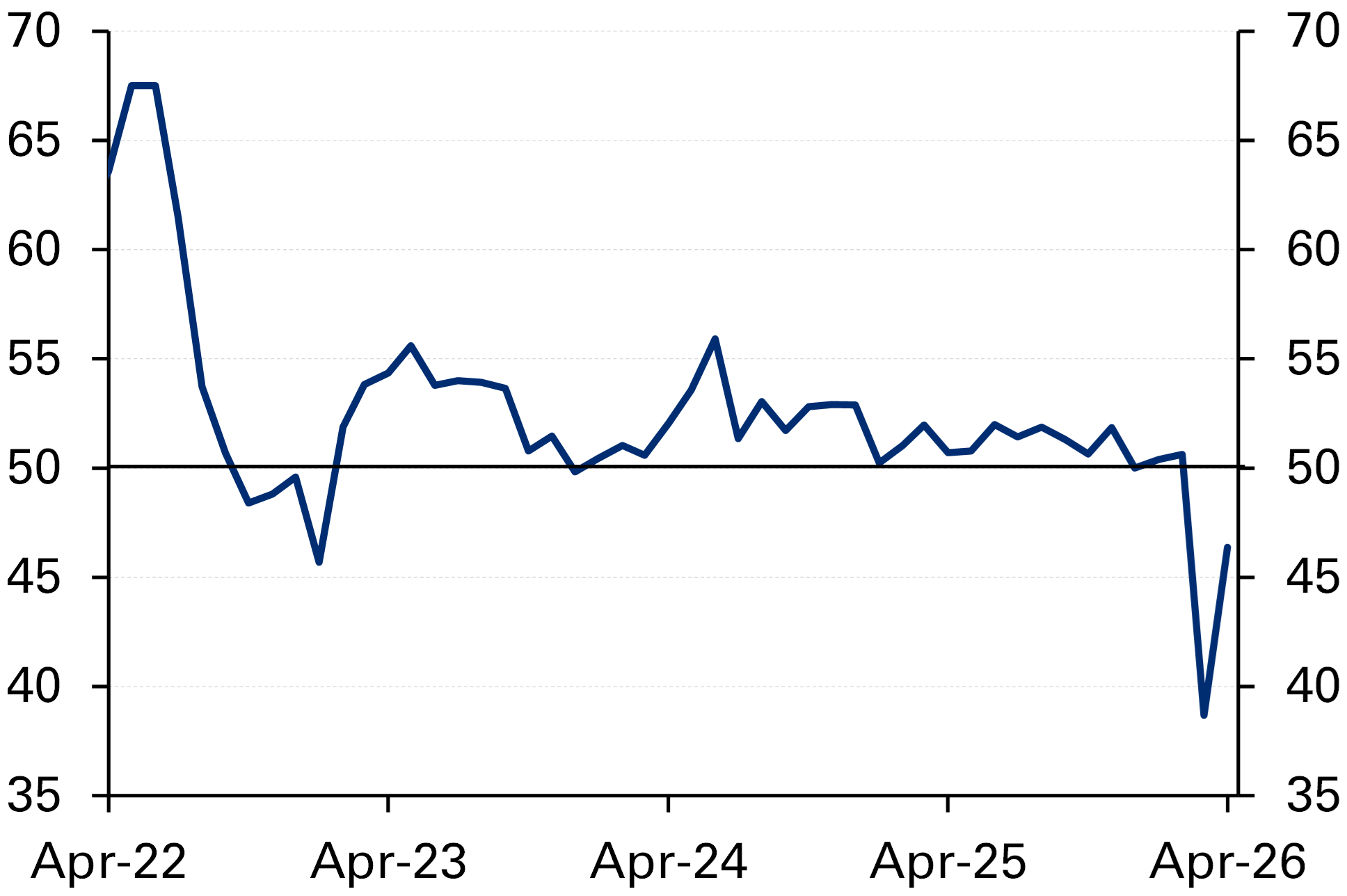
Qatar: PMI rebounds in April but continues to signal non-oil sector weakness. The non-energy private sector activity gauge rebounded to 46.4 in April, a marked improvement from March’s 38.7, suggesting that the extent of the March slump reflected a temporary shock. Nevertheless, the headline reading continues to indicate ongoing weakness in business conditions. Both output and new orders extended their contraction to a fifth consecutive month, albeit at a slower pace, as firms reported subdued demand conditions alongside staffing shortages. To address labor imbalances, companies continued to increase hiring, though the pace of job creation slowed to its weakest since August 2024. The easing business conditions were insufficient to alleviate cost pressures: wage inflation accelerated, and purchase prices strengthened notably as maritime import disruptions persisted, pushing input cost inflation to a seventeen-month high. Firms passed on the higher costs to their consumers, with selling prices rising for the third consecutive month. Sentiment, though ticking up compared to March amid ongoing ceasefire negotiations, the gradual return of expatriate workers, and early signs of activity normalization, remained downbeat. While PMI readings remain in contraction territory for now, the combination of normalizing economic activity, government support measures, and potential conflict resolution points to a possible recovery. That said, elevated uncertainty and lingering supply chain-driven inflation pressures could continue to weigh on the growth trajectory.
Saudi Arabia: Budget deficit widens to its highest level since 2018. The fiscal deficit widened sharply in Q1 2026, reflecting rising spending pressures as the Kingdom continues to fund large-scale economic diversification projects. According to the Ministry of Finance, the budget recorded a deficit of SAR125.7 billion ($33.5 billion) in Q1, the largest quarterly shortfall since 2018. This compares with SAR95 billion in Q4 2025 and is more than double the deficit recorded in the same period last year of SAR58.7 billion. The deterioration was driven by a combination of weaker oil revenues and higher public spending. Oil revenues declined by 3% y/y during the quarter, while total government expenditure rose by 20% y/y to SAR387 billion ($103 billion), reflecting continued investment in Vision 2030-related projects and infrastructure development. The figures come alongside recently released GDP flash data, which showed the Saudi economy growing by 2.8% y/y in Q1, its slowest since mid-2024. Together, data point to mounting economic pressures as regional tensions and softer oil sector momentum weigh on fiscal and growth performance. The financial impact of the Iran conflict, which began in late February and is now in its third month under a fragile ceasefire, is expected to become more visible in second-quarter data. Saudi Arabia has been running fiscal deficits since late 2022, leading the government to rely more heavily on debt markets and alternative financing channels. In this context, the National Debt Management Center recently announced that it had already secured around 90% of its 2026 borrowing requirements before the conflict began, underscoring the Kingdom’s proactive approach to funding its fiscal needs. Overall, the latest figures highlight the cost of maintaining Saudi Arabia’s ambitious investment agenda, while also reflecting the flexibility of its financing strategy in navigating a more challenging external environment.
Egypt: Government targets $44 billion in FDIs and PPPs for FY26/27. As part of its strategy to accelerate growth and deepen private sector participation in the economy, the government plans to achieve this through a combination of public-private partnerships, expanded investment opportunities, and continued progress on the state privatization program. Investment flows are expected to focus primarily on energy, real estate, and heavy industry, with the oil and gas sector remaining a key destination for capital following recent progress in settling outstanding dues to international energy companies. Around 14% of the total target, or $6.2 billion, is expected to come from investments in the petroleum sector, aimed at financing new well development and boosting domestic production capacity. This comes after the government significantly reduced outstanding arrears owed to foreign energy firms, cutting the total from $6.1 billion in July 2024 to just $714 million by April 2026, with a clear objective of fully clearing the balance by the end of June. Beyond hydrocarbons, Egypt is also preparing to launch new projects in renewable energy, water desalination, and waste recycling, broadening the investment pipeline and reinforcing its push toward a more diversified investment base. Overall, clearing arrears and expanding investment opportunities are helping rebuild investor confidence and strengthen Egypt’s appeal as a regional investment destination.