
 +965 2292 4888


Daily Economic Update
11.02.2026
US: Retail sales unexpectedly stagnate m/m in December but strong on an annual basis. Retail sales in December stalled after posting a solid 0.6% m/m rise in November, showing consumer pullback across many categories. A narrow measure of sales (excluding food services, auto, gasoline stores and building material) fell for the first time in three months, by 0.1% m/m after a downwardly revised increase of 0.2% in November and versus the consensus forecast of a 0.4% gain. However, annual growth in non-seasonally adjusted retail sales accelerated to 3.8% in December from 1.9% in November, signaling some seasonally adjustment factors could be at play here, which is common for the month of December. Consumer spending has generally remained robust in recent months, driving resilient economic growth, and therefore, it is difficult to read too much into one month of weak data on a m/m basis. Moreover, retail sales prints for January are unlikely to be clean given frigid weather conditions during the later part of the month that significantly impacted business activities across several US states. Meanwhile, the rise in the employment cost index (a key measure that the Fed monitors) eased to 0.7% q/q in Q4 from 0.8% in Q3, the slowest advance since Q2 2021, indicating wage-linked inflationary pressures continue to abate, boding well for services inflation. Separately, two FOMC voting members saw the current monetary stance being appropriate and advocated to keep the policy interest rate on hold for now. Cleveland Fed President Beth Hammack highlighted that “as we assess the impact of recent rate reductions and monitor how the economy performs,” the Fed “could be on hold for quite some time.” She expressed that fiscal boost and previous policy rate cuts should help support the job market. While Dallas Fed President Lorie Logan stated, “our current policy stance is appropriate and no further rate cuts are needed.” However, she emphasized that a case for cutting rates could become appropriate if inflation slowed along with further material cooling in the labor market. The futures market currently signals cumulative 50-75 bps of rate cuts by the end of 2026.
China: CPI inflation eases to 0.2% y/y in January. Consumer price inflation eased to 0.2% y/y in January, down from a near three-year high of 0.8% y/y in December, marking the lowest reading since October and falling short of the 0.4% consensus forecast. The softer print was impacted by the timing of the Chinese New Year as well as a sharp drop in energy prices. Food prices declined for the first time in three months (–0.7% y/y, compared with +1.1% y/y in December), reinforcing the downward pressure on overall inflation. Core inflation, which excludes food and energy, eased to 0.8% y/y in January, from a steady 1.2% y/y in the previous three months, signaling a modest cooling in underlying price dynamics. Meanwhile, the PPI fell by 1.4% y/y, extending the deflation streak to 40 consecutive months. Although still negative, the decline was slightly smaller than expected and the mildest since mid-2024, suggesting that the worst of the PPI deflation cycle could be behind us.
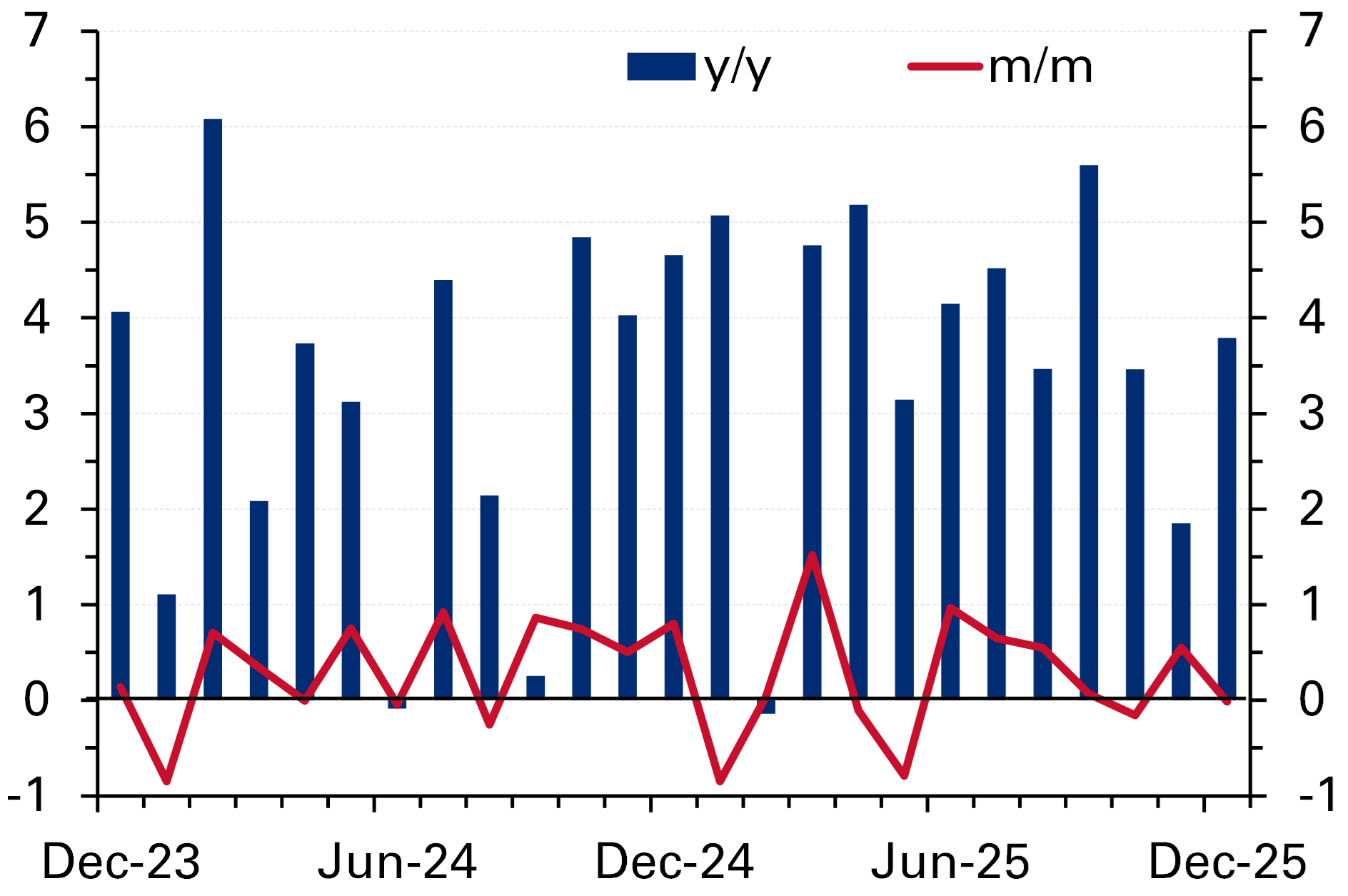
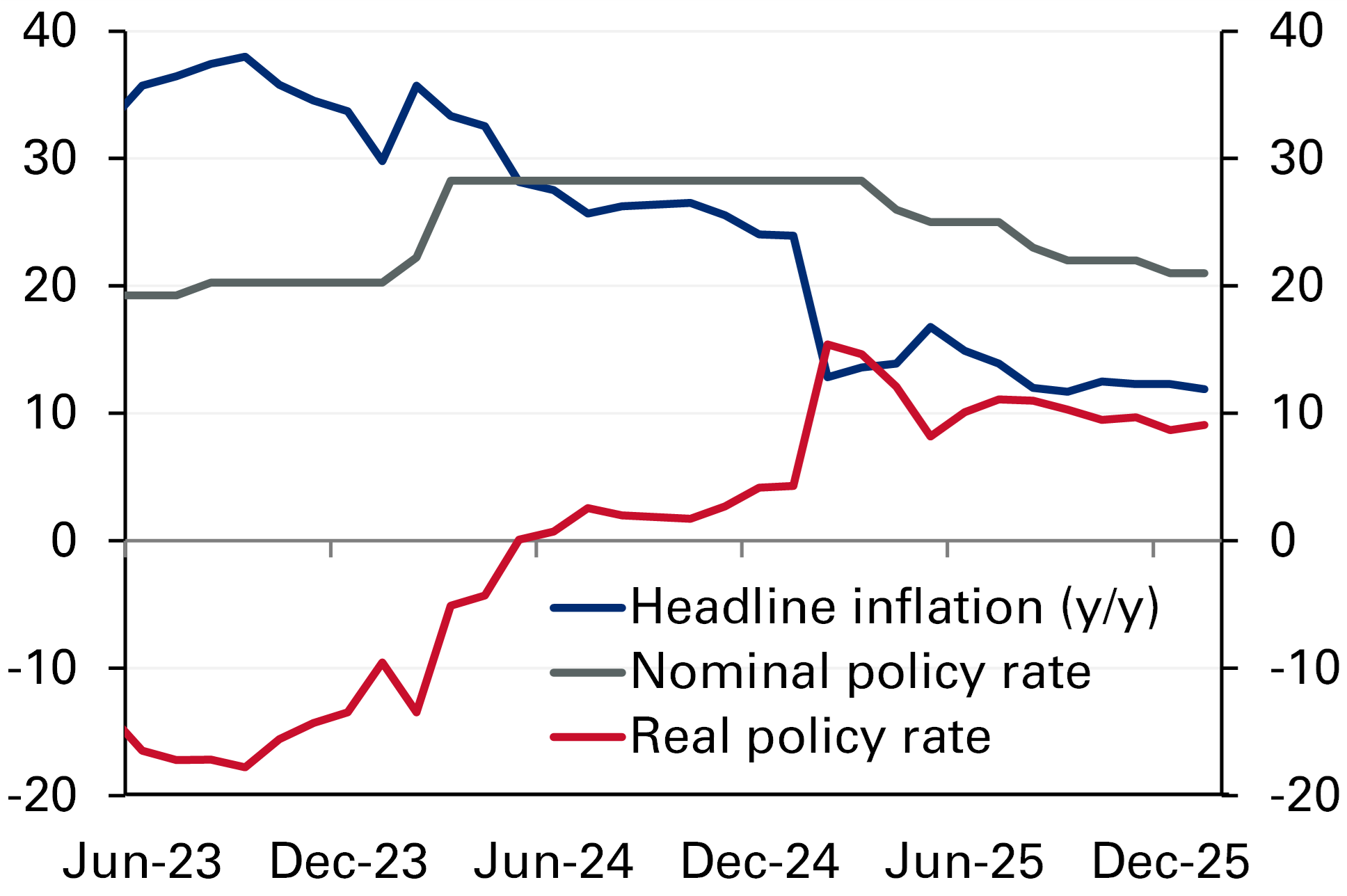
Egypt: Inflation cools further in January, keeping the door open for another rate cut. Consumer price inflation continued to decelerate in January, reinforcing expectations of another cautious policy rate cut at tomorrow’s monetary policy committee (MPC) meeting. Headline inflation eased to 11.9% y/y in January, down from 12.3% in December, despite a 1.2% m/m increase in prices, according to the Central Bank of Egypt (CBE). Core inflation slowed more sharply to 11.2% y/y, from 11.8% previously, also recording a 1.2% m/m rise. The identical monthly increases in headline and core inflation suggest that price movements in the volatile and regulated items largely offset each other. The annual slowdown was mainly driven by favorable base effects, which are expected to remain supportive through May. On a monthly basis, food prices were the main driver, rising 2.3% m/m in January after declining in December, reflecting higher meat and vegetable prices. In contrast, transportation, housing, and utilities inflation eased, signaling that the pass-through from the October fuel price hike is gradually fading, in line with our earlier expectations. Inflation is now close to the levels seen in September 2025, which had been the lowest in nearly four years before the fuel adjustment in October, indicating that the direct impact of the hike has largely been absorbed. Looking ahead, inflation risks appear contained. The cabinet’s decision to freeze electricity tariffs until the end of the fiscal year in June removes a key upside risk in the near term. The main potential pressure point is the seasonal impact of the month of Ramadan, which typically brings higher import demand and temporary price pressures. Overall, a real interest rate buffer of around 9%, decelerating inflation, improving FX liquidity in the banking sector, and easing global commodity prices provide the CBE with sufficient room to continue its easing cycle. Our call for a cautious 100bps rate cut at tomorrow’s MPC meeting remains intact.
Kuwait: MEW mulls regulatory and tariff reforms. The Ministry of Electricity and Water (MEW) reaffirmed plans to implement fiscal and structural reforms to enhance the sustainability of water and electricity provision in the country, with hopes for implementation by the end of the year. The reforms include a comprehensive review of the heavily subsidized water and electricity tariffs, which are the lowest in the GCC, encouraging more responsible consumption and contributing to a broader government effort towards gradual fiscal consolidation. The ministry is also considering an extensive overhaul of the regulatory framework, aiming for improvements in governance and efficiency. Meanwhile, MEW is striving to step-up the offering of utilities projects via the public-private partnership (PPP) framework after the signing of the North Zour IWPP phases 2 and 3 last week, with three projects currently in the bidding stage, and three additional planned projects for 2026. Other prospective measures include the drafting of a new law allowing households to sell excess electricity, which alongside the new infrastructure, would help to boost local supply and ease the current dependence on the GCCIA electric grid, noting that Kuwait has been importing power since April 2025 to address ongoing power shortages.
Saudi Arabia: Industrial output expands, though momentum moderates. Saudi Arabia’s industrial production rose by 8.9% y/y in December 2025, easing from a three-year high of 10.4% in November. Despite the late-year moderation, average industrial production growth for 2025 reached around 5.3%, marking a strong recovery from the 2.1% contraction recorded in 2024. In December, oil-related activities continued to drive overall performance, although growth slowed to 10.1% y/y from 12.9% in the previous month. Within the sector, crude petroleum and natural gas extraction accelerated to 13.2% y/y, up from 12.6%, while the production of coke and refined petroleum products declined by 3.6% after a strong 14.5% expansion in November. Non-oil industrial activities gained further traction, expanding by 5.8% y/y compared to 4.4% in November. However, manufacturing growth eased to 3.2% from 8.1%, and water supply, sewerage, waste management, and remediation activities also moderated slightly. Meanwhile, the contraction in electricity, gas, steam, and air-conditioning supply narrowed to 2.5% from 4.3%, providing a partial offset. On a monthly basis, industrial production edged down by 0.1% in December, a notable improvement from the revised 1.3% decline recorded in November. Overall, the data point to continued expansion in the industrial sector, supported by oil extraction and improving non-oil activity, although the pace of growth is gradually normalizing from recent highs.