
 +965 2292 4888


Daily Economic Update
18.06.2026
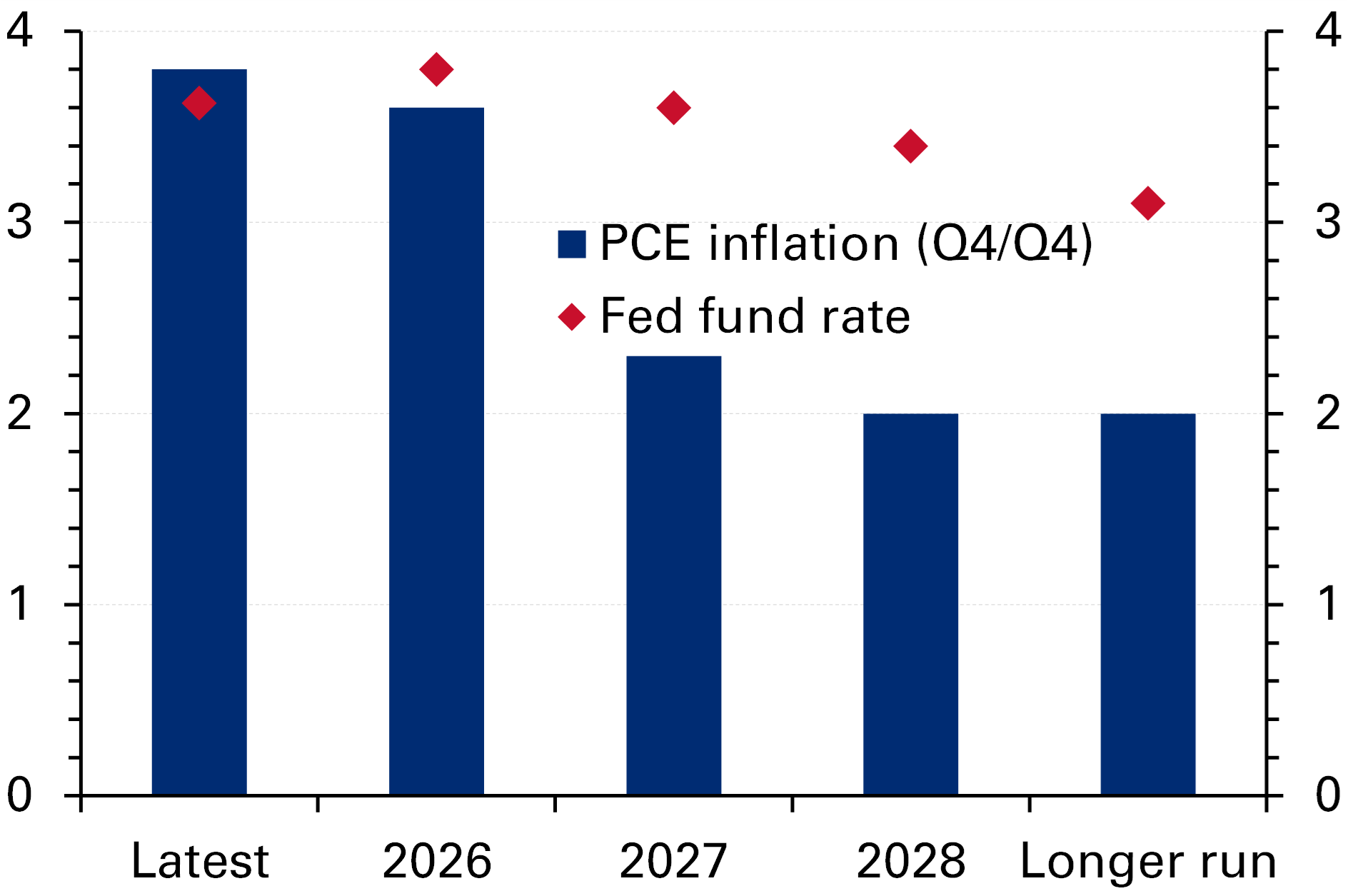
US: Fed maintains interest rates with FOMC turning hawkish, and Chair Warsh putting an end to forward guidance. The FOMC, as widely expected, left the Fed Fund target rate unchanged in the 3.5-3.75% range in a unanimous vote, and reaffirmed maintaining ample reserves in the banking system. The FOMC statement, much shorter than previous ones under former Chair Powell, noted economic activity expanding at a solid pace, productivity growth and capital investment strong, job gains keeping pace with the workforce and the unemployment rate little-changed. In another stark departure from convention, the statement dropped the reference to forward guidance and simply stated that “the committee will deliver price stability”. The dot-plot, which Warsh did not contribute to, indicated that six members, out of a total of 18 contributors, saw at least two 25-bps interest rate hikes and three others one hike, while eight saw no change and one saw a 25-bps cut in 2026, with the median dot signaling one 25-bps rate hike as opposed to one cut envisaged in March. A key question is how long President Trump is willing to give Warsh before the attacks on the Fed resume. For 2027 and 2028, the median projection indicated one 25-bps rate cut each, with no change in the longer run policy rates at 3.1%. The GDP growth forecast was revised down to 2.2% in 2026 (versus 2.4% seen in March) but was kept the same for 2027 at 2.3%. However, PCE inflation projections were lifted sharply to 3.6% y/y for 2026 (up from 2.7% previously) and 2.3% for 2027 (from 2.2%), with the core rate seen at 3.3% for 2026 (from 2.7%) and 2.5% for 2027 (from 2.2%). Interestingly, the projections didn’t see any softening in core PCE inflation this year from the latest reading of 3.3% y/y in April. Kevin Warsh reaffirmed the committee’s 2% inflation goal and emphasized delivering price stability but deliberately avoided giving any forward guidance. Keeping his previous views of a regime change, he mentioned creating five task forces to look into the Fed’s communications practices, its balance sheet, use of data sources, productivity and jobs dynamics, and the inflation framework, and expected recommendations to be delivered by the end of the year. Without prejudging any upcoming changes, he kept the options open, awaiting the recommendations of the task forces before undertaking any radical decisions to upend the Fed’s existing frameworks and policy communications. Warsh dodged many questions by saying that there is a task force on that. We note that the absence of forward guidance and the pull-back in communication by the Fed Chair risks injecting volatility in financial markets. Warsh noted that the transmission of the current monetary policy stance is having uneven restrictiveness on the economy, with mainly the housing market seeing a restrictive stance, but noted other areas, including the financial markets, were not having the same impact. Though Warsh didn’t provide specific views on the current inflation path or any implied policy direction, the markets interpreted the FOMC’s stance, including projections from the other 18 FOMC members, as being on the hawkish side, with yields on USTs rising across the curve, especially a sharp increase in the important 2-year yield, with the S&P 500 tanking 1.2%. The futures market also lifted interest rate hike bets, seeing an over 80% probability of at least one rate hike by the end of 2026.
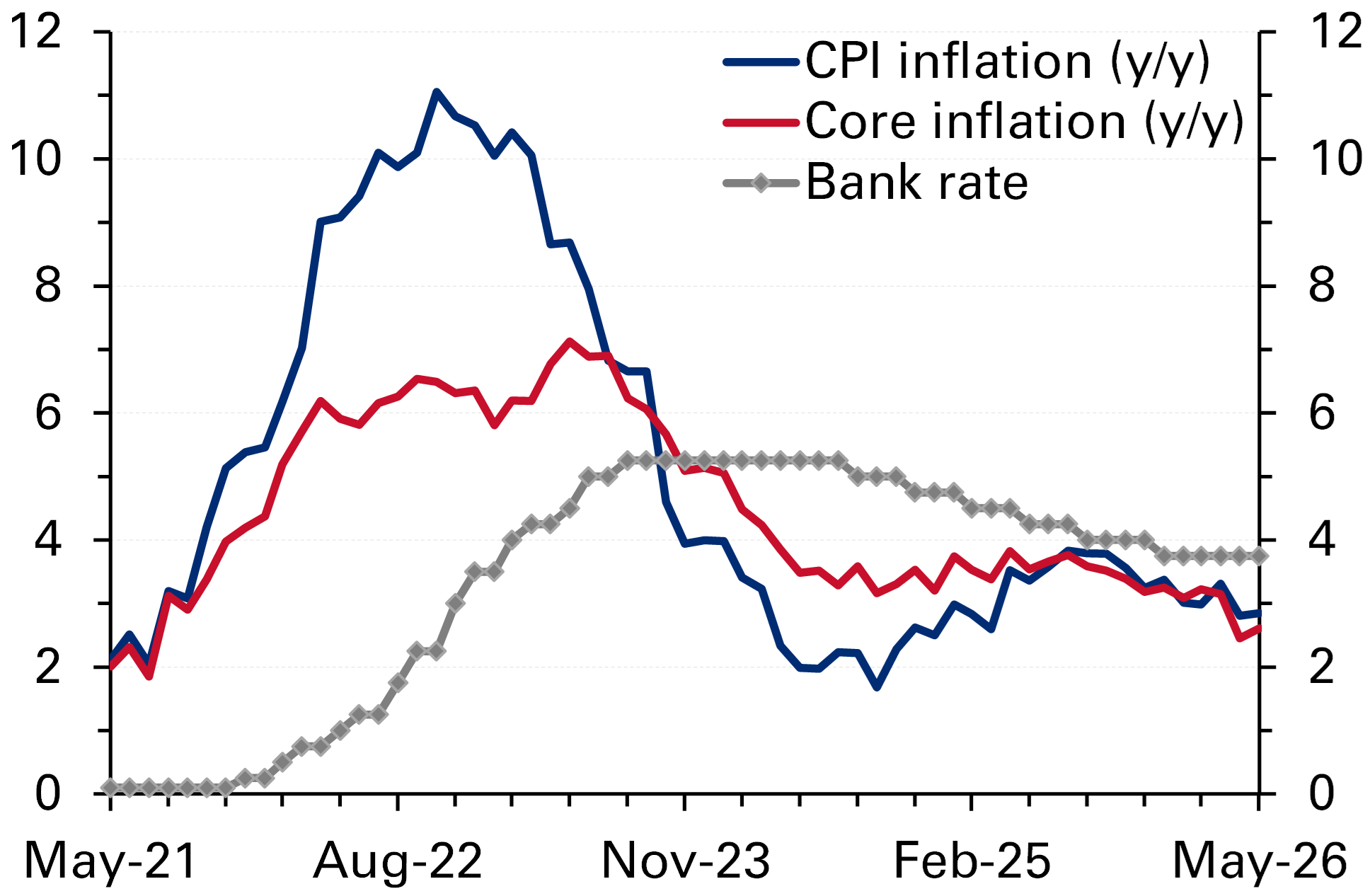
UK: May inflation comes in lower than expected, may drive a cautious BoE interest rate hike stance. CPI inflation in May was steady at 2.8% y/y (+3% forecast), while the core rate rose to a lower-than-expected 2.6% y/y (+2.5% in April). The main disinflationary impulse came from easing food inflation (to 2.2% y/y from 3% in April, the lowest level since December 2024) that helped offset the sharp jump in transportation prices (to 6.8% from 4.5%), including airfares and motor fuels. The ONS explained that a 10.3% m/m surge in airfares in May was mainly contributed by a shift in the Easter holiday timing, which had previously driven a 5% m/m decline in airfares in April. Headline CPI inflation will likely remain elevated over the summer given an upcoming 13.5% increase in the household energy price cap, due to take effect from July and last through September. The BoE MPC, which is set to keep the bank rate unchanged at 3.75% later today, may take comfort from the smaller-than-feared impact of current elevated oil prices and the limited spill-over to core prices so far and adopt an extended wait-and-watch stance before possibly pivoting to a more restrictive policy. The futures market also pared the probability of a 25-bps rate hike by the end of 2026 to over 70%, after previously seeing almost four 25-bps increases at one point during the Middle East war.
Oil: IEA forecasts oil sizeable surplus in 2027 on Hormuz flow normalization; US-Iran MOU signed off one day early. The International Energy Agency (IEA), in its closely watched Oil Market Report for June, sees the energy crisis in the Gulf causing global oil demand to contract by a sizeable 1.1 mb/d in 2026, a downgrade of a not-insignificant 700 kb/d from its last report in May. This would be the first instance of oil demand ‘destruction’ at the annual average level since the Covid-19 pandemic in 2020, amid higher fuel prices and limited oil product deliveries due to the blockage at the Strait of Hormuz. The IEA acknowledged that crude imports into Japan and China especially fell by around 40% (-6 mb/d in total) in recent weeks, which has exerted a significant restraining effect on oil price rises. However, in its first forecast for 2027, the agency sees oil consumption increasing by 2 mb/d on average to 105.3 mb/d on the back of “normalization of trade flows, lower oil prices and an improving economic outlook”. Indeed, the agency forecasts oil market balances to tip back into a significant surplus next year, with pent-up oil supplies—constrained by closure of the Strait of Hormuz in 2026—surging by about 8 mb/d to 110 mb/d. For now, though, and assuming the Iran-US MOU leads to the opening of the Strait, the IEA sees only a gradual recovery in oil flows. Average oil supply for the year is anticipated to decline by a 3.9 mb/d to 102.4 mb/d. Nevertheless, the recovery in flows should in 2027 help to replenish global inventories drastically drawn down to near historic lows over the last few months—by 4.6 mb/d in May and about 3.8 mb/d on average since the conflict erupted. Meanwhile, oil prices have continued to decline this morning with Brent at $77.6/bbl (-2.5% on yesterday’s close) following confirmation that the US-Iran MOU had been signed by the presidents of both countries – one day earlier than had initially been touted.
Kuwait: Ministry of Finance confirms upcoming excise tax. The ministry of finance confirmed its readiness to implement an excise tax on harmful consumables, such as tobacco and sugary drinks. This follows the implementation of the 15% top-up corporate income tax (CIT) on multinational companies in January 2025 under the OECD BEPS framework, part of a broader government effort towards fiscal consolidation amid growing pressure on the public finances. Together, the two tax measures are expected to generate a combined KD450 million (0.9% of GDP) in additional revenue, according to official estimates, and would pave the way for the introduction of the VAT which would have a further positive impact on budget. The measures are in line with GCC unified tax agreement signed in 2016, which seeks to enhance regional integration and trade by avoiding tax distortions. The agreement also aims to promote fiscal sustainability though revenue diversification and the creation of stable and recurring revenue streams.
Saudi Arabia: Construction sector returns to growth in May. The construction sector returned to expansion territory in May, signaling a gradual recovery in activity following the disruptions of recent months. The Al Rajhi Capital Saudi Construction Index rose to 51.2 in May from 48.5 in April, moving back above the 50-point threshold that separates growth from contraction and reaching its highest level in three months. Surveyed firms attributed the improvement to greater regional stability, which allowed work to resume on existing projects and supported the launch of new developments. This newly introduced index, compiled by S&P Global, is based on a monthly survey of 200 construction companies and tracks changes in construction activity, new orders, employment, business expectations, input costs, and supplier delivery times across the residential, non-residential, and infrastructure segments. The recovery was led by the residential sector, where activity rose to 53.8, its strongest reading since the survey began in January, supported by improving housing demand and stronger client confidence. Non-residential construction also expanded, reaching 50.5, driven by ongoing commercial and industrial projects. In contrast, infrastructure activity slipped into contraction for the first time since the survey’s launch, falling to 45.7. New business volumes returned to growth after two consecutive months of decline, suggesting a pickup in project activity. However, construction firms continued to face cost pressures, with input cost inflation rising to its highest level since January due to higher transportation expenses, increased raw material prices, and lingering shipping disruptions. Encouragingly, supplier delivery times improved for the first time in four months. Looking ahead, sentiment remains cautiously optimistic. Nearly 30% of surveyed firms expect activity to increase over the next 12 months, compared with 16% that anticipate a decline, reflecting growing confidence that the sector is gradually regaining momentum.
Oman: Inflation accelerates in May to 3.8%. Consumer price inflation rose to 3.8% y/y in May from 3.2% in April, marking the highest rate in over four years and confirming a gradual upward trend in recent months. The increase was mainly driven by sharp rises in food prices, especially vegetables (+24.9%) and fruits (+16.7%), and higher costs in services like restaurants and hotels (+4.7%), while housing prices declined slightly (-0.3%), partly offsetting price pressure in other items. Recent data suggests that war-related supply chain disruptions are increasingly passing through to consumer prices and becoming more apparent in domestic markets.
Egypt: EGX to launch its first single-stock futures contracts. The Egyptian Exchange (EGX) is set to launch its first-ever single-stock futures contracts next Sunday, marking an important milestone in the development of Egypt’s capital markets. The initial contracts will be based on shares of Commercial International Bank (CIB) and Talaat Moustafa Group (TMG), with trading scheduled to begin during Sunday’s session. The contracts will have maturity dates in September and December 2026. The launch is part of the EGX’s broader efforts to expand Egypt’s derivatives market and provide investors with more sophisticated tools for hedging, risk management, and portfolio diversification. Futures contracts are agreements between two parties to buy or sell an asset at a predetermined price on a future date. Their value is derived from the performance of the underlying asset, in this case, company shares. The introduction of these instruments is expected to deepen market liquidity, attract a wider range of investors, and bring Egypt’s capital markets closer to international standards. It also represents another step in the ongoing modernization of the local financial market infrastructure.