
 +965 2292 4888


Daily Economic Update
15.04.2026
Global: IMF cuts 2026 global growth forecast to 3.1% from 3.3% and raises inflation forecast to 4.4% from 3.8%. In its World Economic Outlook report published yesterday, the IMF, driven by the Middle East war, lowered its global growth forecast to 3.1% from 3.3% for 2026 and kept 2027 growth unchanged at 3.2% (The IMF noted that absent the war, the forecast for global growth would have been revised higher to 3.4% in 2026). The forecast for global inflation has been upped to 4.4% in 2026 from 3.8% in the previous forecast (4.1% in 2025). These projections are based on a “reference forecast”, which assumes the war will have limited duration, intensity, and scope, such that the disruptions will fade by mid-2026, and consistent with commodity futures prices as of March 10. However, given the fluidity of the situation, the IMF complemented the global reference forecast with two scenarios, an “adverse” and “severe” ones in which the conflict lasts longer or expands. Under the adverse scenario with larger and more persistent increases in energy prices, global growth would slow further to 2.5% in 2026, and inflation would reach 5.4%. While under the severe scenario in which there is more damage to energy infrastructure in the region, the impact would be even larger with global growth at around 2% in 2026 and inflation at 5.8%. We note that the IMF considers global growth of less than 2% as consistent with a recession. Among the major economies, under the reference forecast, growth in the US was lowered by 0.1 percentage points (ppt) in 2026 to 2.3% (2.1% in 2025) while Eurozone growth was cut by 0.2 ppt to 1.1% (1.4% in 2025). Growth in the UK was slashed by a steep 0.5 ppt in 2026 to 0.8% (1.3% in 2025) while growth in China was lowered by 0.1 ppt to 4.4% (5% in 2025). Growth in Japan was left unchanged at 0.7% in 2026 (1.2% in 2025).
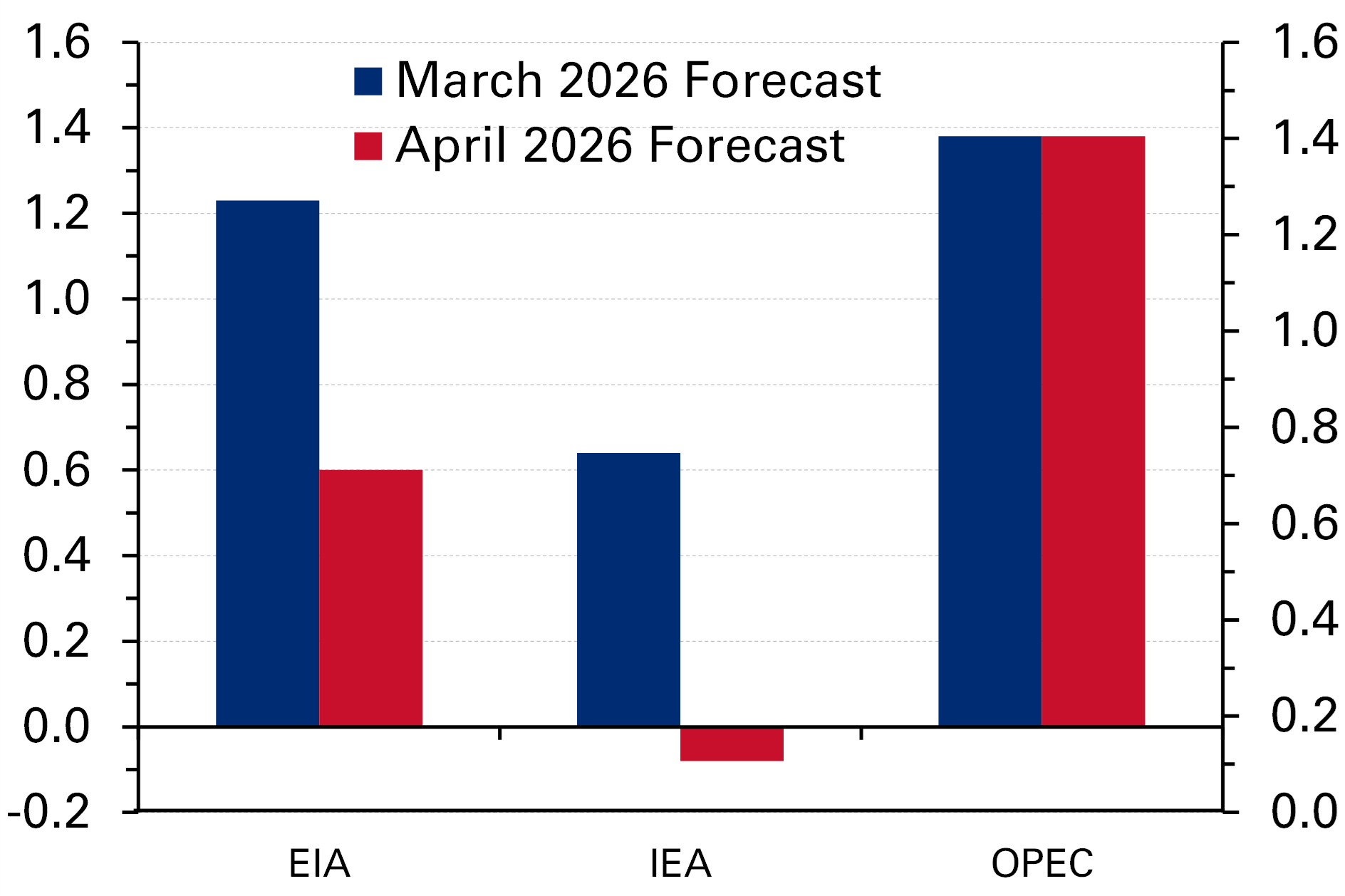
Oil: Prices decline amid rumors of fresh conflict talks; IEA sees oil demand declining in 2026. Brent futures fell 4.6% on Tuesday to close at $94.8/bbl on the news that a second round of US-Iran talks could take place as early as tomorrow. Iran’s muted response to the US naval blockade of its ports, reportedly halting shipments from its ports to avoid a direct confrontation with the US blockade that could inflame the situation and derail a potential diplomatic path out of the conflict, also helped fuel risk-off sentiment. While the two sides remain far apart in both scope and end objectives, the fact that talks have progressed to a second round – with the first lasting 21 hours – is a constructive signal. This raises the likelihood that the current ceasefire is extended or that negotiations eventually yield a settlement, tempering near-term escalation risk. Meanwhile, the International Energy Agency (IEA) in its latest monthly report, underscored the growing scale of disruption to global balances by signaling the first contraction in average yearly oil demand since the Covid-19 pandemic in 2020. The IEA now expects oil demand to decline by 80 kb/d for 2026 as a whole – a sharp reversal from its March outlook when it projected annual growth of 640 kb/d – on the back of a 2.3 mb/d drop in April (-1.5 mb/d in Q2). The bulk of the demand destruction is concentrated in Asian petrochemicals, accounting for 1.8 mb/d of the 2.3 mb/d April demand decline, amid reduced consumption of LPG and naphtha feedstocks. On the supply side, the IEA estimates that global oil supply fell by a steep 10.1 mb/d m/m in March, to 97 mb/d. This has driven an aggressive draw in observed inventories, which declined by 85 mb over the month. The drawdown was overwhelmingly concentrated outside the Middle East, where stocks fell by 205 mb (-6.6 mb/d), partially offset by inventory builds within the Middle East as export routes remained constrained.
US: PPI inflation jumps in March but less than expected; Bessent expects tariffs back at the previous level by July. PPI inflation for final demand in March jumped to an over three-year high of 4% y/y (0.5% m/m), up from 3.4% in February on higher energy prices, but the rise was tamer than the consensus forecast of 4.6% y/y or 1.1% m/m. The impact of the 8.5% m/m surge in energy goods prices was cushioned by flat m/m services prices while a narrow measure of wholesale inflation that excludes food, energy and trade services increased only marginally to 3.6% y/y (0.2% m/m) from 3.5% in February. The latest PPI data, together with previously reported March CPI inflation prints, highlight that the second-round effects of higher energy goods costs have yet to fully transmit to underlying prices. Separately, Treasury Secretary Bessent indicated that tariffs could return to previous levels (pre Supreme Court verdict canceling reciprocal tariffs) by early July, as the administration ramps up efforts to re implement tariffs through Section 301. Meanwhile, rising hopes of a US-Iran deal helped propel US equity markets further, with the S&P 500 climbing 1.2% yesterday to near its record-high seen in January, while the yield on UST 10Y bonds retreated along with the USD.
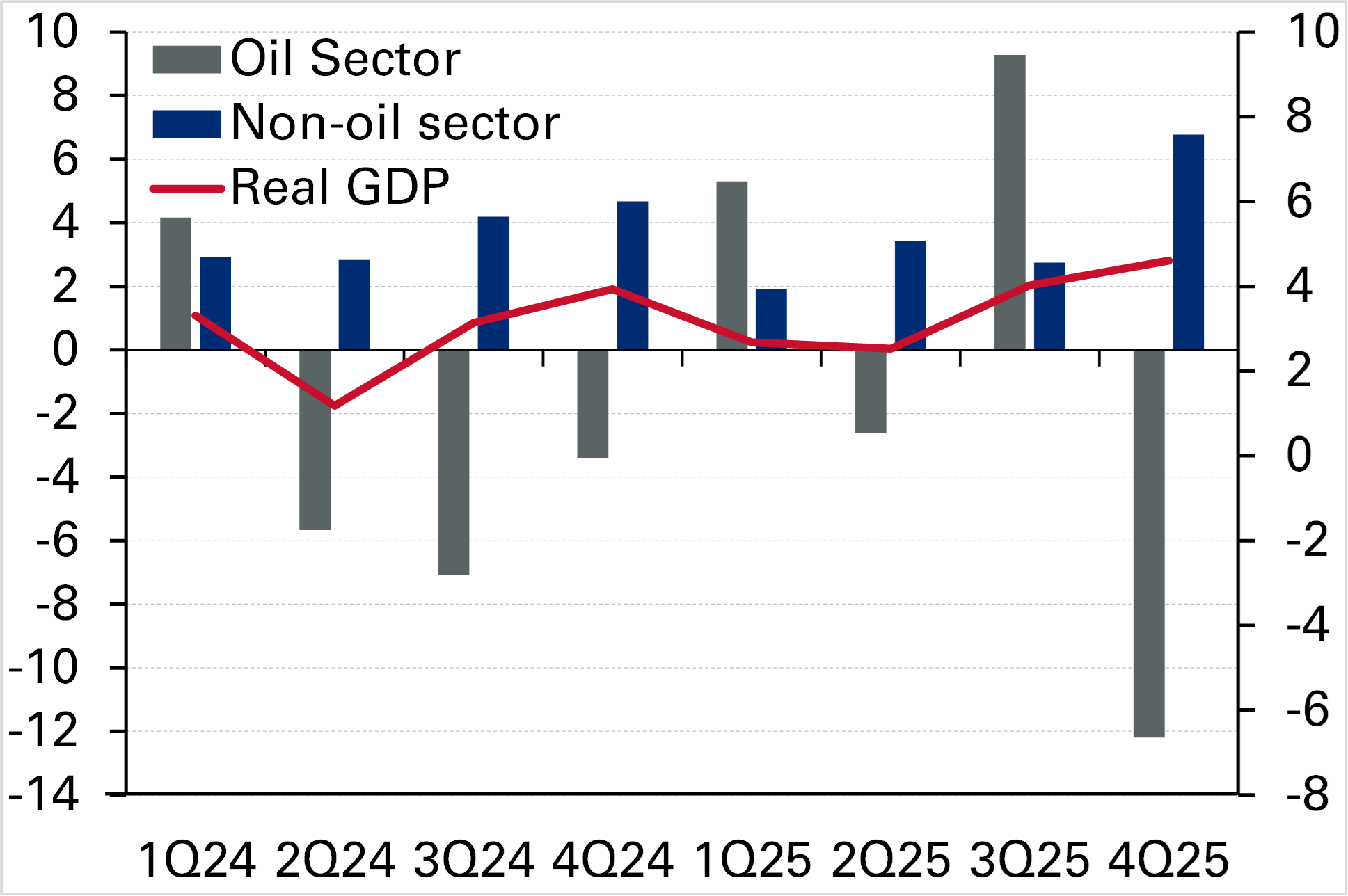
Bahrain: Solid growth in 2025 but downside risks as the economy faces potential contraction in 2026. Bahrain’s economy recorded solid growth in 2025, with GDP expanding by 3.5% y/y, supported primarily by non-oil activities. In Q4 alone, GDP grew by 4.6% y/y, driven by a strong 7.4% expansion in the non-oil sector, while oil activity contracted sharply by 12.3% y/y. For the full year, non-oil sectors, accounting for 86% of the economy, grew by 4.1%, offsetting a marginal 0.3% decline in oil activity, which represents the remaining 14%. On the external front, Bahrain recorded a current account surplus of 5.8% of GDP, with nominal GDP reaching BHD 14.4 billion ($38.2 billion). On the sectoral level, the financial sector remained the largest contributor (17.6%), followed by manufacturing (15.1%), public administration (8.4%), and construction (6.7%). Growth was strongest in the tourism sector as well as for professional services (6.4%), followed by financial services (5.6%) and construction (5.0%). Despite this solid performance, the outlook for 2026 appears significantly weaker. Ongoing regional tensions are expected to weigh heavily on economic activity, particularly the oil sector, which could contract by around 25% due to production disruptions. Spillovers to non-oil sectors including financial services could further dampen growth. Led by the weaker oil sector, Bahrain’s economy could contract by more than 5% in 2026, highlighting rising downside risks to the outlook.
Saudi Arabia: Expat remittances fall to a 15-month low in February. Remittances by expatriates in Saudi Arabia declined in February 2026, marking their lowest level in 15 months. Outflows fell by 2% y/y to SAR 12.6 billion ($3.3 billion), according to data from the Saudi Central Bank. On a monthly basis, expatriate transfers dropped by 6% m/m, a decline of SAR 768 million, pointing to a moderation in outward flows at the start of the year. Remittances by Saudi nationals also recorded a sharper contraction, falling by 22% y/y to SAR 4.9 billion (around $1.3 billion) during the same period. Overall, the decline in remittance outflows suggests a temporary easing in external transfers, which could provide mild support to domestic liquidity conditions, particularly amid already tightening financial dynamics.
Oman: Inflation hits 4-year high on war effects. Consumer prices rose by 3.6% y/y in March from 2.0% in February, marking the highest inflation since February 2022 according to data from the National Centre for Statistics and Information. The higher reading was driven mainly by a jump in food (4.3% from 2.8%) and transport (9.4% from 0.2%) inflation, coupled with continued high inflation in the miscellaneous goods & services (13.8%) and restaurants & hotels (5.8%) categories. In contrast, inflation in most other categories including utilities, communication and tobacco was stable, indicating that price pressures were concentrated in certain consumer categories rather than broad based. Inflation varied across regions, with Muscat recording the highest rate at 4.5%, while Dhofar posted one of the lowest at 1.8%, reflecting uneven price pressures across governorates. Average inflation in Q1 2026 stood at a contained 2.4%, but if the March numbers are a guide may rise over coming months as war-related price pressures, mostly affecting food and transportation, continue to build-up.