
 +965 2292 4888


Daily Economic Update
10.05.2026
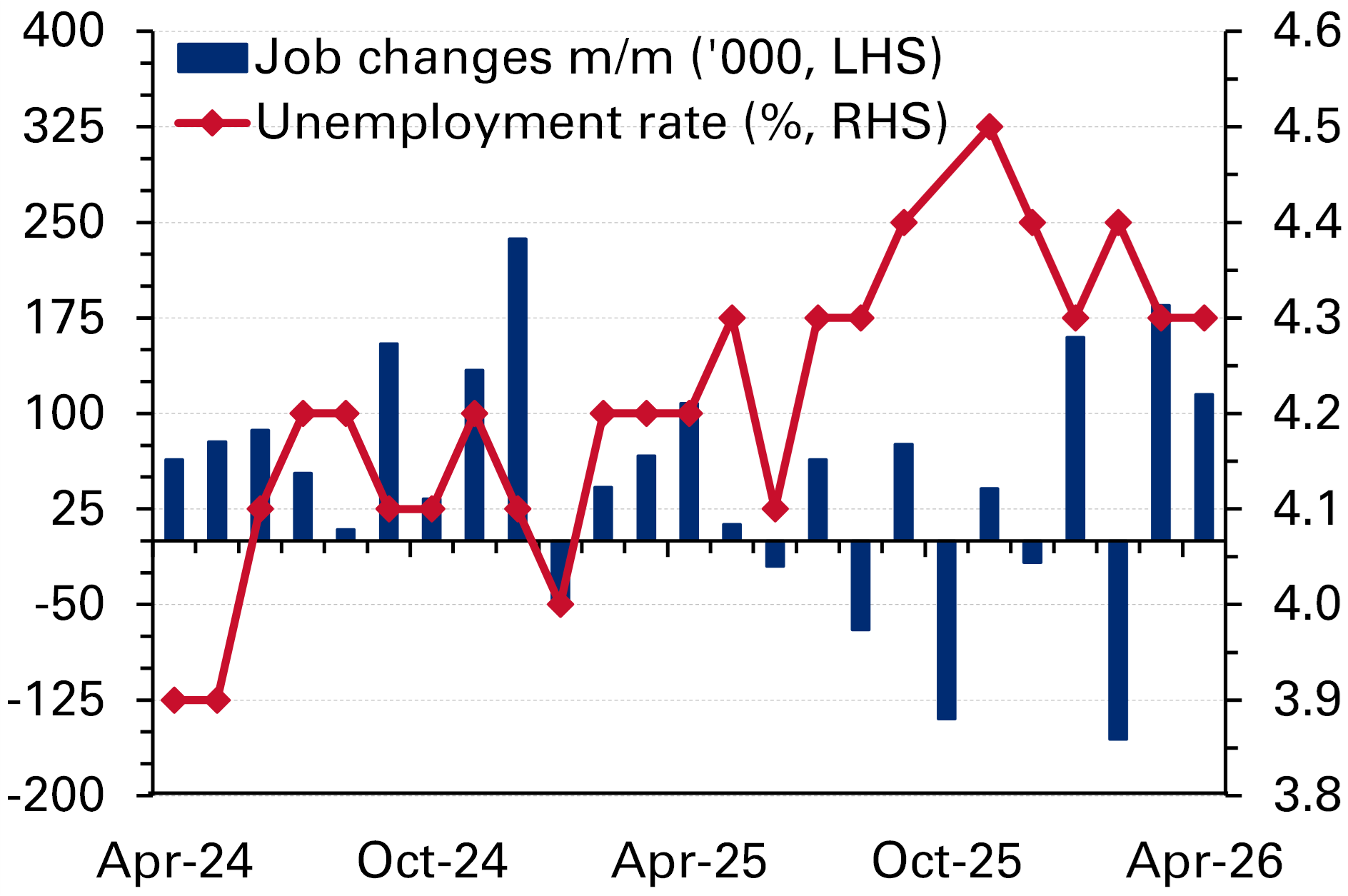
US: Job growth exceeds expectations in April in a sign of improving labor market. Non-farm payrolls rose by 115K in April, far exceeding the consensus forecast of a 62K rise, following an upwardly-revised 185K increase in March. April’s job growth was more broad-based, mainly supported by healthcare, transportation/warehousing, and retail trade, though government payrolls continued to fall. The unemployment rate was steady at 4.3%, but the participation rate dropped further to 61.8% from 61.9%, the lowest since October 2021. Average hourly earnings increased by a lower-than-expected 3.6% y/y (3.4% in March) with the m/m increase steady at 0.2%, indicating no wage-driven inflationary pressures for now. Overall, the latest job report, coupled with other data points such as the weekly jobless claims, underscores that labor market conditions have started to gradually improve after a very weak 2025 (average monthly job gains of 10K in 2025 versus 76K so far in 2026). If the job market continues to strengthen, it will be difficult to see how the Fed’s focus should not shift to managing the elevated, even worsening inflation outlook. Meanwhile, the US Court of International Trade in Manhattan invalidated section 122 10% global tariffs that were imposed after the Supreme Court verdict of cancelling reciprocal tariffs issued under an emergency act. As per section 122, up to 15% tariffs can be imposed for a maximum of 150 days without needing Congressional approval on concerns related to severe balance of payment crises. However, importantly, the court restricted the order to only the two companies that sued and the State of Washington. The Trump administration has appealed against the ruling in the US Court of Appeals for the Federal Circuit. Despite the continued court setbacks, the administration continues to pursue other legal authorities such as section 301, which would likely keep overall tariffs similar to the levels seen pre-Supreme Court decision.
UK: Starmer under more pressure after Labor’s poor show in council elections. In local council elections conducted on Thursday, the governing Labor party lost control of over half of its previously-held seats, with Nigel Farage’s populist Reform emerging as the key winner, taking seats from both the Labor and the Conservative parties. The Green party also won many seats, further upending the long-standing duopoly of the two main parties in the UK political scene. PM Starmer was already facing issues related to the appointment of now-sacked Peter Mandelson as Ambassador to the US, who had links with Jeffery Epstein, and the subsequent resignation by his Chief of Staff on the matter along with other political missteps including U-turns on some key economic reforms. Labor’s latest poor election results has intensified pressure on Starmer with his premiership now appearing even more shaky, although he remained defiant following the election results. UK government bond yields edged down from highs on Friday, interpreting Starmer’s commitment to stay on as forestalling the appointment of a replacement PM who might loosen fiscal controls.
Eurozone: Retail sales drop m/m in March, but come in stronger than expectations. Eurozone retail sales edged lower in March, with volumes declining by 0.1% m/m following a downwardly revised 0.3% drop in February, though beating expectations of a 0.3% decrease. The monthly decline was driven mainly by a sharp fall in fuel sales, which dropped 1.6% m/m, reflecting higher fuel costs linked to the Middle East war. Food, drinks, and tobacco sales edged lower for the second straight month while non food sales rose by a relatively solid 0.6%, partly cushioning the broader slowdown in retail activity. On an annual basis, retail sales growth slowed to 1.2% (+1.3% in February), the weakest pace since July 2024, but beating expectations of a 1% increase.
China: April trade data indicate resilience ahead of Trump-Xi summit later this week. China’s latest trade figures showed exports rising by a stronger than expected 14% y/y in April, a sharp acceleration from March (+2.5%) and a sign that external demand continues to provide an important buffer for growth as domestic consumption remains uneven. Shipments to the US returned to growth, increasing 11% y/y, after a double-digit decline in 2025 and also in Q1 of this year. Meanwhile, imports remained elevated, up 25% y/y, in line with the double-digit increase recorded in Q1. The monthly trade surplus widened to $85bn from $51bn previously. The solid trade outturn comes ahead of a key summit in Beijing between President Xi and US President Trump later this week, where trade relations, among other important matters, are expected to feature prominently.
Japan: Employees’ cash earnings growth softens but real wage growth remains positive. Employees’ cash earnings rose by 2.7% y/y in March, well below February’s 3.4% figure and consensus expectations of 3.2%. Similarly, real wage growth declined from 2% y/y in February to 1% in March, but remained positive for the third consecutive month.
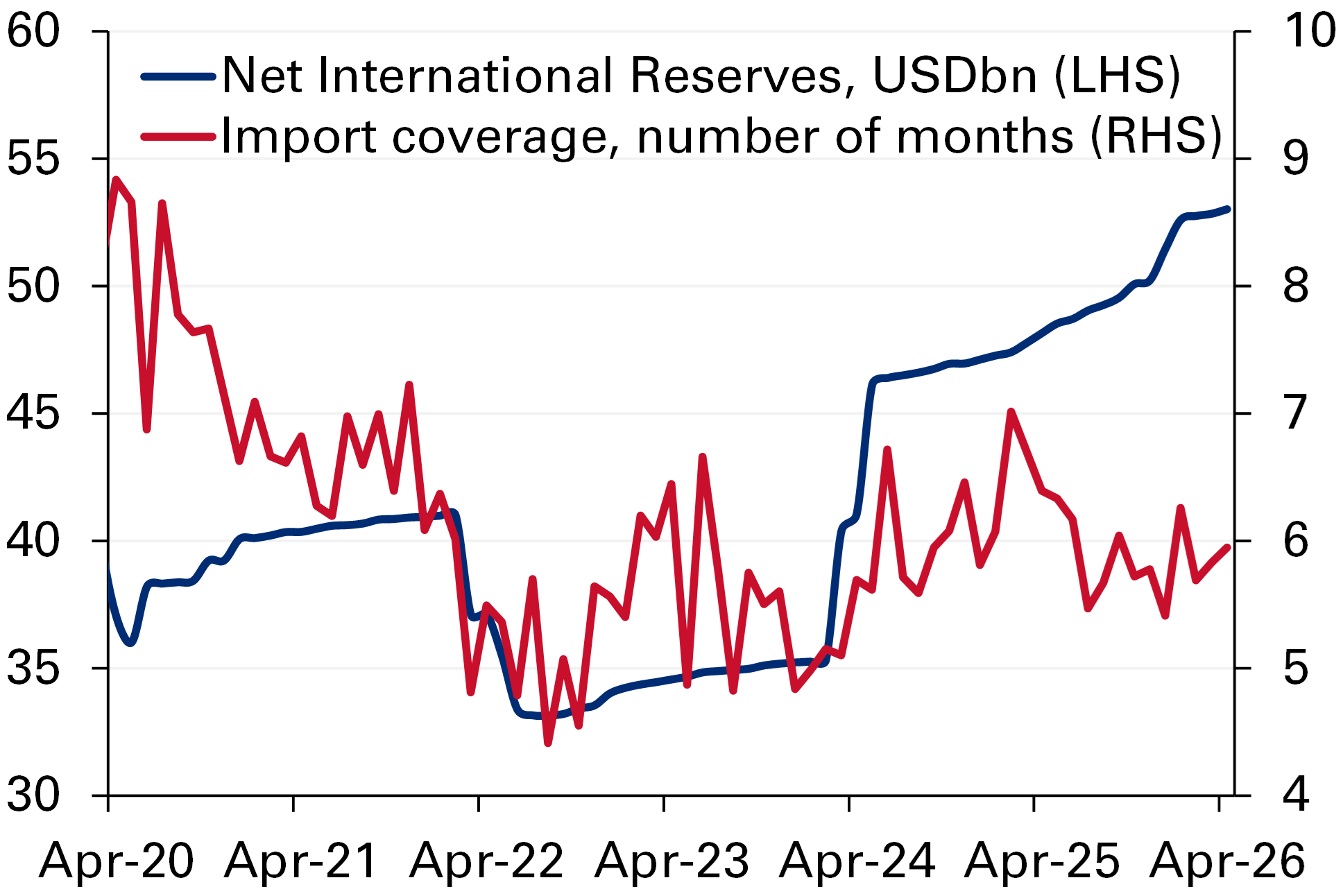
Egypt: International reserves surpass $53 billion ahead of the IMF review. Egypt’s official international reserves rose by $178 million in April to exceed $53 billion, marking another gradual improvement in external buffers. At the same time, unofficial reserves edged lower by a similar amount to $14.7 billion, suggesting that the overall reserve position remains broadly stable. Importantly, Egypt’s reserve coverage ratio continues to hold at around six months of imports, which is a comfortable level that strengthens the country’s ability to absorb external shocks and meet foreign currency obligations. The continued improvement in official reserves comes at an important time, as Egypt prepares for its seventh review under the IMF’s Extended Fund Facility program. In parallel, the government is expected to soon present and approve an updated version of the State Ownership Policy document before releasing it publicly. The updated framework will be closely watched as it is expected to provide further clarity on the next phase of Egypt’s privatization and private sector participation agenda. Overall, the latest reserves data reinforces Egypt’s improving external position and provides an additional layer of confidence ahead of the upcoming discussions with the IMF.