
 +965 2292 4888


Daily Economic Update
22.06.2026
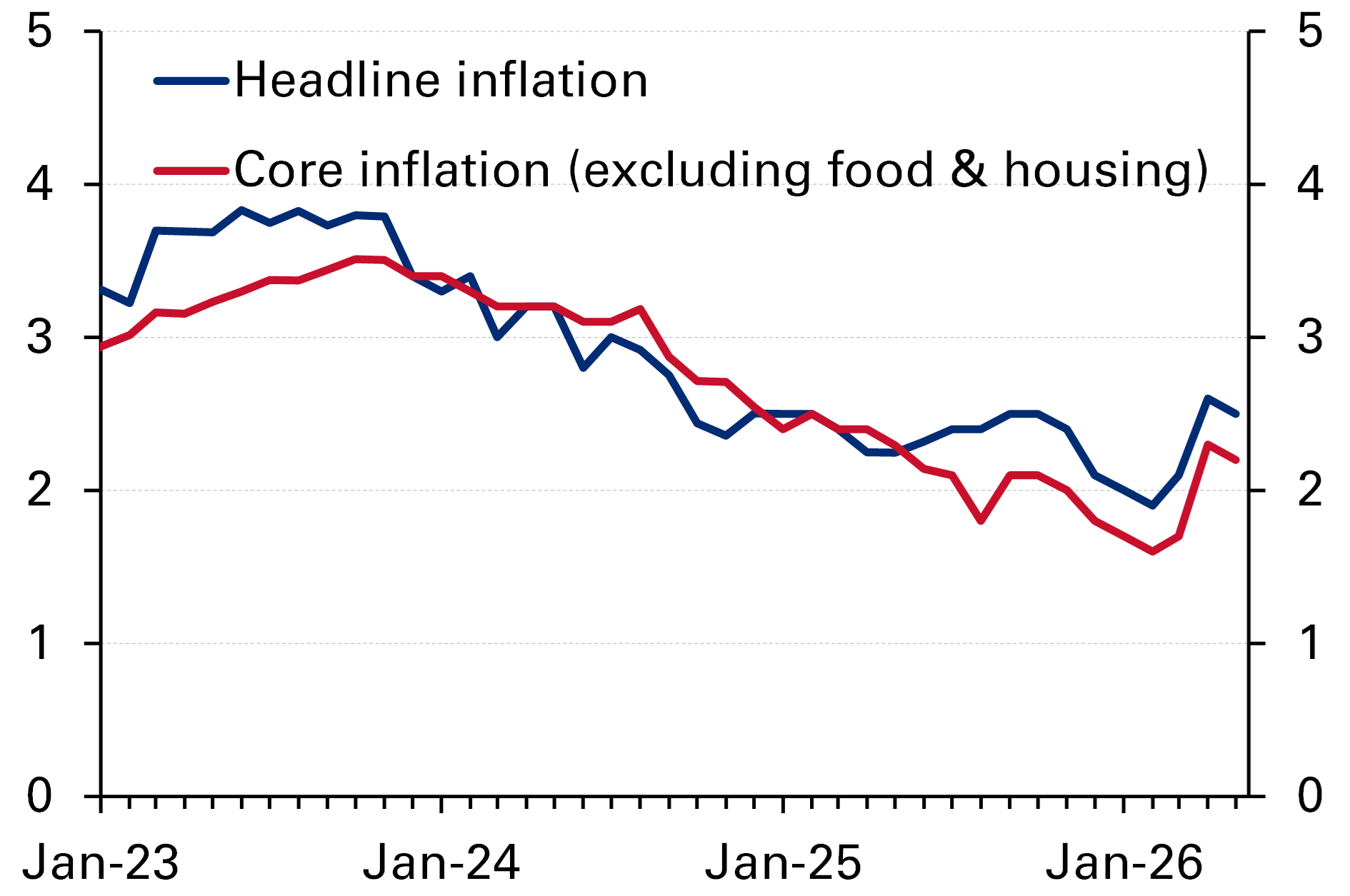
Kuwait: Inflation softens to 2.5% y/y in May as food pressures ease. Consumer price inflation eased to 2.5% y/y in May from 2.6% in April, helped by softer food price dynamics. Food and beverage inflation moderated to 6% y/y (from 6.3%), supported by slower increases in meat & poultry and fish & seafood prices. Meanwhile, housing services inflation – the largest component of the CPI basket and which reflects mainly rents – was unchanged at 0.5% y/y. Excluding food and housing, core inflation edged down to 2.2% y/y from an 11-month high of 2.3% in April. Price trends across most core categories were broadly stable, with health services the only major segment recording stronger growth, rising 1.2% y/y. Elsewhere, inflation moderated in miscellaneous goods, clothing & footwear, and home furnishings, although the annual increase in miscellaneous goods (which includes precious metals) remained relatively elevated at 6.6% y/y. The softer headline reading suggests that the pass-through from supply chain disruptions associated with the closure of the Strait of Hormuz has so far been limited. More broadly, the data point to the effectiveness of government measures in containing inflationary pressures during the conflict, despite the significant disruption to regional trade flows.
Egypt: Carry trade surge drives the pound below EGP50 per USD. Foreign investor appetite for Egyptian debt instruments has strengthened sharply in June, fueling a significant appreciation of the Egyptian pound and highlighting the growing influence of carry trade flows on the local FX market. Net foreign purchases of Egyptian government debt instruments in the secondary market reached nearly $4bn last week, marking the strongest weekly inflow since the outbreak of the US-Iran conflict. During the first three weeks of June, cumulative net inflows surged to approximately $6.9bn, compared to just $600mn in May. The bulk of these inflows was directed toward Egyptian treasury bills, attracted by Egypt’s high real interest rates and improving investor sentiment toward emerging markets in general. The strong rebound in portfolio inflows has provided substantial support to the pound, which appreciated by around 6.5% m/m to trade currently at approximately EGP49.9 per USD, pushing the currency below the EGP50 threshold for the first time in months. Underlying the strength is also the signing of the US-Iran MOU earlier in June, which reduced regional conflict-related risks. While the recent appreciation reflects renewed confidence in Egypt’s debt market, it also underscores the growing sensitivity of the exchange rate to short-term capital flows. As a result, the pound is likely to remain highly responsive to shifts in global risk appetite and carry trade dynamics in the coming period.
Saudi Arabia: Foreign reserves decline for a second consecutive month in May. Saudi Arabia’s foreign reserves declined for the second consecutive month in May, according to the latest data released by the Saudi Central Bank (SAMA). Total foreign reserve assets fell by 1.3% m/m, reaching SAR1.83tn ($488bn) at the end of May. Despite the monthly decline, reserves remained 6.4% higher on an annual basis. The monthly decline was largely driven by a 1.4% reduction in foreign currency reserves, which account for 95% of total reserve assets. Meanwhile, Saudi Arabia’s gold reserves remained unchanged at SAR1.6bn, a level that has been maintained since February 2008. Although reserves have declined over the past two months, their overall level remains strong by international standards and continues to provide the Kingdom with a significant buffer against external shocks.
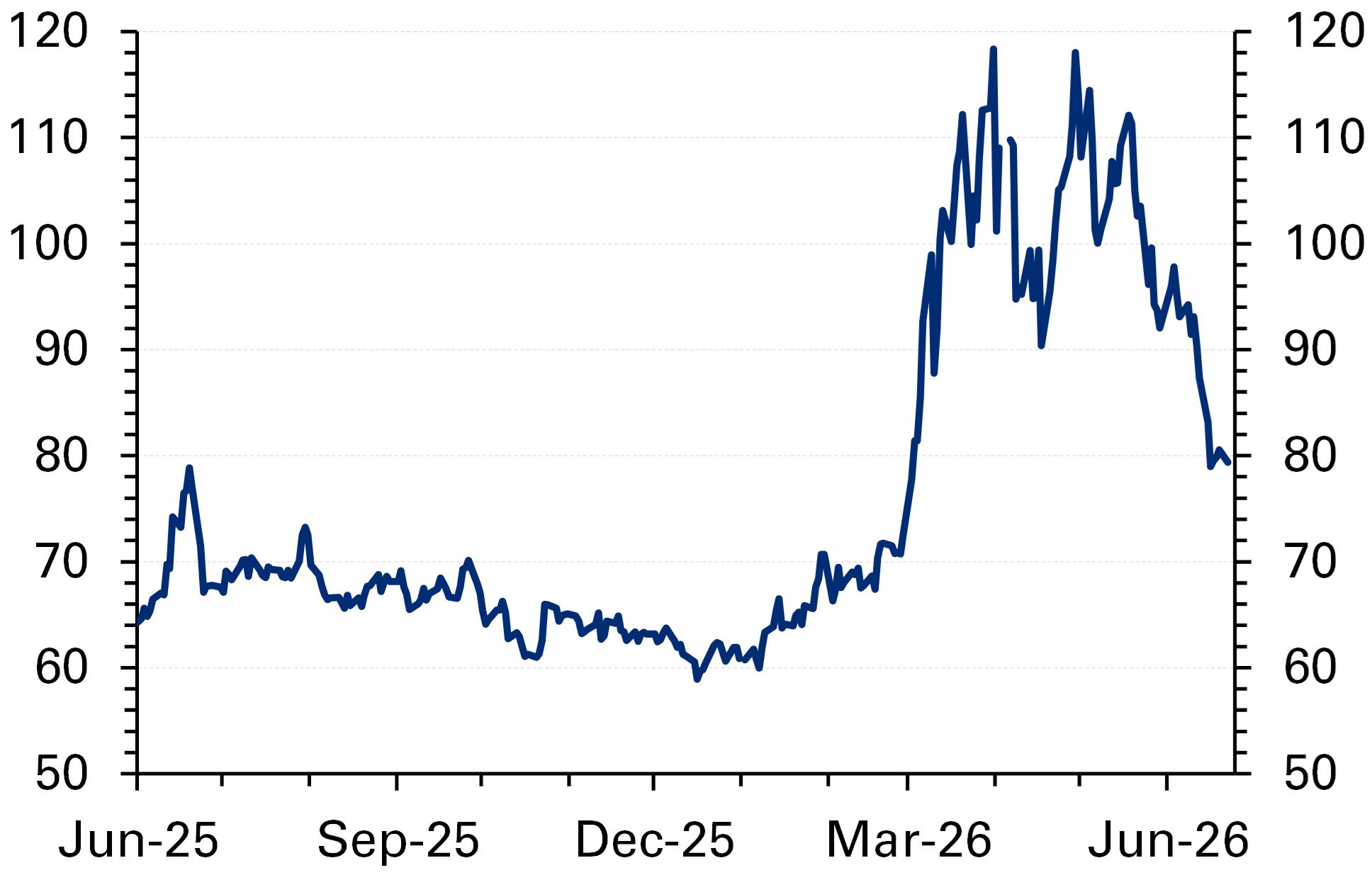
Oil: Brent opens lower this morning on US-Iran talks progress. Oil slipped back below the $80/bbl level this morning, reversing most of its gains since last Wednesday on the news that US and Iranian negotiators in Switzerland had made “encouraging progress” towards a more lasting peace deal alongside the commencement of technical discussions on Iran’s nuclear program. At the time of writing, Brent was down 1.5% to $79.4 in Asian markets, having closed on Friday at $80.6/bbl (-7.7% w/w). Talks between the two sides were almost derailed over the weekend after fighting broke out again between Israel and Hezbollah in Lebanon and only resumed after the belligerents agreed to a ceasefire. That appear to be short-lived, however, with fighting again resuming in southern Lebanon, and Iran announcing that it was closing the Strait of Hormuz (SoH) in response. President Trump then waded into the fray with threats to strike Iran if it doesn’t restrain Hezbollah and even suggested that Iran’s negotiating team, which includes foreign minister Araghchi, would not be permitted to travel back to Iran. While the SoH remains ostensibly closed, more and more tankers are successfully transiting the waterway and, importantly, in both directions, by hugging the southern Omani coastline. US Central Command indicated that 17 million barrels of oil had crossed the Strait, which would equate to about 5-10 tankers depending on whether they were carrying one million (Suezmax) or two million barrels (VLCC). At least one tanker was believed to be carrying oil from Kuwait.
China: PBoC holds LPR steady; US-China trade frictions are on the rise. The PBoC kept its loan prime rates (LPR) unchanged in June, with the one year at 3.0% and the five year – the benchmark for mortgage rates – at 3.5%, extending the pause to a 13th straight month, reflecting a continued preference for stability. That said, the backdrop remains uneven, with exports still holding up while domestic demand continues to lag, partly due to the ongoing property downturn. With domestic demand still soft and the external environment still volatile, authorities appear inclined to stick with targeted, incremental support rather than resorting to broad-based rate cuts. Meanwhile, Beijing has tightened export controls for some US companies, placing 10 industrial companies on its export control list, including a couple of rare earth miners, in a move that follows Washington’s decision earlier this month to impose restrictions on several Chinese companies.
Global: US May PCE inflation and global flash PMIs key data points this week. In the US, May’s PCE inflation is due on Thursday, and the consensus forecast indicates an acceleration in the core rate to 0.3% m/m from 0.2% in April. The S&P Global flash PMIs for June (Tuesday) are forecast to show retreating manufacturing (from 55.1 in May to 54.7) but improving services activities (from 50.7 to 51). Several Fed officials will also speak this week, which should attract even greater attention following Chair Warsh’s first press conference last week. It will be important to know FOMC members’ views about forward guidance and the five task forces that Chair Warsh is in the process of forming. In the Eurozone, the flash June PMIs are due on Tuesday, and expectations point to a mixed picture, with the manufacturing PMI seen easing slightly to 51.2 from 51.6 in May, while the services PMI is expected to improve to 48.1 from 47.7. In the UK, the street expects the S&P Global flash PMIs to slightly decline for manufacturing (from 53.9 in May to 53.6 in June) but strengthen for services (from 49.3 to 50). Beyond the economic data, political developments will also be key as speculations are rife that PM Starmer may step down soon. Finally in Japan, the S&P Global flash PMIs for June are due on Tuesday, with the manufacturing one set to remain near an over four-year high of 54.5. Tokyo’s June CPI inflation (Friday) is seen rising to a still-modest level of 1.6% y/y (from 1.3%) as government subsidies continue to help offset higher inflation elsewhere.