
 +965 2292 4888


Daily Economic Update
17.02.2026
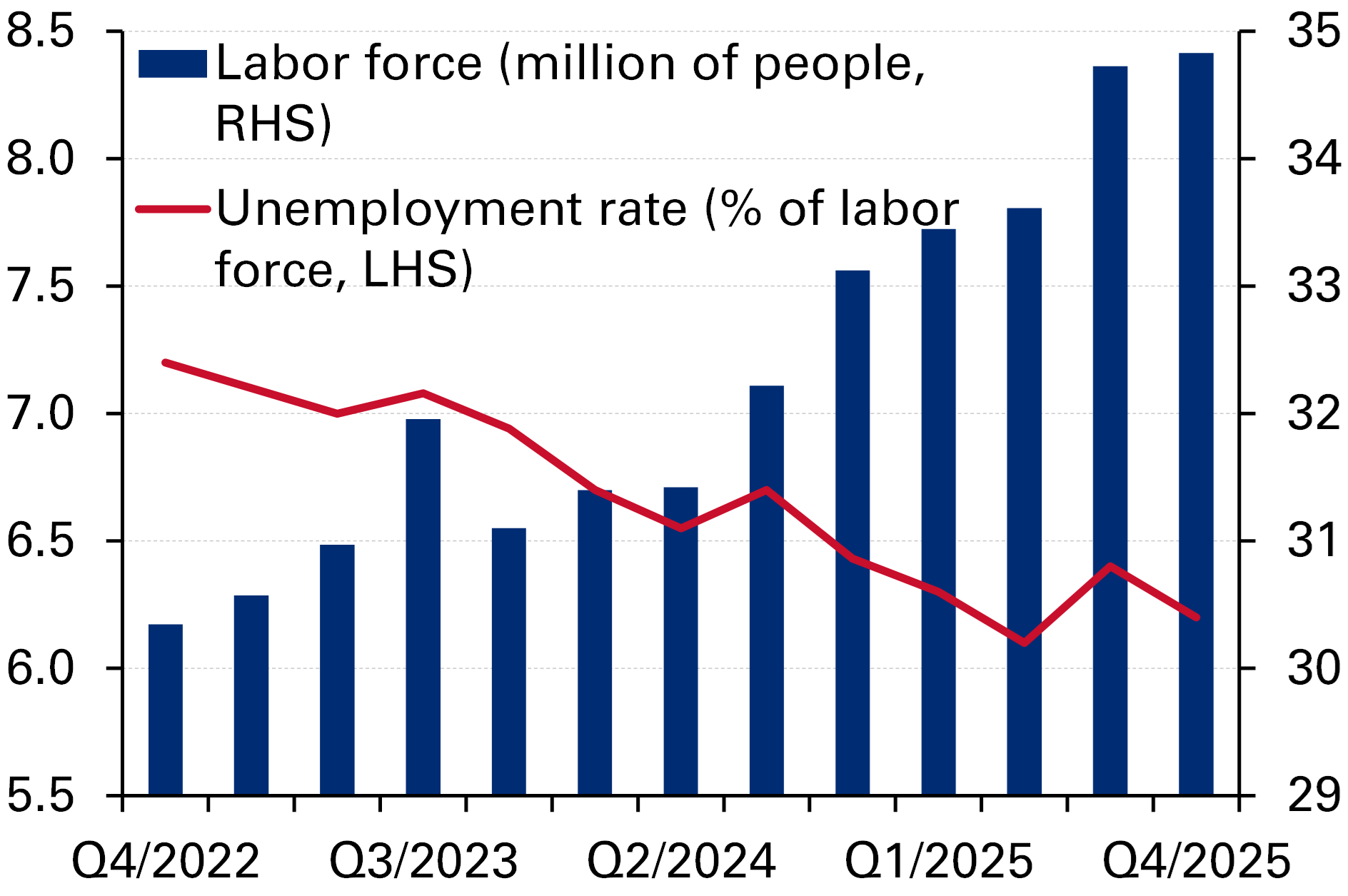
Egypt: Unemployment falls to a historic low, but structural gaps remain. The unemployment rate declined further to 6.2% in Q4 2025, down 0.2 percentage points from the previous quarter, according to CAPMAS. With this latest reading, the average unemployment rate for 2025 reached 6.25%, marking the lowest level in Egypt’s modern history. While the continued decline reflects improving labor market conditions, the broader picture remains more nuanced. The total labor force stood at 34.8 million, representing only 46.7% of the working age population (aged 15 and above). This relatively low participation rate suggests that a significant portion of the working age population remains outside formal labor market activity, highlighting the persistent weight of informality and underutilized labor potential. Geographically, the rural labor force reached 19.6 million, exceeding the urban labor force of 15.2 million. From a gender perspective, the disparity remains pronounced, with 26.9 million males in the labor force compared to just 7.9 million females. In short, while unemployment has reached record lows, boosting labor force participation and female inclusion remain critical to unlocking Egypt’s full growth potential and achieving more inclusive economic development.
Kuwait: Upcoming labor market reforms announced. First Deputy Prime Minister and Interior Minister Sheikh Fahd Al Yousef announced reforms to strengthen labor market regulation, including tougher penalties for illegal employment and streamlined services for compliant employers. A new “freelancer” residency permit, which will cost KD 750–1,000, is set to be launched within two months to curb the rampant practice of visa trading, with the added benefit of supporting non-oil public revenues. Authorities reported deporting 39,000 illegal workers last year and confirmed plans to reopen family visas for single parents’ children under the age of 18. Additional measures include reviewing driving license rules, enforcing inspections on nurseries and delivery companies, and considering limits on factory operations during the electricity peak demand period in the summer. In addition, the Public Authority for Manpower highlighted progress in digital services, ongoing labor law amendments, and a proposal to allow workers to transfer between contracts more flexibly.
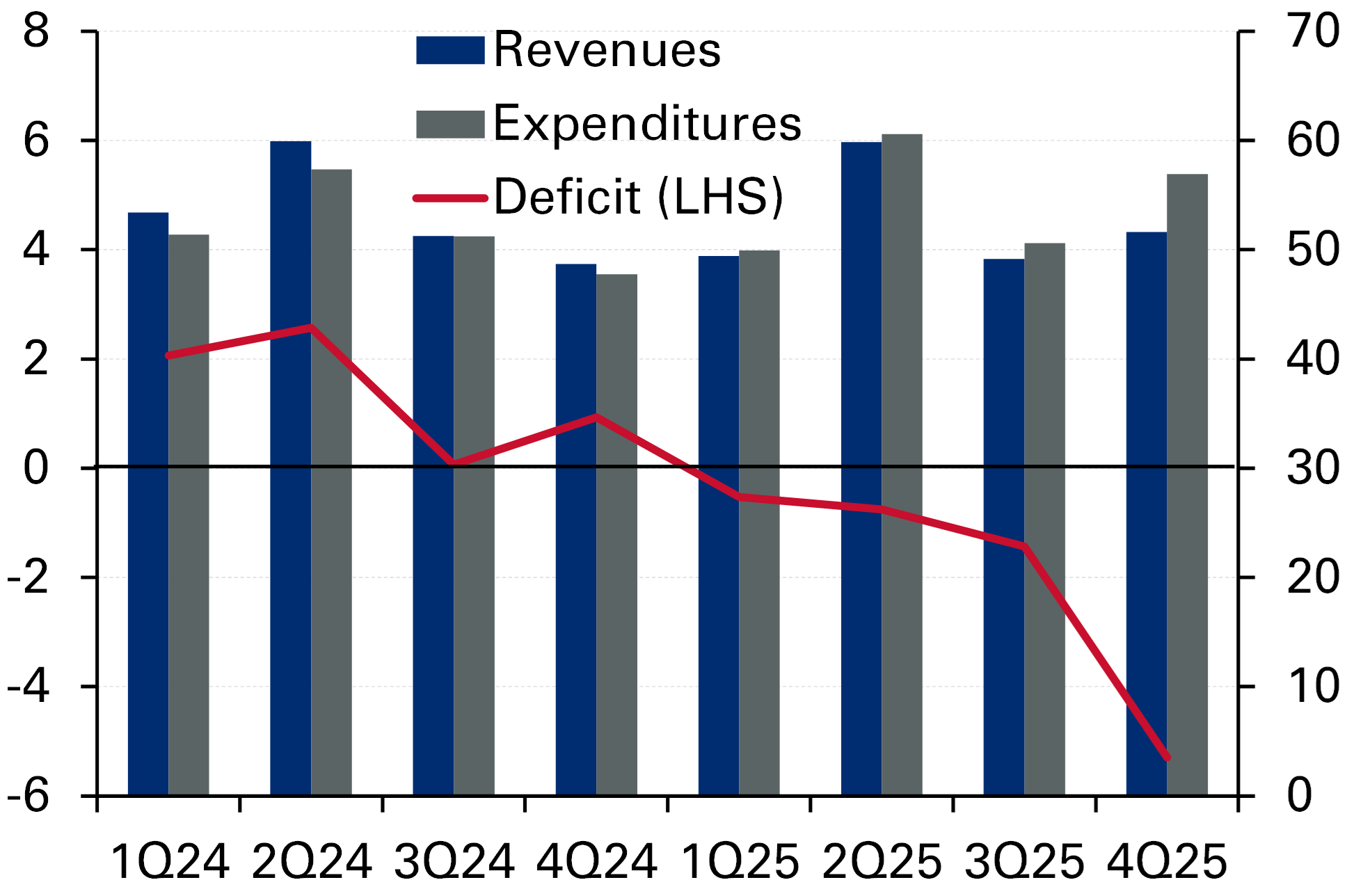
Qatar: Fiscal deficit in Q4 2025 the largest in five years, and 2025 sees first full-year deficit since 2020. Driven primarily by elevated expenditures, the government’s fiscal deficit, which was modest at less than 1% of GDP over the first nine months of the year, widened sharply in Q4 to 2.7% of GDP (QR 5.3 billion, $1.4 billion), the largest quarterly deficit since Q4 2020. Capital expenditures rose 23% q/q while current expenditures increased 13% q/q, reflecting broad based expansion in fiscal outlays. On the revenue side, hydrocarbon receipts strengthened by 7% q/q, supported by higher LNG export volumes. However, non hydrocarbon revenues, which account for roughly 10% of total revenues, fell 11% q/q. For 2025 as a whole, the deficit stood at QR 8 billion ($2.2 billion; 1% of GDP) amid softer hydrocarbon revenues and rapid expenditure growth. Brent crude, which heavily influences LNG contract pricing, averaged $69/bbl last year, down 14% from 2024. Hydrocarbon revenues declined by a more moderate 4% y/y to $45.7 billion, a softer fall helped by base effects from lower gas production the previous year. Non energy revenues, meanwhile, rose 8% y/y, limiting the decline in total revenues to just 1.5%. Expenditure pressures persisted, however. Total spending increased 5% to $60 billion, driven by higher current spending as well as notable capital outlays tied to major infrastructure projects. According to the Ministry of Finance, the deficit was financed through debt instruments, though this is not expected to have materially increased the debt to GDP ratio. Despite the government running fiscal deficits between Q1 and Q3, the debt ratio actually fell from 42.5% to 41.5% by end Q3, supported by debt amortization and nominal GDP growth. Last year’s fiscal outcome was broadly in line with our estimates, and the deficit is projected to narrow to 0.2% of GDP in 2026 before shifting back to a surplus in 2027, underpinned by rising hydrocarbon revenues. The long awaited LNG expansion projects, whose completion has been delayed to year end, are now expected to begin operations in late 2026 and early 2027, providing a significant boost to fiscal receipts as new volumes come onstream.
Eurozone: Industrial production weak in December with growth at 1.5% for full-year 2025. After a downwardly revised increase of 0.3% m/m in November, Eurozone industrial production slumped 1.4% m/m in December, close to market expectations of a 1.5% contraction. The print reflects the sharpest monthly pullback since April 2025 and interrupts the modest recovery phase observed over the prior three months. The decrease was broad-based, but with capital goods production particularly weak (-1.9%) signaling a loss of momentum in investment related activity. On a y/y basis, industrial production increased by 1.2% in December (+2.2% in November), putting full-year 2025 growth at 1.5%.