
 +965 2292 4888


Daily Economic Update
08.02.2026
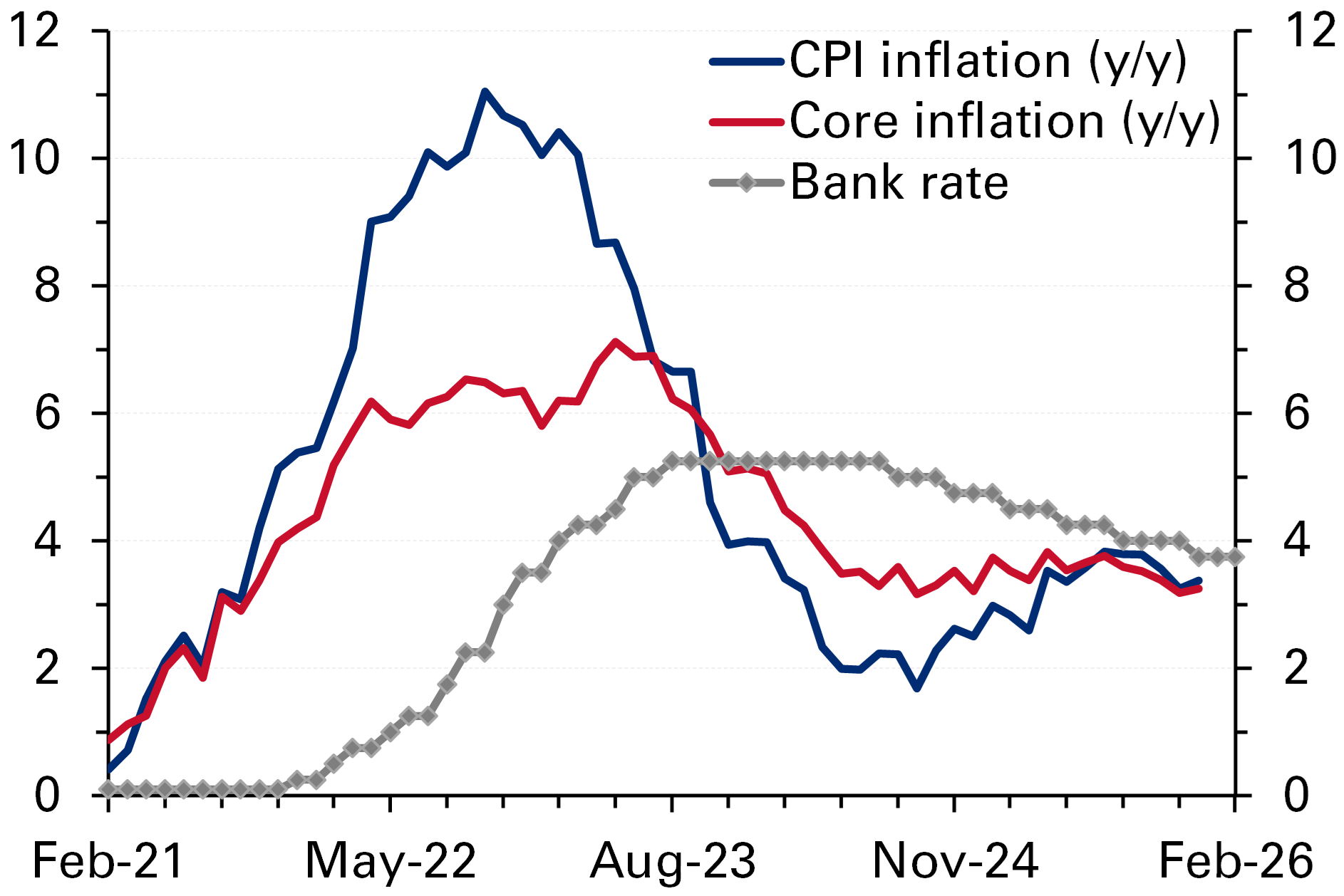
UK: BoE keeps bank rate unchanged at 3.75% but signals faster rate cuts ahead. The MPC left the bank rate unchanged at 3.75% in a 5-4 vote (five for a hold and four for a cut), in a more dovish vote split than the market’s expectation of just two votes in favor of a rate cut, with BoE Governor Bailey casting the decisive vote. The MPC statement highlighted that “the risk from greater inflation persistence has continued to become less pronounced, while some risks to inflation from weaker demand and a loosening labor market remain.” Governor Bailey noted that disinflation “looks to be ahead of the schedule” and “there should be scope for some further reduction in bank rate this year,” signaling that interest rate reductions should resume soon. After the MPC announcement, the futures market boosted rate cut bets to 50+% in March, which Bailey implicitly endorsed, saying it “is not a bad place to be.” The bank also provided updated economic projections, seeing inflation falling to around its 2% target from April (latest at 3.4% y/y in December), much earlier than previously expected, following lower fuel duties and household energy bills as announced in the Autum budget last year, and hovering at around 2% or below beginning Q2. However, it lowered the growth forecast for 2026 to 0.9% from 1.2% in November, and for 2027 to 1.5% from 1.6% earlier, as the bank expects a higher unemployment rate (peaking at 5.3% in Q2 and staying there for several quarters versus 5.1% currently). We note that the UK labor market has continued to weaken steadily since late 2024, with sustained job losses (around 220K cumulatively since November 2024) and the unemployment rate at a near five-year high.
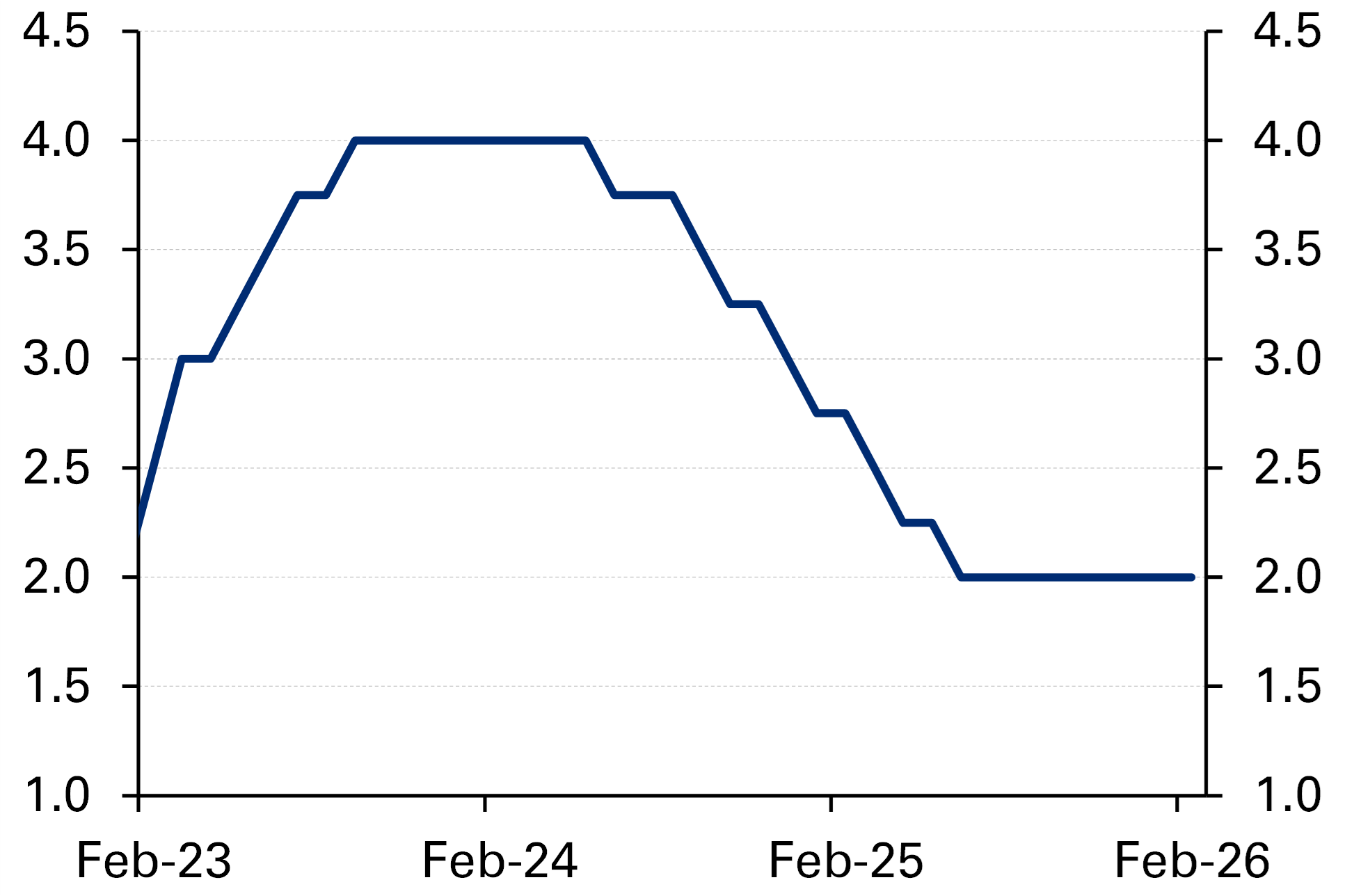
Eurozone: ECB maintains rates as economy holds steady and inflation cools. The European Central Bank kept interest rates unchanged at its meeting on Thursday, with its key interest rate at 2%. The ECB said that neither the inflation path nor broader economic conditions justified a policy move, while cautioning that the outlook remains uncertain. ECB President Lagarde stressed that the bank will continue its “data dependent, meeting by meeting approach” and will not “pre-commit to a particular rate path,” adding that decisions will hinge on the inflation outlook and the risks surrounding it. The ECB noted that inflation is expected to settle around the 2% target over the medium term and that growth is supported by low unemployment, solid private sector finances, increasing public spending on defense and infrastructure, and the lagged effects of earlier rate cuts. Separately, retail sales fell more than expected in December, down 0.5% m/m after a 0.1% increase in November (revised down from 0.2%). The monthly drag was driven by a 1.2% m/m decline in non-food products, while food, drinks, tobacco increased by 0.1% and automotive fuel in specialized stores remained flat.
Japan: Household spending fell in December as the country votes today. December’s real household spending fell 2.6% y/y, significantly weakening from November’s six-month high of +2.9% and consensus estimates of 0%. The decrease was driven by a 7.6% fall in housing spending (-1.8% in November) and a 7.1% fall in transportation spending (+20.4% in November), with government officials previously stating that these volatile categories may not be indicative of an overall trend. The contraction in spending comes as Japan votes today in a snap general election called by Prime Minister Takaichi to capitalize on her popularity and attempt to increase her coalition’s razor-thin majority in the Lower House. Results are expected later today, with media reports currently predicting positive results for Takaichi’s LDP party, although strong snowstorms across the country are expected to decrease voter turnout.
US: Job openings drop to an over five-year low. Job openings in December fell to the lowest level since September 2020 to 6.5 million from a downwardly revised 6.9 million in November as labor market conditions continued to show some softness. However, the hiring rate slightly ticked up to 3.3% from 3.2% and the quits rate remained steady at 2%. Meanwhile, initial weekly jobless claims climbed to their highest level since early December to 231K (w/e January 31) from 209K the previous week, with continuing claims also rising to 1.84 million (w/e January 24) from 1.82 million the week before. However, bad weather conditions at the end of January likely impacted these numbers, as the broader trend continues to show a modest level of unemployment.
Egypt: The Finance Ministry and EGX move to activate a secondary market for sovereign sukuk. The Finance Ministry, in coordination with the Egyptian Exchange, is preparing to activate secondary market trading for sovereign sukuk, marking an important step in deepening Egypt’s Islamic finance market and unlocking fresh liquidity. Allowing sukuk to trade on the exchange is expected to improve price discovery, enhance returns for investors, and broaden participation beyond the primary market. Egypt’s EGP 200 billion sovereign sukuk program has seen demand soften in recent auctions, with yields hovering around 21%, well below the 25–26% offered on conventional government debt. Since the program’s launch last November, seven issuances have been completed, prompting policymakers to explore new tools to revive appetite and diversify the investor base. As part of this effort, the ministry is considering the introduction of variable rate sovereign sukuk, aligning with its broader debt management strategy aimed at lowering borrowing costs and extending the average maturity of public debt to 4.5–5 years, from the current 1.7 years. The sukuk program is also expected to be extended through FY26/27, alongside the rollout of additional instruments, including fractional, zero coupon, and fixed rate bonds. In parallel, the government plans to launch Egypt’s first retail government bonds in H1 2026, allowing individuals to invest directly in sovereign debt without intermediaries, further supporting market depth and financial inclusion.