
 +965 2292 4888


Daily Economic Update
21.04.2026
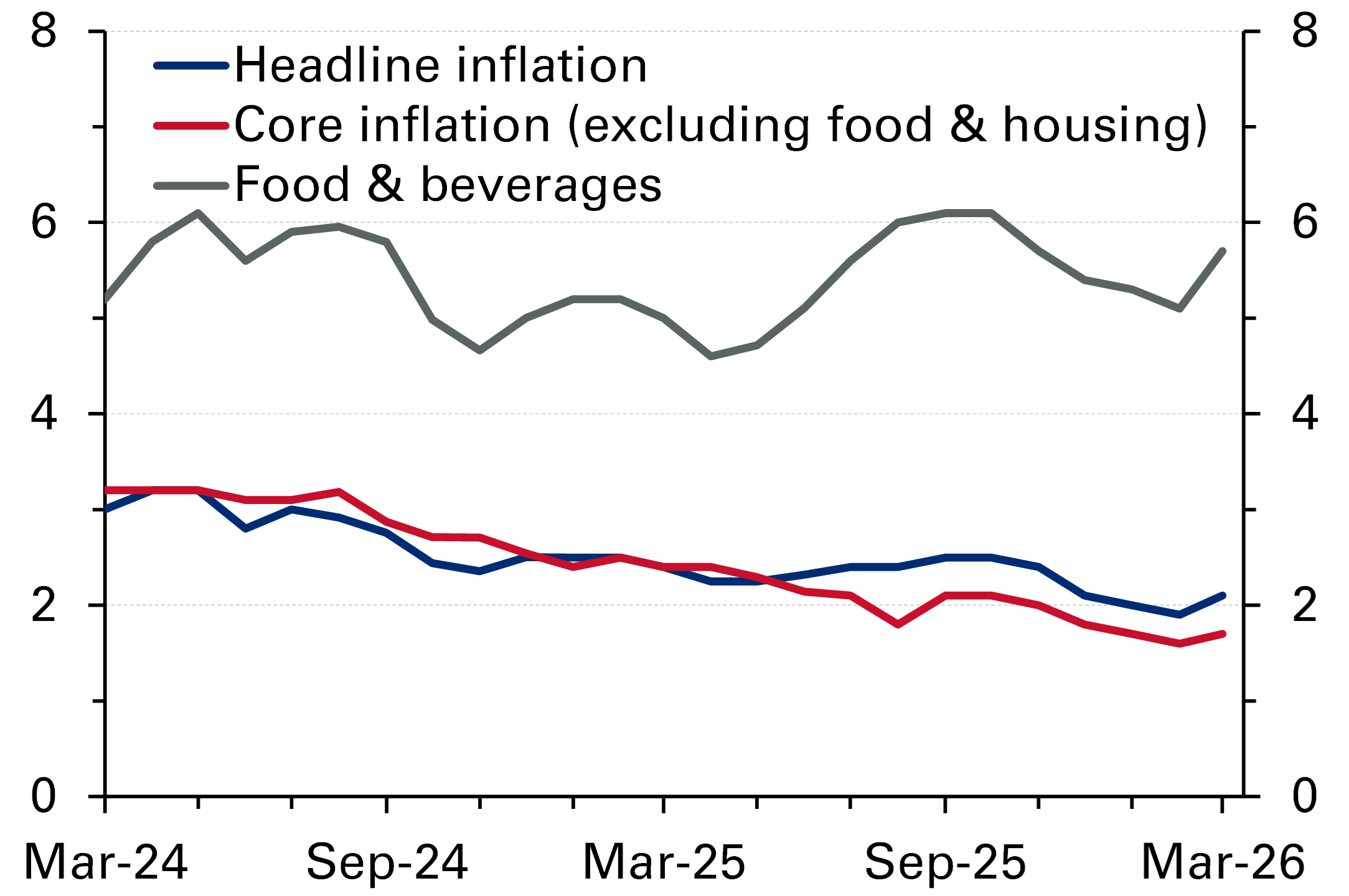
Kuwait: Inflation ticked up in March, reversing four-month slowdown. CPI inflation edged up in March to 2.1% y/y from 1.9% in February, breaking a four-month disinflationary streak amid trade disruptions stemming from the closure of the Strait of Hormuz – though also revealing no huge obvious near-term impact from the US-Iran conflict. On a month-on-month basis, prices increased by 0.4%, the strongest rise since December 2024, though the reading was also influenced by seasonal effects, including Ramadan and Eid. Prices in the food & beverages category, which is heavily biased towards imported items, rose 1.2% m/m, with the annual rate increasing to its highest level, 5.7% y/y, since June 2022. The increase was broad based across subcomponents but may have been partially contained by government measures, including a ban on food exports and the enforcement of price controls during March. Nonetheless, prolonged maritime disruptions raise the risk of shortages in non-essential food items over time. Inflation in the housing services category, the largest by weight in the CPI, was unchanged at 0.5% y/y, which helped to stabilize the headline reading somewhat. Excluding food and housing, core inflation ticked up to 1.7% y/y (Feb 1.6%) but remained low. The March uptick was driven primarily by miscellaneous goods, where price growth accelerated to a record 7.3% y/y, largely reflecting higher precious metals prices. Clothing & footwear prices also rose, by 1.1% y/y, marking the first annual increase since mid-2024, while price pressures in the communications category strengthened further. In contrast, inflation eased in the education, healthcare, and restaurants & hotels sectors, while other categories showed little change.
Oil: Prices gain on Monday amid ongoing standoff in the Strait Of Hormuz. Brent futures finished higher on Monday, gaining 5.6% d/d to $95.5/bbl, spurred by the continued, tense standoff between the US and Iran after the US navy seized an Iranian vessel and Iran fired on shipping attempting to transit the Strait over the weekend. President Trump also declared that the US would not lift its own blockade of Iranian shipping until after a negotiated settlement has been reached with Iran. Markets, searching for direction amid mixed diplomatic signaling over the status of these peace negotiations in Islamabad, especially concerning Iran’s participation and US Vice President JD Vance’s attendance at the talks, had to wait for late in the day for some clarity, with Iran reportedly agreeing to send a delegation and President Trump confirming Vance’s trip. Oil prices were down this morning in Asian markets below $95/bbl (-0.7% d/d) on the news. It is not clear, though, who from the Iranian side will be dispatched and, more importantly, whether they even have the authority to negotiate on behalf of the IRGC. Meanwhile, according to unconfirmed reports, KPC has signaled to its customers, by declaring force majeure, that it will not be able to honor oil sales commitments in the weeks ahead even if the Strait is opened. Kuwait had to shut in more than 50% of its pre-conflict output in March, bringing paring back production to 1.2 mb/d on average, according to OPEC data, with exports likely considerably below that level.
Saudi Arabia: Saudization requirements tighten in marketing and administrative roles. As part of ongoing labor market reforms, Saudi Arabia’s Ministry of Human Resources and Social Development, has implemented higher Saudization requirements in marketing and sales professions following the end of the grace period for the private sector. Private sector firms are now required to achieve a 60% Saudization rate in these roles. In addition, a minimum monthly salary of SAR 5,500 has been set for Saudi employees to be counted within the Saudization quota. The ministry has also expanded its 100% Saudization mandate to include 69 administrative support roles, extending coverage across all private sector establishments. These measures are part of broader efforts to increase employment opportunities for Saudi nationals and deepen labor market participation across sectors, while gradually reducing reliance on expatriate labor.
Egypt: Government nears full settlement of IOC dues to unlock energy investments. Egypt is close to clearing its outstanding payments to international oil companies, with only $900 million remaining, which the government aims to settle in full by end-June 2026. This follows a recent $300 million payment made last week, as authorities move to rebuild confidence and attract fresh investments into the energy sector. Alongside the repayments, the government is working on a new framework to prevent the re-accumulation of arrears, signaling a more sustainable approach to managing obligations with foreign partners. Looking ahead, Egypt is targeting an increase in natural gas production to 6.6 billion cubic feet (bcf) per day by 2030, supported by plans to drill 14 exploratory wells in the Mediterranean this year and launch a seismic survey tender in the Western Desert. These efforts are already translating into stronger investor commitment. Major players like Shell are planning to expand operations, including raising gas production capacity by 160 mmcf/d by the end of this year. Overall, clearing arrears and advancing exploration plans are key steps toward reviving upstream activity, enhancing energy security, and reducing reliance on imports over the medium term.