
 +965 2292 4888


Daily Economic Update
06.07.2026
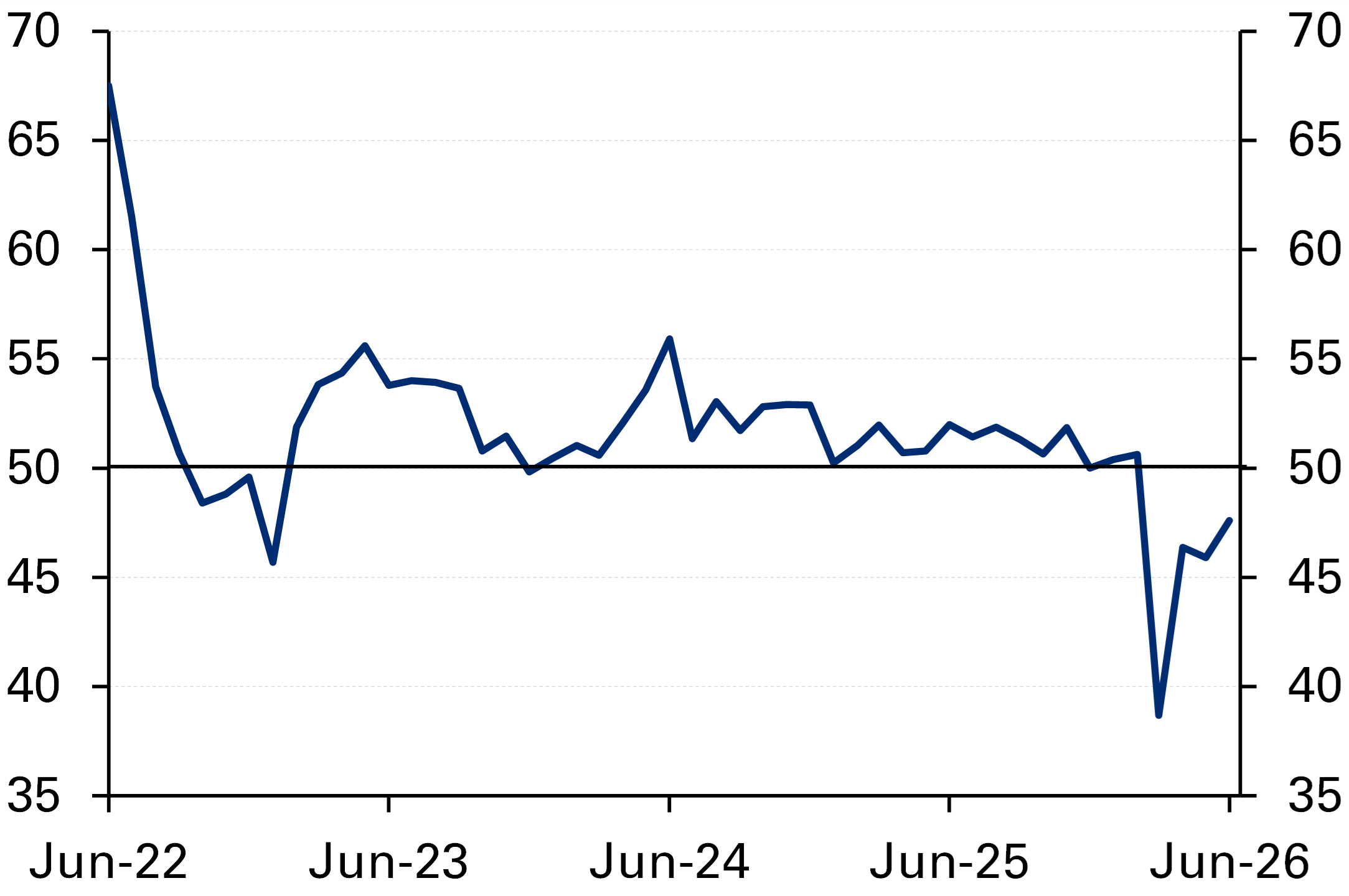
Qatar: PMI improves in June, hitting a four-month high. Qatar’s non-energy private sector PMI improved to 47.6 in June from 45.9 in May, hitting a four-month high. While the reading remains below the 50-point expansion threshold, the latest data points to a moderation in the pace of weakness and suggests that business conditions are gradually stabilizing following the recent disruptions. The improvement was broad-based across the survey. New orders continued to decline, but the pace of contraction eased to its softest level in six months, while output ended a six-month contraction streak and was unchanged from the previous month. Business sentiment also strengthened during the month. Firms’ year-ahead expectations rose to a four-month high, reflecting growing optimism that regional tensions will continue to ease and that operating conditions will become more stable. Improved business confidence helped sustain hiring activity, extending the current employment growth streak to 23 consecutive months, although the pace of job creation was unchanged from May. Meanwhile, inflationary pressures continued to build. Input costs increased for the sixth consecutive month, driven by higher purchasing prices and supply-chain-related pressures stemming from the regional conflict. Businesses responded by passing on some of these costs to customers, resulting in the strongest rate of output price inflation since 2022. Overall, while the PMI remains in contraction territory, June’s reading suggests that the worst of the conflict-related disruption may be fading as improving demand, stabilizing output, and stronger business confidence all point to a more constructive near-term outlook.
Kuwait: Emergency Response Fund launched with $100 million in capital. Kuwait has officially launched the Emergency Response Fund with an initial capital of $100 million to strengthen national preparedness, mobilize financing for emergency situations, and support the repair of infrastructure and essential services affected by crises. According to the announcement, the fund aims to ensure the continuity of vital public services and enhance the country’s ability to respond quickly and recover from emergencies through dedicated and readily-available financing mechanisms. The initiative is overseen by the Kuwait Fund for Arab Economic Development and reflects Kuwait’s efforts to improve institutional resilience and emergency-response capabilities. The Chairman of the Kuwait Fund for Arab Economic Development added that the invitation is open to both the private and public sector for further contributions to the Emergency Response Fund.
Saudi Arabia: Hotel occupancy eases in Q1 as tourism capacity continues to expand. Saudi Arabia’s hotel occupancy rate edged down y/y to 60.8% in the first quarter of 2026, according to GASTAT. The decline came as the Kingdom continued to expand its hospitality capacity to accommodate the rapid growth in tourism. Moreover, the Middle East war has most likely impacted hotel occupancy for the month of March. In contrast, occupancy at serviced apartments and other hospitality facilities improved slightly to 51.6%, reflecting strong demand for alternative accommodation options. The number of licensed tourism hospitality facilities increased by 23% y/y to more than 6,100 establishments, highlighting the rapid expansion of Saudi Arabia’s tourism infrastructure under Vision 2030. Around half of these facilities were hotels, while the remainder consisted of serviced apartments and other accommodation types. Meanwhile, the average hotel room rate declined to SAR 423, down from SAR 477 a year earlier, suggesting that the increase in room supply has started to ease pricing pressures. At the same time, the average hotel stay lengthened slightly to 4.2 nights, indicating that visitors are spending more time in the Kingdom. The slight decline in hotel occupancy does not necessarily point to weaker tourism demand. Instead, it reflects the rapid expansion of Saudi Arabia’s hospitality sector as new hotels continue to open while lower room rates and longer stays may suggest that the market is becoming more competitive.
Egypt: Airport privatization program gains momentum. Egypt is expected to announce the first results of its airport privatization program before the end of this year, according to the Regional Director of the International Finance Corporation (IFC). The IFC, which is serving as the government’s strategic advisor, confirmed that significant progress has been made in restructuring the program, which aims to increase private sector participation in the management and operation of Egyptian airports. The initiative covers 11 airports, with the IFC preparing the technical and financial studies, designing public-private partnership models, and helping market the opportunities to both local and international investors. The objective is to improve operational efficiency, enhance service quality, and attract new investments into Egypt’s aviation sector. The airport privatization program represents another key pillar of the government’s broader reform agenda to expand private sector participation in the economy. If successfully implemented, it could strengthen infrastructure investment, improve the competitiveness of Egypt’s transport sector, and reinforce investor confidence in the country’s ongoing privatization strategy.
Global: Minutes of the FOMC June meeting and China’s June inflation key matters this week. In the US, the minutes of the FOMC’s June meeting is due on Wednesday and should attract extra attention, given that it was the first meeting under Chair Warsh and especially given his decision to reduce overall communication with investors and Fed observers in general. Several Fed officials are scheduled to speak this week, including Governor Waller on Monday and New York Fed President Williams on Thursday, both key members of the FOMC. The ISM Services PMI (later today) is expected to ease slightly to 54.2 in June from 54.5 in May. In the Eurozone, retail sales data for May is due later today, and is expected to increase by 0.2% m/m after decreasing 0.4% in April. In the UK, the Halifax House Price Index for June is due on Tuesday and is projected to inch up 0.1% m/m after falling in the previous three months (-0.1% in May). In China, the CPI for June is due on Thursday with the headline rate expected to hold steady at 1.2% y/y while producer price inflation is projected to inch up further to 4.1% in June, after hitting a nearly four-year high of 3.9% in May. Finally in Japan, household spending for May (Tuesday) is seen increasing by 1.4% m/m after growing 1.6% in April, while growth in employees’ cash earnings (Tuesday) is expected to inch down to +3.4% y/y in May from +3.5% in April.