
 +965 2292 4888


Daily Economic Update
22.10.2026
UK: CPI inflation accelerates more than forecast as BoE seen hiking interest rates in early November; government borrowing continues to overshoot budget. CPI inflation in September rose to 3.5% y/y (3.4% forecast) from August’s 3.1%, mainly driven by higher energy costs, especially motor fuel prices which surged 30% y/y, up from August’s 23% rise. The core rate also came in above forecasts at a six-month high of 2.8% from 2.6% earlier. While goods inflation increased to 3.2% y/y from 2.7%, the services gauge also rose to 3.7% from 3.4%. Recreation and culture, mainly live music events and computer games, and transportation services were among the key contributors of higher underlying inflation in September. The Bank of England (BoE), in September, projected CPI inflation to rise to around 3.75% in Q4 and to 4% in Q1 next year on higher energy prices. The futures market was already signaling an around 95% probability of a 25bps bank rate hike by the BoE on November 5 prior to the CPI data, and the higher-than-expected inflation prints should make that near certain. Separately, government borrowing in September overshot the budget at £24.5 billion versus the OBR’s forecast of £22.6 billion. Borrowing for this fiscal year (ending March 2027) to September stood at £97.8 billion, £6 billion above the official forecast for the period, partly driven by higher interest expenses. The steep rise in market borrowing costs in recent months will further pressure the fiscal situation over the coming months, creating more challenges for Chancellor Healey in terms of balancing the priorities related to growth, fiscal and cost-of-living issues ahead of the Burnham administration’s first Autumn Budget next week.
Oil: Prices rise amid heightened regional tensions. Brent futures rose 1.5% in today’s early trading to above $110/bbl, extending recent gains as fresh attacks on Saudi energy infrastructure and heightened geopolitical tensions renewed concerns about regional oil supplies. Fresh support for prices came from a Houthi attack on Saudi’s Shaybah oil field, which is among the Kingdom’s largest and has production capacity of around 1 mb/d. While Saudi Arabia's energy ministry emphasized that operations were unaffected, with no loss in output, the strike nevertheless highlighted the vulnerability of regional energy infrastructure. Sentiment was further supported by reports that the US has ordered non-emergency diplomatic personnels to leave Saudi Arabia. Meanwhile, the latest EIA data showed US commercial crude inventories declining by 3 mb in the week ending October 16. Inventory movements continue to be influenced by the lingering effects of hurricane-related disruptions in the Gulf of Mexico, contributing to tighter near-term supply conditions with US crude production down 410 kb/d w/w.
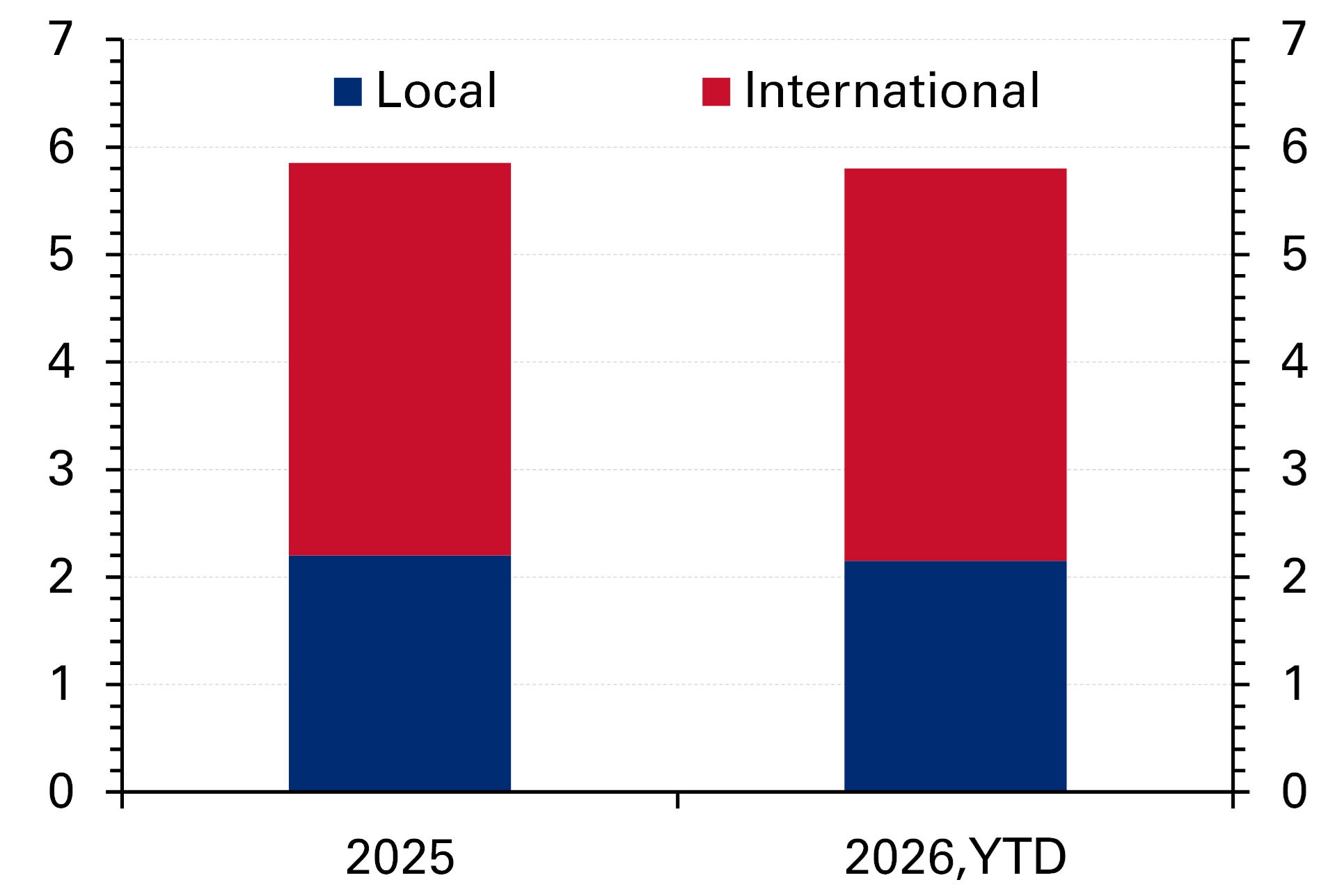
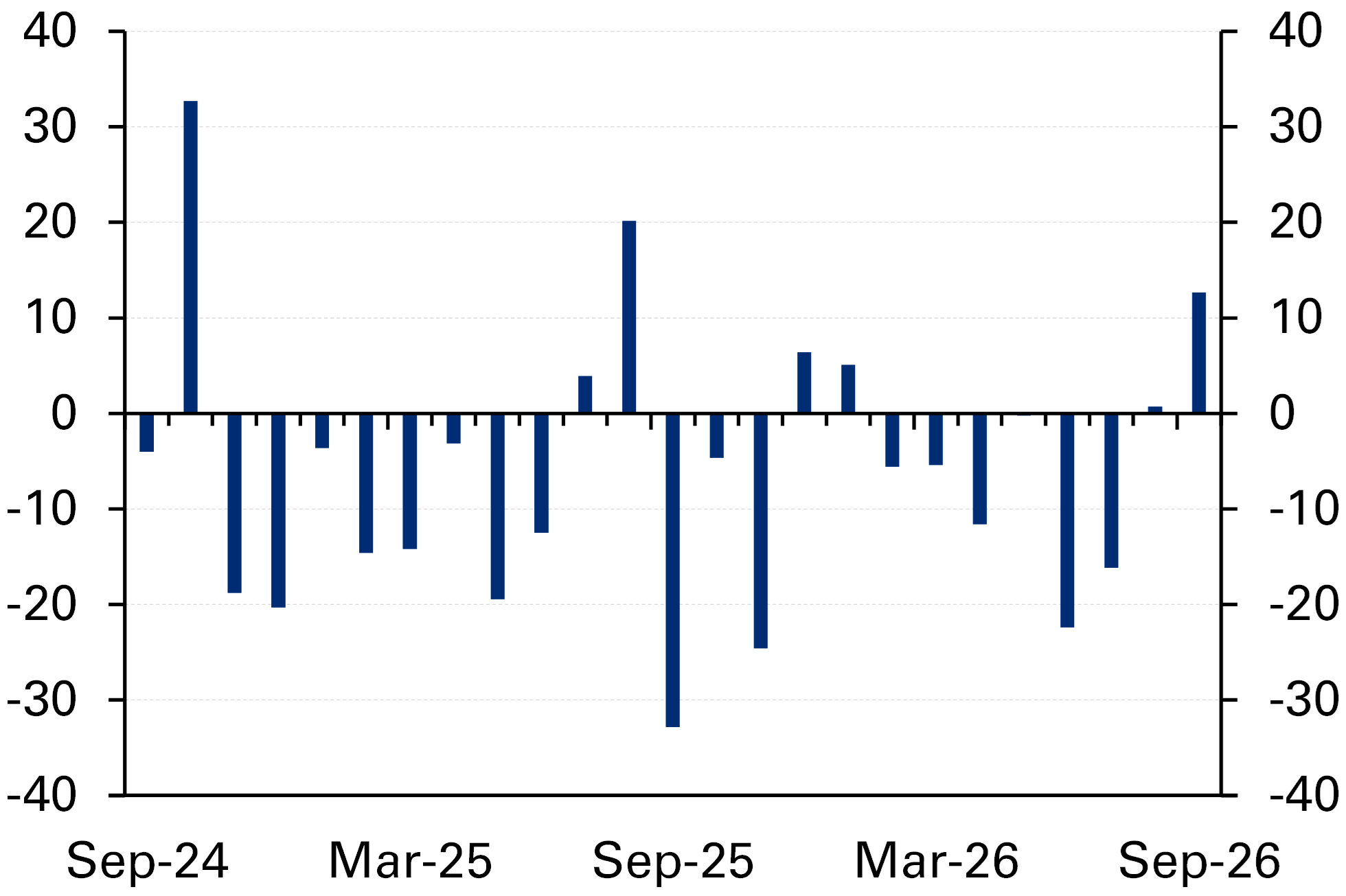
Saudi Arabia: Real estate price rises slow in Q3. Saudi Arabia’s real estate price index rose by 1.2% y/y in Q3 2026, slightly easing from 1.3% in Q2, according to GASTAT. This marked the second consecutive quarterly slowdown, with price increases concentrated in a few regions while several others recorded declines. Residential properties, which account for 72.7% of the index, remained the main driver of growth, with prices rising by 2.3% y/y. Residential land prices increased by 4.9%, while apartment prices rose by 1.7% and residential floors (units within buildings) by 0.8%. In contrast, commercial real estate prices fell by 2.0%, mainly due to a 2.1% decline in commercial land prices. Agricultural land prices, however, increased by 3.9% y/y. Price movements also varied considerably across regions. The Northern Borders Region recorded the strongest increase, at 12%, followed by Riyadh at 4.6% and Madinah at 0.3%. Among the regions recording declines, Asir saw the largest drop, at 4.3%, followed by Hail at 3.8% and the Eastern Province at 3.7%. Overall, the slowdown in real estate price gains reflects diverging trends across property types and regions, with residential land supporting the market while commercial property prices remain under pressure.
Egypt: Trade deficit widens as imports outpace exports. Egypt’s goods trade deficit widened by 36% y/y to $6.4 billion in August, up from $4.7 billion a year earlier, according to CAPMAS. Exports increased by 17.5% y/y to $4.7 billion, while imports rose by a faster 27% to $11.1 billion. As a result, total trade grew by 25% to $15.8 billion during the month. The trend was more pronounced over the first eight months of the year (January-August), when the trade deficit expanded by 47% y/y to $48.1 billion. Exports rose by 8.3% to $36.6 billion, while imports climbed by 28% to $84.7 billion. The widening deficit due to faster growth in imports relative to exports highlights the continued challenge of narrowing Egypt’s trade gap and strengthening its external position.