
 +965 2292 4888


Daily Economic Update
10.02.2026
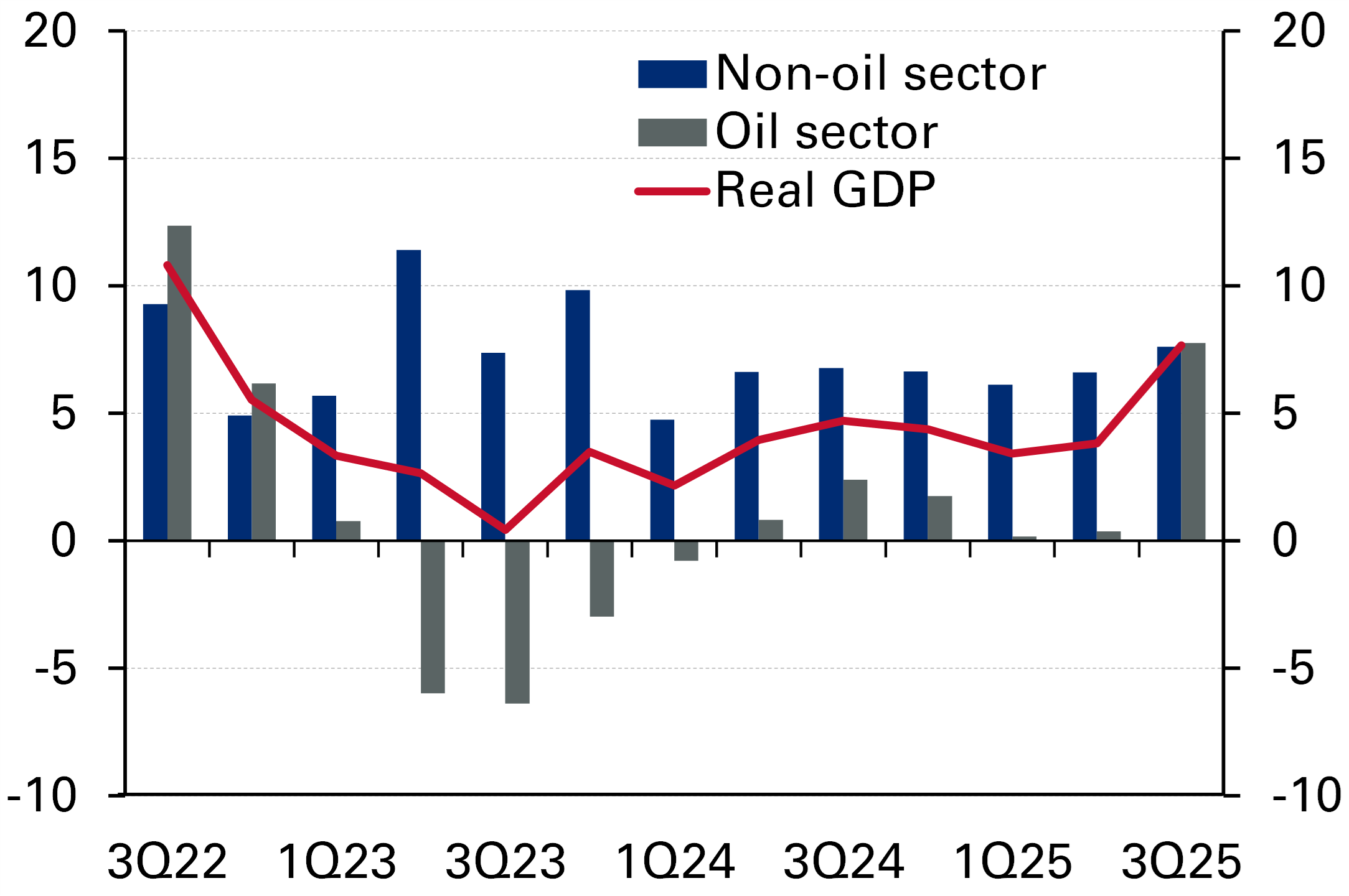
UAE: Abu Dhabi’s GDP growth logs a three-year high in Q3. Abu Dhabi’s economy recorded its strongest quarterly performance in three years in Q3 2025, with real GDP expanding by 7.7% y/y. Growth was underpinned by a sharp acceleration in the oil sector, which rose by 7.8% y/y, in line with a 10.5% increase in oil production to 3.24 mb/d in Q3. At the same time, non oil activity remained key despite its contribution to the total declining slightly to 54% in Q3 from about 56% in the previous two quarters. Non oil GDP growth accelerated for the second consecutive quarter to 7.6% y/y, up from 6.6% in Q2, supported mainly by strong growth in the construction (13.9% y/y versus 9.7% in Q2), wholesale and retail trade (3.0% versus 1.6%), and electricity, gas and water (16.2% versus 12.5%) sectors. Growth in finance and insurance remained robust at 8.5% y/y, albeit moderating from 10.3% in Q2. As for the first nine months of 2025, real GDP grew by 5.0% y/y, the strongest increase since 2022, driven primarily by the non oil economy, which expanded by 6.8% y/y, while oil GDP growth improved to 2.9% y/y. For 2026, Abu Dhabi’s growth outlook remains positive, with the momentum to be sustained by the diversification led growth model in the non-oil sector and the expected increase in oil sector growth broadly guided by OPEC+ policy and the UAE’s higher baseline quota.
Saudi Arabia: PIF tests investor appetite as it refines its new investment strategy. The Public Investment Fund (PIF) is beginning to test key elements of its revised investment strategy by sounding out investor interest in selected giga and mega projects. The fund is still in the process of finalizing its revised strategy, with the updated roadmap expected to be completed later this spring. Under the emerging framework, projects that fail to meet stricter internal rate of return thresholds, or are not linked to strategically important flagship events, are likely to be deprioritized. This reflects growing fiscal pressures and higher borrowing needs, which are prompting a more selective approach to capital allocation. As part of the new strategy, attracting co-investment from major global asset managers is set to become a central pillar. The fund is increasingly focused on mobilizing external capital rather than relying solely on its own balance sheet, particularly for large-scale developments. The PIF has also signaled a shift away from Neom as a focal point of its investment agenda. Instead, the next phase will be structured around six priority sectors, including tourism and advanced manufacturing. The 2026-2030 strategy further aims to concentrate capital on a narrower group of portfolio companies, with the objective of scaling them into global champions across sectors such as manufacturing, artificial intelligence, and aviation. Overall, the strategy points to a more disciplined and return-driven investment approach, marking a transition from expansion by scale toward expansion by efficiency and global competitiveness.
Oman: New five-year plan projects 700,000 new jobs. Oman’s growing economy and falling public debt are boosting its capacity to generate employment, with the 11th five-year plan projecting around 700,000 new jobs, including 300,000 for Omanis, according to senior officials. The government highlighted progress in economic diversification, private sector inclusion, and labor-market alignment, including Omanization of leadership roles and improved training programs. Tourism continued its post pandemic expansion with 3.96 million visitors in 2025 and an 18% y/y increase in spending, while major investments in telecoms and digital infrastructure (RO 1.2 billion) reflect Oman’s digital transition. Additional updates included advances in urban development, strengthened investment facilitation through the “Invest in Oman” platform, and progress on strategic projects attracting up to RO 2.5 billion in new investments.
Egypt: Cabinet opts to keep electricity prices unchanged, delaying any hike until year-end. The cabinet is choosing to hold electricity tariffs steady, signaling that consumers are unlikely to face higher power bills before the end of the current fiscal year in June. Electricity prices have remained unchanged since the last adjustment in August 2024, despite the Electricity Ministry finalizing several scenarios for potential increases to reflect higher operating costs. For now, policymakers appear more focused on containing inflationary pressures than on reducing energy subsidies. Keeping electricity prices flat limits second-round inflation effects and gives the Central Bank of Egypt greater confidence to continue its monetary easing cycle, potentially from a more proactive stance. From a fiscal perspective, the trade-off also looks manageable. Any adjustment to electricity tariffs now appears postponed to the final quarter of the fiscal year, or more likely aligned with the start of the new budget cycle in July. This timing would allow authorities to reassess inflation dynamics, subsidy costs, and financing conditions before taking a decision that could have broader macroeconomic and socioeconomic implications.
US: Consumers’ year-ahead inflation expectations fall in January while job market perceptions improve. According to the monthly New York Fed survey, consumers’ year-ahead inflation expectations in January dropped to a six-month low of 3.1% y/y from 3.4% in December, while those for three-year and five-year-ahead horizons remained steady at 3% for the fifth consecutive month. The survey also highlighted improving perceptions about employment prospects in January, with a slightly falling probability of losing one’s job and better chances of finding a new role though still weaker than the trailing 12-month average. However, views about household financial situations somewhat deteriorated amid tighter access to credit and moderating household income growth. Debt delinquency expectations (missing minimum debt payments over the next three months) fell sharply from December but remained elevated versus the broader trend seen last year. The survey results broadly indicate that the outlook for inflation and employment remains cautious in 2026, with inflation elevated, though not as high as once feared, and hiring weak. Meanwhile, Fed Governor Miran emphasized that the tariffs’ impact on the economy has remained “quite muted” as he had predicted, claiming that it is mostly foreign players who are absorbing the higher duties, and that tariff revenue would be “significant in terms of reducing the primary deficit." He also supported the idea of reducing the Fed’s balance sheet, echoing views from Fed Chair nominee Kevin Warsh and Treasury Secretary Bessent, but highlighted that during crises expanding the balance sheet will be “the right move.”