
 +965 2292 4888


Daily Economic Update
02.06.2026
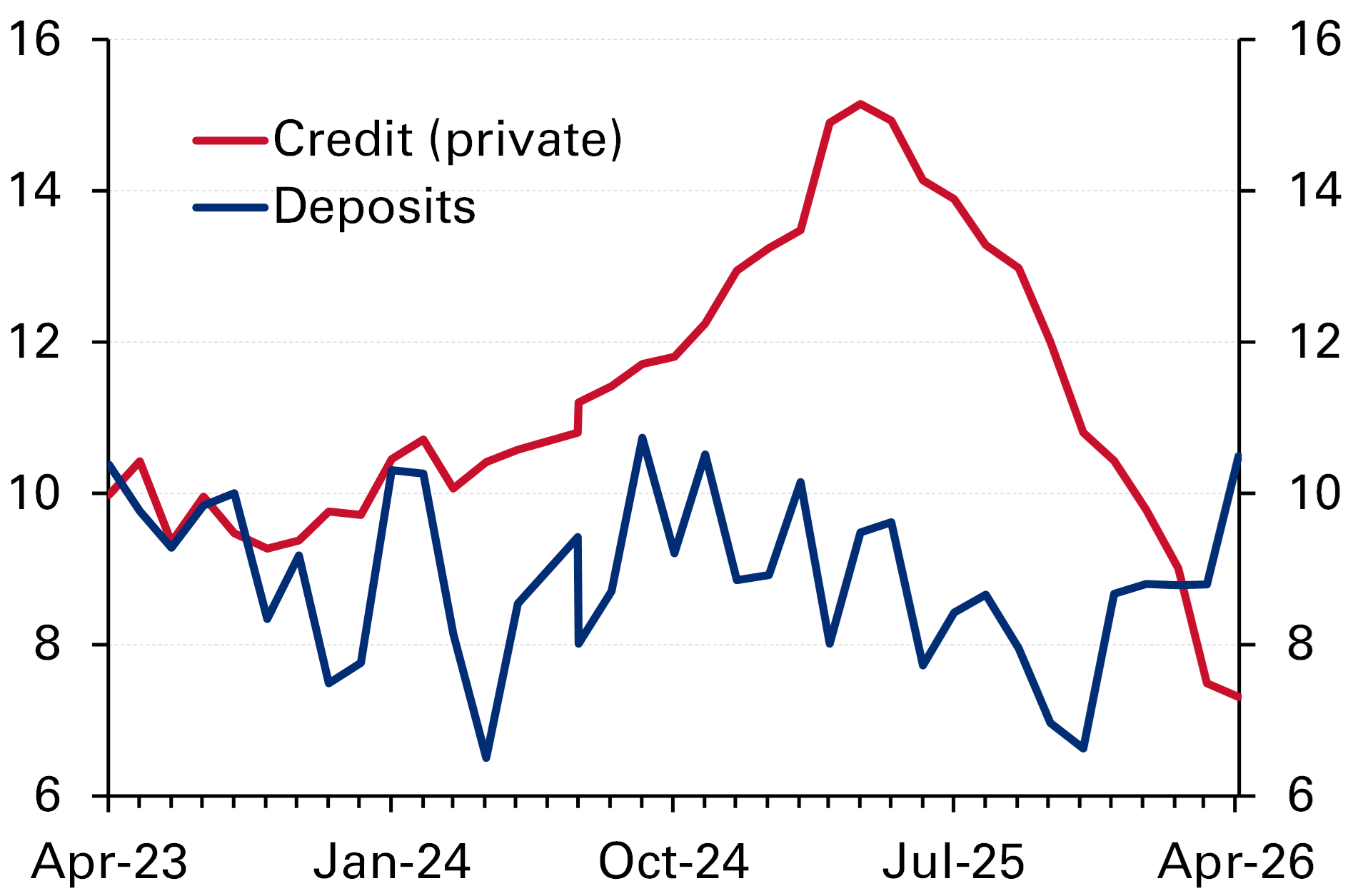
Saudi: Bank lending continued to slow in April, but deposit and liquidity metrics improved. Official data showed that bank lending to the private sector continued its year-long moderating trend in April, easing to 7.3% y/y (+0.6% m/m) from 7.5% in March. While still solid, this is around half the rate of growth recorded in April 2025 (+15.1% y/y). Total bank credit growth, which includes lending to public sector enterprises, slowed to 8.0% y/y in April from 8.2% in March. When classified according to economic activities, credit continued to expand across all the major sectors, such as real estate (+9.6% y/y), wholesale & retail trade (+3.4%), manufacturing (+6.3%) and finance & insurance (+18.4%), though rates of growth were well down on 2025 levels. On the liabilities side, against the backdrop of regional conflict, bank deposits rose at a faster 10.5% y/y in April (+1.7% m/m) – indeed the fastest in more than one year – on the back of time & savings and foreign currency placements by government entities, which helped offset a decline in demand deposits. In a sign of improving liquidity, the Saudi Central Bank’s adjusted loan-to-deposit ratio (LDR) fell to its lowest level in more than two years in April at 78.9%. The LDR had set a post-pandemic high of 83.2% in December 2024 as bank lending outpaced deposit growth to fund Vision 2030 projects and the kingdom’s rapid economic expansion. Amid ever tighter liquidity, banks increasingly resorted to capital markets and external financing for funds. Rating agency Fitch warned yesterday that the current prolonged conflict in the Gulf is testing the resilience of regional banking systems including Saudi Arabia’s, through deteriorating asset quality and tightening liquidity especially.
Oil: Prices rise as US-Iran negotiations appear to be breaking down. Brent futures (August contract) rose 4.2% yesterday to close at just under $95/bbl on a flare-up of geopolitical risk amid faltering US-Iran peace deal prospects. Indeed, negotiations on a MOU stalled after Iran paused engagement via mediators, citing Israel’s continued military actions in Lebanon and stating that a cessation of hostilities across all fronts was a prerequisite for further negotiations. Additional upside pressure came from reports that Iran, through its Houthi proxies in Yemen, had threatened vessels transiting the Bab el Mandeb Strait in response to the Israeli escalation in Lebanon, raising concerns over a potential second maritime disruption point beyond Hormuz. According to shipping data, Saudi Arabia ships 4-6 mb/d of oil through Bab el-Mandeb. These developments briefly pushed intraday gains above 6%, though the price advance was partially pared after President Trump announced that he had secured a pledge from Hezbollah to refrain from further attacks on Israel, easing some of the immediate escalation fears.
US: ISM manufacturing PMI climbs to a four-year high but price pressures remain steeply elevated. The ISM manufacturing PMI beat forecasts to hit a four-year high of 54 in May (52.7 in April) as the gauges of new orders (56.8) and production (54.3) climbed to the highest level in four months. In general, manufacturing activity globally has been spurred by firms seeking to mitigate supply chain disruptions as well as any further potential price hikes following the Middle East war, which has prompted stockpiling in recent months. Besides the latest front-running, the massive AI-related spending boom is delivering support and driving optimism among certain businesses. Still, manufacturing employment shrank for the 16th consecutive month, albeit at a softer pace than in April (48.6 in May versus April’s 46.4). Inflationary pressures remain sharply elevated, with the ISM prices paid measure hovering near a four-year high despite easing from 84.6 in April to 82.1 in May, implying no material softening in consumer price inflation anytime soon. Meanwhile, Fed Governor Powell, in his first public comments since he was succeeded by Kevin Warsh as Fed Chair continued to strike a defiant tone and warned that “If any administration finds a way to remove Fed officials over policy differences, then future administrations will do so as well. The public would lose faith that the central bank will make decisions based only on what’s best for all Americans. The Fed’s credibility would be lost.” The remarks came in an acceptance speech for receiving the “2026 John F. Kennedy Profile in Courage Award”. We note that Powell had previously mentioned that he would maintain a “low profile” during his remaining term as Fed Governor.
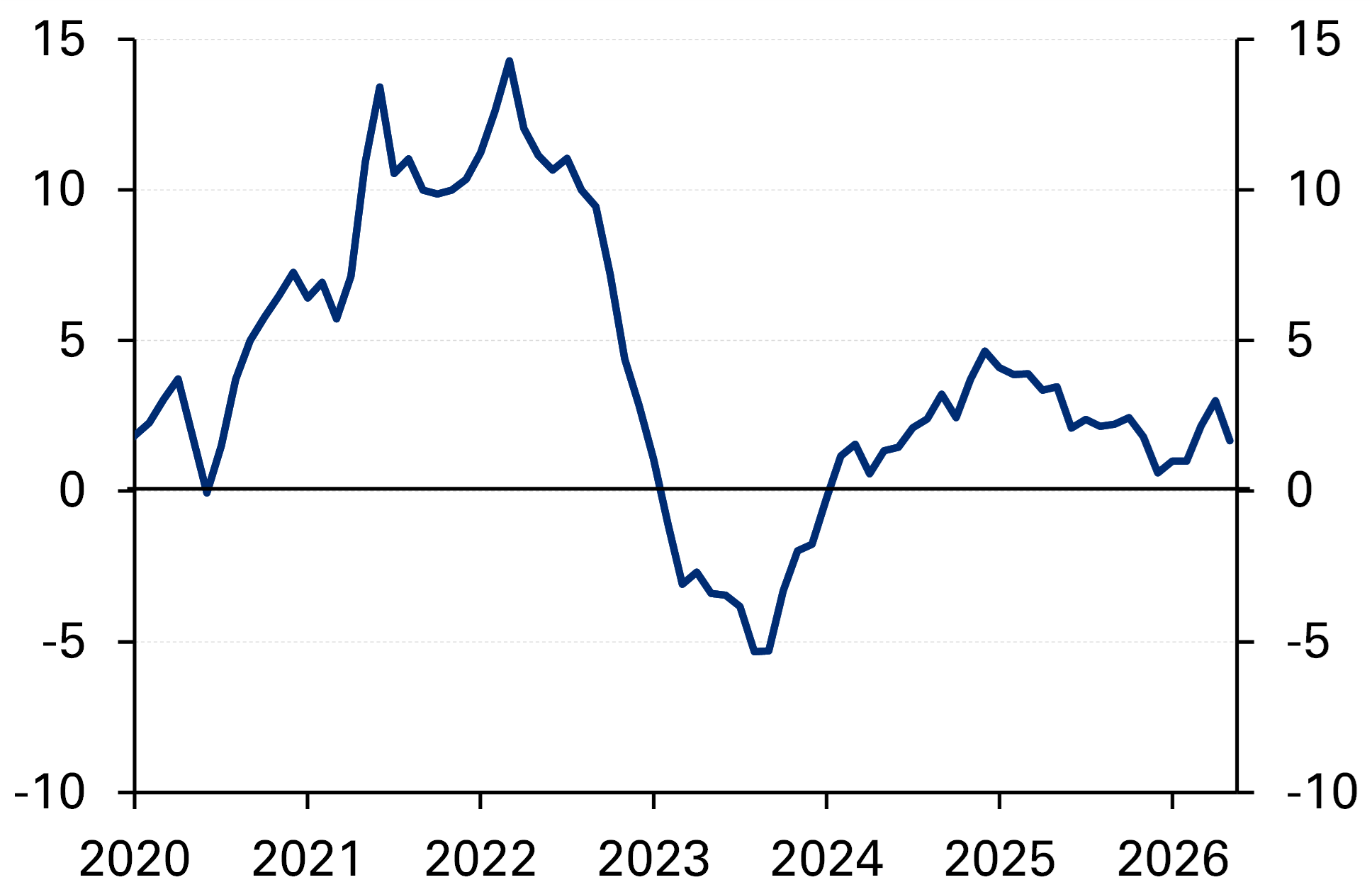
UK: Nationwide house price index drops in May as the March-April momentum falters. The Nationwide house price index fell by a more-than-forecast 0.6% m/m in May, the first monthly fall in five months, and after rising 0.9% in March followed by 0.4% in April. On an annual basis, growth eased to 1.7% from 3% in April. This compares to a 2.5% average rise seen in the last two years and around 3% per annum seen pre-COVID. We also note that UK house prices are now down 15% in real (i.e. after inflation) terms from their peak in early 2022 – highlighting a substantial market adjustment. Like we have noted earlier, the near-term outlook for the UK residential property market continues to be muted. An ongoing weak job market, with falling employment and slowing wage growth, rising price pressures given the spike in energy prices (despite CPI inflation softening in April on temporary factors), tougher rules for landlords and elevated mortgage rates will likely keep headwinds in place.