
 +965 2292 4888


Daily Economic Update
01.06.2026
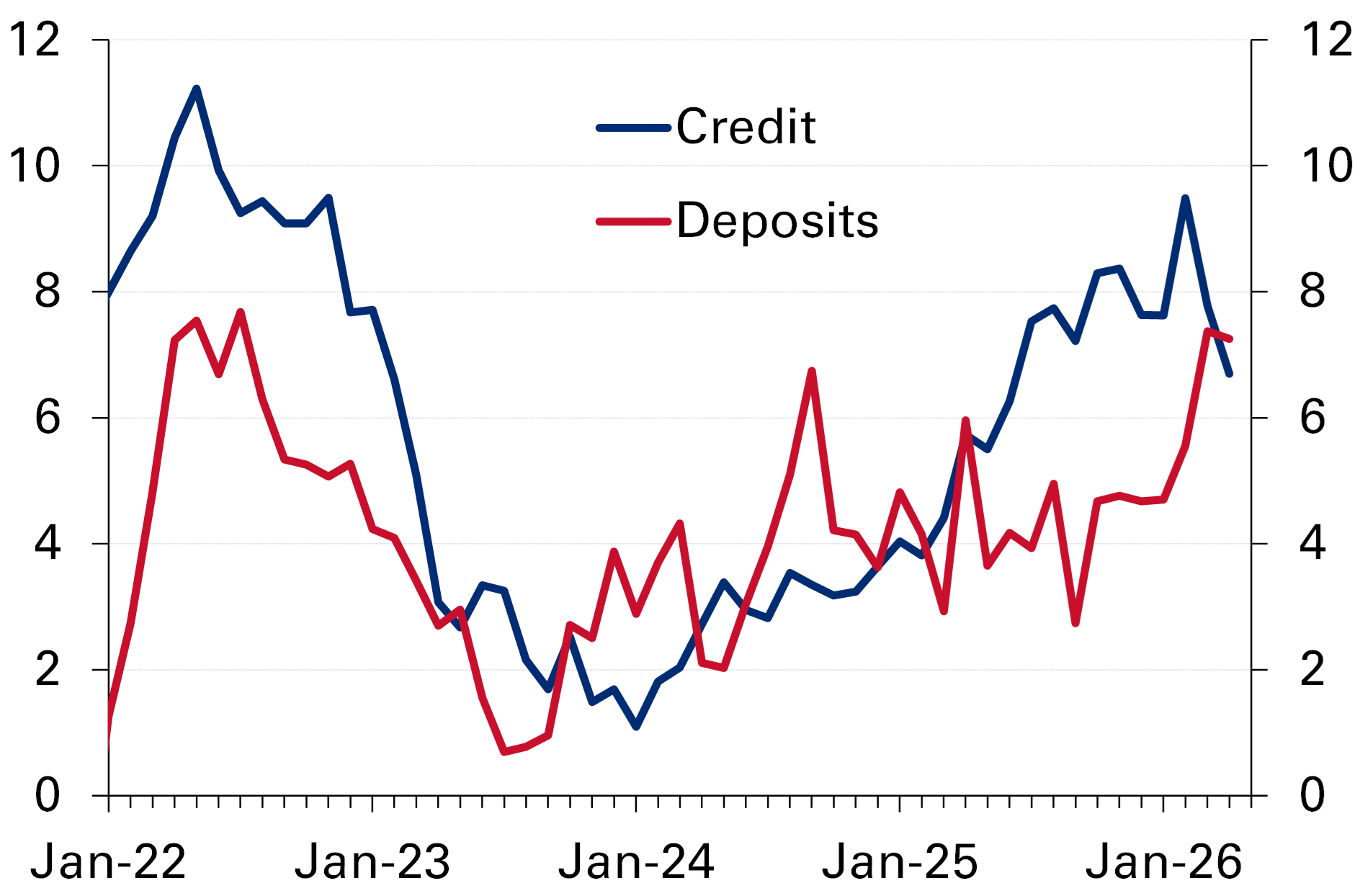
Kuwait: Domestic credit edged higher in April as household and financial sector lending rebound. Domestic credit rose by 0.3% m/m in April (6.7% y/y), reversing the 0.7% contraction in March and lifting YTD growth to 2.1%. The expansion was primarily driven by a strong recovery in lending to banks & financial institutions, which jumped 5.9% m/m following a sharp 13% decline in March, alongside a pickup in household credit, which increased by 0.5% m/m, the fastest pace since July 2025, following a monthly contraction of -0.5% in March. Meanwhile, business credit growth eased to 0.1% m/m, bringing YTD growth to 3.0%. The slowdown reflected continued weakness in trade (-1.2% m/m, albeit less severe than March’s -5.5%) and contractions in real estate (-0.5%) and other sectors (-1.1%), while positive growth in industry (3.6%) and construction (0.5%) sectors slowed. Credit for the purchase of securities declined sharply by 2.8% m/m, reversing the slight increase seen in March and pushing its YTD growth into negative territory (-1.6%). Credit to non-residents also fell by 1.4% m/m, mainly due to an 8.3% drop in lending to foreign banks. On the liabilities side, resident deposits grew a solid 1.5% m/m in April (5.3% YTD and 7.3% y/y), comparable to March, supported by another strong increase in government deposits (11.0% m/m) and a rebound in private sector deposits (1.2% m/m) following the previous month’s contraction (-1.0% m/m). In contrast, non-resident deposits declined for the third consecutive month, albeit at a slower pace of 2.2% m/m, driven mainly by continued weakness in foreign currency private sector deposits.
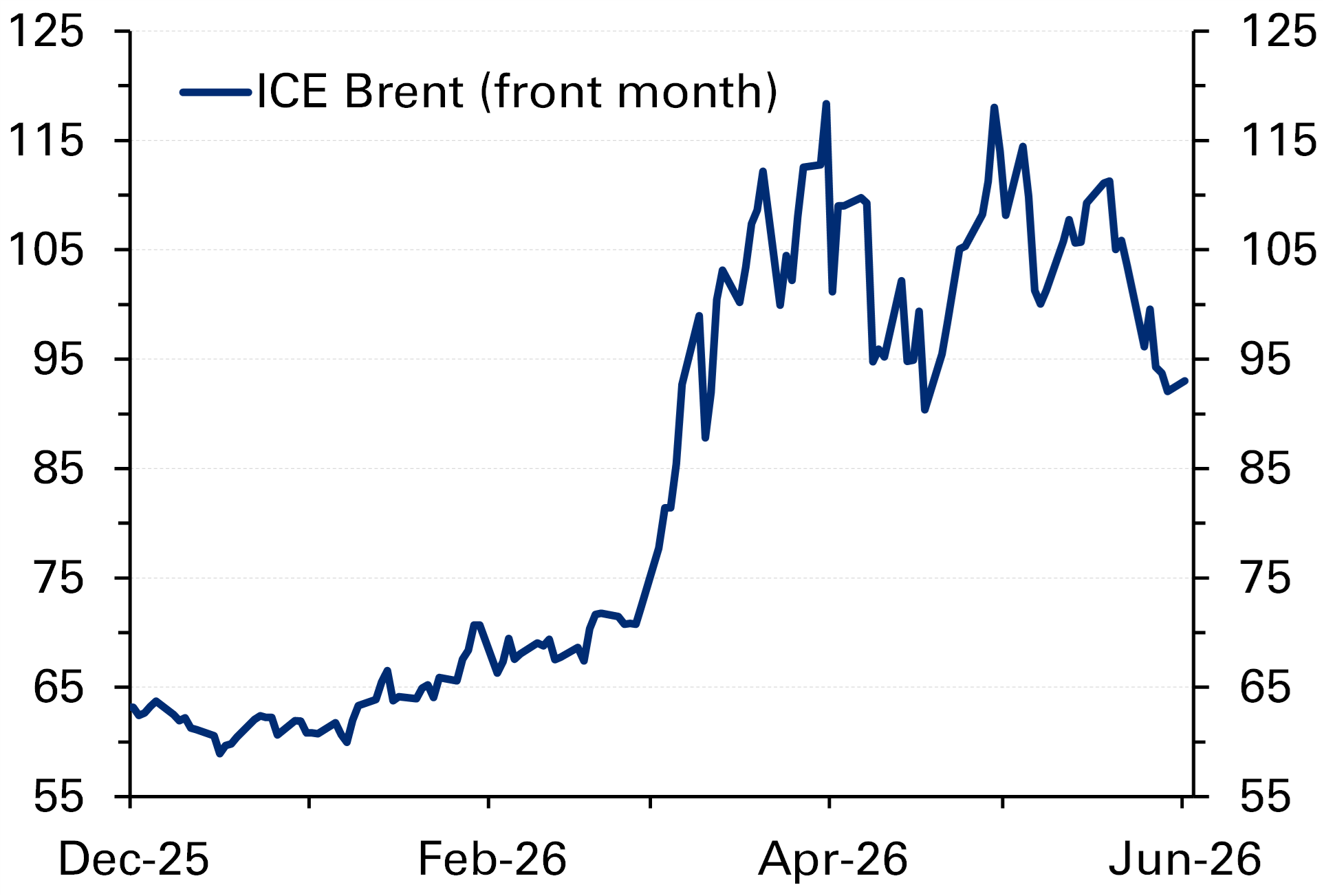
Oil: Brent suffers sharpest decline in seven weeks amid easing geopolitical risk premia. Brent futures (July delivery) settled at $92.1/bbl on Friday, dropping 11% week-on-week and 19% month-on-month – respectively, the sharpest decline in seven weeks and the steepest monthly fall in six years. The losses reflected the unwinding of geopolitical risk premia, as markets increasingly traded on the expectation that the three-month US-Iran conflict could be approaching a resolution. Throughout last week, both sides signaled that negotiations were making progress, with media reports suggesting that the framework under discussion includes a 60-day extension of the ceasefire and the reopening of the Strait of Hormuz within a month. However, US President Trump is still to sign off on the draft and Tehran has yet to confirm the agreement. Indeed, both sides appeared to harden their positions over the weekend, with Trump stating that he was “not in a hurry” to reach a deal (and reportedly submitted a tougher counterproposal) and chief Iranian negotiator Ghalibaf reiterating that no agreement would be reached until Iran’s rights – presumably a reference to its nuclear program – are secured. Brent gained 2% in early Asian trading this morning amid the ongoing uncertainty. While last week saw a limited exchange of strikes, including a US attack on Bandar Abbas and an Iranian strike on a US military installation in the region, neither side appeared willing to escalate decisively. The restrained response suggests that both Washington and Tehran remain focused on preserving the diplomatic track, reinforcing the market’s view that the conflict may be entering its final stages. Meanwhile, fundamentals in the physical market continue to point to robust consumption. According to the EIA, total US crude inventories (commercial stocks + SPR) fell by 12.4 mb w/w in the week ending May 22, marking the seventh consecutive weekly decline. Gasoline and distillate inventories also drew down, likely reflecting stronger seasonal demand for transportation fuels. The trend was mirrored in US crude export data, which declined 1.2 mb/d w/w to 4.4 mb/d as refinery utilization increased, indicating that more barrels were being absorbed domestically to meet higher summer consumption.
China: Official PMI remained in expansion in May. The official PMI for May signaled continued but uneven expansion, with a modest divergence across sectors. The manufacturing PMI edged down to 50.0 in May from 50.3 in April as output eased and new orders slipped back into contraction, highlighting still fragile domestic demand and less supportive external orders compared to April’s uptick. Meanwhile, the non manufacturing PMI rebounded to 50.1 in May from 49.4 in April, returning to expansion as services activity stabilized and construction improved modestly after the prior month’s decline. As a result, the composite PMI rose to 50.5 in May from 50.1 in April, pointing to a slight firming in overall activity. Overall, the data suggest that growth remains broadly steady though manufacturing momentum has softened and domestic demand continues to lag, leaving the outlook sensitive to external conditions and policy support.
Japan: Tokyo CPI inflation unexpectedly falls in May while retail sales and industrial production were solid in April. Tokyo’s consumer price inflation fell to 1.4% y/y in May, matching March’s four-year low, despite upward price pressures from the Iran war. The fall was aided by favorable base effects and continued fuel subsidies, with PM Takaichi aiming to keep those subsidies in place through an extra budget with additional debt issuances. Core inflation (excluding fresh food) also fell, declining for the sixth consecutive month and falling below consensus estimates of 1.5% y/y to reach 1.3%. Meanwhile, retail sales growth improved to 2.1% y/y in April, beating expectations of a 1.3% rise as government subsidies and strong wage growth continue to support demand. Finally, April’s industrial production growth edged down slightly to 2.3% y/y (from 2.4%) but beat expectations, with gains in electrical machinery and electronics offsetting declines in chemicals output.
Global: US jobs report, Eurozone CPI, and US-Iran ceasefire developments key matters this week. Further updates on the US-Iran ceasefire will continue to be the main market moving event this week, after media reports last week suggested that the two sides were moving closer to a more durable deal that drove global benchmark bond yields lower and equities higher. In the US, the non-farm payroll data for May (Friday) is expected to show more signs of improvement in the labor market, with job gains projected at 96K versus 115K in April along with a steady unemployment rate of 4.3%. Job openings in April (Tuesday) are seen staying largely flat at 6.87 million. The ISM manufacturing PMI (later today) is expected to tick down to 52.6 in May from 52.7 in April, while the services measure (Wednesday) is seen unchanged from April at 53.6. Beyond the headline series, the attention will also be on the price gauges that have spiked following the Middle East war. Several Fed officials will also speak this week, offering more clarity on their views ahead of the next FOMC meeting on June 16-17, the first one under the leadership of new Chair Warsh. In the Eurozone, the flash CPI for May (Tuesday) will be the critical inflation report ahead of the ECB policy meeting next week, with headline inflation forecast at 3.3% y/y and core at 2.4% y/y, up from 3% and 2.2% in April, respectively. In addition, April retail sales (Thursday) are seen declining by 0.3% m/m following a decrease of 0.1% in March. In the UK, the Halifax house price index (Friday) is seen rising by 0.2% m/m in May after a drop of 0.1% in April. In Japan, April’s household spending and average cash earnings are both due on Friday, with consensus estimates seeing both measures improving to -1.4% y/y and +3.2% y/y from -2.9% and +2.7%, respectively.