
 +965 2292 4888


Economic Insight
06.05.2026
The impact of AI on the US labor market and the economy at large remains a developing story with, obviously, many unknowns. However, data/studies are showing that the early impact of generative AI tools is fewer jobs for entry-level white-collar workers and rising unemployment for that cohort. Moreover, AI-driven job cuts and displacements have been expanding, and the further advancement in AI tools will possibly broaden the extent of job displacements. An MIT study found that AI can overlap human skills for 11.7% of US jobs. Still, the overall impact on the aggregate job market remains unclear. The optimistic view is that, as in prior ground-breaking technological innovations, the outcome will eventually be positive for overall job growth. Less uncertain is AI’s boost to efficiency and productivity, which is real and already happening. And while that is clearly disinflationary, the massive AI-related CAPEX spend is inflationary, leaving the net impact on inflation unclear. As for the prediction that AI can drive policy interest rates lower, that seems far-fetched. This is because, on top of the unclear inflation impact, the AI-productivity gains would lead to stronger real GDP growth and hence higher real interest rates and a higher neutral interest rate.
AI’s early impact is fewer jobs for entry-level white-collar workers and rising unemployment for that cohort
AI technology, especially generative AI, could be one of the most promising technological advancements with huge potential to enhance productivity and efficiency, while disrupting some job types in the process. But in recent years, the job market has also been influenced by other key factors including the normalization of demand after the post-Covid boom, the sharp fall in the foreign-born labor supply amid immigration curbs, the increase in uncertainty driven by chaotic tariff policy, and a possible skills mismatch between the demand and supply of workers. It can be difficult to unpick the impacts of these various forces.
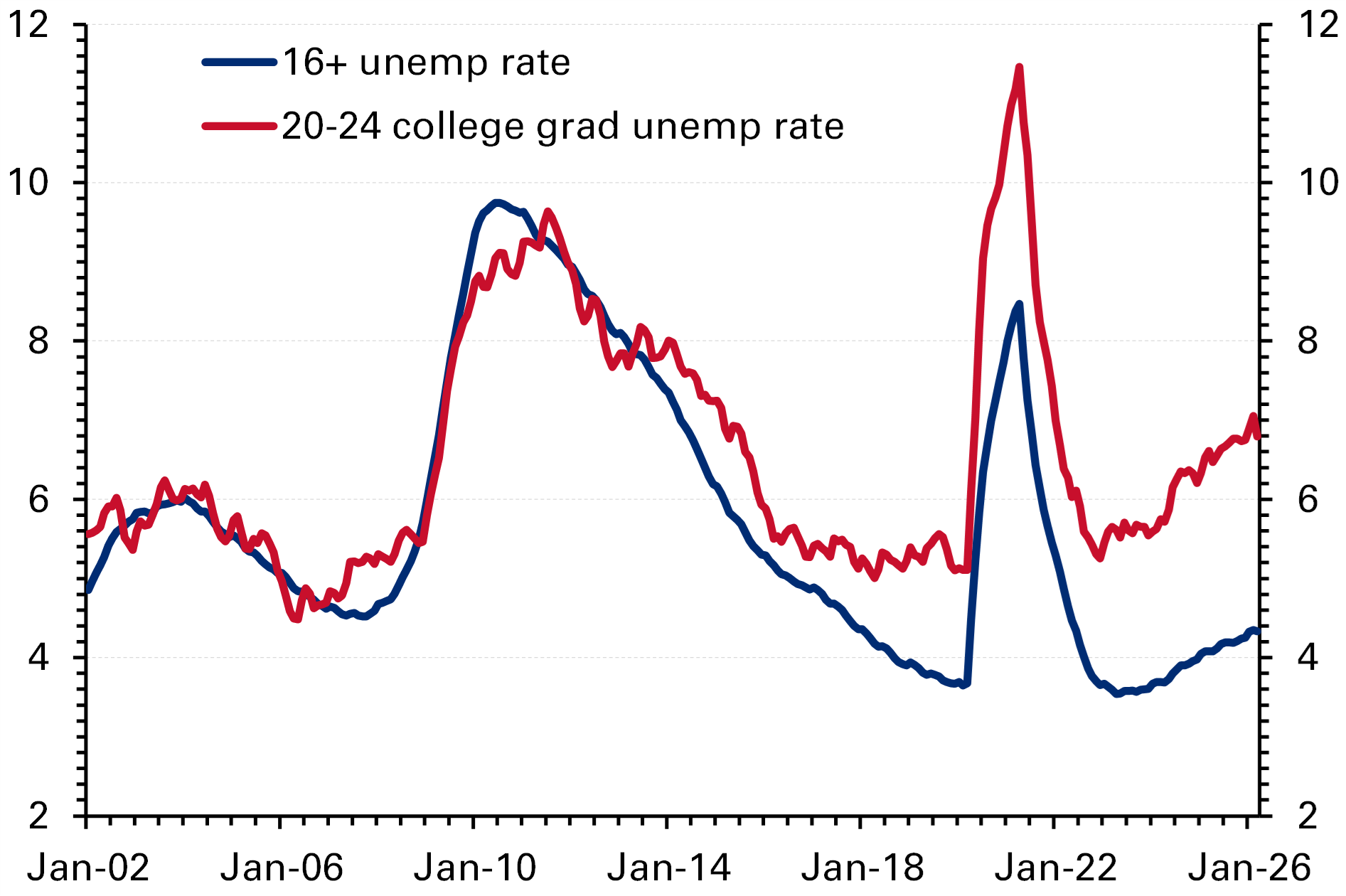
We note that despite inconclusive evidence of AI’s impact on the aggregate job market, signs of actual job displacement are hard to miss, as shown by several data points and academic studies. While AI is possibly already having an impact on many occupations across several industries and experience levels, the most visible disruption so far appears among entry-level white-collar jobs where demand for certain professions has likely weakened. For example, BLS data shows that the unemployment rate for recently-graduated students has recently been rising faster than the overall unemployment rate, after generally moving in tandem historically. Other data sources, such as the New York Fed, point to similar findings. Similarly, a study by Stanford Digital Economy Lab (a research center at Stanford University focusing on technology and its impact on the economy) analyzing ADP payroll data highlighted that job types most exposed to AI such as software developers and customer service representatives saw declining employment for early career workers (22-25 age group), specifically by around 6% between late 2022 and September 2025, although employment increased for more experienced ones. In contrast, the study found that jobs that are less exposed to AI did not witness any noticeable pattern across various experience levels.
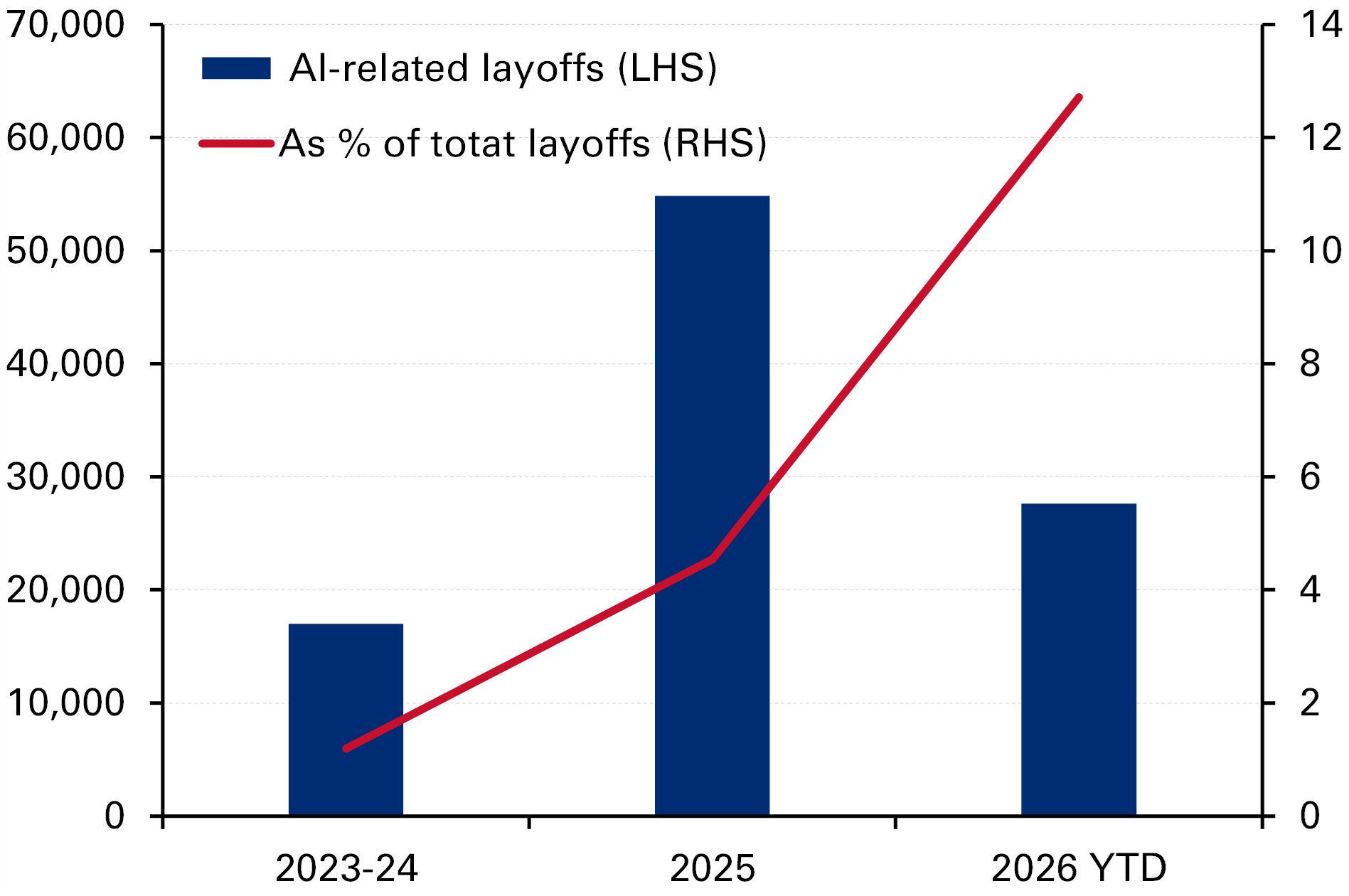
Moreover, based on Challenger, Gray, and Christmas (an HR consulting firm which also tracks unemployment trends), the rate of job cuts attributed to AI has rapidly surged recently. Specifically, AI was cited as the reason for almost 13% of total headcount reductions in the US between January and March of this year, up from only around 1% in 2023-24. For example, social media firm Snap, in April, announced 1K job cuts (around 16% of its total workforce) as the company mentioned utilizing AI tools to increase automation and "reduce repetitive work and increase velocity." In addition, data from Revelio Labs (a labor market analytics firm) indicate that, for entry level jobs, roles that are highly exposed to AI fell by more than the drop witnessed by other roles.
Job displacements happening amid faster AI adoption
As generative AI continues to gain traction and see faster adoption across several work functions, it could potentially have a far-reaching impact on the entire US job market, driving significant job displacements. One of the leading AI agent developers, Anthropic’s Co-founder Dario Amodei mentioned that “AI will disrupt 50% of entry-level white-collar jobs over 1–5 years”. An MIT study found that AI already has the capability to replicate human skills for 11.7% of total US jobs. A similar study by Tufts University identified 6% of total jobs in the US were vulnerable to displacements because of AI, with professions in information (18%) as well as finance and insurance (16%) at higher risk. Taking a cautionary stance, IMF Managing Director Kristalina Georgieva recently mentioned that AI is “hitting the labor market like a tsunami, and most countries and most businesses are not prepared for it.”
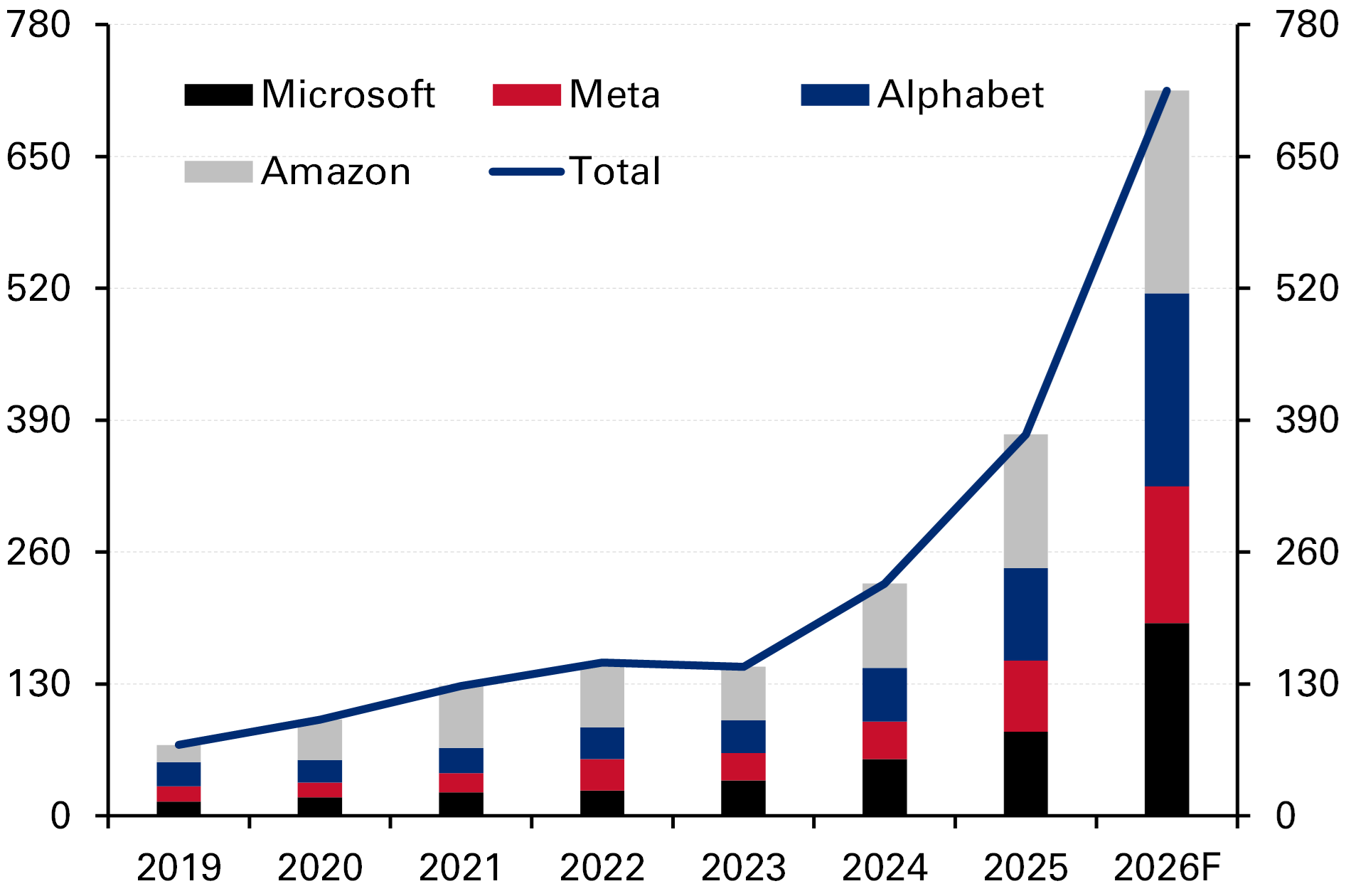
Tech corporations obviously acknowledge AI’s potential and its profound impact on their core software development functions as well as employment. Google’s CEO recently noted that “75% of all new code at Google is now AI-generated and approved by engineers, up from 50% last fall.” Microsoft’s Chief Technical Officer predicted that AI would contribute around 95% of coding work by 2030 as the company shed over 20K jobs since the beginning of 2025. Amazon and Meta have also trimmed jobs citing AI-driven productivity gains and better capital reallocation. Since October 2025, job cuts at Amazon amounted to around 30K, mostly among its 350K staffed corporate functions while Meta has planned 8K to 16K headcount reductions (up to 20% of the total). Massive spending on developing AI infrastructure is currently underway as some large US technology companies plan to spend a total of around $700 billion in 2026 on CAPEX, with the bulk geared towards AI and associated infrastructure. In fact, combined spending by these “hyperscalers” is expected to remain in excess of $600 billion per year at least through 2030, as per consensus estimates. As has been the case recently, this massive spending is expected to continue supporting GDP growth.
But AI is leading to productivity and efficiency improvements; impact on overall job growth still unclear
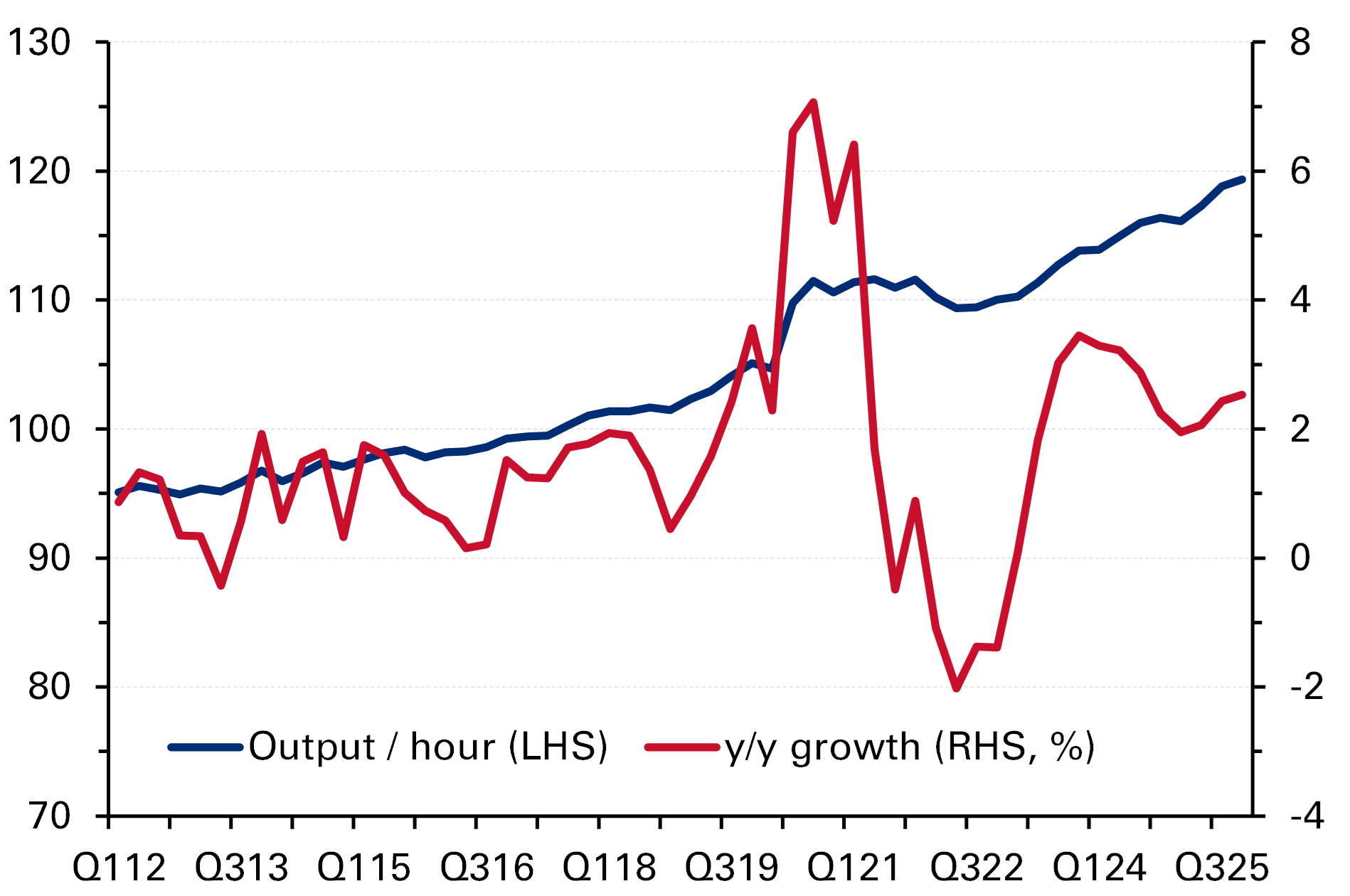
Generative AI has shown immense potential to drive additional labor productivity gains, which have been a key feature of the US economy over the past years. Notwithstanding job displacement-related worries, AI will also help augment existing skill sets and drive broader efficiency gains. According to a LinkedIn survey conducted last year, around 63% of US executives agreed that “AI will eventually take on some of the mundane, manual tasks that entry-level employees at their organizations currently focus on.” Such potential for efficiency enhancement would help businesses create more roles elsewhere, redistributing resources across other functions. For example, Nvidia CEO emphasized that AI was creating jobs for manual workers given the ongoing massive expansions in AI-related physical infrastructure such as data centers and power plants. Fed Governor Michael Barr, in February, emphasized that in the case of gradual AI development, AI-related augmentations should deliver stronger productivity growth similar to what was witnessed in some past technological innovations.
The upshot is that AI’s efficiency-related benefits are obvious and with increasing capability and greater integration, it will boost productivity further. Most workers would still need to upskill to integrate AI tools within their existing roles similar to what happened after computers and then the internet became necessary to perform day-to-day work requirements. But given AI’s potential to perform many tasks currently done by humans, some further job displacements will be inevitable. Still, the hope lies in the fact that previous groundbreaking technological innovations, despite driving job losses in specific industries, created more jobs elsewhere, even giving birth to new industries, such that overall job growth was preserved or even boosted. The optimistic view believes that the same will happen with AI, resulting in a net positive outcome for the job market.
AI’s productivity boost is disinflationary but countered by an inflationary CAPEX spend; notion that AI will drive policy rates lower is far-fetched
Finally, what could be the impact of AI on inflation and interest rates has become, understandably, a key topic recently. It is a valid argument that AI’s productivity gains are a supply boost to the economy that will help in keeping unit labor costs low and hence drive inflation (especially service sector inflation) lower. However, that is only one side of the story. The other side of the coin is that the significant, even unprecedented, AI-related CAPEX is inflationary such that the net effect on inflation is unclear. As for the notion that AI will be a force driving policy interest rates lower, that prediction is even harder to back up. This is because these same AI-productivity gains would lead to stronger real GDP growth and hence higher real interest rates as well as a higher neutral interest rate. This is a reason for higher policy interest rates, not lower ones.