 +965 2292 4888


International Scene
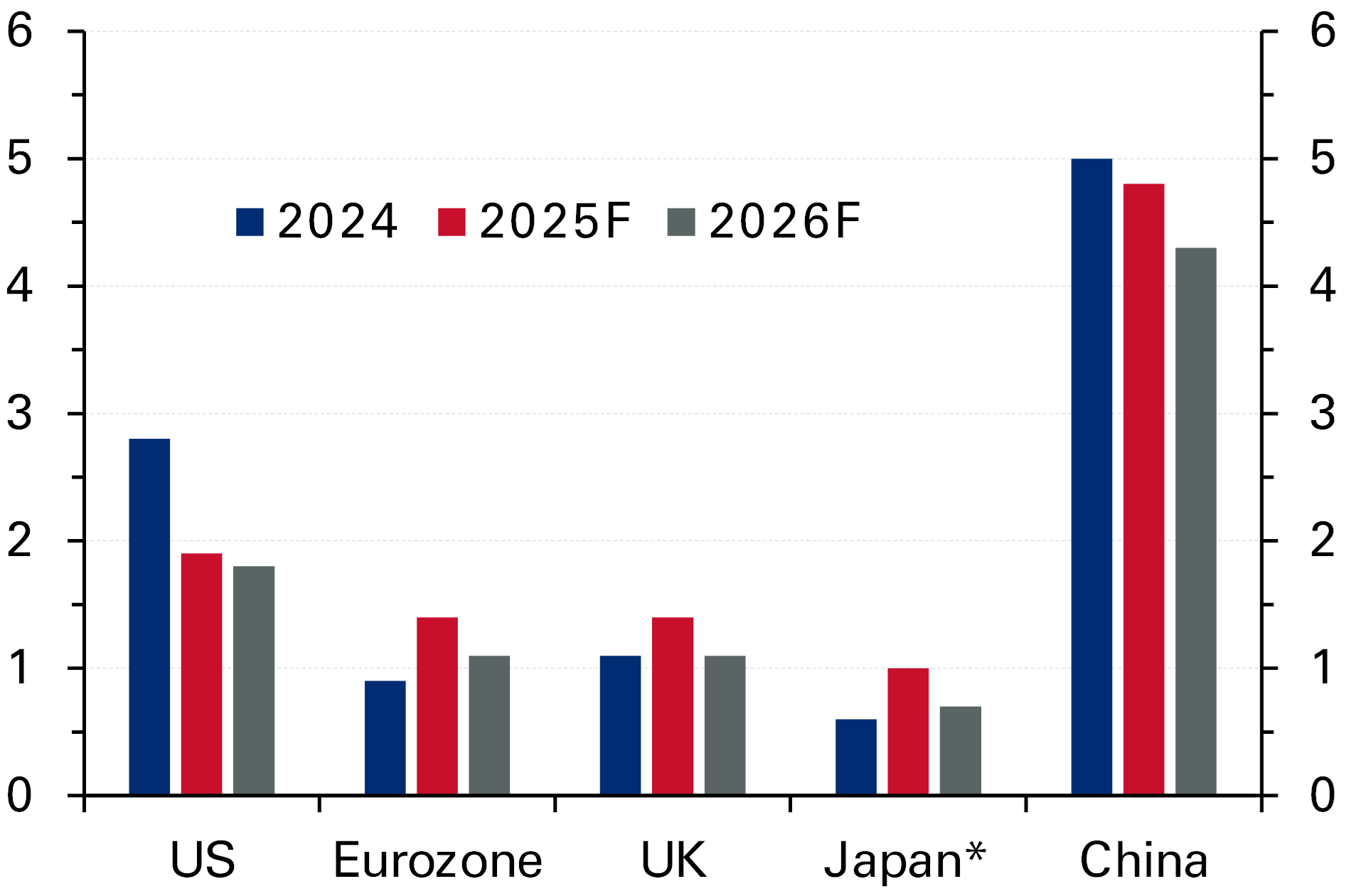
03.12.2025Growth among the major economies continued to come mostly stronger-than-expected recently and the IMF has upgraded its global growth forecast for 2025 for the second time. For 2026, with the exception of China, growth is seen broadly similar to 2025 although current consensus estimates are indicating a slight softening across the board. However, given that 2025 growth held up relatively well despite unprecedented tariff-related uncertainty, which is mostly behind us now, it is possible that growth will surprise to the upside in 2026. An important caveat is the potential for the US Supreme Court to strike down the country-specific tariffs, which will reignite uncertainty given that the US administration will undoubtedly attempt to rebuild the tariff wall through other legal means. In the US, the remarkable resilience of the economy will likely persist in 2026, supported by a fiscal boost and lower interest rates. In Europe, 2026 growth is seen broadly similar to 2025 with the ECB holding rates but the BoE cutting. In Japan, 2026 growth is seen at a sub-1% while Chinese growth, absent a forceful stimulus, is seen slowing markedly but staying above 4%.
US: Economic resilience to continue in 2026 on a fiscal boost and potentially lower interest rates
The remarkable resilience of the US economy will likely sustain in 2026, with fresh support coming from tax cuts, potentially further interest rate cuts, and despite soft job conditions and still-elevated inflation. The latest consensus estimates point to GDP growth of 1.8% in 2026 (IMF sees a stronger 2.1%) but lower than the nearly 3% in 2023-2024, dragged down by tariffs and immigration curbs. One key driver of this resilience, the wealth effect from record-high stock markets and elevated house prices, has helped in keeping consumer spending largely intact. Moreover, the tech/AI boom is spurring business investment and buoying GDP growth. However, given some concerns about an AI-related bubble, any meaningful and sustained correction in the stock market could contribute to a downward spiral. Additionally, if the Supreme Court strikes down the reciprocal tariffs, the reduced tariff revenue would re-ignite worries about the federal debt trajectory, potentially raising UST bond yields with a knock on effect on growth.
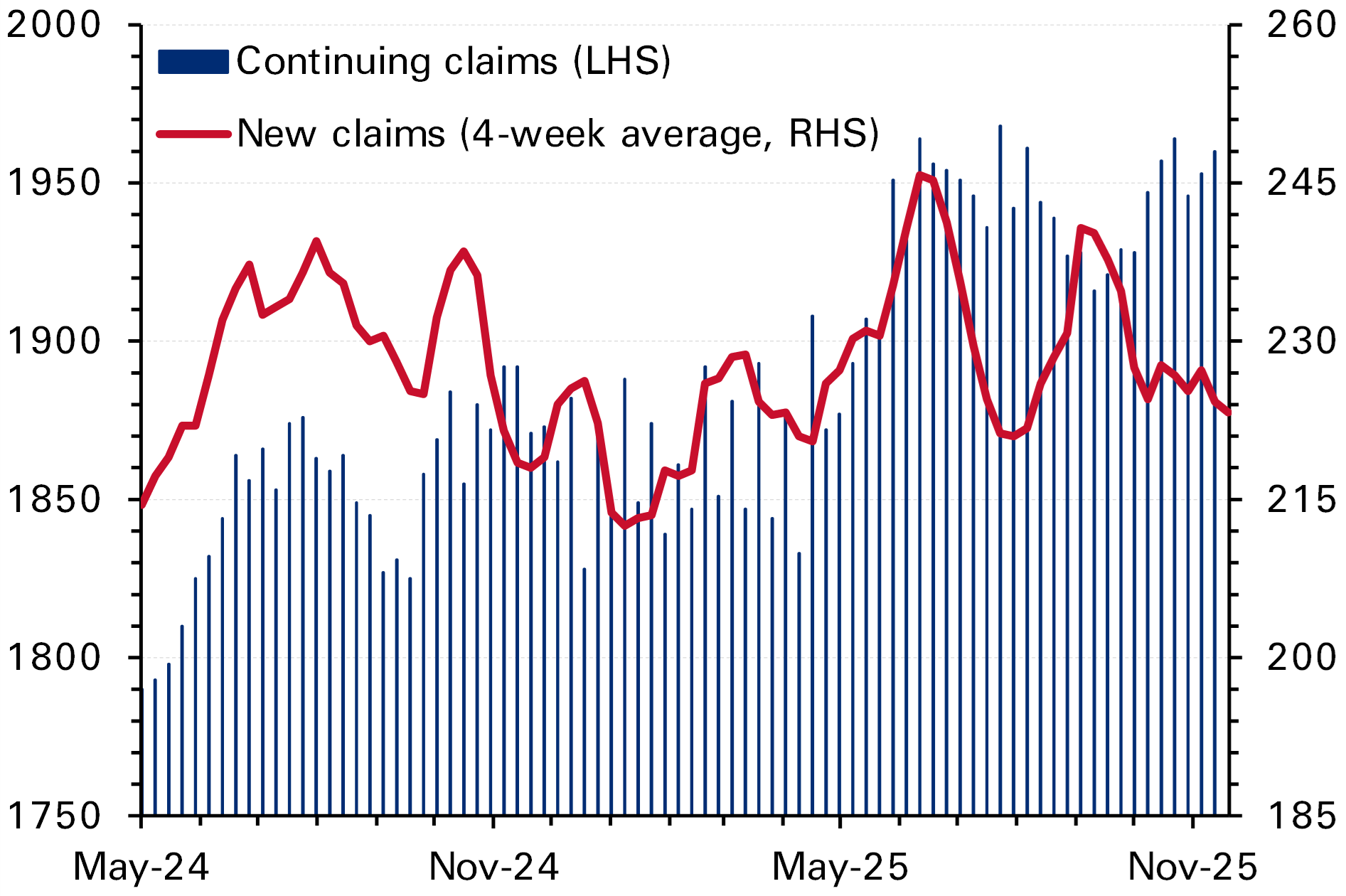
The now-ended record-long government shutdown suppressed economic activities in Q4 and caused a ‘data fog’ with key economic data releases either delayed or canceled. Nevertheless, labor market indicators continue to show decreased hiring as both labor demand and supply have weakened, but also low layoffs and only a moderate increase in unemployment given still-robust economic activities. Inflation will likely be stuck firmly above the Fed’s 2% goal in 2026 on steady tariff passthrough although softer rent inflation and lower energy costs will continue to lessen the blow. Given differing views about the job and inflation outlooks among Fed officials, the monetary policy outlook remains unclear. The current market expectation of three-to-four rate cuts by end-2026 seems a stretch based on the macroeconomic outlook: sticky and still above-target inflation, decent economic growth, and possibly improving demand for labor. Admittedly, the appointment of a new Fed Chair in May 2026, when Powell’s term ends, will strengthen the dovish bias at the bank. However, that incoming dovish Chair will have to convince the rest of the FOMC to loosen policy further, which is not a guaranteed outcome.
Eurozone: Growth outlook for 2026 broadly similar to 2025; ECB seen holding rates through end-year
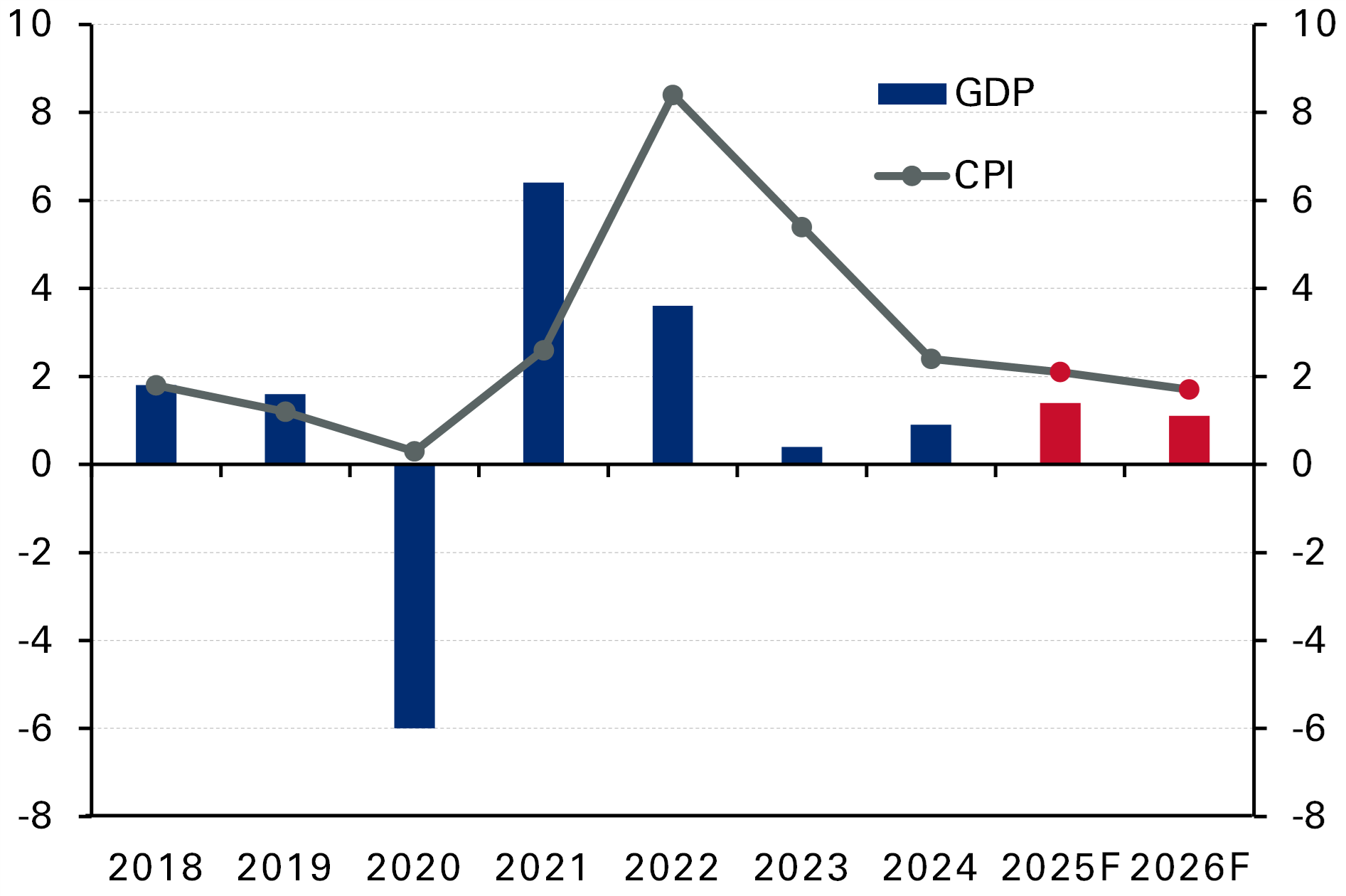
Eurozone GDP growth continued to come slightly stronger than expected, standing at 0.2% q/q in Q3 while October and November PMIs signal a stronger expansion in Q4. Inflation is near-target at 2.2% in November and projected to ease further in 2026 while unemployment remains near record-lows at 6.4%, underscoring the labor market resilience despite unimpressive economic growth. In contrast, retail sales, after a stronger performance earlier in the year have stagnated over the past few months, reflecting a cautious consumer. The Eurozone enters 2026 with modest growth prospects and broadly at-target inflation, but structural challenges and global uncertainty will continue to shape its trajectory. The key question remains whether the Eurozone can shift from resilience to strength. As ECB President Lagarde recently stressed, “Europe cannot rely on others to secure its prosperity; it must unlock its own potential”, as she called for deepening integration in the single market and framed structural reforms as central to boosting competitiveness. Other risks – especially sluggish global trade and geopolitical tensions – may continue to weigh on the bloc’s export-driven economies in 2026. The political situation/stability in France especially with regards to passing the 2026 budget remains a headwind for the bloc’s second largest economy. Consensus forecasts point to Eurozone growth softening slightly to 1.1% in 2026 from 1.4% in 2025. Without more forceful action by policymakers, the Eurozone risks further relative stagnation, leaving the ECB to navigate a narrow path between supporting growth and safeguarding price stability. Current expectations indicate that the ECB will keep rates unchanged at 2% through end-2026. It may take a sustained inflation undershoot and/or a major deceleration in economic growth, both seen unlikely at this stage, to change that policy stance.
UK: Growth outlook for 2026 similar to 2025 as structural challenges remain; BoE seen cutting rates
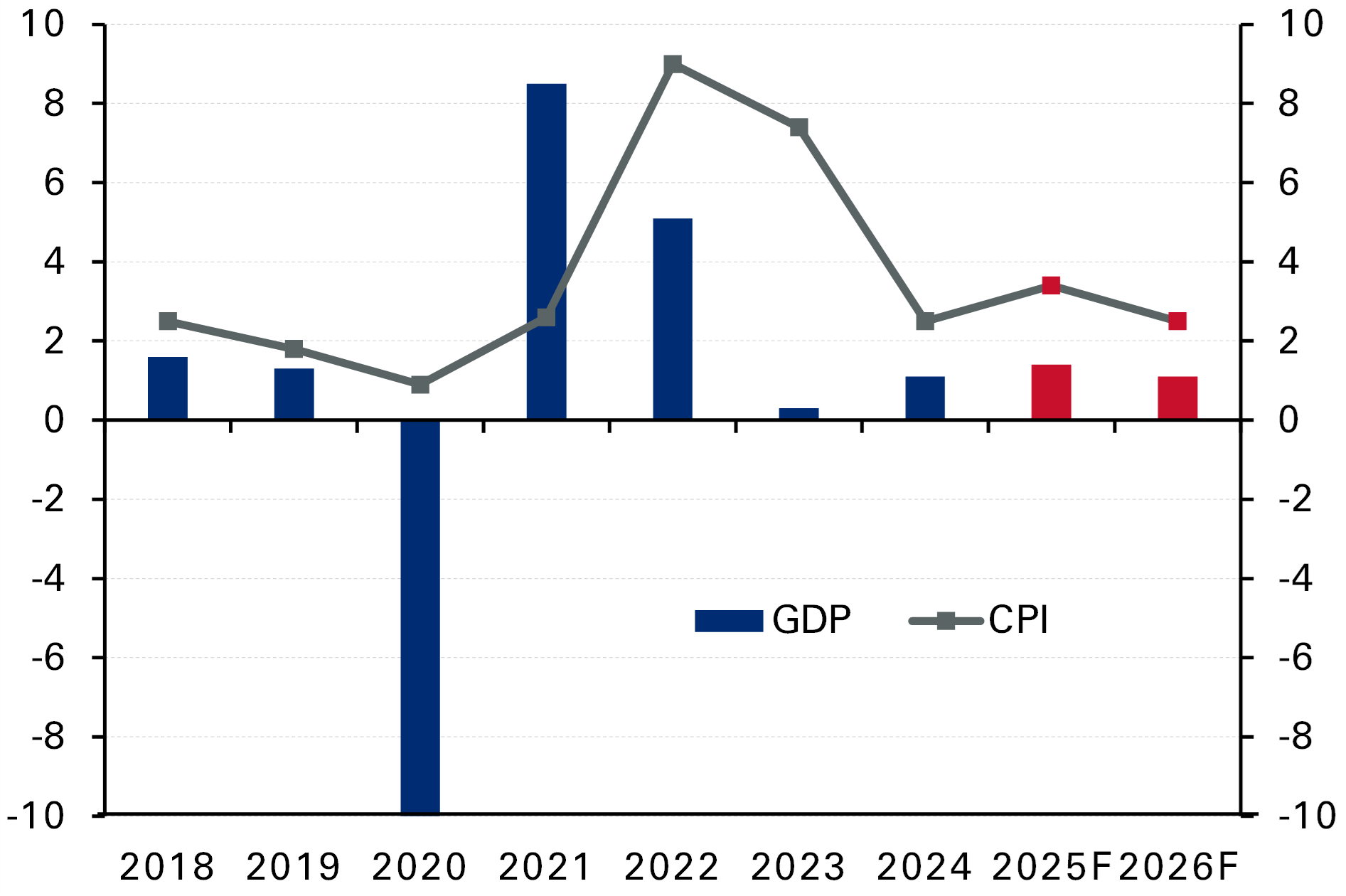
The UK economy continues to face structural challenges due to slow productivity gains, subdued investment, and a weak fiscal position. The November budget, though cheered by the markets given the higher fiscal headroom projected for five years ahead, did not address these structural headwinds. Meanwhile, following a sharp increase in national insurance contributions in 2024’s Autumn budget, employment has declined by an average of 15K jobs per month in the last 12 months. With the new budget raising the national (minimum) living wage by 4.1%, the drag on the labor market may continue. The economic scene was already muted prior to the budget announcement, with growth disappointing at just 0.1% q/q in Q3, down from 0.3% in Q2. The S&P Global composite PMI dropped to 50.5 in November from 52.2 in October, on stagnating services (50.5), and retail sales in October fell for the first time in five months. September CPI inflation, at 3.6% y/y, was in line with the Bank of England (BoE) projections and is expected to come down gradually to hit the bank’s 2% target, but only by 2027. Looking ahead, a further boost to public welfare spending in the recent budget, such as the removal of the two-child cap for availing welfare benefits, an extension of the freeze on fuel duties, and delayed tax hike measures (most not due to take effect before 2028) should help lift consumption somewhat next year. Given the relatively weak expected economic growth (1.1% in 2026 as per consensus estimates, a stronger 1.3% as per the IMF), the market pricing is indicating 50-75 bps of additional policy interest rate cuts by the end of 2026, including a near-certain 25 bps cut later this month.
Japan: Growth seen at a lackluster sub-1% in 2026; BoJ to raise rates this month or in January
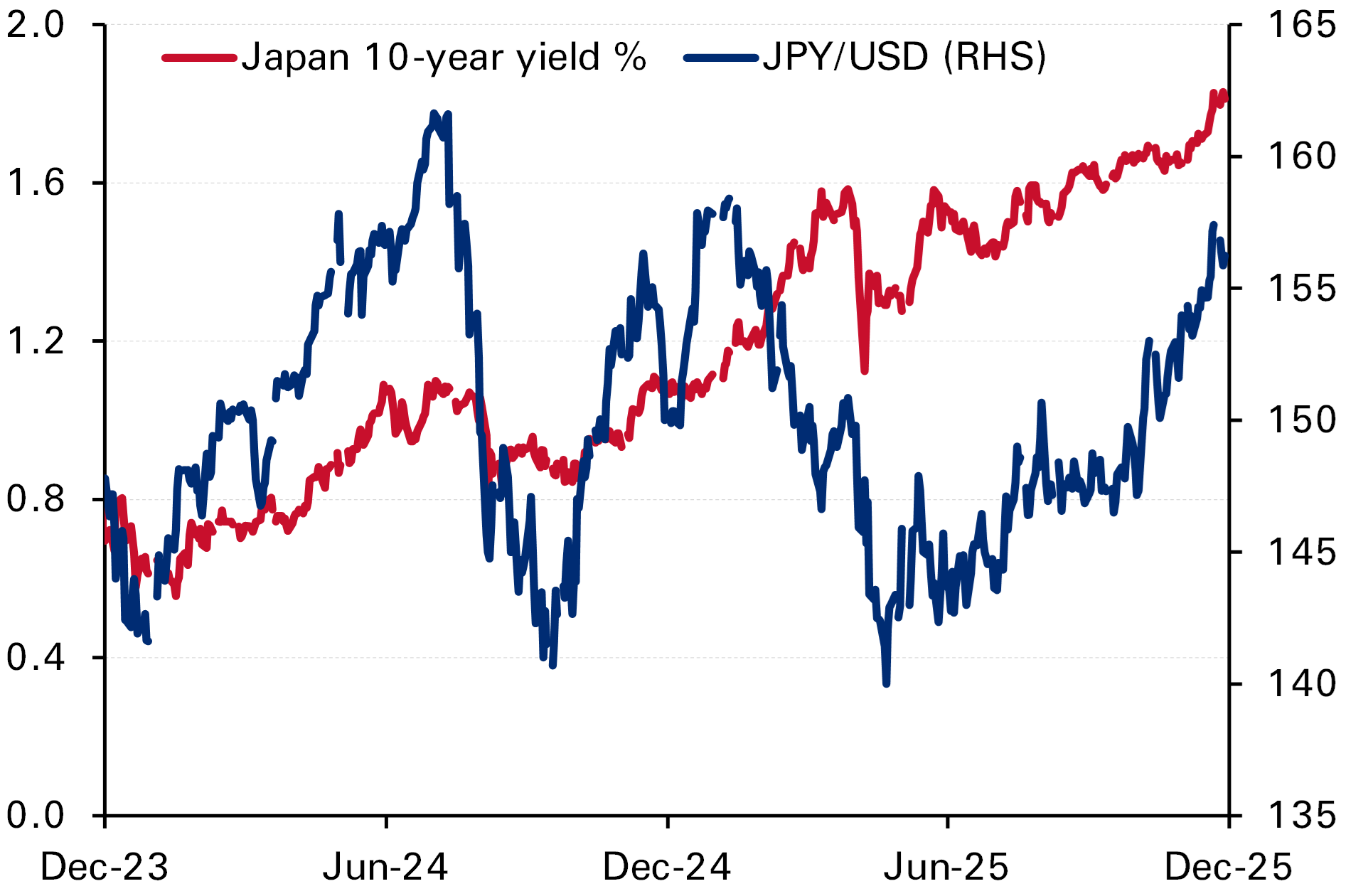
The economy reversed course in the third quarter, with GDP declining 0.4% q/q, the first fall since Q1 2024. However, growth trends remained better than expected, just like the case in the first half of the year. Inflation (latest at 3%) continues to be elevated and above-target for over three years now. The inflation problem has prompted PM Takaichi to include, as part of her total stimulus package (¥21.3 trillion or $135.5 billion), a significant amount aimed at price relief. This stimulus package is the largest since the pandemic and is expected to boost GDP and lower inflation by 0.7 percentage points between February and April 2026, according to the Cabinet Office. Optimism over an improved trade situation with the US and the stimulus package lifted the composite PMI to the joint-highest in 15 months of 52 in November, with business confidence around the year-ahead outlook reaching a ten-month high. In contrast, in negative developments, the yen has depreciated by close to 6% since early October with Japan’s finance minister continuing to hint at a possible intervention to support the currency, claiming that the weakness is not driven by fundamentals. In addition, the market’s concern over fiscal sustainability continued to drive government bond yields higher, touching multi-decade highs, with the 10-year yield breaching the 1.8% level in late November. Looking ahead, growth expectations for FY2026 (ending in March 2027) are relatively muted with consensus estimates (and the BoJ) penciling in only 0.7%, down from 1% this fiscal year. With inflation above target for more than three years now, defying prior BoJ expectations, the bank now forecasts inflation to fall below target during FY2026. The BoJ is seen increasing rates by 0.25 bps to 0.75%, if not in this month’s meeting, then in January.
China: Absent a forceful stimulus, growth to materially soften in 2026, but still seen above 4%
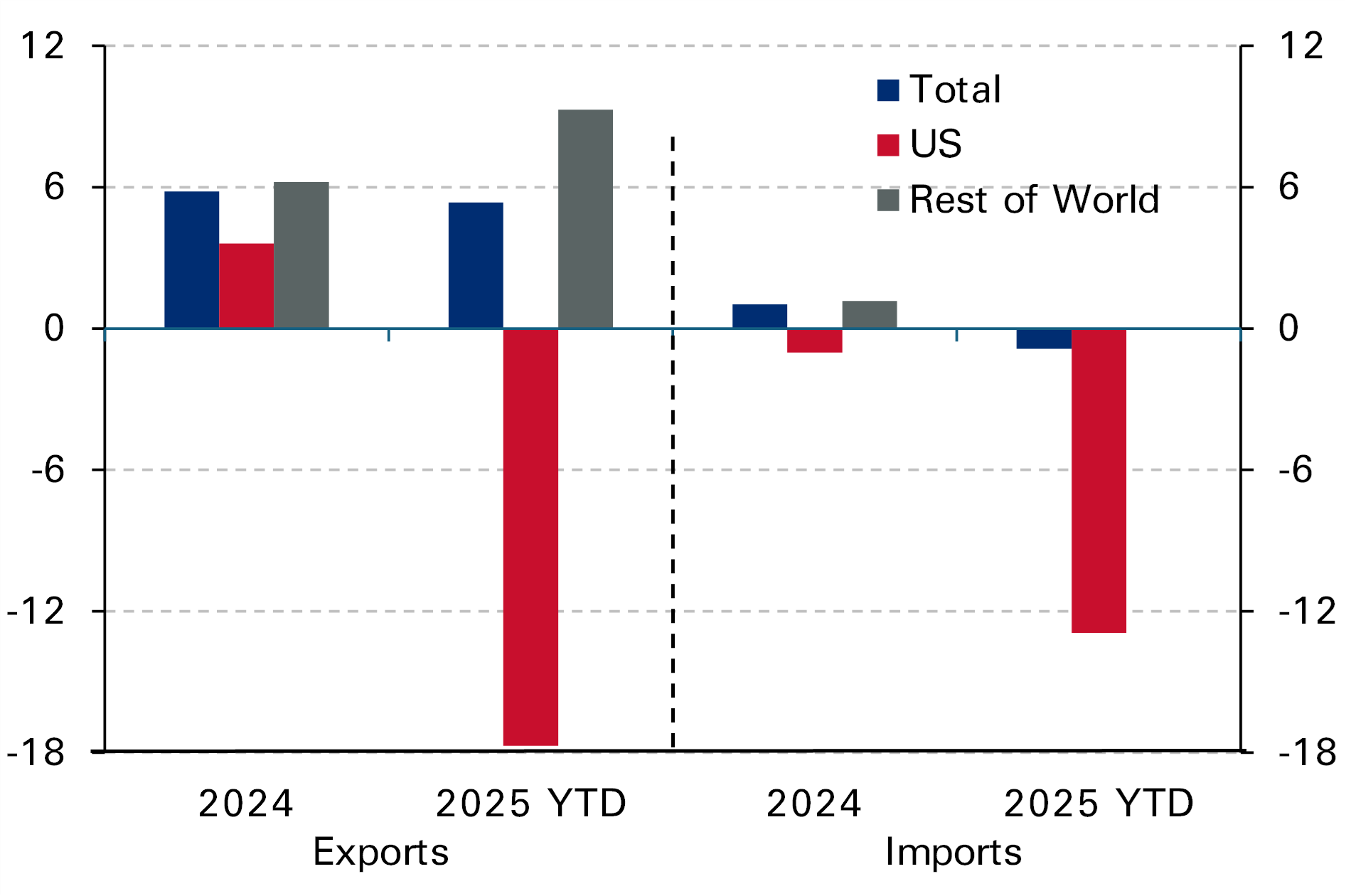
China’s economy has been losing momentum as structural challenges persist, setting the stage for a difficult 2026. While GDP growth softened to 4.8% y/y in Q3 (5.2% in Q2), recent data signal further cooling; industrial production growth slowed to 4.9% y/y in October and retail sales to 2.9%, their weakest pace in over a year. Housing remains a major drag, with new home prices dropping by 0.5% m/m in October, the steepest fall in a year. Investment has weakened markedly recently with fixed asset investment contracting by 1.7% in 10M2025, its weakest since 2020. In addition, external conditions remain fragile with exports, which have been a key growth driver, unexpectedly slipping in October. The November PMI reinforces this picture with the composite measure slipping to 49.7, its lowest level since late 2022. However, inflation trends have been improving with the core rate hitting a 20-month high of 1.2% y/y in October. Against this backdrop, the PBoC kept the loan prime rates unchanged for a sixth consecutive month in November. Looking ahead, despite the slowdown, achieving the 2025 growth target of “around 5%” still appears feasible given that growth in 9M2025 stood at 5.2%, although both the IMF and the consensus forecast 4.8% in 2025. However, more importantly, sustaining that momentum in 2026 (indicators point to authorities keeping the growth target broadly unchanged at around 5% in 2026) without ramping up fiscal stimulus appears challenging. The IMF as well as consensus forecasts point to 4.2%-4.3% growth in 2026, a material softening from recent trends, but unsurprising given the challenges. On a more positive note, the trade agreement reached with the US offers a short-term respite, relieves pressure points that have plagued most of 2025, and helps build confidence between the two sides for a more enduring agreement in the future.