
 +965 2292 4888


Daily Economic Update
17.06.2026
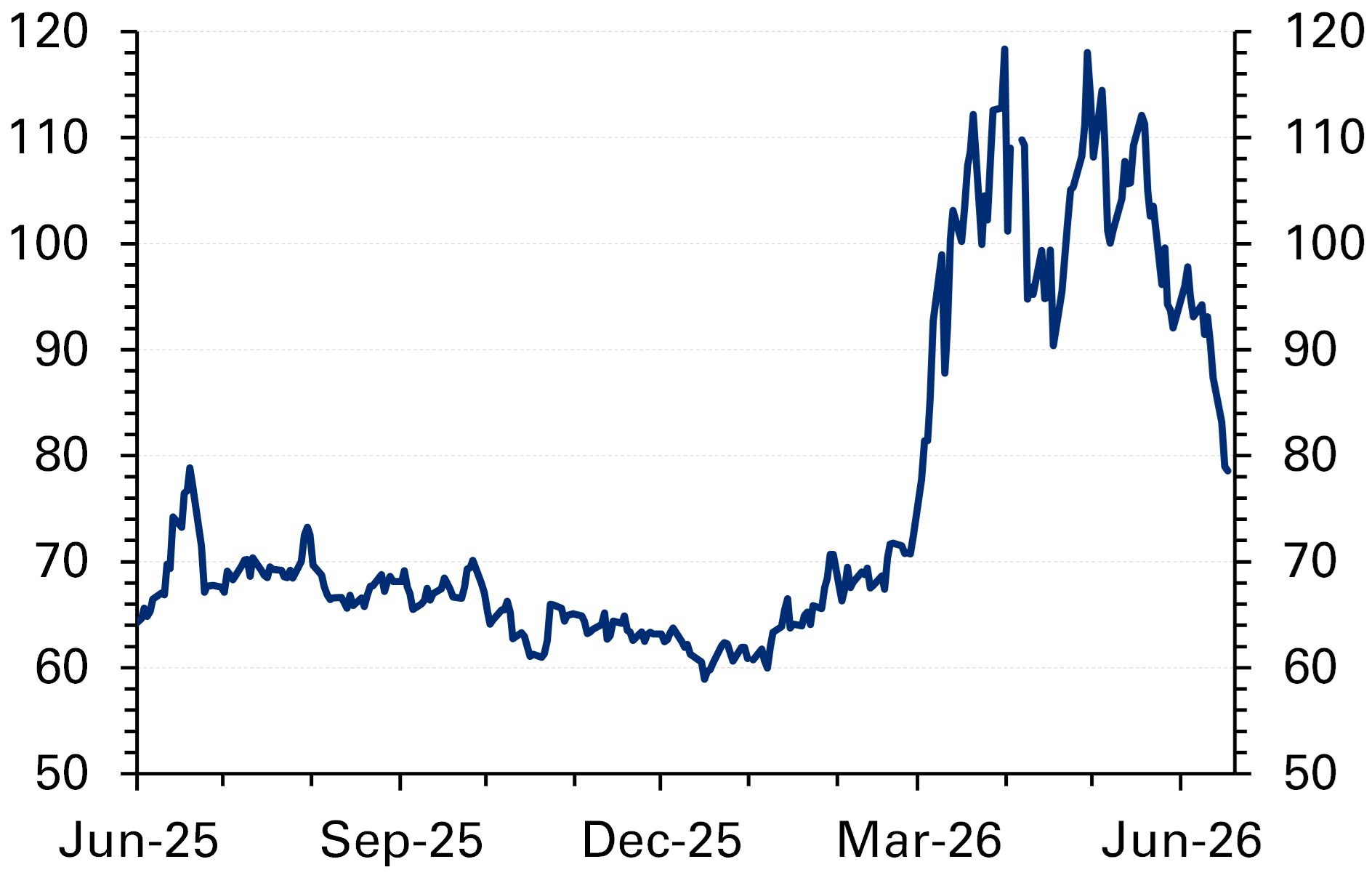
Oil: Brent drops below $80 amid US-Iran deal-linked sell-off. The sell-off in oil futures accelerated on Tuesday, with Brent shedding more than 5% d/d to settle at $79.0/bbl – its second lowest level since the start of the conflict – and extending its run of losses to 16% over four consecutive trading sessions. Prices were again under pressure this morning in Asian trading (falling further to $78/bbl), as markets looked ahead to the expected signing this Friday of the interim MoU between the US and Iran to reopen the Strait of Hormuz. The agreement should see hostilities brought to an end, the Strait fully opened with both sides removing restrictions and the commencement of 60 days of negotiations over Iran’s nuclear program. Also (reportedly) under the still to be officially released 14-point MoU, the US will eventually lift sanctions on Iran’s energy exports, issue near-term waivers on oil exports, unblock frozen assets (over an unspecified time period) and create a plan for a $300 billion economic development fund. Iran, in addition to its obligations surrounding the reopening of the Strait of Hormuz, according to the draft MOU, “reiterates that it will never produce nuclear weapons”. Meanwhile, Qatar, among the energy exporters hardest hit by the conflict both in terms of energy infrastructure damage (the Ras Laffan facility was directly hit early in the conflict) and closure of the Strait itself, has signaled that it plans to accelerate gas liquefaction (LNG production) to about 50% within a month of the restoration of secure passage through the Strait and to restore most of its export capacity within two months. QatarEnergy had cautioned in March that damage to Ras Laffan, which knocked out two of its fourteen LNG trains and 12.8 mtpa of LNG capacity, could take three to five years to repair.
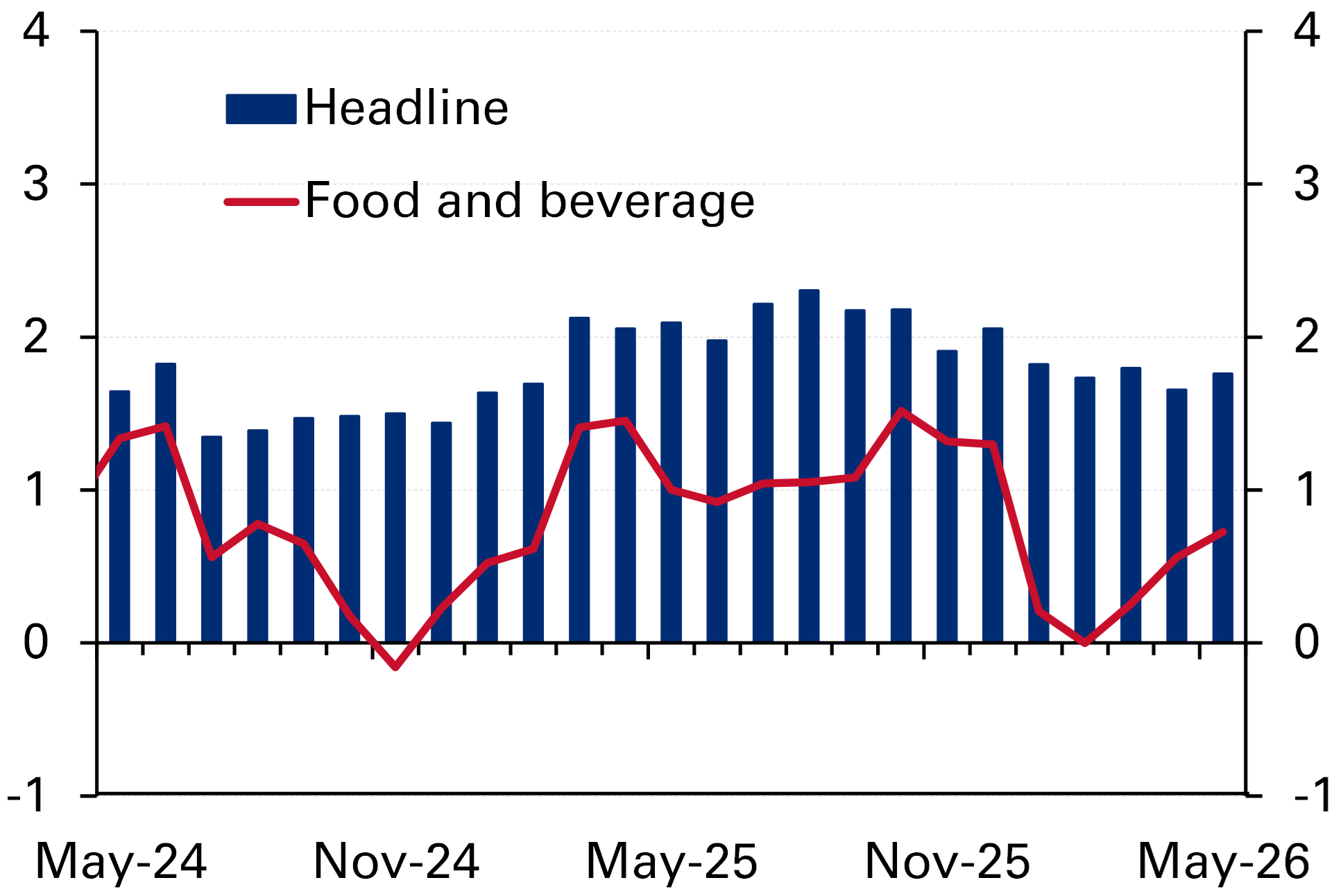
Saudi Arabia: Inflation edges higher in May as food and transport costs gain momentum. Saudi Arabia’s inflation rate accelerated slightly in May, driven mainly by higher transportation and food prices, while housing-related inflation, the main driver of prices over the past two years, continued to gradually ease. According to the data from GASTAT, inflation edged up to 1.8% y/y in May from 1.7% in April. Despite the increase, inflation remains relatively low by both regional and global standards, especially amid ongoing geopolitical uncertainty and volatile energy markets. The latest reading suggests a gradual shift in the sources of inflationary pressure within the Saudi economy. While housing and rental costs have historically been the dominant contributor to inflation, other categories, particularly transportation and food, are starting to play a larger role. The transportation segment, the third-largest component in the consumer basket, saw inflation accelerate to 1.5% y/y in May, up from 1% in April, reflecting higher operating and transportation-related service costs. Meanwhile, the food and beverages category, the largest component of the inflation basket, recorded its third consecutive monthly acceleration, rising 0.7% y/y, compared to 0.6% in April, pointing to continued pressure on selected food items. At the same time, inflation in the housing, water, electricity, gas, and fuel category, the second-largest component of the CPI basket, slowed slightly to 3.7% y/y from 3.8% in April, helping to contain the overall pace of price increases. Saudi Arabia continues to maintain one of the lowest inflation rates among G20 economies, supported by domestic energy subsidies, the riyal’s peg to the US dollar, and strong availability of essential goods. Importantly, inflation has remained broadly stable between 1.7% and 1.8% since the start of the year, suggesting that regional geopolitical tensions have so far had only a limited pass-through effect on domestic consumer prices. Overall, the latest data points to an economy where inflation pressures are becoming more diversified but remain well contained.
Egypt: New EU funding expected this month to support reform efforts. Egypt is expected to receive EUR 1.5 billion in new funding from the European Union this month, according to recent remarks by the President of the European Commission, in a move aimed at supporting the country’s ongoing economic reform program. The announcement comes as part of the EU’s broader commitment to strengthen economic cooperation with Egypt, with plans to help mobilize up to EUR 8 billion in investments to support the Egyptian economy over the coming period. During recent discussions with the Egyptian President, both sides also reviewed regional geopolitical developments and diplomatic efforts in the Middle East, alongside Egypt’s progress in implementing structural economic reforms. The Egyptian president highlighted ongoing efforts to improve the business environment, enhance economic competitiveness, and strengthen the resilience of the economy, with the expectation that these reforms will encourage greater participation from European companies and attract additional foreign investment into Egypt. Overall, the expected disbursement represents another important source of external financing for Egypt, while reinforcing international support for the country’s reform agenda amid a challenging global and regional environment.
Japan: BoJ hikes rates by 25 bps and signals that more to come. As expected, the Bank of Japan (BoJ) raised interest rates by 25 bps to 1% yesterday. The 7-1 vote represents the first hike since December, raising rates to their highest level in more than 30 years as the BoJ attempts to contain inflationary pressures. Despite the hike, the BoJ reiterated that financial conditions remain accommodative in the country and hinted that more hikes will come. The BoJ also stated that they will continue tapering their JGB purchases by Yen 200 billion each quarter through Q1 2027, and starting April 2027 purchasing will be stabilized at Yen 2 trillion per month. Despite the hike and the signal of more hikes in the pipeline, the yen was little changed yesterday and in trading this morning. In data releases, export growth strengthened for the third consecutive month in May to reach 17% y/y, above consensus estimates of 16.2%, as shipments increased to China (+17.9%) and the US (+12.5%). Import growth also rose to 12.5%, broadly in line with consensus estimates.
US: Industrial production growth in May slows as manufacturing stalls. Industrial production growth in May eased to 0.1% m/m (+1.7% y/y) from an upwardly revised 0.9% (+1.4% y/y) in April. Manufacturing output was unchanged from April, posting a first no growth print this year, after rising 0.7% m/m in April, and utilities fell 0.4% but mining rose 1.3%. Despite stalling in May, manufacturing output in recent months has been supported by strong business capital spending amid the ongoing AI/tech investment boom that has also helped the economy remain robust. Meanwhile, housing construction indicators weakened as new housing starts fell 15% m/m in May to hit the lowest annual rate since the pandemic, while building permits declined by 0.7% m/m. Though such monthly data tends to be volatile, the broader trend has remained mostly downward. Homebuyer demand has been suppressed due to elevated mortgage rates (30Y fixed at around 6.6%) and high house prices amid slowing wage growth that has worsened affordability for many first-time buyers.
China: May data overall weak with retail sales growth turning negative. China’s retail sales unexpectedly fell 0.6% y/y in May, marking the first decline in more than three years as the country continues to struggle with weak domestic demand. Meanwhile, industrial production beat consensus estimates of a 4.3% rise, accelerating to 4.5% as utilities (7.6%) and computers & communications equipment (17.0%) led growth. Fixed asset investment weakened further, slumping 4.1% y/y in 5M2026, down from -1.6% y/y in 4M2026. New home sales fell 3.5% y/y in May, matching April’s pace and marking almost three years of declining prices in the country. Overall, May’s data continued to point to an uneven recovery trajectory, with persistent weakness in domestic demand being offset by strength in industrial activity and exports.