
 +965 2292 4888


Daily Economic Update
02.03.2026
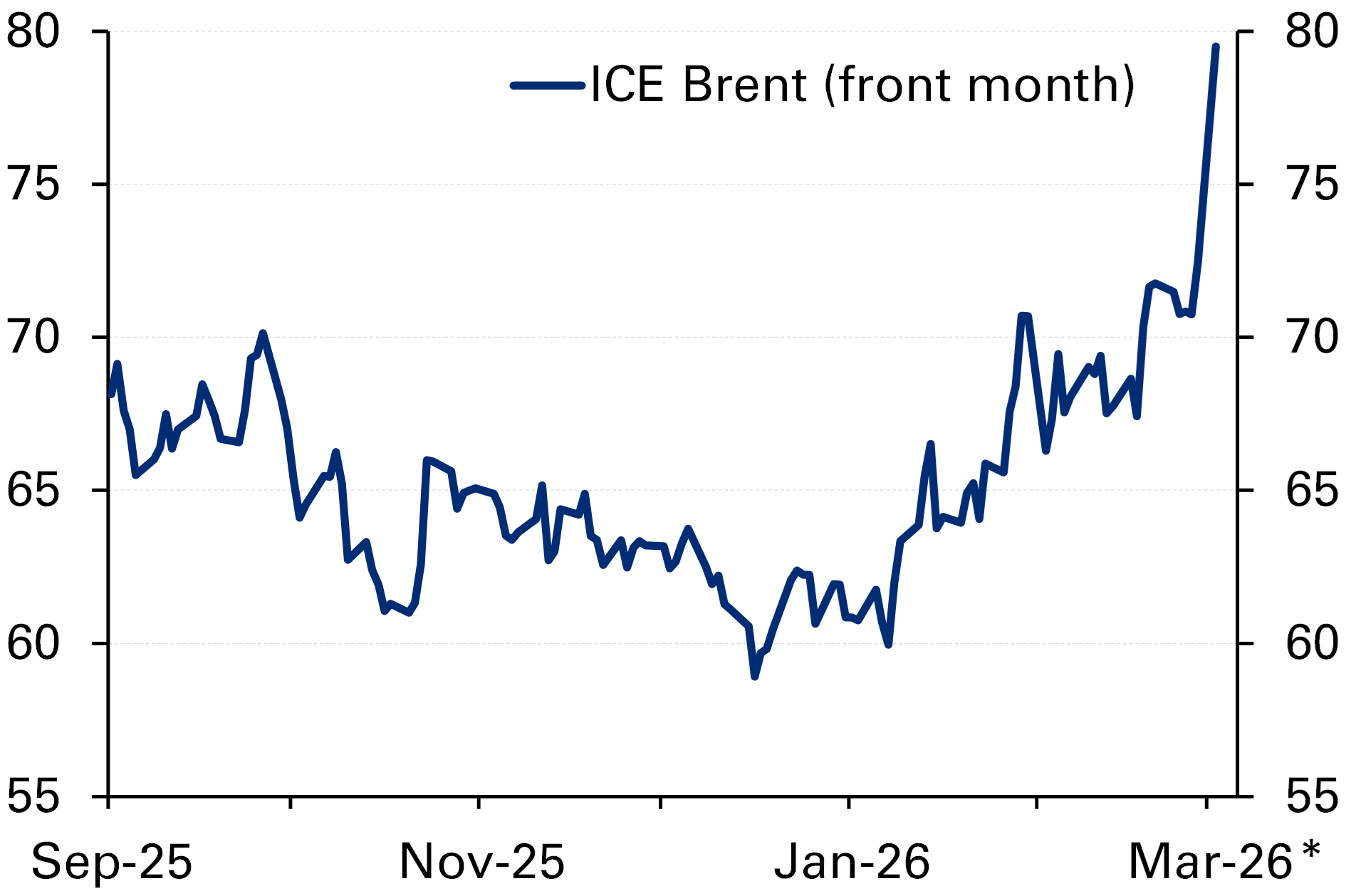
Oil: Prices spike amid escalating Middle East conflict. Brent futures opened this morning 13% higher at $81.6/bbl, the highest level since January 2025, following the US and Israeli strikes on Iran and the wide-ranging retaliatory attacks that followed. According to tanker tracking data, flows through the Strait of Hormuz have largely come to a halt, amid multiple reported attacks on vessels transiting the chokepoint. Brent has subsequently given back part of its early gains, trading near $79/bbl at the time of writing. This reflects a combination of profit-taking – particularly after bullish speculator positioning reached its highest level since April 2024 last week – and the fact that the market had already priced in some degree of US-Iran escalation, with Brent up 19% year-to-date by last Friday. It also reflects OPEC-8’s decision yesterday to raise output at a slightly faster pace for April. In its scheduled meeting yesterday, the group agreed to continue unwinding production cuts that it has paused through Q1 26, increasing quotas by 206 kb/d in April, which is 50% higher than the previous increment. Given the stretched spare capacity among some members, it is unlikely that the full 206 kb/d will translate into physical barrels. However, the move could signal some preparedness by OPEC to pre-emptively offset potential supply disruptions stemming from the US-Iran conflict. At the new pace of unwinding, the remaining portion of the earlier 1.65 mb/d voluntary cut will be fully phased out by September.
US/Middle East: Military strikes continue with signs of conflict broadening. The spike in oil prices comes amid further waves of attacks between Iran and US/Israel, with Iranian drones and missiles also hitting targets across the Gulf and regional airspace mostly closed. Moreover, in a sign of the widening of the conflict, Israel traded strikes with Lebanese group Hezbollah while a UK military base on Cyprus was hit by a drone attack and UK PM Starmer approved the use by the US of UK military bases for ‘defensive’ strikes against Iranian missile bases. US President Trump said that combat operations were “ahead of schedule”, will continue “until all of our objectives are achieved” and could go on for the next four weeks despite the likelihood of further US casualties – contrasting his previous comments about a possible halt in a few days. He also claimed that “most of the candidates” lined up to succeed former Supreme Leader Khamenei have been killed.
Global: All eyes on the military conflict in the Middle East; US February jobs report key data point this week. The military conflict in the Middle East will continue to be the main issue globally over the coming days. In terms of data releases, in the US, February’s jobs report is due on Friday, with consensus estimates at 60K jobs added, down from January’s +130K, and a stable unemployment rate of 4.3%. Labor productivity growth in Q4 (Thursday) is seen remaining very strong at 4.8% (annualized) following Q3’s 4.9%. Retail sales in January (Friday) are projected to decline by 0.2% m/m after staying unchanged in December. In the Eurozone, the flash CPI for February is due on Tuesday with both the headline and core rates seen unchanged at 1.7% and 2.2% y/y, respectively. Retail sales for January (Thursday) are expected to increase 0.2% m/m following a 0.5% decrease in December. In the UK, the Nationwide house price index for February will be released today, and the street forecasts a steady rise of 0.3% m/m while the equivalent Halifax one (Friday) is expected to show a similar 0.4% m/m increase, but down from January’s 0.7%. In China, the official PMI for February is due on Wednesday with the manufacturing and non-manufacturing gauges expected at 49.1 and 49.8, respectively. Wednesday also marks the start of the annual “Two Sessions” meeting (March 4–11), where policymakers will set the year’s key economic goals and outline the broader policy agenda. The meetings are also expected to feature the release of China’s 15th Five Year Plan, which will map out development priorities for 2026–2030.
Kuwait: IMF heralds start of transition from oil-dependent welfare state to a dynamic, diversified economy. In its recently released Article IV consultation (just before the start of the current US/Israel-Iran conflict), the IMF notes that Kuwait has begun transitioning away from an oil-dependent welfare model toward a more diversified economic structure aligned with Vision 2035. The Fund points to a scale-up in public investment and tangible progress on fiscal and structural reforms, highlighting in particular the roll out of the Financing and Liquidity law and the recent increase in fees for government services. Despite this momentum, the IMF continues to emphasize the need for a comprehensive, well-sequenced reform package to ensure long-term fiscal sustainability. Key priorities include mobilizing non oil revenues, including extending corporate income tax to all domestic companies, and introducing both VAT and excise taxes, alongside efforts to rationalize the public wage bill, reform energy subsidies, and scale up on budget public investment to improve infrastructure. The IMF also updated its growth outlook for Kuwait. For 2026, GDP growth was revised lower to 3.8% compared to 3.9% in the October Regional Economic Outlook, as a lower oil GDP growth estimate (4.7% vs 5.4% in the REO) more than offset an upgrade to non-oil activity (3% vs 2.6%). For next year, the Fund expects overall economic growth to slow to 2.5%, driven largely by a normalization in oil GDP growth to 2%, while the non-oil sector is projected to maintain a relatively robust 3% expansion.
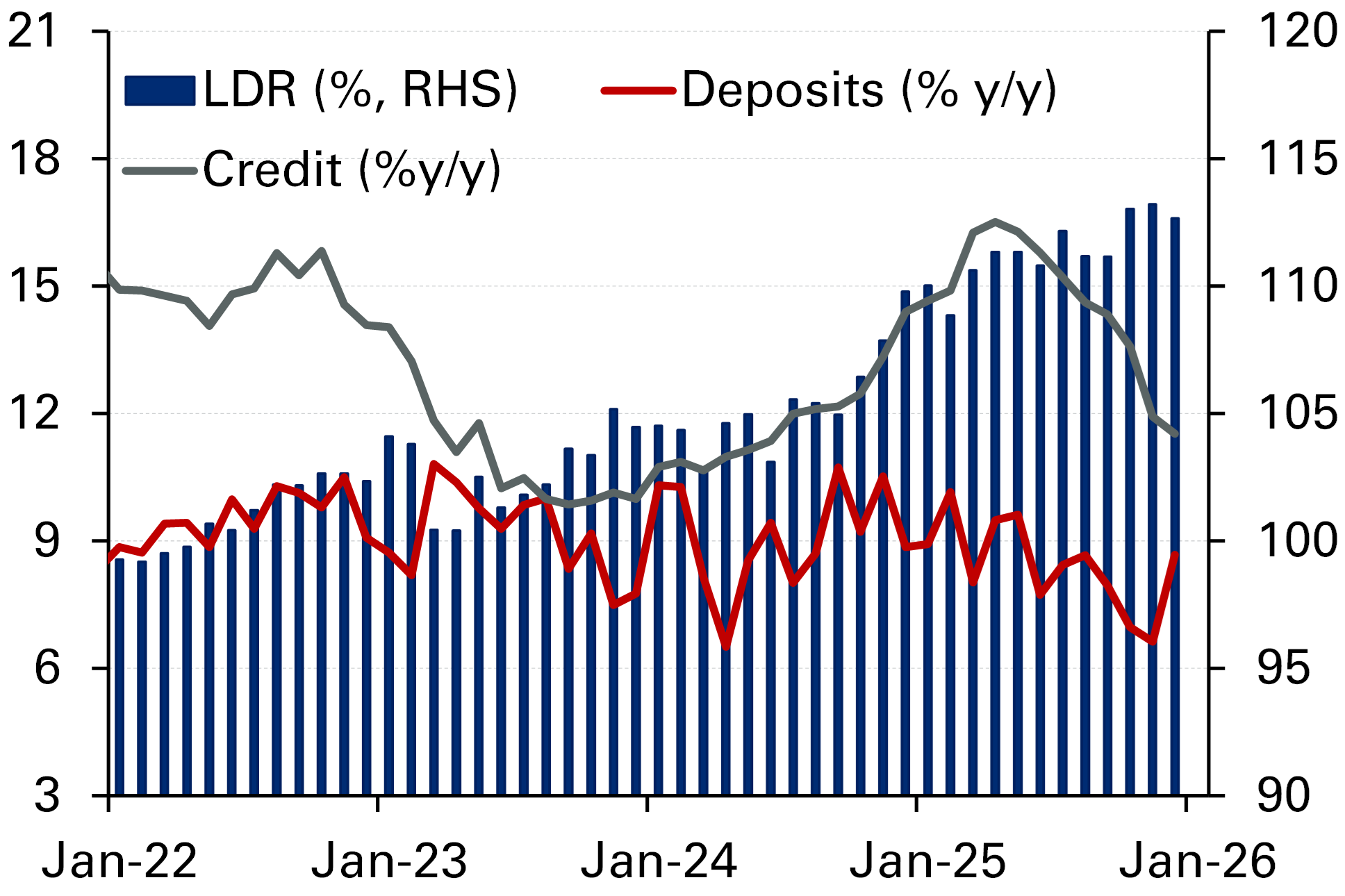
Saudi Arabia: Credit growth lowest in nearly 2 years. Bank credit growth eased to a 22-month low of 11.4% y/y in January from 11.9% in November, marking the ninth consecutive month of deceleration from a peak of 16.5% in April 2025. Private sector credit growth eased but remained solid at 9.8% y/y (from 10.4% in December) with personal loans growth easing further to a multi-year low of 5.1% y/y after a period of stronger growth driven by the rapid expansion of the non-oil economy. Meanwhile, deposit growth edged up slightly to 8.8% (from 8.7% in December), lifted by continued strong growth in government deposits. Thanks to the sustained improvement in the credit/deposit trend, the loan-to-deposit ratio fell to 111.7% from November’s peak of 113.2%, a sign of easing liquidity pressures although conditions remain tight. The net foreign asset position fell deeper into negative territory on continued demand by commercial banks for external funding. Saudi Central Bank reserve assets reached a record high of $476 billion (9.6% y/y), boosted by higher foreign currency and deposits abroad.