
 +965 2292 4888


Daily Economic Update
12.02.2026
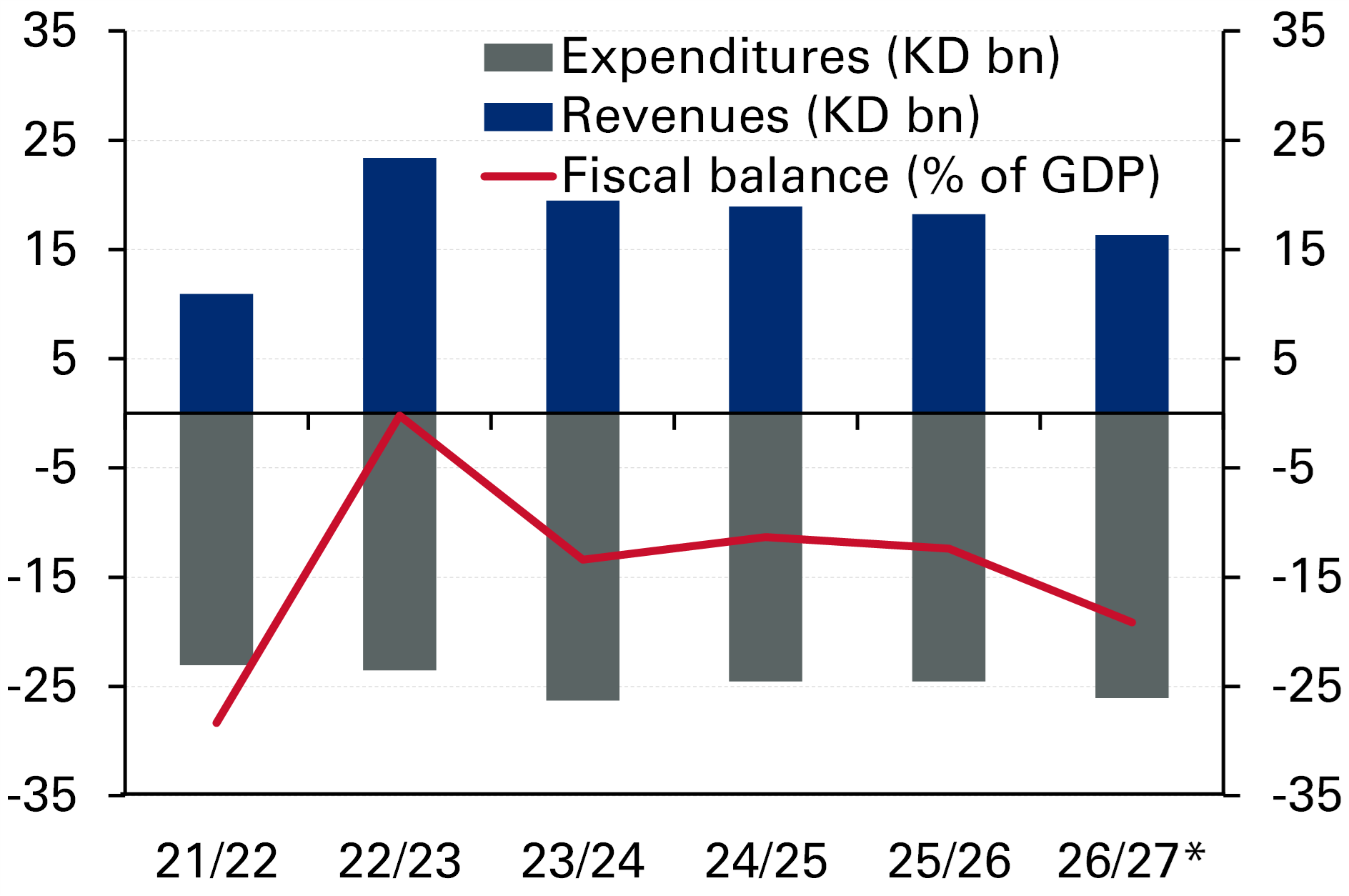
Kuwait: FY26/27 budget announced with near KD10 billion deficit. The Ministry of Finance announced the FY 2026-2027 draft budget that showed a projected deficit of KD9.8 billion (around 19% of GDP), the largest in five years from KD6.3 bn (12% of GDP) in the previous budget. Total expenditures are projected to reach 26.1 billion (6.2% budget-on-budget, b/b), the second highest allocation on record, which is partly driven by higher current expenditures (+3.2% b/b), which comes despite ongoing efforts to rationalize spending, and by increased capital expenditures (+37% b/b to KD3.1bn)—a level unseen since 2021. Within current spending, higher outlays are expected on employee compensation (+5.2% b/b), which continues to capture the bulk (61%) of total spending, and on other expenditures (+13.6% b/b), which more than offset a projected decline (-10.5%) in subsidies linked to lower oil prices. On the capex side, the increase is a positive move that signals the authorities’ intention to accelerate the execution of key development projects. Total revenues are projected to decline by 10.5% b/b to KD16.3 billion on a drop in oil revenues (-16.3% to KD12.8bn) due to a lower assumed oil price of $57/bbl vs $68 in the previous budget, despite a notable jump (+19.6% b/b) in projected non-oil revenues to a record high of KD3.5 billion. This will be the third consecutive year of budgeted growth in the latter as the government maintains its efforts to mobilize non-oil revenues following last year's implementation of the corporate income tax and increases in various service fees, though the share of total revenue still remains low (21%). Although the wider budget deficit is justified by higher capex and negative external (oil market) conditions, a renewed increase in current spending runs contrary to spending control and fiscal consolidation objectives. However, budget figures are usually on the conservative side – higher oil revenues and underspending is likely in actual terms. We estimate narrower deficits averaging 4.5% of GDP in the current and next fiscal years (FY25/26, FY26/27), with the higher-than-expected expenditure budget posing a downside risk. The government may continue to tap debt markets this year, (after issuing around KD6bn in local and international bonds since June) for deficit financing, pushing debt levels upwards from the current 14% of GDP, and highlighting the need for an enhanced debt management strategy.
Egypt: New economic faces as the CBE eyes another cautious cut on Thursday. All eyes are on today’s MPC meeting, where the Central Bank of Egypt (CBE) is widely expected to continue loosening monetary policy. In our view, the combination of slowing inflation, a still elevated real interest rate buffer of around 9%, improving FX liquidity across the banking sector, and softer global commodity prices, especially oil, gives the CBE sufficient room to deliver another cautious 100 bps rate cut. Such a move would reinforce the signal that the easing cycle remains data-driven and gradual. On the fiscal and structural front, Parliament approved a ministerial reshuffle that introduced new leadership within the economic group. Mohamed Farid, formerly the Chairman of the Financial Regulatory Authority, takes over as Minister of Investment and Foreign Trade, while Ahmed Rostom, formerly a senior economist at the World Bank, assumes the role of Minister of Planning. The reshuffle comes at a critical stage, as the government targets raising $10.3 billion from privatization proceeds by the end of FY26/27. Under its IMF commitments, Egypt is required to mobilize around $6 billion in additional proceeds, having already raised about $5.9 billion, or 48% of its $12.2 billion target set for March 2022 to July 2025, through stake sales and IPOs in 19 companies. Monetary easing is progressing cautiously, while structural reforms and asset monetization remain central to strengthening macro stability.
Saudi Arabia: Expat outward remittances reached record-high in 2025. Personal remittances by expatriates in Saudi Arabia rose sharply in 2025, increasing by 15% y/y to a record-high of SAR165.5 billion (approximately $44 billion), according to the latest central bank data. The rise in remittances likely reflects stronger labor market conditions, particularly in non-oil sectors, higher income levels, and the continued reliance on expatriate labor across key industries. Expatriates account for around 42% of the Kingdom’s total population.
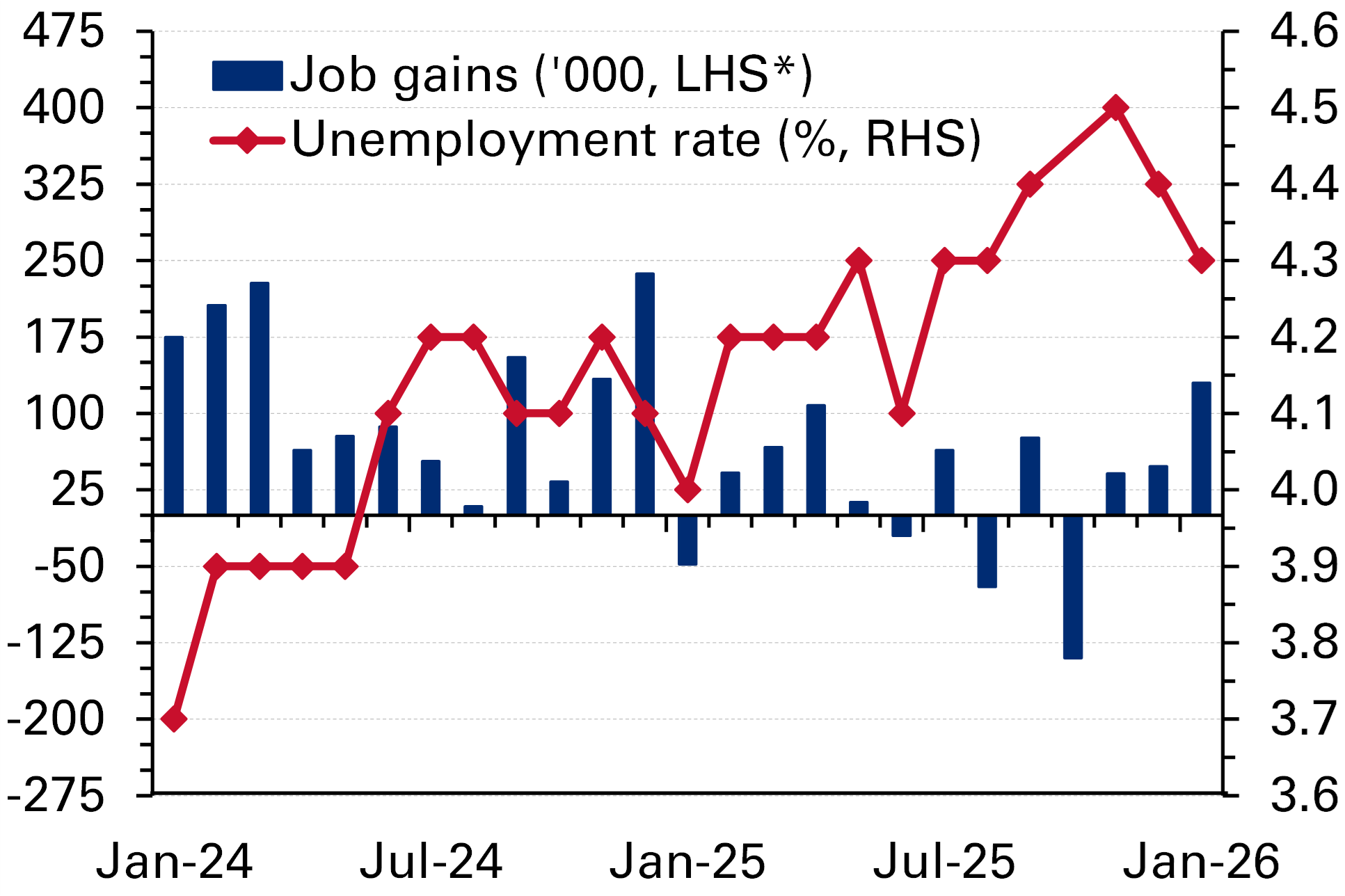
US: January job growth much stronger than expected but increases in 2024 and 2025 revised downward significantly. Non-farm payrolls in January rose by 130K m/m, much higher than the consensus forecast of +70K and from +48K in December. However, increases were mostly concentrated in the education and healthcare segments, continuing the trend seen in recent months, along with sizeable gains in construction and professional and business services. Manufacturing added 5K jobs in January, a first positive reading in 14 months, while most other categories saw declines. The household survey also showed upbeat prints as the unemployment rate edged down to 4.3% from 4.4%, the lowest level since August 2025, while the participation rate ticked up to 62.5% from 62.4% in December. Wage growth was steady at 3.7% y/y but accelerated on a month-on month basis to 0.4% from a downwardly revised 0.1% the previous month. January’s strong employment data further signaled that labor market conditions are stabilizing going into 2026, supported by lower policy uncertainty, lower policy interest rates, and the fiscal boost. However, the job market is yet to be out of the woods, as the BLS revised down overall job growth in 2025 significantly, from the previously reported average monthly increase of 49K to just 15K, underscoring a jobless economic expansion. The BLS also published the annual benchmark revision for the 12 months period ending March 2025, which resulted in 898K fewer jobs than previously reported, broadly matching the preliminary figure of 911K reported in September 2025. The positive spin to that is that productivity growth in 2024 and 2025 has been even stronger than previously thought. After the release of the robust January jobs data, the futures market pared down the expectations of two Fed rate cuts by the end of 2026 to around 70%.
US: CBO projects widened fiscal deficit in its 10-year projections. The bipartisan Congressional Budget Office (CBO), in its 10-year budget projections, raised the overall fiscal deficit forecast by $1.4 trillion over the next 10 years compared to the forecast it made in January 2025, mainly due to higher interest expenses while higher tariff revenues are more than offset by other changes in fiscal receipts and outlays. The CBO sees debt held by the public reaching 120% of GDP by 2036 from around 100% currently, with interest expenses alone eating up 26% of total revenue by then from 18.5% in 2025. In the near term, the CBO expects a fiscal deficit of 5.8% of GDP in 2026 and 5.7% in 2027 versus 5.5% and 5.2% projected earlier. The CBO also forecasts 2.4% GDP growth in 2026, up from an estimated 2% in 2025, followed by softer 1.9% in 2027. The overall CBO projections continue to show sustained worsening in the government fiscal metrics that will likely be increasingly reflected in higher UST bond yields, as despite the Fed interest rate cuts of 175 bps (cumulatively) so far in the current easing cycle since September 2024, yields on 10Y and 30Y US bonds have risen over the same period.
Japan: Producer price inflation softens in January, in line with expectations. The producer price index (PPI) increased by 2.3% y/y in January, matching consensus estimates and edging down from December’s 2.4% print. This increase represents a 21-month low for the PPI, which has been above 2% since May 2024. The moderation in PPI will be welcomed by both the Bank of Japan and Prime Minister Takaichi, who will be seeking to push her more aggressive fiscal policies after the Lower House convenes for their inaugural session next week. PM Takaichi’s new supermajority means that she can suspend the country’s consumption tax and ease affordability concerns linked to inflation, which was a key pledge during the elections.