
 +965 2292 4888


Daily Economic Update
01.10.2026
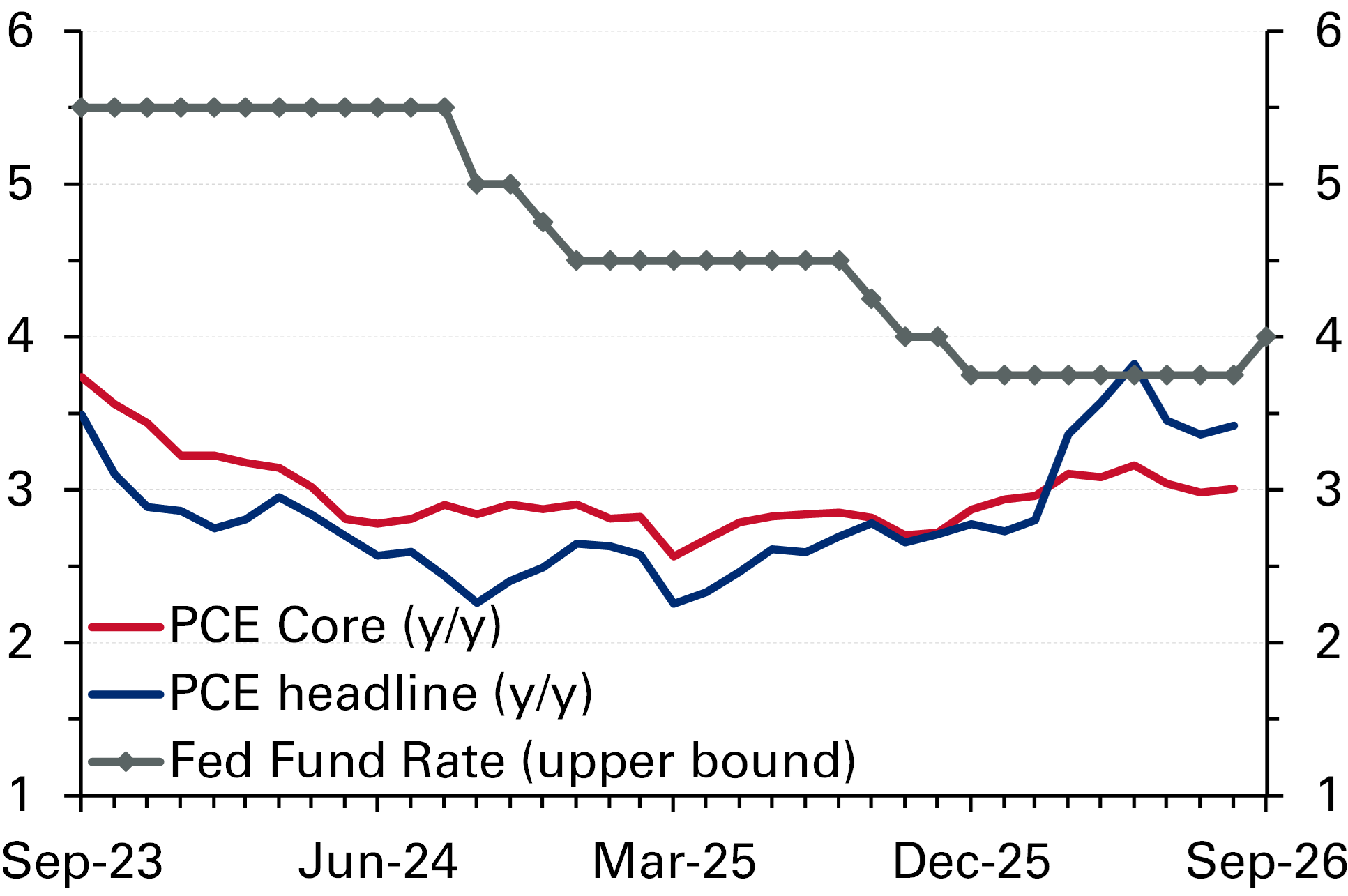
US: August core PCE inflation slightly softer than expected; revisions indicate GDP growth has been stronger than previously reported. The PCE and core PCE inflation rates in August were steady from July’s revised readings at 3.4% y/y and 3%, respectively. On a monthly basis, the core PCE rose by 0.25%, slightly slower than the 0.3% forecast, though was up from a downwardly revised 0.1% in July. As previously announced, the BEA revised the calculation methodology for certain PCE inflation components (such as portfolio management and legal services), that pushed previous PCE inflation rates downward. For example, over May-July, both y/y headline and core PCE inflation is now lower by around 30 bps than previously reported. However, indicating persistent price pressures, a core services gauge (excluding housing and energy) rose 0.4% m/m, the highest pace in three months. Moreover, fuel prices have risen further in recent weeks, which will exert upward pressure on inflation readings for September. The market pricing continues to signal over 95% probability of at least one additional Fed rate hike by year-end. GDP growth rates for the past several quarters including Q1 and Q2 for this year were revised. Q2 GDP growth was revised higher to 2.2% from the 1.5% previously reported, with the underlying domestic economy (final sales to private domestic purchasers) rising at a more solid rate of 4.6% (4.2% previously), accelerating from a revised increase of 1.8% in Q1. BEA’s latest methodology revisions boosted GDP growth by 0.2% per quarter on average over the past two years. Domestic growth drivers including the solid AI-linked investment boom and robust household consumption have remained intact and continue to keep the economy resilient against repeated supply shocks seen over recent years.
US: Investigation finds no criminal offences in the Fed’s building renovation project; Trump renews calls to fire Powell. An internal Federal Reserve agency, Office of Inspector General, found no evidence of criminal misdeeds related to significant cost overruns for a Fed building renovation project that was initiated during the tenor of former Chair Powell. However, the agency highlighted a series of deficiencies that had led to a sharp increase in project cost versus the budget. After the release of the investigation, President Trump relaunched his attack to fire Powell--currently a Fed Governor—, saying “this is Jerome Powell’s fault, and he should be forced to resign, IMMEDIATELY!” and instructed the US Attorney General to “make a determination as to what to do.” Meanwhile, another FOMC voting member in 2026, Minneapolis Fed President Neel Kashkari emphasized that “inflation is still too high,” and the Fed and monetary policy should work to bring it down, echoing views from many other FOMC officials.
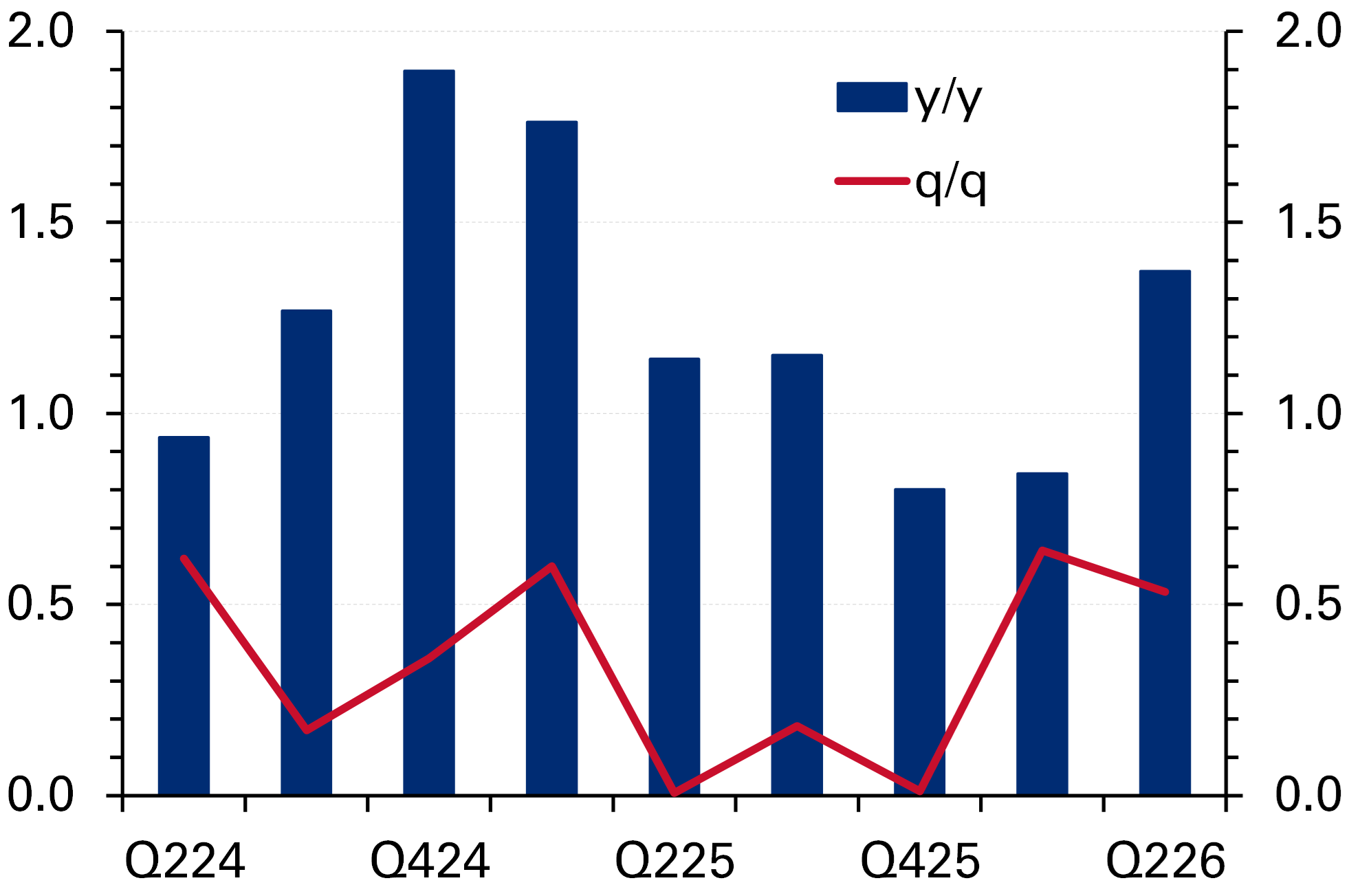
UK: Q2 GDP growth revised higher to 0.5% q/q on stronger services data. The UK economy fared better than previously estimated in Q2, growing 0.5% q/q (1.4% y/y) versus 0.4% in the prior estimate, following growth of 0.6% (0.8% y/y) in Q1. In terms of output, services performed better than the earlier estimate (+0.6% q/q versus 0.5%), but production fell by 0.1% (down from no growth in the previous estimate). On the expenditure side, the upward revision mainly came from higher contribution from net trade. A stronger Q2 growth reading suggests that the UK economy remained solidly resilient absorbing shocks from the Middle East war. However, looking ahead, headwinds remain including high energy prices, a rebound in inflation, the potential for BoE policy rate hikes, and rising gilt yields that have further eroded the government’s ability to deliver growth measures.
Egypt: Tourist arrivals and tourism revenues rise in the first eight months of 2026. The number of tourists visiting Egypt increased 4% y/y to 12.7 million during January-August 2026, up from 12.2 million during the same period in 2025, according to data released by the Egyptian Cabinet. Tourism revenues also rose 1.7% y/y to $12 billion, from $11.8 billion a year earlier. Tourist activity around the pyramids also remained strong, with the archaeological area recording around 2.9 million visitors during the first nine months of 2026. Visitor numbers are expected to exceed 4 million by year-end, supported by rising interest from foreign tourists visiting the Grand Egyptian Museum and the pyramids in the one-day trip program to the area. The continued growth in tourism is important for Egypt’s external position, as tourism revenues represent a key source of foreign currency inflows, alongside remittances, Suez Canal revenues and foreign direct investment. Sustained growth in tourism receipts can therefore help support foreign-exchange liquidity and strengthen the balance of payments, particularly by providing recurring FX inflows that help finance the country’s import and external financing needs.
UAE: The central bank deepens economic ties with Egypt while accelerating AI investments. The Central Bank of the UAE and Egypt have renewed an AED5 billion (EGP69 billion) currency swap agreement for five years, which would help in boosting bilateral trade, investment flows, and the use of local currencies in cross-border transactions. While economic ties between the two countries continue to deepen, non-oil trade remains relatively modest, accounting for 1.4% of the UAE's total non-oil trade in 2025, up from 0.8% in 2024. At the same time, Abu Dhabi's Mubadala has partnered with US-based Together AI to expand AI infrastructure and capabilities in the country with the aim of identifying investments that support the development and deployment of AI technologies in the UAE while establishing a presence in Abu Dhabi, bringing its AI research and inference capabilities closer to regional developers and businesses. It’s worth noting that the UAE is currently working with the US to develop a major AI campus in Abu Dhabi with 5 gigawatts of AI data center capacity. On a separate note, the Government of Sharjah has announced more than AED1.2 billion ($327 million) in development projects across its Eastern and Central regions in 2026, with investments spanning education, sports, tourism, government facilities, and public spaces to support growth and enhance quality of life.
Saudi Arabia: PIF deepens investment ties with China. Saudi Arabia’s Public Investment Fund (PIF) is seeking to strengthen its investment partnerships with Chinese institutions and companies. During a visit to Beijing, PIF Governor Yasir Al-Rumayyan met with the Chairman of China Investment Corporation (CIC) to discuss ways to deepen investment ties, according to the Saudi Embassy in China. Al-Rumayyan and the Saudi Ambassador to China also met with the Chairman of Sinopec, China’s largest oil refining company, to discuss expanding existing cooperation. The meetings come as the PIF, which manages around $1 trillion in assets, continues to expand its presence in China. Earlier this year, the Fund opened a second office in mainland China in Shanghai, complementing its existing office in Beijing. The Shanghai office is intended to strengthen PIF’s ability to identify and execute investment opportunities in the Chinese market. At the same time, the PIF and Saudi officials are seeking to attract more Chinese investment into the Kingdom. Chinese investment in Saudi Arabia increased 27% y/y in 2025 to around SAR 40 billion, while around 1,900 Chinese companies currently operate in the Kingdom. Of these, 43 have established regional headquarters in Saudi Arabia. The growing engagement highlights the increasingly two-way nature of Saudi-China investment ties, with the PIF pursuing opportunities in China while Saudi Arabia seeks to attract Chinese capital, companies and expertise into its domestic economy.