
 +965 2292 4888


Daily Economic Update
15.06.2026
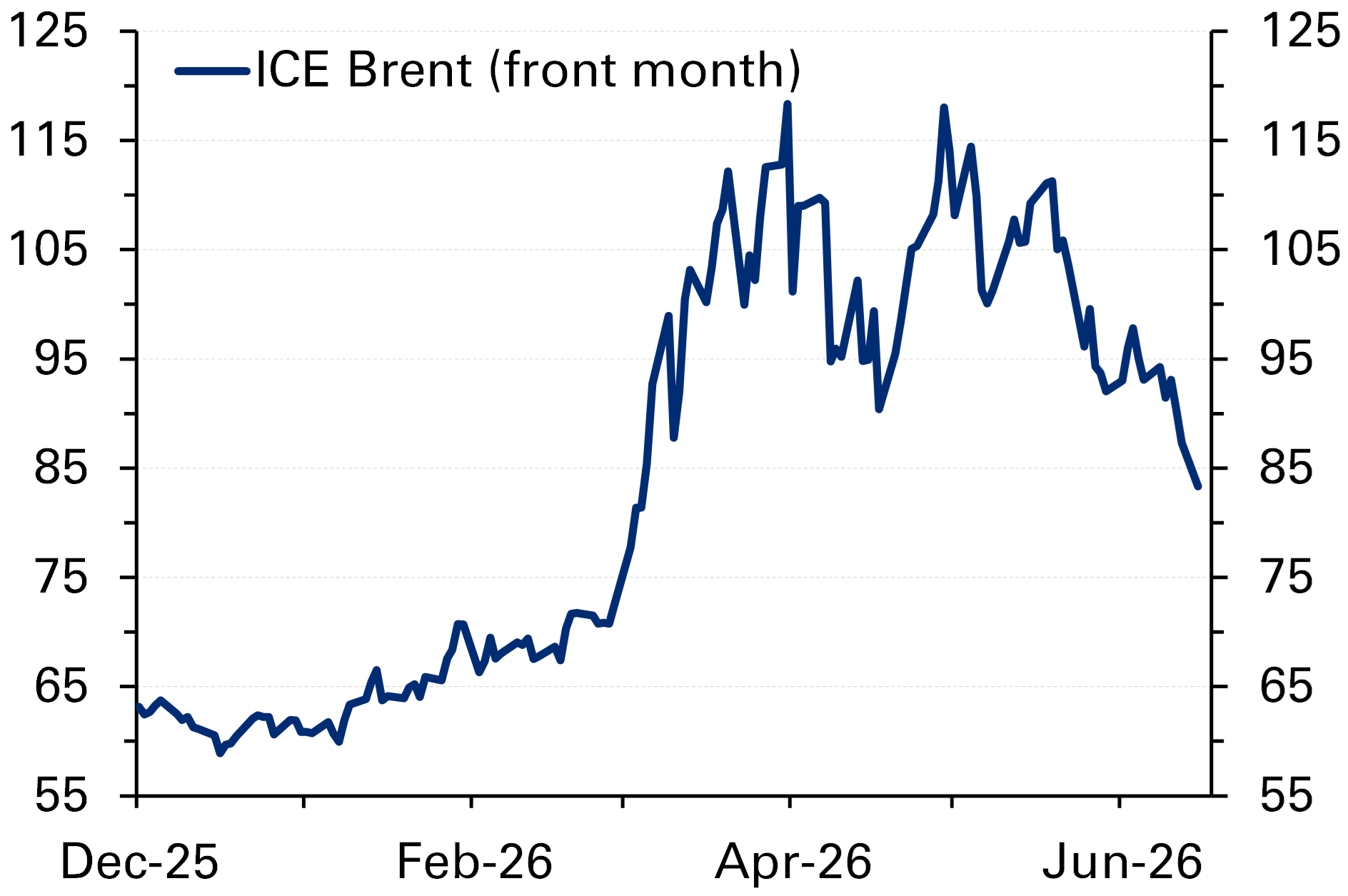
Oil: Brent falls sharply on US-Iran deal to reopen the Strait of Hormuz. Brent futures declined sharply in Asian markets this morning, falling 4.5% to $83.4/bbl, on news of the interim deal between Iran and the US to reopen the Strait of Hormuz. Brent’s drop extends losses to almost 11% over three consecutive trading sessions potentially and pushes prices to more than three-month-lows as markets appear to be quickly re-pricing fading geopolitical risk. A formal signing is scheduled for Friday in Switzerland. The deal signals a de-escalation of tensions that have been a key driver of oil market volatility in recent months. As part of the arrangement, the Strait of Hormuz is expected to reopen fairly quickly after formal signing and an interim period dedicated to clearing mines previously deployed in the waterway will commence. In parallel, the US is expected to lift its effective blockade on Iranian crude exports. The agreement also outlines a subsequent 60-day negotiation period focused on the future of Iran’s nuclear program and to hash out details within the broader agreement, suggesting that while near-term conflict risk may be easing, medium-term uncertainty remains elevated. At this stage, critical details remain unclear, however, with terms of the agreement yet to be released, and it is uncertain whether these will be disclosed upon signing. In particular, the mechanics of the Strait’s reopening are ambiguous. Reports on previous versions of the memorandum of understanding had raised questions around whether passage would be immediate and toll-free: Iran maintains that the Strait will be reopened within 30 days under Iranian arrangements. However, US President Trump has indicated that transit will be toll-free, making it unclear whether Iran will retract its prior stance on the imposition of transit fees.
Saudi Arabia: Consumer spending in April grows at fastest rate in almost five years. Consumer spending – as represented by bank card transactions – accelerated sharply in April, recording its strongest annual growth in nearly five years, according to the latest data. Total spending rose by 17.5% y/y to reach SAR 134 billion, marking the fastest pace of growth since May 2021. The strong performance was largely driven by the continued increase in e-commerce activity which rose 43% y/y and accounted for nearly one-quarter of total spending, the highest share ever recorded. This highlights the Kingdom’s accelerating shift toward digital consumption and online payment channels. At the same time, point-of-sale (POS) spending remained robust, rising by 11.8% y/y, its strongest increase in more than two years. POS transactions represented around 44% of all spending, signaling that spending strength extended beyond online shopping to a broad range of consumer-facing sectors. Meanwhile, cash withdrawals through ATMs increased by nearly 10% y/y to SAR 42 billion, accounting for 32% of total spending. However, despite the increase in absolute terms, cash usage remains close to historical lows as consumers continue shifting toward electronic payments and digital transactions. The strong spending figures also suggest that consumer confidence remains relatively resilient, supported by stable inflation, government spending, and labor market strength, despite the broader uncertainty stemming from regional geopolitical tensions.
Egypt: Government moves to settle historical debts while extending debt maturities. The government is taking new steps to improve the financial position of state entities and strengthen public debt management, moving to settle EGP 196 billion in long-standing financial obligations, while also introducing longer-term local debt instruments. The National Investment Bank (NIB) signed two framework agreements to resolve historical debts, some dating back to the 1980s, involving subsidiaries of the Holding Company for Drinking Water and Sanitation, the General Authority for Reconstruction Projects and Agricultural Development, and the Egyptian Agricultural Authority. The settlement is expected to help restore the financial balance of these public entities, reduce legacy liabilities, and ease pressure on the state budget over time. At the same time, the Central Bank of Egypt, acting on behalf of the Ministry of Finance, plans to issue its first 10-year variable-rate local treasury bond, marking an important step toward extending the maturity profile of government debt and diversifying financing tools in the domestic market. The planned issuance targets around EGP 15 billion, with returns linked to a floating interest rate mechanism and coupons paid quarterly. The move comes as Egypt continues efforts to reduce refinancing risks and improve debt sustainability by gradually shifting toward longer-term borrowing instruments. Overall, both developments signal a broader government effort to strengthen fiscal sustainability through cleaning up historical liabilities and improving the structure of public debt.
Global: Run-up to the US-Iran deal signing on Friday and Fed/BoE/BoJ policy meetings key matters this week. News-flow related to the US-Iran deal, which is set to be signed, absent last-minute surprises, in Switzerland on Friday will likely dominate headlines this week. In the US, the FOMC meets on Tuesday-Wednesday, the first meeting under new Fed Chair Kevin Warsh, and it is widely expected that rates will be left unchanged. Attention will be focused on Warsh’s comments at the post-meeting press conference. This is especially important given his views about the Fed’s communication strategy, forward guidance, and many other important matters. The Fed will also release a new set of macroeconomic projections. In terms of data releases, retail sales growth in May (Wednesday) is expected to stay resilient at 0.5% m/m, matching April’s pace. In the UK, the BoE’s MPC is expected to keep the bank rate unchanged at 3.75% on Thursday, and a key matter will be whether or not the MPC signals a potential rate hike later in the summer. CPI inflation for May (Wednesday) is projected to resume its upward trajectory, rising to 3% y/y from April’s 2.8%, with a higher core rate of 2.7%, up from 2.5% in April. Labor market data will be out on Thursday, and the consensus forecast is for a steady unemployment rate of 5% in the February-April period with slowing regular pay growth, which is seen at 3.3% y/y, down from 3.4%. A critical by-election will be held on Thursday, where Labor’s Andy Burnham will seek a return to parliament to challenge PM Starmer’s premiership. Attention will also be on the bond market’s reaction as it is feared that Burnham may lean towards more fiscally loose policies. In China, a series of data releases for May are due on Tuesday, including house prices, industrial production (expected at +4.2% y/y versus 4.1% in April) and retail sales (seen flat versus +0.2% y/y in April). In addition, fixed asset investment is expected at -2.0% YTD y/y versus -1.6% through April while the unemployment rate is seen unchanged from April at 5.2%. Finally in Japan, the BoJ’s interest rate decision is due on Tuesday with expectations of a 25-bps rate hike to 1%. May’s inflation is due on Friday with the core rate seen steady at 1.4% y/y.