
 +965 2292 4888


Daily Economic Update
16.08.2026
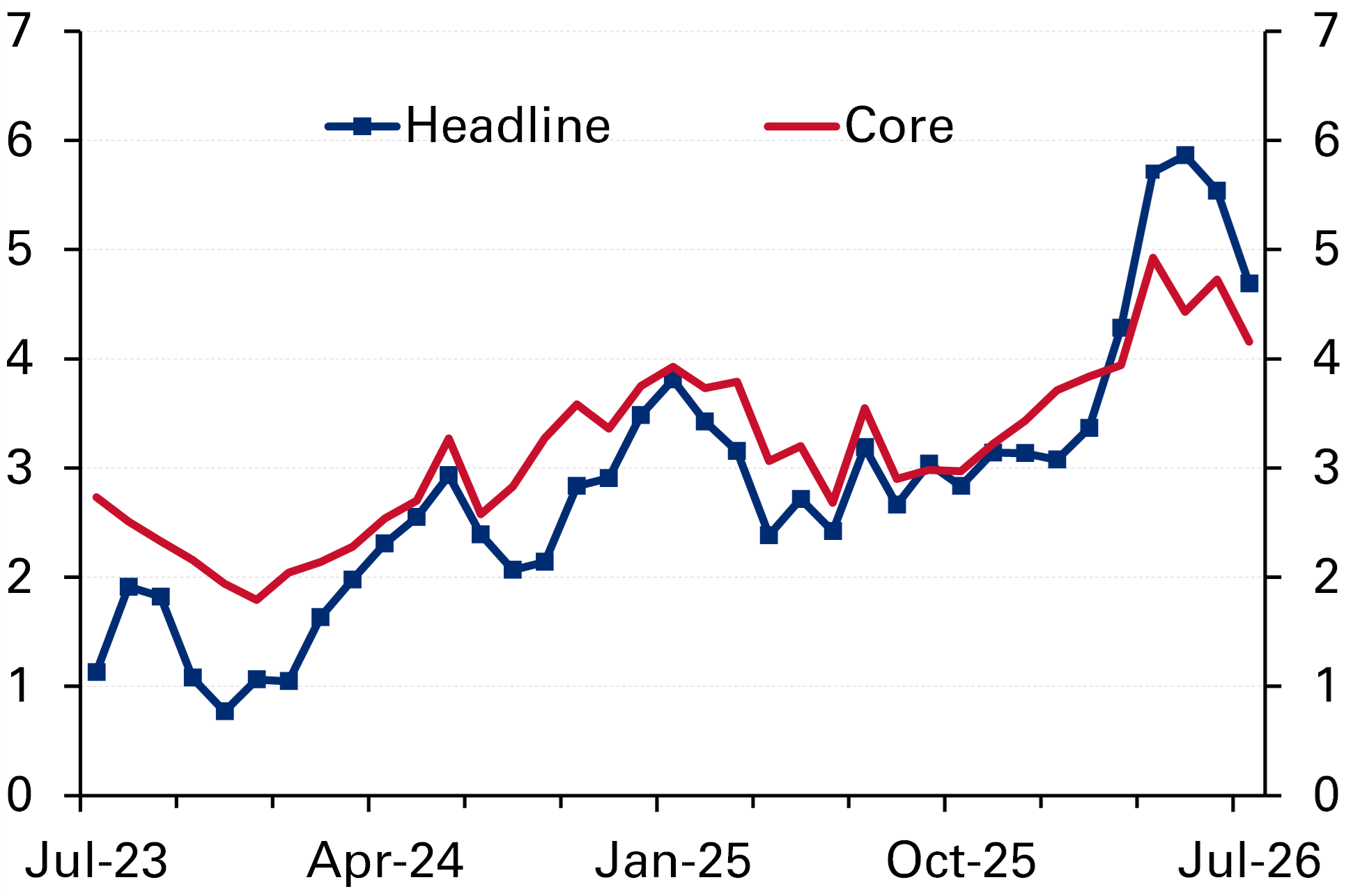
US: PPI inflation slows more than expected, while retail sales surprisingly fall in July. PPI inflation in July slowed more than forecast to a four-month low of 4.7% y/y from June’s 5.5%, below the consensus forecast of 4.9%. Similarly, wholesale price rises excluding food and energy eased to 4.2% from 4.7%. Though inflation overall remains significantly elevated versus the pre-US-Iran war levels, July’s PPI inflation combined with previously reported CPI inflation suggests that the pass-through from current higher energy prices to broader categories is slow but still uncertain. This may likely nudge the FOMC towards a more cautious approach at next month’s meeting, absent no significant surprises in incoming data, with the current market-implied pricing signaling a roughly two-third probability of a hold in policy rates in September. Separately, retail sales surprisingly fell in July by the most since May 2025 at -0.6% m/m (+0.1% forecast) after rising 0.2% in June. A core measure of sales (excluding auto, gasoline, building materials, and food services) declined by 0.4% following a downwardly revised increase of 0.4% in June. However, July’s drop in retail sales was affected by a 2.2% fall in online sales, with Amazon’s flagship sales event taking place in June this year. FIFA World Cup-related spending also faded from the previous month. Moreover, retail sales in prior months were boosted by higher than usual tax refunds this year after the enactment of fresh tax breaks in the One Big Beautiful Bill of 2025. Despite weaker July prints, underlying consumption momentum remains robust, as amid record-high equity markets, wealthier households continue to support aggregate spending, helping keep US economic growth strong.
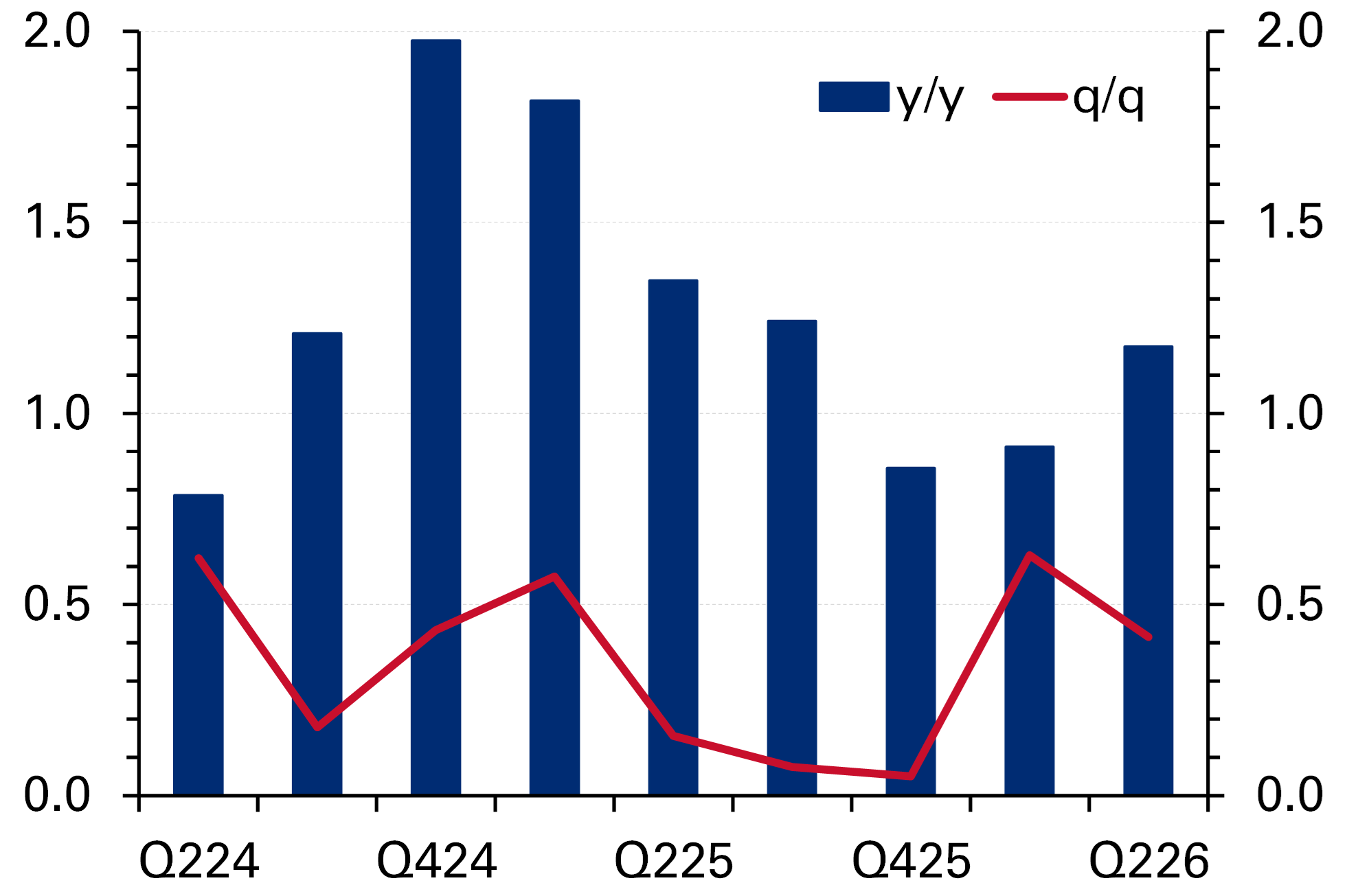
UK: GDP growth resilient in Q2 but the outlook remains soft. The UK economy showed resilience in Q2 despite high energy prices, with GDP growth reaching 0.4% q/q (1.2% y/y) versus 0.6% (0.9% y/y) in Q1, matching the consensus forecast but above the BoE projection of a 0.3% rise. Growth in services slowed to 0.5% q/q from 0.8%, while production stagnated after an increase of 0.2% in Q1. Within production, manufacturing grew by a solid 1% (versus 0.7% in Q1) as firms increased stockpiling efforts to mitigate supply-chain disruptions related to the Middle East war. On the expenditure side, household consumption rose by a robust 0.3% q/q (though down from 0.6% in Q1) as favorable weather conditions and moderate inflation during the quarter helped support spending, while gross capital formation increased by 1.2%, up from Q1’s 0.4%. Although growth was decent overall in H1, the outlook continues to be relatively soft. Repricing of utility bills following a surge in European wholesale gas prices and rebounding global fuel costs are expected to drive inflation higher over the coming months, squeezing consumer wallets. In addition, a temporary boost to manufacturing may fade over the coming period. Finally, the new administration, despite looking to address cost-of-living issues while remaining under political pressure to deliver fresh populist measures, will be constrained by ongoing fiscal challenges.
Eurozone: Industrial production stabilizes in June, offering tentative signs of resilience. Industrial production was flat in June (0.0% m/m), following a revised 0.3% increase in May but outperforming expectations for a 0.1% contraction. The sectoral picture remained mixed with growth in non-durable consumer goods (3.0% m/m in June vs 3.3% in May) and energy output (1.5% vs 2.6%) remaining firm and durable consumer goods returning to growth (0.3% in June vs -1.3% previously). Meanwhile, declines in intermediate and capital goods production point to continued weakness in industrial activity and business investment. On an annual basis, output rose 0.1%, compared with -0.1% in May (revised up from -1.2%) and well above expectations for a 0.8% decline. The data points to a more resilient industrial sector than previously thought, with substantial upward revisions to May and stronger-than-expected June data, though the recovery remains tentative amid still-soft demand and external uncertainties.