
 +965 2292 4888


Daily Economic Update
03.03.2026
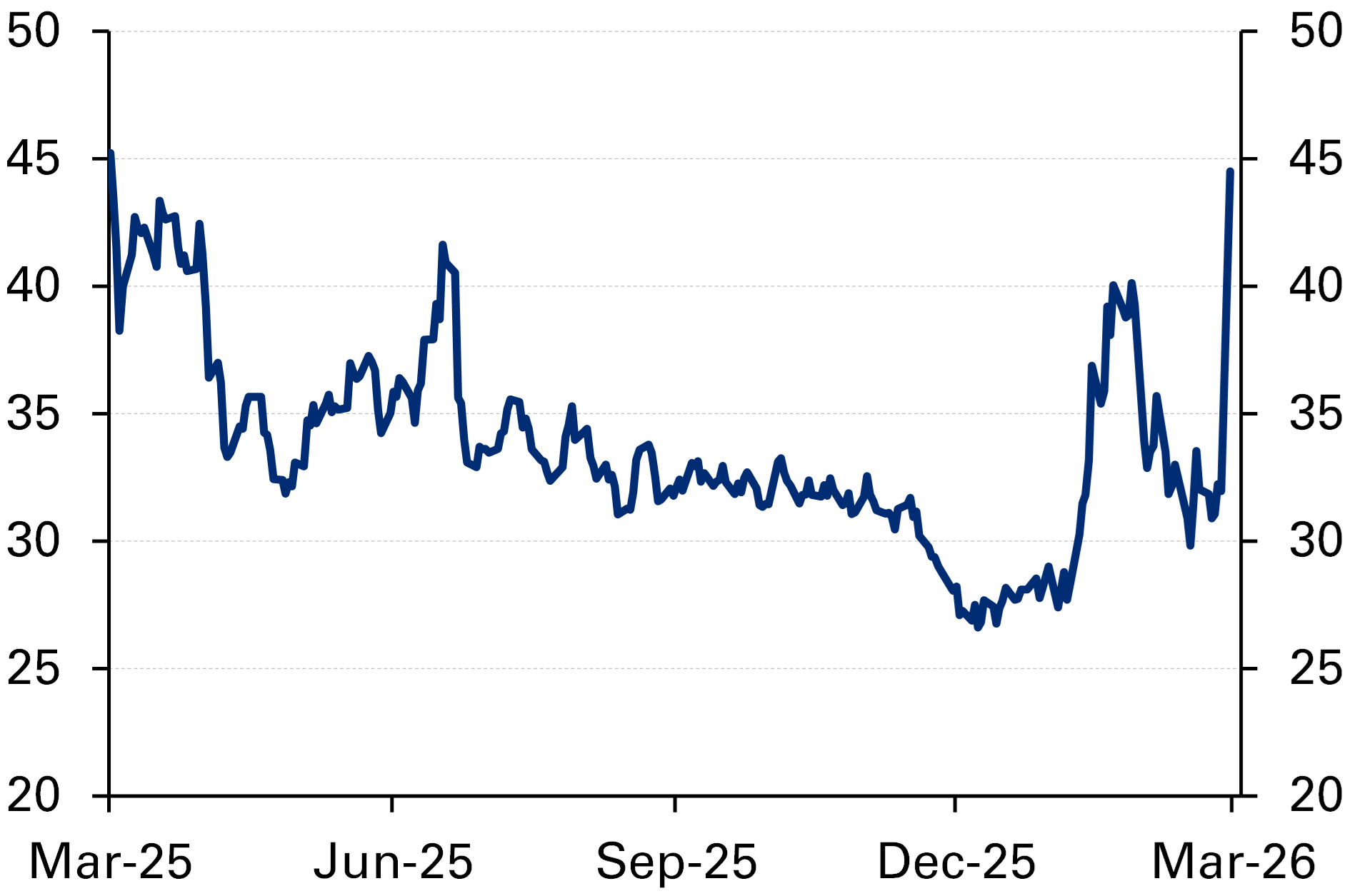
Oil: Brent prices see renewed climb as conflict impacts regional energy infrastructure. Brent futures pared part of their initial surge yesterday, settling at $77.7/bbl, up 7.3% d/d after having traded almost 14% higher in early trading. The pullback partly reflected profit taking as well as the substantial risk premium already embedded in prices. Even so, Brent has rebounded today, trading back near $80/bbl, as market focus shifts toward the attacks on a range of regional energy infrastructure and potential duration and severity of supply disruptions. Traffic through the Strait of Hormuz has effectively come to a standstill, following comments from a senior IRGC commander who warned that Iran would fire on any ship attempting to transit the chokepoint. Although some ships are pausing passage through the Strait as a precaution, the risk has been mirrored in global oil and gas shipping rates, both of which have surged amid elevated risk and operational uncertainty. Meanwhile, key parts of GCC energy infrastructure were directly affected by the conflict yesterday. Saudi Aramco announced the shutdown of the 550,000 kb/d Ras Tanura refinery following drone strikes, while the 346,000 kb/d Mina Al Ahmadi refinery in Kuwait was hit by falling debris, albeit with production reportedly unaffected. QatarEnergy fully suspended LNG production, sending global gas markets sharply higher (see Eurozone section below), and operations at Jebel Ali, the Middle East’s largest port, were partially halted yesterday. With GCC oil, gas, and port infrastructure being affected, the potential scale and risk of supply disruptions has grown materially, shifting market focus away from temporary chokepoint-related volatility. Relatedly, US President Trump said overnight that “we projected four to five weeks, but we have capability to go far longer than that” in relation to the possible length of the conflict with Iran, and that the US is prepared to continue operations for “as long as necessary”, potentially implying no quick relief for global energy prices and markets.
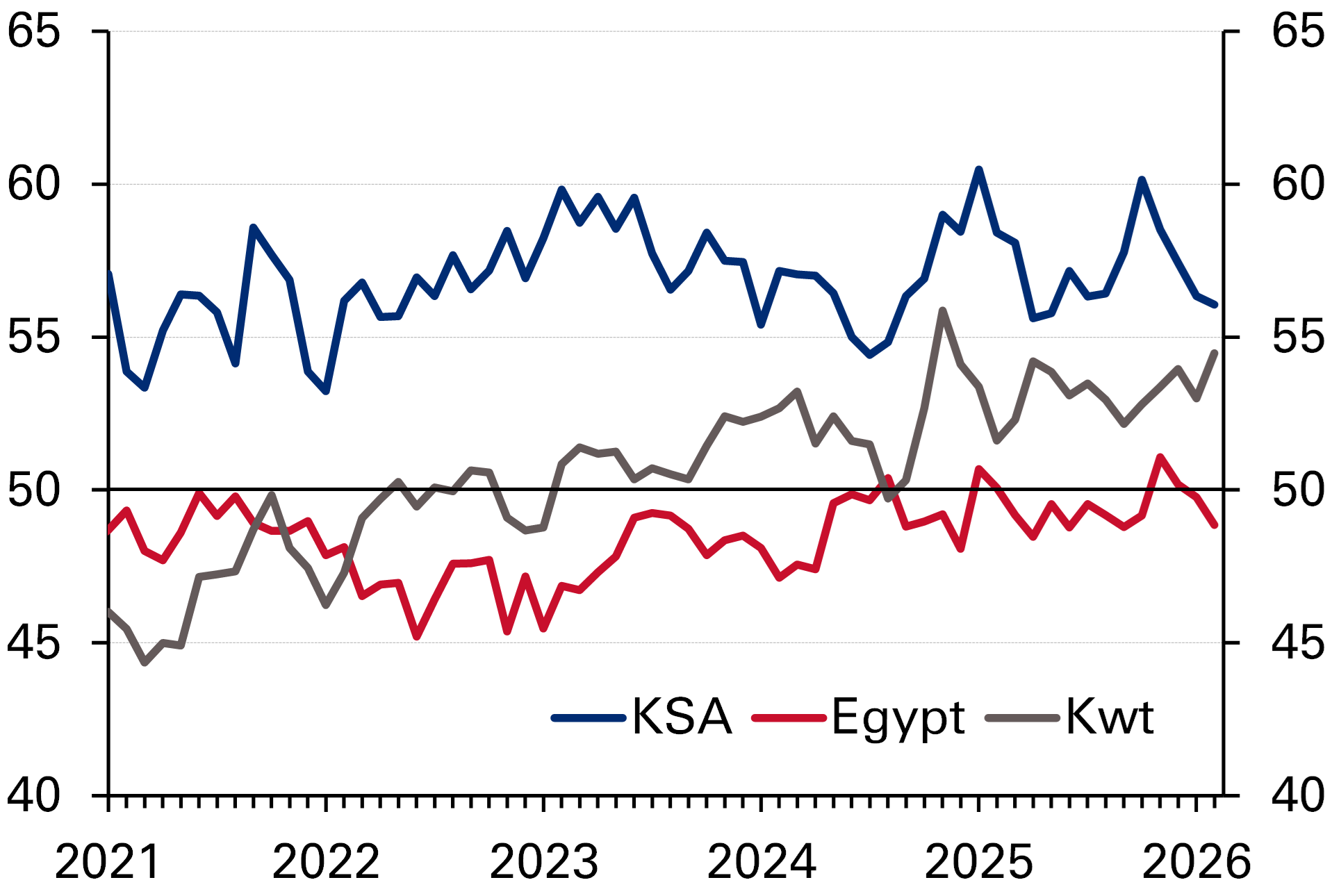
Kuwait: Business activity continued to strengthen in February. The PMI rose to 54.5 in February from 53.0 in January, marking the eighteenth consecutive month of improving non-oil private sector conditions and the strongest growth since November 2024. Of course, the latest survey does not factor in any negative impact from current adverse geopolitical events, which seems likely to push the index down in March. Stronger business activity in February was driven by faster increases in output and new orders, which reached 10 and 15 month-highs respectively, in addition to accelerated growth in export orders. Firms attributed these gains to competitive pricing, high product quality, and successful marketing. Work backlogs rose for the third consecutive month to a series high despite a continued (albeit modest) rise in employment, as demand outpaced hiring. To meet rising new orders and prevent stock shortages, companies increased purchasing activity at the second-fastest pace on record and expanded inventories. Input cost inflation climbed to a nine-month high, with pressures reportedly stemming from materials, maintenance, marketing, printing, rent, salaries, and spare parts. While some firms raised selling prices, overall output price inflation remained modest due to discounting and offers by other vendors. One year-ahead business optimism strengthened to a 26-month high, supported by expectations of rising output, broader product offerings, and competitive pricing strategies.
Saudi Arabia: Non-oil activity remained resilient in February with PMI easing slightly. Saudi Arabia’s Purchasing Managers’ Index declined marginally to 56.1 in February from 56.3 in January, marking the softest improvement in non-oil business conditions in nine months. Despite the slight moderation, the index remained comfortably above the 50 threshold, signaling continued expansion. The PMI has been gradually easing since reaching one of its highest levels in over a decade last October. Still, demand conditions remain strong. Output continued to expand at a solid pace, though growth slowed to its weakest level since August. The expansion was supported by sustained increases in new orders and a seventh consecutive month of rising export sales. Stronger business inflows encourage firms to increase hiring, leading to a notable tightening in the labor market. Wage costs rose at the fastest pace in the survey’s history as companies adjusted compensation to manage higher workloads. Importantly, recent regional tensions have not yet been reflected in the February data. Business expectations for the next twelve months remained positive, suggesting confidence in underlying economic fundamentals. Overall, February’s reading points to an economy that is still growing at a healthy pace, albeit transitioning toward a more balanced and sustainable trajectory. The March release will likely be weaker, with recent geopolitical developments weighing on sentiment.
Egypt: PMI slips further into contraction as cost pressures build. Business conditions in Egypt’s non-oil private sector weakened in February, with the PMI declining from 49.8 in January to 48.9 in February, moving further into contractionary territory. The reading suggests that growth momentum at the start of the year may moderate slightly, with first quarter GDP likely to come in around 4.5% to 5%, softer than previously anticipated. After four months of expansion, firms reported a renewed decline in output amid weaker demand and intensifying cost pressures. Companies highlighted rising global commodity prices, particularly oil and metals, which drove the fastest increase in input costs in nine months. Margin pressures have become more visible, especially as businesses remain cautious about passing higher costs on to consumers. Additionally, recent currency depreciation, partly linked to portfolio outflows amid regional geopolitical tensions, could amplify imported cost pressures for firms reliant on foreign raw materials. If sustained, this dynamic may gradually feed into consumer prices, posing a mild risk to the current easing momentum in monetary policy. Overall, the data reflects a delicate balance where growth remains positive at the macro level, but the private sector is navigating a more challenging cost and demand environment.
Eurozone: Natural gas prices surge as Qatar stops LNG production. Natural gas prices in Europe and Asia surged sharply on Monday, driven by a sudden tightening in global LNG supply amid escalating geopolitical risks. Benchmark European gas prices jumped by around 50% intra-day yesterday, before trimming gains, after Qatar suspended LNG production at key facilities following drone attacks, disrupting a supply source that accounts for roughly 12-14% of EU LNG imports as per some estimates. The shock has been amplified by halted tanker flows through the Strait of Hormuz and already low EU storage levels—now below 30%, compared with 40% a year earlier as per some media sources. Although prices remain well below 2022 crisis levels, the combination of constrained Middle Eastern supply and heightened geopolitical uncertainty could continue to generate pronounced volatility across European hubs. If sustained, a surge in energy prices would push up inflation in the bloc, currently running at 1.7% y/y. Energy accounts for roughly 10% of the Eurozone CPI basket, so, a 10% increase in energy prices will translate to around a 1% direct increase in the CPI. However, factoring in the indirect impact on non-energy related goods and services would push the price impact even higher.
US: ISM manufacturing PMI remains in expansion, but price pressures rise sharply. The ISM manufacturing PMI ticked down to 52.4 in February from 52.6 in January, remaining in expansion mode for two consecutive months, the first time since October 2022. New orders eased from an almost four-year high of 57.1 in January to a still-robust 55.8 in February, while production also moderated to 53.5 from 55.9. Employment continued to shrink, albeit at a softer pace, with the gauge improving to 48.8 from 48.1, the highest level since January 2025. However, price pressures built up sharply as the input price measure jumped to 70.5 from 59 in January, the highest rate since June 2022. This, combined with previously reported sharply higher core PPI inflation signals that input cost passthrough could pick up over the coming months, keeping the inflation path bumpy. Moreover, if the ongoing military conflict in the Middle East escalates further keeping oil and other energy prices elevated for some time, overall consumer price inflation in the US will likely accelerate. Following the developments in the Middle East and the increase in oil prices, the futures market trimmed the probability of two Fed interest rate cuts by the end of 2026 to around 65% now from almost 80% last Friday, seeing higher chances of the first down move at the FOMC meeting in July versus June previously.
UK: House price rises steady in February but the overall trend still soft. The Nationwide House Price Index showed that UK residential property prices rose by 1% y/y (0.3% m/m) in February, matching the pace seen in January, but the overall price growth trend remains modest compared with 2024-25. The outlook continues to be cautious amid sustained weak labor market conditions though business activity has shown early signs of improvement lately. However, the anticipated interest rate cuts this year by the Bank of England should help support the UK housing market.