
 +965 2292 4888


Daily Economic Update
18.08.2026
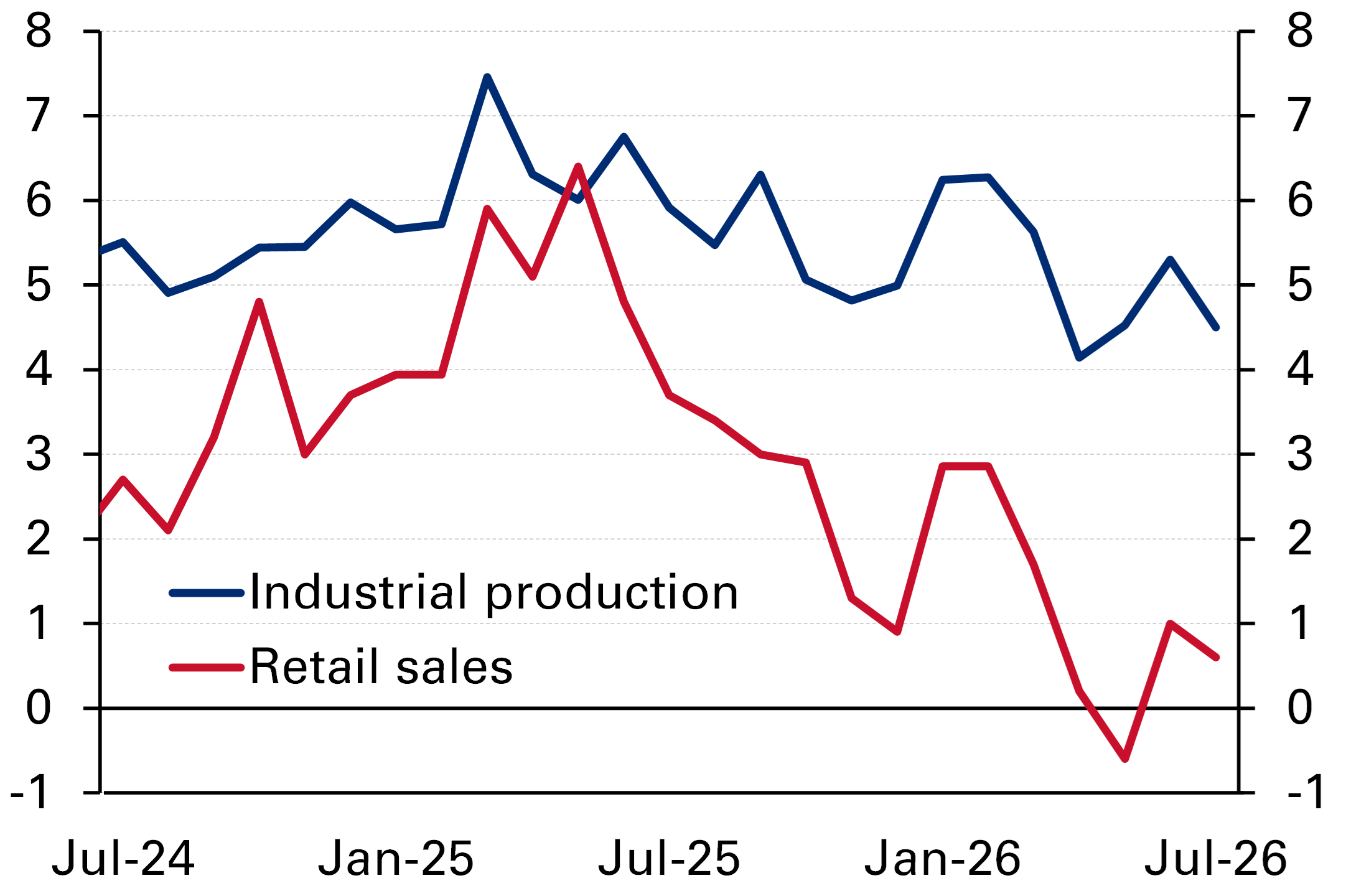
China: Key economic indicators point to ongoing domestic demand weakness in July. Economic activity softened in July, with retail sales growth easing to 0.6% y/y from 1.0% in June and industrial production slowing to 4.5% y/y from 5.3%, suggesting both consumer spending and manufacturing momentum lost some steam during the month. Reflecting the broader weakness in demand, fixed-asset investment contracted 6.7% y/y year-to-date (Jan-July), deepening from a 5.7% decline in the first half of the year, while the urban unemployment rate edged up to 5.2% in July from 5.0% in June, pointing to a modest deterioration in labor market conditions. Meanwhile, in the property sector, there were tentative signs of stabilization, with new home prices falling 3.2% y/y in July, a slight improvement from June's 3.3% decline. Overall, the July data underscores concerns that domestic demand remains the economy's key weak spot, limiting broader growth momentum – Q2 GDP growth eased to 4.3% y/y, the lowest on record outside the Covid-19 years and below the official 2026 target range of 4.5-5% – despite ongoing resilience in parts of the industrial sector. Lastly, it is worth noting that the data follows authorities recent pledge to strengthen domestic demand and accelerate fiscal implementation in the second half of the year.
Egypt: Government to rely primarily on domestic borrowing in FY26/27. The Ministry of Finance plans to finance 89-93% of its borrowing needs in FY26/27 from the domestic market, while limiting external borrowing to 6-9%, in line with its strategy to reduce exposure to foreign currency debt. Treasury bills will remain the government’s main financing instrument, accounting for around 72-75% of domestic borrowing, followed by treasury bonds at 15-20%. The ministry also plans to expand the use of EGP-denominated sukuk and retail bonds, while attracting more participation from fixed-income and money-market funds. On the external front, the government intends to rely mainly on concessional and semi-concessional financing to provide 66-72% of external borrowing, with international bond issuances used selectively for the remaining 28-34%. Planned issuances may include Eurobonds, sovereign sukuk, Panda bonds, Samurai bonds, and other sustainable financing instruments. Importantly, new external borrowing will remain below maturing obligations, supporting the government’s objective of gradually reducing external debt. The strategy also targets a further reduction in Egypt’s gross financing needs during the current fiscal year, building on the progress achieved last year. Meanwhile, the average maturity of government debt has increased to 10.5 years, while budget-sector (which covers most of the public sector) debt has continued its downward trend, reflecting ongoing efforts to strengthen debt sustainability. The government had successfully cut the budget sector’s external debt by around $2 billion, bringing it down to 19.6% of GDP in March 2026 from 21.8% in June 2025. Total budget-sector debt stood at 83.9% of GDP in March, down from its 96% peak in FY22/23.
Saudi Arabia: PIF profits surge in 2025 despite a slight decline in assets under management. The Public Investment Fund (PIF) reported a strong financial performance in 2025, with net profits jumping 152% y/y to SAR 65.1 billion, while revenues rose 9% to around SAR 449 billion, according to the fund’s annual report. The sharp increase in earnings highlights the continued strength of the fund’s diversified investment portfolio despite a challenging global market environment. Despite the strong profit growth, PIF’s assets under management (AUM) edged down by 1% y/y to around SAR 3.4 trillion, remaining below its SAR 4 trillion target for 2025. The fund attributed the decline to market conditions, changes in asset valuations, and the timing of certain investment transactions. Domestic investments continued to dominate the portfolio, accounting for 76% of total assets, followed by international investments (20%) and the treasury portfolio (4%). Looking ahead, PIF signaled that it plans to list more of its portfolio companies on the Saudi stock exchange, reaffirming its confidence in the Kingdom’s capital markets despite ongoing geopolitical tensions. While the fund fell short of its AUM target, it noted that it met or exceeded its other strategic objectives for 2025, underscoring continued progress in supporting Saudi Arabia’s Vision 2030 agenda.