
 +965 2292 4888


Daily Economic Update
24.11.2025
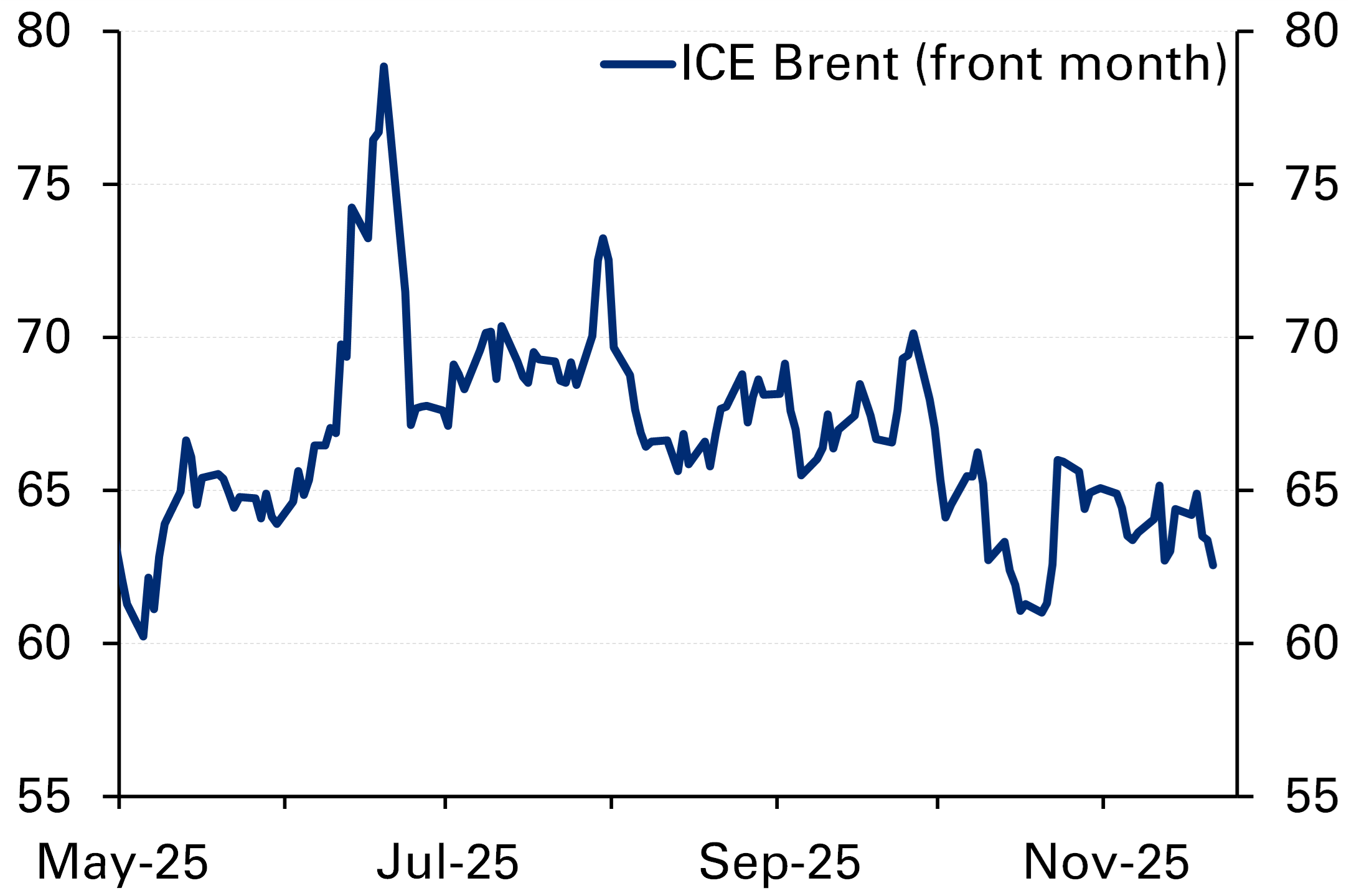
Oil: Prices decline on Trump’s Russia-Ukraine peace proposal. Brent futures closed down 2.8% w/w last week at $62.6/bbl as markets weighed the prospect of a US-brokered deal between Russia and Ukraine that could bring the nearly 4-year long war to a close and allow sanctioned Russian crude to trade more freely on international markets. The resumption of oil loadings from the Novorossiysk export hub following a 2-day pause also contributed to the more bearish turn. President Trump is pushing Ukraine to accept a 28-point peace proposal on an “aggressive timeline” of less than one week in a bid to bring the war to a close (and further burnish his credentials as a peacemaker), but the terms of the deal, which include ceding Russian-controlled Ukrainian land in the Donbas permanently to Russia, limiting the size of Ukraine’s army to 600,000 personnel and foregoing any NATO membership plans, are seen by both Ukraine and the Europeans as too restrictive and favoring Russia. The Europeans, for their part, are looking to amend the US proposal to strengthen Ukraine’s capacity to defend itself and to preserve the country’s “dignity”, as Ukrainian president Zelenskiy called it. The moves helped Brent pare back some of its losses on Friday but otherwise the direction of travel appears to be towards some sort of resolution to the conflict in the weeks or months ahead. The implications for oil would be bearish, with Russian oil sanctions likely to be lifted afterwards and Russian crude more freely available and to more customers. The geopolitical risk premium attached to Brent especially would also likely be eroded. Having said that, the ultimate impact may be less negative than many expect given that the bulk of Russian oil was already finding buyers in China, India, Turkey and elsewhere, albeit at heavily discounted prices; once the US/EU/G-7 price caps are lifted, the price of the benchmark Russian Urals grade will naturally range closer to the market price, so this would result in a firming of the oil market complex. Market participants will look to size up any developments on this Trump peace proposal this week and the upcoming OPEC-8 meeting on November 30. Meanwhile, the latest US EIA weekly report painted a mixed picture, with commercial crude inventories dropping 3.4 mb w/w (w/e November 14) but crude production remaining near record levels at 13.8 mb/d.
Bahrain: S&P downgrades Bahrain’s sovereign rating to “B” on rising fiscal and debt pressures; outlook stable. S&P Global Ratings downgraded Bahrain’s long-term sovereign rating to “B” from “B+”, citing increasingly challenging fiscal dynamics and a rising debt trajectory. The agency projects the fiscal deficit to widen to 7.6% of GDP in 2025, broadly in line with our forecast of 7.7%, driven by softer oil prices, elevated financing costs, and structurally high social spending. Moreover, government net debt, already high, rose to 118% of GDP in 2024 and is expected to climb to 126% in 2025, reaching 139% by 2028, reflecting significant off-budget spending. With this expanding debt burden, S&P expects interest payments to average around 33% of general government revenue over 2025–2028. Bahrain remains sensitive to oil price movements: hydrocarbons account for about 55% of government revenue and 50% of goods exports, despite representing just 15% of GDP. The debt structure also increases vulnerability, with around 60% of total government debt denominated in USD, while the remainder is dinar-denominated, including government securities (25%) and liabilities to the Central Bank of Bahrain (15%). S&P expects Bahrain’s reliance on external investors for funding and FX needs to persist. On the external side, the current account surplus is set to narrow from an estimated 4.8% of GDP in 2024, to averaging only 1.6% over 2025–2028 on the back of weaker oil markets. The agency noted that continued financial support from GCC neighbors remains an important anchor for Bahrain’s creditworthiness.
UAE: The government launches $10 billion national investment fund to hit $600 Billion FDI goal by 2031. The UAE government has approved the establishment of a national investment fund of $10 billion to attract foreign investments. This initiative is a key component of a broader federal strategy aimed at more than doubling its annual FDI to AED240 billion by 2031 and increase its total accumulated FDI to AED2.2 trillion ($600 billion) in the next seven years. The fund will provide financial incentives to support further growth in FDI inflows. Underscoring this strategy, the UNCTAD world investment report has revealed that the UAE ranked as 10th globally for foreign investment inflows in 2024, attracting about $45.6 billion, which represents a 48% y/y increase while highlighting the success of the implemented foreign ownership reforms. The government strategic focus on attracting FDI inflows would help in enhancing global competitiveness, ensuring robust and sustainable non-oil GDP growth in the medium and long term while positioning the UAE as a premier global investment destination. Meanwhile, the US has approved the sale of about 35,000 AI chips with GB300 processors from Nvidia to G42 (AI holding company), which would speed up the Stargate UAE project (1-gigawatt AI compute cluster) and the UAE-US AI campus (5-gigawatt AI infrastructure hub).
Global: The UK Autumn Budget and US retail sales key matters this week. In a holiday-shortened week in the US, retail sales for September (due on Tuesday) are expected to remain robust, increasing by 0.4% m/m though slowing from 0.6% in August. Also on Tuesday, September’s PPI inflation is seen increasing to 2.7% y/y from 2.6% in August. Durable goods orders for September will be released on Wednesday, with the street projecting a steady 1.9% m/m increase in orders excluding defense. In the UK, the Chancellor will present the much-awaited Autumn Budget on Wednesday, which is expected to include new fiscal consolidation measures amid a weakening economy; the reaction in the UK bond and currency markets will be key. In terms of data releases, the Nationwide housing price index for November is due on Friday. In Japan, Tokyo’s November inflation figures are due on Friday with the headline and core rates both seen decreasing to 2.7% y/y from 2.8% in October. Also on Friday, October’s retail sales growth is seen improving to 0.8% y/y (0.5% in September) while industrial production is seen decreasing 0.6% m/m in October after increasing 2.6% in September.