 +965 2292 4888


Daily Economic Update
13.08.2026
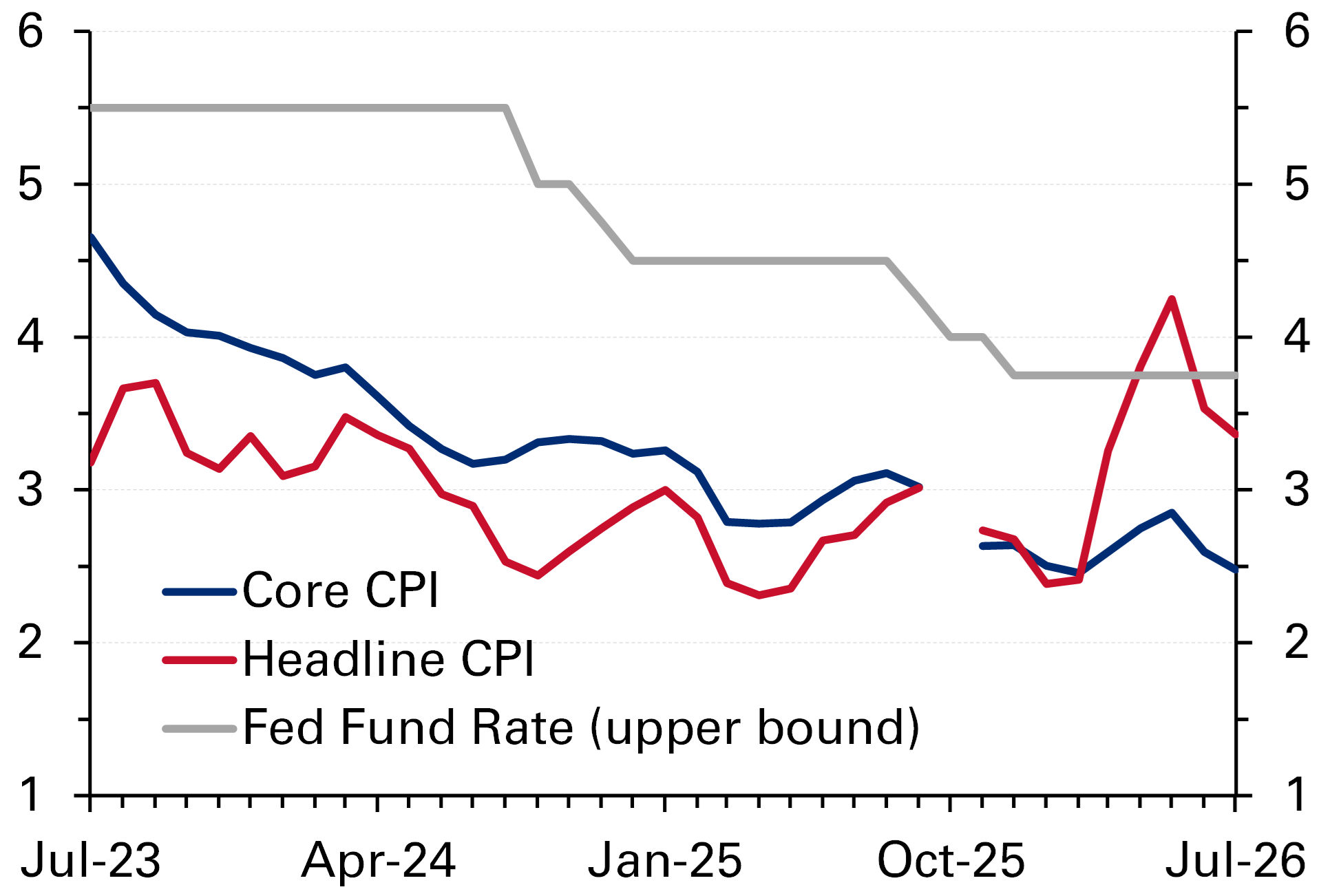
US: CPI inflation softens further matching expectations but keeps policy rate hike bets alive. CPI inflation in July eased further to 3.4% y/y from 3.5% in June as energy prices fell m/m for the second month, led by a sustained decline in gasoline costs (-2.9% m/m following -9.7% in June). However, energy commodity costs are still up a significant 25% versus July 2025. The core rate also dropped to 2.5% from 2.6%, matching the lowest level seen since March 2021, indicating no broad price pressures from elevated energy prices. On a monthly basis, the core rate increased by 0.2% in July after being flat in June. Durable goods prices continued to fall y/y for the fourth straight month as tariffs impact seems to be fading steadily. However, the AI-related boom is pushing up prices for some categories. For example, computer software and accessories prices increased by 0.5% m/m after jumping by 2.3% in June, while computers and peripherals prices soared by 3.5% m/m. Within services, the key component shelter increased by only 0.1% m/m, same as in June, softening the y/y increase to 3.2% and auto insurance (a key contributor of services inflation post-pandemic) continued to fall (-4.5% y/y). However, airfares climbed by 26% y/y (2.2% m/m). A narrow measure of services inflation (ex-energy and shelter) rebounded to 0.2% m/m following a decline last month. A second straight benign CPI inflation report coupled with July’s weak labor market print should help take some pressure off the FOMC to hike interest rates immediately. Nonetheless, inflation remaining substantially elevated versus the Fed’s 2% target, with an ongoing robust economic growth outlook, will keep the debate about interest rate hikes alive. The futures market pared the probability of a 25bps rate hike at the FOMC’s September meeting to 40% from around 50% before the CPI release but still sees around 75% chance of at least one hike by year-end. Reaction in the UST bond markets was also broadly muted yesterday, with 10Y and 30Y yields almost unchanged, but the key 2Y yield fell by around 2bps.
Japan: PPI softer than expected in July but the y/y increase at more than a three-year high. Japan’s producer price index rose 7.2% y/y in July, easing marginally from an upwardly-revised 7.3% increase in June and coming in below market expectations of 7.4%. On a monthly basis, the PPI inched up by 0.1% in July (+0.5% in June), sharply below expectations (0.6%). The moderation suggests that some cost pressures, particularly from energy and commodity prices, have softened. Electricity prices were a key contributor to the m/m increase, while declines in some energy and chemical prices helped offset broader pressures. Overall, while July’s PPI print was soft on a monthly basis , the y/y increase remains at more than a three-year high, indicating that inflationary pressures in the economy remain strong, keeping upside risks to CPI inflation elevated. This is in-line with the BoJ’s recent warnings on inflation, and especially given the yen’s weakness and its impact on import costs.
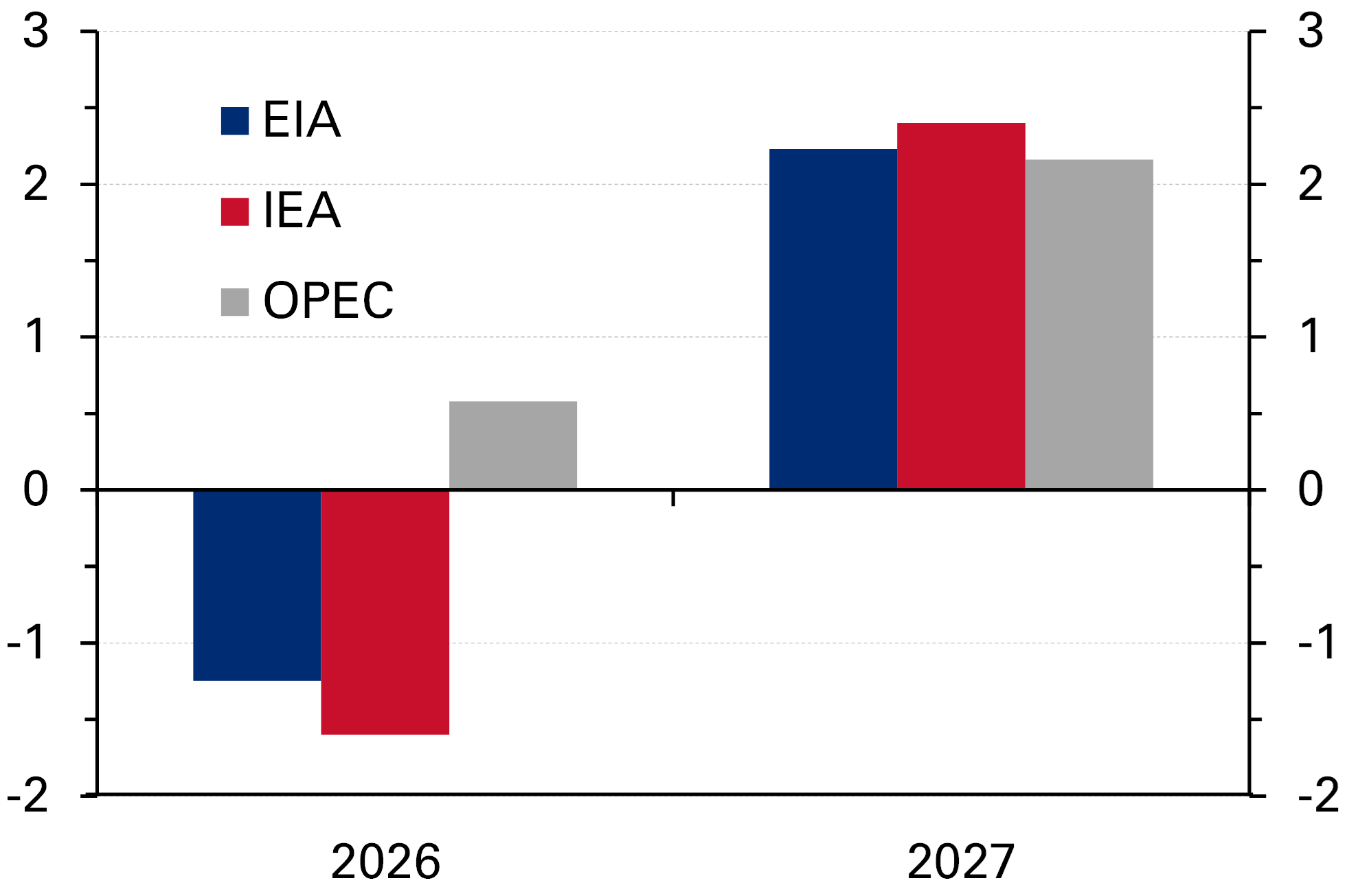
Oil: Prices softer in early trading amid oil demand downgrades by the IEA and OPEC. Brent futures, closing mostly unchanged on Wednesday at a shade under $89/bbl, softened slightly this morning in Asian trading (-0.4% to $88.6) at the time of writing on the back of a surprise build in US crude inventories and weaker oil demand expectations. The IEA, in its August monthly oil market report published yesterday, adopted a more bearish tone on oil demand and projected a steeper contraction in oil consumption (-1.6 mb/d) this year compared to its previous estimate (-1.1 mb/d) a month earlier. According to the agency, continued disruptions to shipping through the Strait of Hormuz and elevated fuel prices have weighed on demand. While the contraction in oil demand was sharpest in Q2 (-4.9 mb/d y/y), the agency reckons that conditions are expected to improve gradually, with declines easing to -2.8 mb/d in Q3 before returning to growth of 580 kb/d in Q4. The recovery in oil demand growth is expected to persist in 2027, expanding by 2.4 mb/d. Supply expectations were also revised lower. The IEA now sees global oil supply falling by 4.3 mb/d in 2026, versus a 3.7 mb/d decline in the previous report, which reflects the impact of maritime disruptions during July and early August. Supply is nevertheless expected to rebound by 8.3 mb/d in 2027. Combined with a 69 mb decline in global inventories during July, the agency estimates a market deficit of 1.8 mb/d in Q3 2026. Nevertheless, the agency assumes a de-escalation and gradual normalization in oil flows by year-end, helping swing the market back into a surplus of around 4 mb/d. The normalization in supply will also help revert the overall 1.3 mb/d deficit seen in 2026 into a 4.6 mb/d surplus next year. Meanwhile, OPEC's updated outlook – also released yesterday – remains more constructive, although it also lowered its 2026 demand growth forecast by 200 kb/d to 580 kb/d, marking a fourth consecutive downgrade. The organization, nevertheless, raised its 2027 demand growth estimate by 200 kb/d to 2.16 mb/d. On the supply side, DoC production excluding the UAE increased by 1.4 mb/d m/m to 33.8 mb/d in July, led by Iraq (+665 kb/d to 2.6 mb/d), Saudi Arabia (+590 kb/d to 7.3 mb/d), and Kuwait (+393 kb/d to 1.85 mb/d). Stronger output from Kuwait and Iraq suggests that some crude exports continue to move through the Strait, either via ship-to-ship transfers or tankers operating with transponders off. Partly offsetting this increase was a decline in Kazakhstan's production due to Ukrainian attacks that have disrupted CPC operations. Adding to the market’s bearish tone yesterday, EIA data revealed a surprise increase in US crude inventories. Total crude stocks rose by 11.3 mb during the week ending August 7, the first net build since early April, driven by a 17 mb jump in commercial inventories, the largest since January 2023. Crude in the SPR, however, continued to decline, falling by 6.1 mb during the week. Higher imports and lower exports appear to have been the key drivers behind the inventory build.