
 +965 2292 4888


Daily Economic Update
02.08.2026
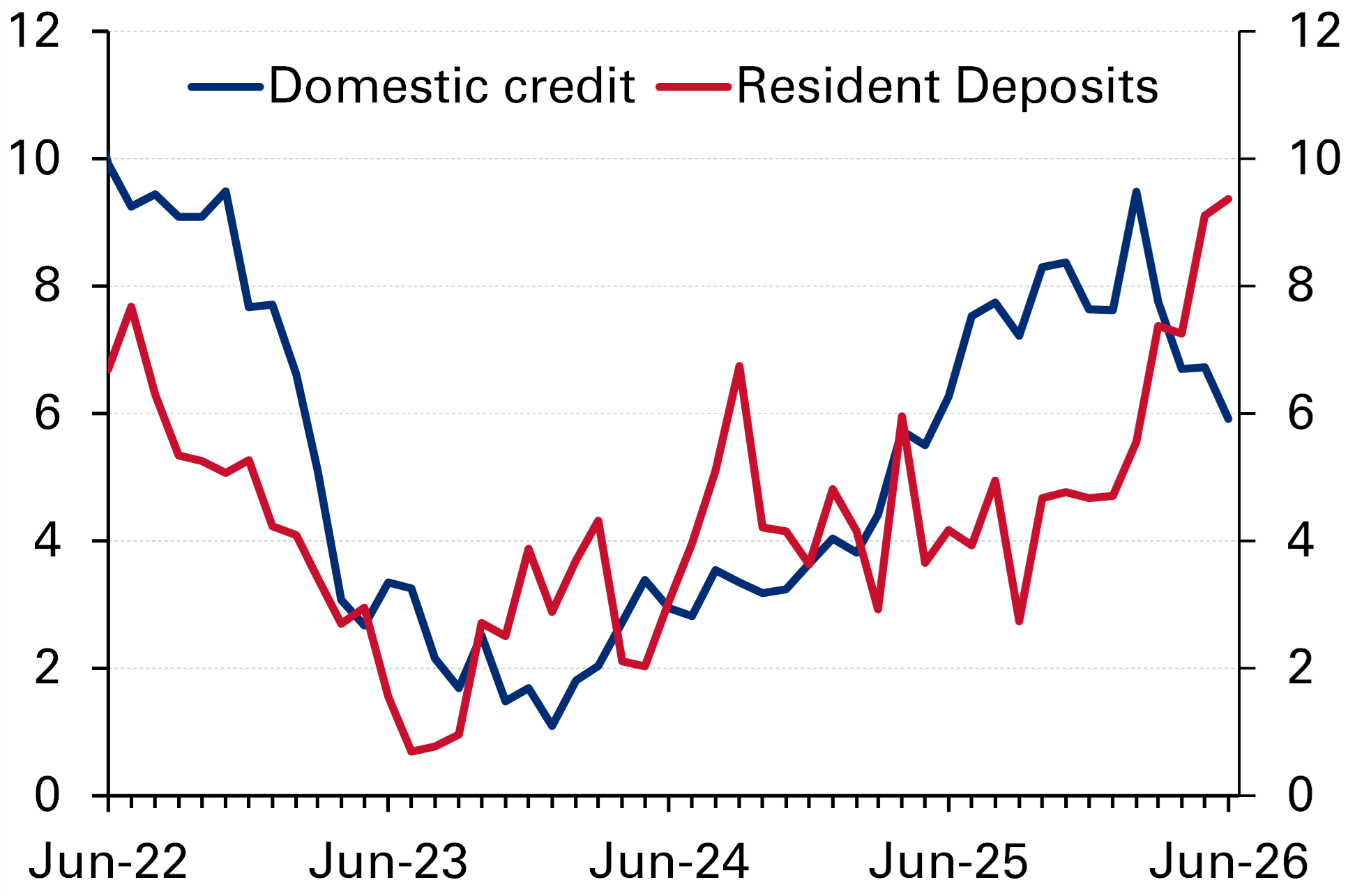
Kuwait: Domestic credit growth decent in June amid solid household and business lending. Domestic credit rose by a decent 0.4% m/m in June (+5.9% y/y), slowing marginally from 0.5% m/m in May and bringing YTD growth to 2.9%. On a quarterly basis, credit expanded by 1.2% q/q in Q2, moderating from 1.8% q/q in Q1, reflecting slightly softer overall lending momentum. The June increase was supported by solid business credit, which maintained its growth pace at 0.6% m/m (+6.2% y/y), lifting YTD growth to 4.2%, driven primarily by solid gains in industry (+7.5% m/m; +10.7% y/y), public services (+5.1% m/m; +52.0% y/y), real estate (+0.6% m/m; +5.2% y/y), and other sectors (+0.4% m/m; +12.6% y/y). These gains offset the monthly declines seen in the in trade (-1.3% m/m; -9.0% y/y), construction (-2.0% m/m; +6.1% y/y) and oil & gas (-0.7% m/m; +21.9% y/y) sectors. Household credit also accelerated to 0.6% m/m (+3.9% y/y), marking its fastest monthly increase since July 2025 and pushing YTD growth to 1.6%. Purchase of securities credit strengthened further to 3.0% m/m (+10.9% y/y), its strongest monthly gain since December 2025. In contrast, lending to banks and financial institutions contracted sharply by 6.7% m/m, its steepest decline since March 2026, though y/y growth remained positive at 9.9%. Meanwhile, credit to non-residents fell for a third consecutive month, though the pace of contraction moderated to -1.8% m/m with the YTD contraction widening to -3.6%. On the liabilities side, resident deposit growth accelerated to 0.6% m/m in June (+9.4% y/y) from 0.3% m/m in May, supported by stronger public institution deposits, which rebounded by 3.4% m/m (+44.4% y/y) following a 3.7% decline in May, while government deposits rose more moderately by 2.0% m/m (+28% y/y). Private sector deposits, however, declined by 0.2% m/m (+1.6% y/y), marking their first monthly contraction since March. Non-resident deposits rose by 1.3% m/m (+33.2% y/y), reversing the declines recorded in previous months, though they remained down by -2.8% YTD mainly due to the decline in government deposits and private sector deposits in foreign currency. The overall picture is one of still-solid credit growth despite uncertainty related to the regional conflict, while deposit growth has doubled since the start of the year driven by a 19% jump in deposits from the government and public institutions.
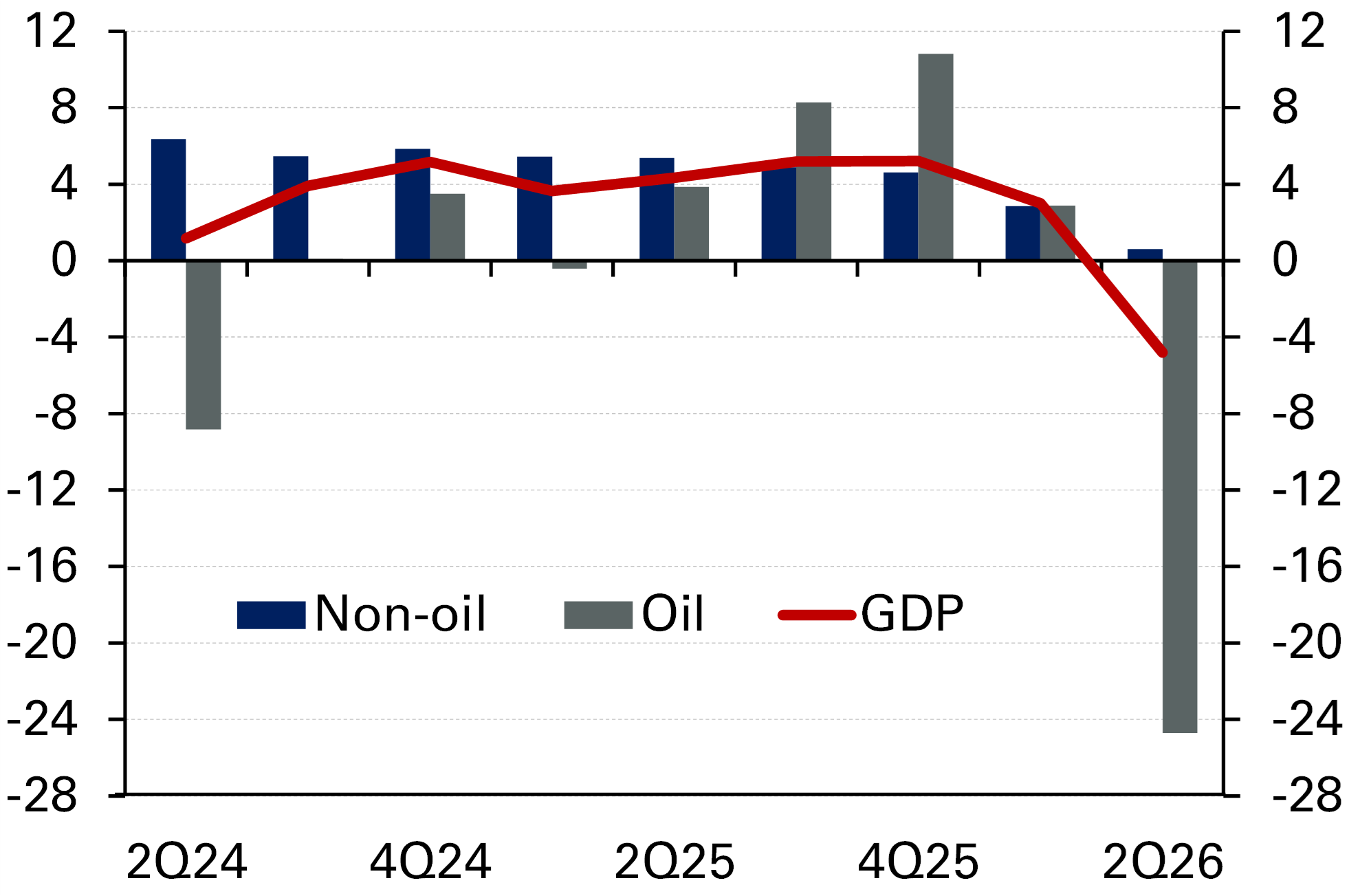
Saudi Arabia: Economy contracts sharply in Q2, IMF highlights resilience and downside risks. According to GASTAT flash estimates, the economy contracted by 4.8% y/y in Q2 2026, marking the steepest decline since Q2 2020 during the pandemic and a sharp reversal from the 3.0% growth recorded in Q1 2026. The decline was driven largely by a 24.7% contraction in oil activities, reflecting the impact of disruptions to oil exports and production, but economic activity was broadly weaker, with non-oil growth slowing to a series low of 0.6% and government activities growth easing to 0.9%, well below the multi-year average. The data suggests that while the oil sector has been heavily affected by recent geopolitical and trade disruptions, the non-oil economy has been relatively resilient given the still positive albeit much slower pace of growth. Meanwhile, in the recently concluded article IV review, the IMF noted that the Saudi economy has remained resilient despite the Middle East conflict and disruptions to shipping through the Strait of Hormuz, supported by strong macroeconomic fundamentals, robust fiscal and external buffers, diversified oil and logistics infrastructure, and ongoing Vision 2030 reforms. While the conflict has disrupted trade and oil exports and weighed on non-oil activity and confidence, higher oil prices have largely offset lower export volumes, providing a revenue windfall. Growth is projected to slow to 1.7% in 2026, with non-oil growth easing to 2.6%, before recovering as trade routes normalize. The IMF emphasized that risks remain tilted to the downside due to geopolitical uncertainty, and recommended maintaining policy flexibility, modest fiscal consolidation, targeted and temporary support measures if needed, and continued implementation of Vision 2030 reforms to strengthen diversification, private sector development, productivity, and long-term economic resilience.
US: Underlying GDP growth solid in Q2 even though headline growth disappointed on weaker net exports. The US economy grew 1.5% (annualized) in Q2, missing the consensus forecast of 2.1%, and down from 2.1% in Q1, mainly dragged down by weaker contributions from volatile net exports. However, underlying growth was solid as a core measure of local demand, final sales to private domestic purchasers, climbed to an over three-year high at 3.9% from 1.7% in Q1. Personal consumption was robust at 3.2% (up from 0.5% in Q1), helped by higher than usual tax refunds following additional tax breaks announced in last year’s One Big Beautiful Bill, while business equipment and software investments remained strong amid the ongoing AI/tech spending boom. Continued strong ‘wealth effects’ due to equity market gains have supported aggregate household spending in recent quarters, while AI-related investments are driving business outlays higher, helping the US economy remain resilient despite the government policy and energy price related shocks. Meanwhile, PCE inflation in June dropped to 3.7% y/y from May’s three-year high of 4.1%, matching street forecasts and reflecting a drop in oil prices during the month. Core inflation also ticked down to 3.3% from 3.4%, but despite moderation, remained elevated. On a monthly basis, PCE inflation stood at -0.1% (+0.5% in May) and the core rate fell to 0.1% from 0.3%. Looking ahead, headline inflation may accelerate again at least in the near term given a rebound in energy prices since June. Finally, the employment cost index (a key proxy for labour cost inflation) held steady at 0.9% q/q in Q2 and has hovered in a range of 0.7-0.9% in the last two years, indicating relatively moderate pressure on inflation due to labour costs.
Eurozone: Growth rebounds in Q2 and inflation edges higher in July. The Eurozone economy expanded by a higher-than-expected 0.4% q/q in Q2, rebounding from an upwardly-revised no-growth in the first quarter. Growth accelerated at its fastest pace since Q1 2025, underpinned by strong investment in technology-related industries and continued fiscal support, despite the drag from higher energy prices and the Iran conflict. On an annual basis, GDP growth accelerated to 1.0% from 0.5% in the previous quarter, with Spain (+2.7%) continuing to outperform larger economies while Germany, France, and Italy recorded growth of 1% or less. The stronger-than-expected reading suggests the Eurozone economy has remained resilient to elevated geopolitical and energy-related uncertainty. Meanwhile, inflation edged higher in July, with the headline rate reaching 2.9% y/y from 2.8% in June, driven primarily by higher energy prices (10.0% y/y in July from 8.5% previously). Core inflation also increased to 2.5% y/y in July from 2.4% in June, with services inflation edging up to 3.3% from 3.2%.
Japan: BoJ keeps rates unchanged and increases growth forecast; US Treasury and MoF intervene to support the yen. As expected, the Bank of Japan held its policy rate at 1% on Friday with an 8-1 vote. In the subsequent press conference, Governor Ueda struck a relatively hawkish tone, noting that risks to the inflation outlook remain tilted to the upside and suggesting that the Bank would need to incorporate these risks into its future policy deliberations. Governor Ueda's remarks reinforced market expectations that the BOJ will deliver one additional rate hike this year. The BoJ also released its quarterly Outlook Report, increasing its GDP growth forecasts for FY2026 (ending in March 2027) and FY2027 to 0.6% y/y (from 0.5%) and 0.8% y/y (from 0.7%), respectively. The revisions reflect expectations that robust AI-related global demand, solid wage growth, and accommodative government measures will offset some of the negative aspects of the US-Iran war. Inflation projections were lowered for FY2026 with core CPI inflation seen at 2.5% y/y (from 2.8%), but increased for FY2027 to 2.4% (from 2.3%). Finally, both the US Treasury and the Japanese Ministry of Finance intervened to support the yen on Thursday, helping the yen strengthen from a 40 year low of ¥163/$ to reach ¥157/$. This possibly marks the first joint US-Japanese effort to support the yen in almost 30 years, with media reports indicating that the Japanese MoF sold in excess of $50 billion to defend the currency.
UK: BoE maintains the bank rate at 3.75%, Governor Bailey says not edging towards a rate hike. The Bank of England MPC in a 6-3 vote kept the bank rate at 3.75%, as Catherine Mann sided with two other known hawks, Megan Greene, and Chief Economist Huw Pill for a 25bps rate hike. The MPC statement noted that “the impact of the energy shock on the UK economy remains uncertain,” and the policy stance “will depend on the scale and duration of the shock” resulting from the Middle East conflict. The MPC saw the risks of greater material second-round effects should higher energy prices persist for long, with inflation risks tilted to the upside. Still, it highlighted “clear signs of underlying disinflation in recent data,” while labor market conditions are loose and financial conditions are tight. Governor Bailey underlined that there was a little evidence of broad-based inflationary pressures due to higher energy prices and emphasized that the bank was not “edging towards a hike”. A few other MPC members also struck a cautious tone and advised remaining watchful of the inflation outlook before supporting an interest rate hike. The Bank in its latest ‘central projections’ saw CPI inflation peaking at 3.2% y/y in Q4 (versus 3.3% projected at the time of the June meeting), but sharply up from 2.6% in June, given high energy prices, while GDP growth was seen at 1.1% in both 2026 and 2027. After Bailey’s relatively soothing comments, the futures markets trimmed the probability for two 25bps interest rate hikes by end-2026 to around 35%, seeing roughly an 85% chance of one rate hike.
China: PMIs signal renewed loss of momentum in July, politburo signals targeted support, avoids major stimulus. China’s official PMI for July pointed to a renewed weakening in economic activity, with both manufacturing and non-manufacturing indicators falling back into contraction territory. The manufacturing PMI declined to 49.2 in July from 50.3 in June, marking the first contraction since February and undershooting market expectations, as weaker domestic demand and softer new orders weighed on factory activity. The non-manufacturing PMI also fell to 49.0 in July from 50.2 previously, reflecting slower services activity and continued weakness in construction. Meanwhile, the composite PMI dropped to 49.3 from 50.6, indicating a broader slowdown across the economy. Beneath the headline figures, the sharp fall in new orders and renewed contraction in export orders suggest that demand conditions remain fragile despite earlier resilience in manufacturing and exports, reinforcing concerns that growth momentum softened at the start of Q3 and increasing pressure on policymakers to support domestic demand. China's July Politburo meeting last week struck a more supportive tone on the economy, pledging to strengthen domestic demand and accelerate fiscal implementation in the second half of the year. However, policymakers refrained from announcing large-scale stimulus measures, instead emphasizing faster deployment of existing policy tools and targeted support for consumption, investment, and high-tech industries.