
 +965 2292 4888


Daily Economic Update
24.06.2026
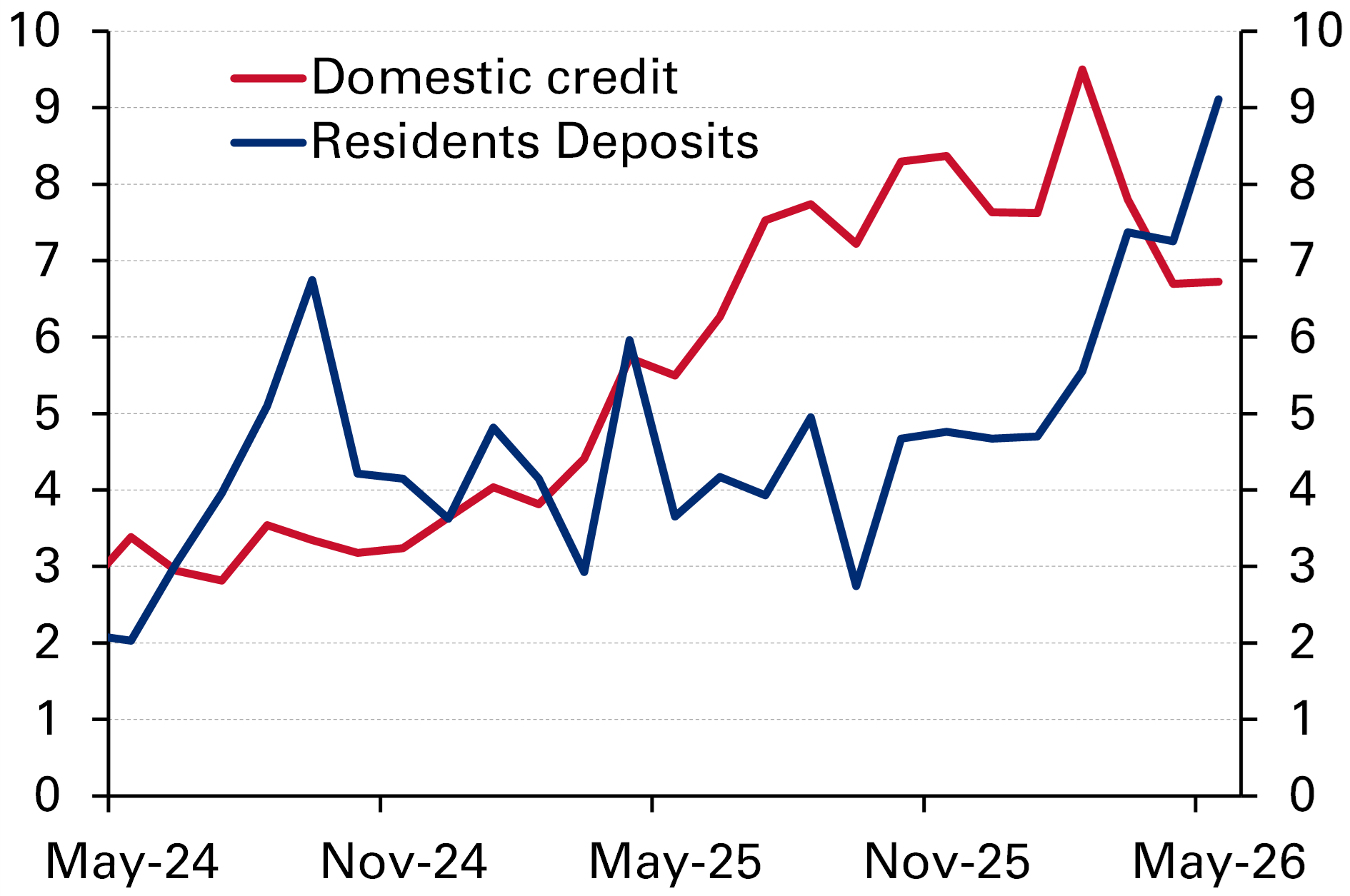
Kuwait: Domestic credit growth rose in May on stronger business lending. Domestic credit rose by 0.5% m/m in May (+6.7% y/y), up from 0.3% in April and lifting YTD growth to 2.6%, albeit still slower than the 3.4% recorded during the same period of 2025. Despite the monthly rise, the changes reflect a slowdown from the strong pre-conflict pace of expansion of 9.5% y/y recorded in February. The May rise was primarily driven by a pickup in business credit, which increased by 0.6% m/m, its fastest pace since February, bringing YTD growth to 3.6%, supported by gains across the ‘other services’ sector (+2.3% m/m; +11.6% y/y), trade (+1.1% m/m; -8.4% y/y), and real estate (+0.5% m/m; +4.5% y/y). Meanwhile, household credit growth eased slightly to 0.4% m/m (+3.4% y/y), pushing YTD growth to 1%. Credit for the purchase of securities rebounded by 1.1% m/m (+15.6% y/y), reversing the sharp contraction seen in April (-2.8% m/m). In contrast, lending to banks and financial institutions declined by -1.4% m/m, though annual growth remained robust at 32% y/y. Credit to non-residents contracted for the second consecutive month, declining by 3.7% m/m on a 13.3% drop in lending to foreign banks, pushing the YTD decline in credit to non-residents to 1.9%. On the liabilities side, resident deposit growth slowed to 0.3% m/m in May (+9.1% y/y), reflecting weaker growth in private sector deposits (+0.2% m/m; +2.4% y/y) alongside a steeper decline in public institutions’ deposits (-3.7% m/m; +38.5% y/y) and a moderation in government deposit growth to 9% m/m (+26% y/y). Combined government and public institution deposits are up 13% from February levels. On the other hand, non-resident deposits declined for the fourth consecutive month in May at 3.7% m/m mainly on a 3% m/m fall in private sector deposits in foreign currencies and a 40% m/m drop in government time deposits. As a result of the above, the loan-to-deposit ratio stood at 97.7% in May, little changed from April. Looking ahead, business credit should benefit from improving investor sentiment in the wake of the signing of the Iran-US MOU and the reopening of the Strait of Hormuz. Momentum in household lending could also improve, sustaining overall credit expansion, although deposit growth dynamics will need to keep pace to maintain favorable liquidity conditions.
US: S&P PMI activity indicators stronger than expected in June, but details mixed. The S&P Global flash PMI readings in June beat expectations, with the composite PMI rising to 52.2 from May’s 51.5, a five-month high. Manufacturing hit an over four-year high of 55.7 from 55.1 in May, benefiting from continued stock building that may prove to be temporary. Services also rose to 51.3 from 50.7, partly supported by stronger demand due to the FIFA World Cup. However, businesses trimmed employment further, with factories shrinking payrolls at the fastest pace since 2009, outside of the pandemic. Overall input price pressures remained historically elevated, with the manufacturing input cost gauge the second highest in nearly four years and the services one reaching a six-month high. Output prices rose at a steady rate with higher increases reported in the services sector. The future sentiment measure, however, improved to the most upbeat level since February due partly to expectations of easing war-related disruptions and softer inflationary pressures. According to the survey, the June print signals a sluggish growth outlook for the economy in the near term. Meanwhile, in signs of a setback for President Trump, the Republican-controlled Senate narrowly passed a war resolution to direct the administration to halt military operations in the Middle East after previously failing to pass it several times. Four Republican lawmakers joined all except one Democrat to pass the resolution. The House had already voted in favor of it. The resolution is largely symbolic because it does not carry the force of the law and is unlikely to be sent to Trump for his consideration. Regardless, the development signals that some Republicans are growing nervous about the administration’s policies and their impact on US citizens and the economy ahead of the mid-term elections in November amid falling approval ratings for Trump.
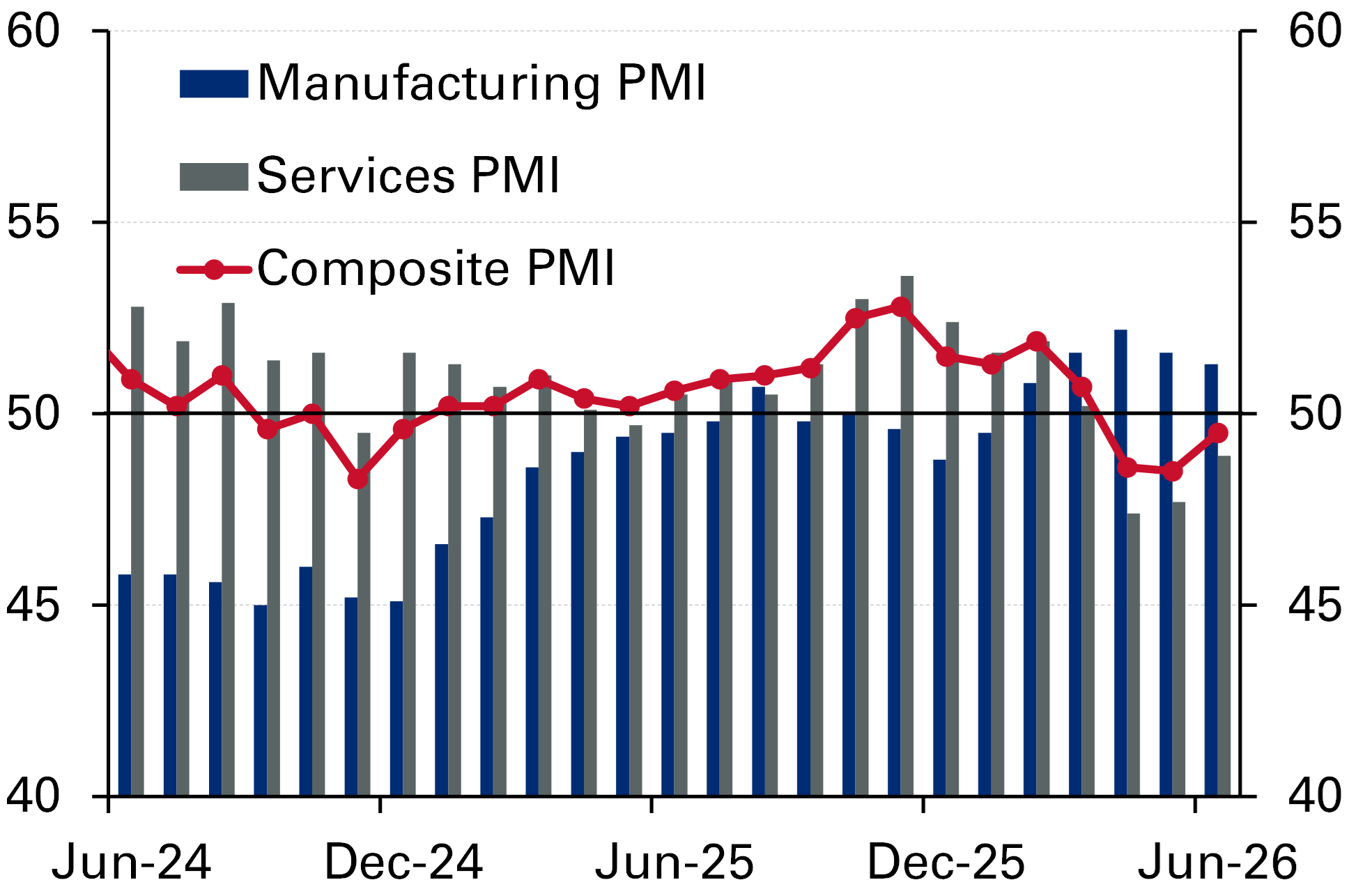
Eurozone: June PMI shows subdued business activity, but inflation pressures begin to ease. Flash PMI readings for June suggest the Eurozone economy remains in contraction, though the pace of decline has moderated from May, pointing to tentative stabilization after recent weakness due to the conflict in the Middle East. The composite PMI rose to 49.5 in June, from 48.5 in May, marking a three-month high but still below the 50-threshold, indicating a third consecutive month of declining activity. The sectoral picture remains uneven. The pace of deterioration in services eased, with the measure edging up to 48.9 in June (47.7 in May), but remaining in contraction territory as weak demand, heightened geopolitical uncertainty, and the residual impact of higher energy costs continue to weigh on activity. By contrast, manufacturing expanded further but lost some momentum, with the PMI slowing to 51.3 in June (from 51.6 in May), suggesting that earlier upturn—partly supported by inventory building amid supply concerns linked to the conflict—is beginning to soften. Underlying demand remains fragile, with new orders still declining and firms staying cautious on hiring, leaving employment near stable. Meanwhile, inflation pressures have started to ease, as input costs rose at a slower pace and output price growth moderated, suggesting the earlier energy-driven spike may be fading.
UK: Flash PMIs weaken in June as the composite measure drops to a 14-month low. The S&P Global flash PMIs for June came in weaker than expected as the composite measure fell to a 14-month low of 49.4 from May’s 49.7. While the expansion in manufacturing slowed (to 53.1 from 53.9), which was still being helped by “strategic stockpiling”, services tanked to the lowest level in 41 months at 48.7 from 49.3. Higher costs, weak sentiment, and local political uncertainty weighed on demand, especially in the services sector. New orders declined at the steepest pace in 14 months and the temporary boost to manufacturing from front loading appeared to be fading. Firms shed employment for 21 straight months. Input price pressures eased further but remain significantly elevated and a similar trend was observed in output inflation. Although the expectation gauge did rise from May’s very low level, it remained weaker compared to the pre-war trend. The latest PMI readings underscore a further loss in economic momentum but fading political uncertainty and the recent drop in oil prices, if sustained, could help support business activities going forward.
Japan: Summary of opinions from BoJ’s June meeting shows inflation risks driving future interest rate decisions. The Bank of Japan released the summary of opinions from its June meeting, when it raised policy rates to 1%. The summary states that the BoJ’s decision was to counter upward pricing pressures stemming from high oil prices, which threaten the bank’s price stability targets. The BoJ noted that downside economic risks have moderated. The bank also pointed to resilient corporate profits, robust AI-related investment demand, and supportive fiscal measures as key tailwinds underpinning economic activity. Separately, media reports indicate that the government is examining plans to improve management of the country’s $1.3 trillion in foreign exchange reserves, with the goal of enhancing returns and boosting the domestic economy.