
 +965 2292 4888


Daily Economic Update
05.03.2026
Oil: Shipping constraints put global inventory levels in focus. Brent futures ended yesterday unchanged at $81.4/bbl, the highest since January 2025. The market continues to digest the extent to which the conflict will escalate, with mixed messaging from the US and Israel regarding the expected duration of the war also keeping market participants on edge. US defense secretary Pete Hegseth signaled a longer timeline for the conflict with Iran than previously floated by the administration, saying it could now last up to eight weeks. The US also struck an Iranian warship off Sri Lanka, further widening the conflict area. Meanwhile, the closure of the Strait of Hormuz maritime transit route is undoubtedly leading to a buildup of crude inventories in the Gulf region and is likely to lead to production shutdowns if the blockade is not resolved soon. Indeed, declining oil exports from the Gulf are pushing countries such as India and Indonesia to seek alternative energy supplies, while some Chinese refiners have either shut down operations or brought forward refinery maintenance schedules. If disruptions become prolonged and materially reduce crude supply, coordinated releases from international strategic reserves could follow – though none have been announced yet. According to the IEA, global observed oil inventories rose to more than 8.2 billion barrels in 2025, their highest level since 2021 and providing “a welcome cushion against supply disruptions” according to the agency. The US holds 415 mb in its strategic reserve, China’s crude inventories are estimated at roughly 1 billion barrels, and major EU economies – including Germany, France, Italy, and Spain – each hold at least 100 mb. With the oil market remaining relatively well supplied in the near term, this may help explain why movements in oil prices have remained largely contained over the past two sessions.
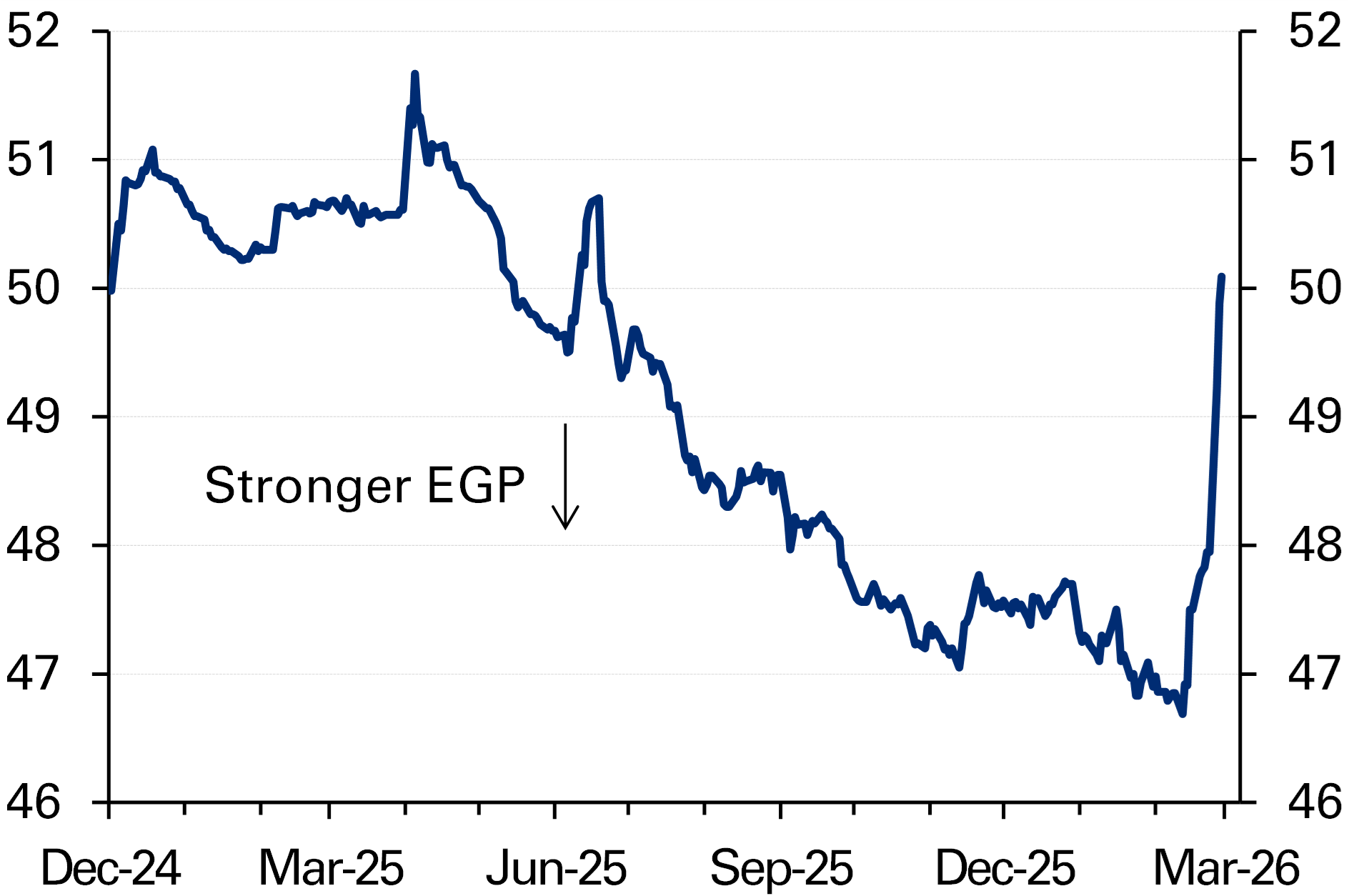
Egypt: Portfolio outflows push the EGP weaker amid rising external pressures. The Egyptian pound has depreciated by 7% m/m to EGP50.25/$1 – its first spell above 50 since June 2025 – following renewed foreign outflows from the local debt market. Outflows reached around $885 million on Tuesday alone, bringing total withdrawals since late February to more than $4 billion. Moreover, interbank FX volumes climbed to around $700 million, reflecting increased demand for foreign currency as banks met client needs. This dynamic is likely to be reflected in the banks’ net foreign assets (NFA) position for March. That said, banks still maintain a relatively comfortable buffer, with banks’ NFAs standing at $14.5 billion at the end of January, providing room to absorb short-term pressures. Looking ahead, the weaker currency, coupled with rising global oil and energy prices amid geopolitical tensions, may exert additional pressure on the fiscal balance. Higher import costs could widen subsidy burdens and potentially translate into upward pressure on sovereign yields if external volatility persists.
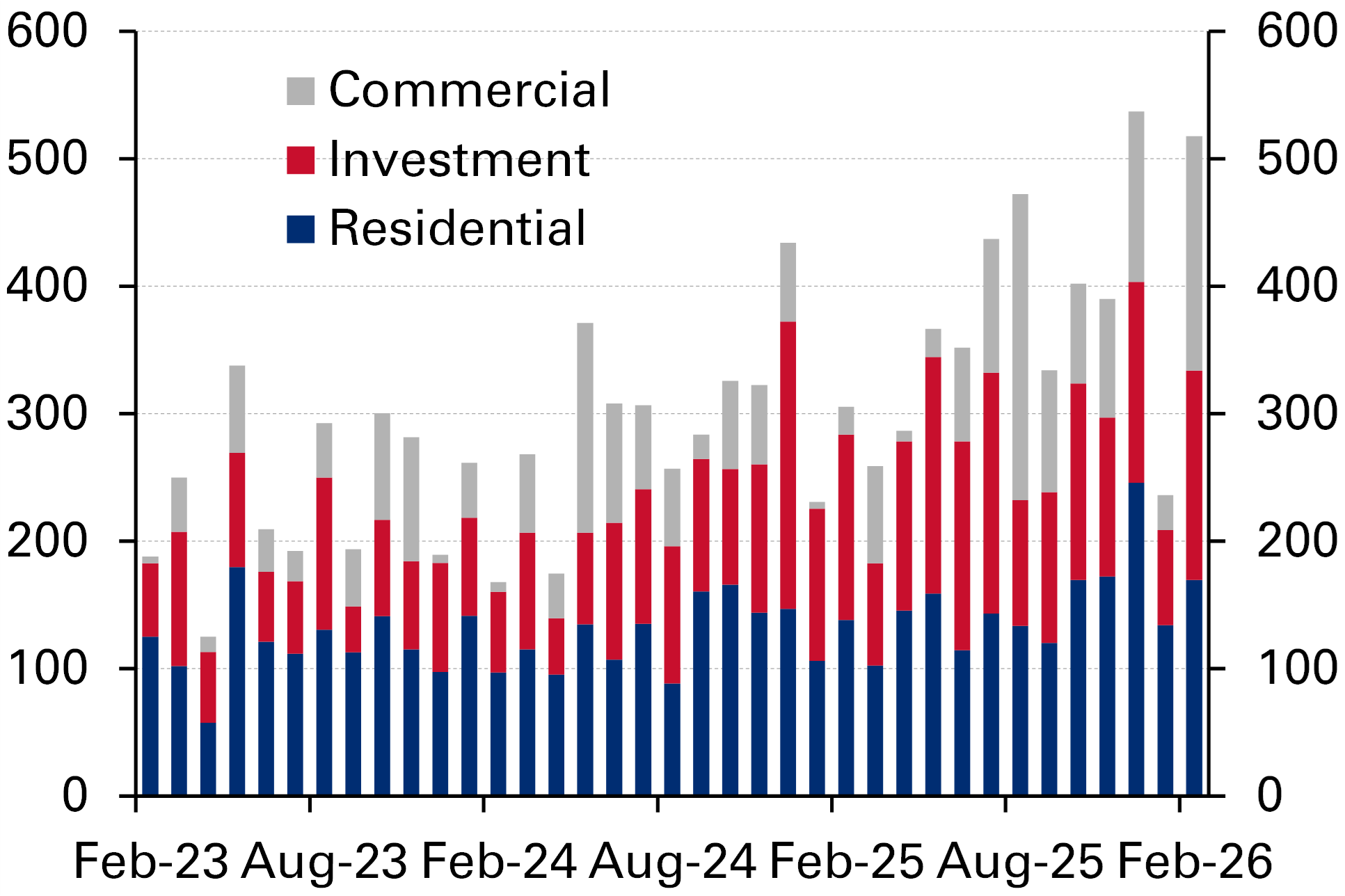
Kuwait: Real estate sales surged in February, rebounding from January’s seasonal dip. Real estate sales rose sharply in February to KD518 million (70% y/y; 119% m/m), recovering from January’s seasonal dip and coming only slightly below December’s two-decade historical high (KD537 million). The strong rebound reflected a broad-based recovery across all market segments, though commercial sales accounted for the largest share of the rise, coming at KD184 million, the highest level since August 2025. Investment property sales also strengthened markedly to KD164 million (120% m/m; 13% y/y), registering its strongest reading since July 2025. Meanwhile, residential sales increased more modestly but remained solid at KD169 million (26.4% m/m; 23% y/y), supported by a similar increase in transaction numbers. Overall, the rebound in February sales across all market segments highlighted resilient underlying demand, supported by improving non-oil activity and the anticipated real estate financing law. However, the start of the US–Iran conflict from late February will weigh on sentiment over the short term, potentially leading to softer sales over the coming months.
Qatar: Non-energy private sector PMI improves in February. The non-energy private sector activity gauge edged up to 50.6 in February from 50.4 in the previous month, driven by stronger employment growth, which offset continued contractions in output and new orders. Sustained expansion in the labor market – linked to capacity building and sales support – helped cushion weaker demand conditions, as softer business activity and intensifying competition weighed on client spending, leaving output and new orders in decline, albeit at a slower pace than in January. Sectoral dynamics remained uneven here as manufacturing and construction activity continued to contract, while the services sector maintained modest expansion. Rapid workforce growth prompted firms to raise wages at the fastest pace in seven months, while overall input costs increased at their quickest rate since December 2024. Firms’ future outlook also improved, supported by planned business expansions and new project pipelines. But recent regional developments are not yet reflected in the data and are likely to weigh on both demand conditions and business sentiment in next month’s report. Qatar has been particularly affected by the conflict, as targeted strikes from Iran and the closure of the Strait of Hormuz have led to the suspension of LNG production and aluminum manufacturing. While these disruptions will not be directly captured in the PMI, they are likely to dominate sentiment, as investors withdraw capital, firms delay investment decisions, and tourism activity softens.
US: Bessent sees the higher 15% baseline tariff coming this week and predicts the tariff rate in five months will be equal to pre-Supreme Court ruling. Treasury Secretary Bessent said that the baseline tariff would be raised from the current 10% to the previously mentioned level of 15% likely this week for a maximum of 150 days, after the Supreme Court invalidated the IEEPA reciprocal tariffs last month. In line with our view, he emphasized that “it’s my strong belief that the tariff rates will be back to their old rate (i.e. before Supreme Court ruling) within five months,” hinting at other mechanisms such as country-specific levies through section 301 and other sectoral duties though section 232. Separately, he stated that the administration would make a series of announcements to help smooth the flow of oil and gas cargos through the Strait of Hormuz, pointing to Trump’s previous comments about providing insurance and possibly escorts to tankers sailing through the waterway. Meanwhile, the US Court of International Trade in New York directed the US custom department to initiate the process of refund calculations for goods that were subjected to now-cancelled IEEPA tariffs. These refunds are estimated to be around $175 billion as per some third-party estimates, although US officials had estimated lower amounts. As a reminder, the Supreme Court, while rendering the IEEPA tariffs unconstitutional, had left decisions related to refunds to lower courts. The administration may appeal against the International Trade court ruling. Finally, the US Senate blocked a war powers resolution to limit President Trump’s authority on the Iran-related military conflict with congressional backing in a 52-47 vote. Even if Congress had advanced the resolution, Trump would have vetoed it unless it was passed in Congress by a two-thirds majority.
US: ISM services PMI jumps to a 43-month high in February, indicating resilient economic activity in Q1. The ISM services PMI rose to the highest level since July 2022 at 56.1 in February (53.8 in January), far ahead of the consensus forecast (53.5), on surging demand for new orders (to 58.6 from 53.1) and higher business activity. This, combined with the previously reported robust manufacturing reading, signals that the economy remains resilient so far in Q1. If the military conflict in the Middle East drags, it will likely temper optimism on higher inflation concerns. The employment sub-index also increased to a one-year high of 51.8 from January’s 50.3, further confirming signs of stabilization in the labor market. However, unlike the equivalent manufacturing price gauge, which jumped to the highest level since June 2022 in February, the services input price sub-index fell but to a still-elevated 63 (66.6 January), the lowest in 11 months, suggesting uneven consumer price rises ahead.
China: Authorities set a 4.5% to 5% growth target for 2026, down from 5% in 2025. China announced the growth target for 2026 in the opening session of the National People’s Congress (NPC), the country’s annual parliamentary gathering. The target was set at 4.5% to 5%, the lowest growth target since the early 1990s. This likely reflects the government’s recognition of the persistent economic challenges it faces. For 2025, the growth target was set at “around 5%” and actual 2025 GDP growth stood at 5%. The decision to adopt a relatively modest growth target may indicate a shift in Beijing’s approach from prioritizing numerical growth targets—often at any cost—to a more quality-oriented economic strategy. Accompanying the GDP growth target, the government reaffirmed its budget deficit target at "around 4% of GDP," and the consumer price inflation goal at "around 2%," both unchanged from last year’s targets. In addition, the government set a goal to create over 12 million new urban jobs, reflecting an ongoing effort to stabilize the labor market amidst economic uncertainties. To further stimulate the economy, China plans to issue RMB1.3 trillion (around $188 billion) in ultra-long-term special sovereign bonds and RMB4.4 trillion in local government special bonds aimed at funding major projects, both targets unchanged from last year’s. Finally, it is worth noting that a draft of the 15th five-year plan was also released, outlining the economic strategy for 2026-2030, and is set to be officially voted on next week.