
 +965 2292 4888


Daily Economic Update
08.01.2026
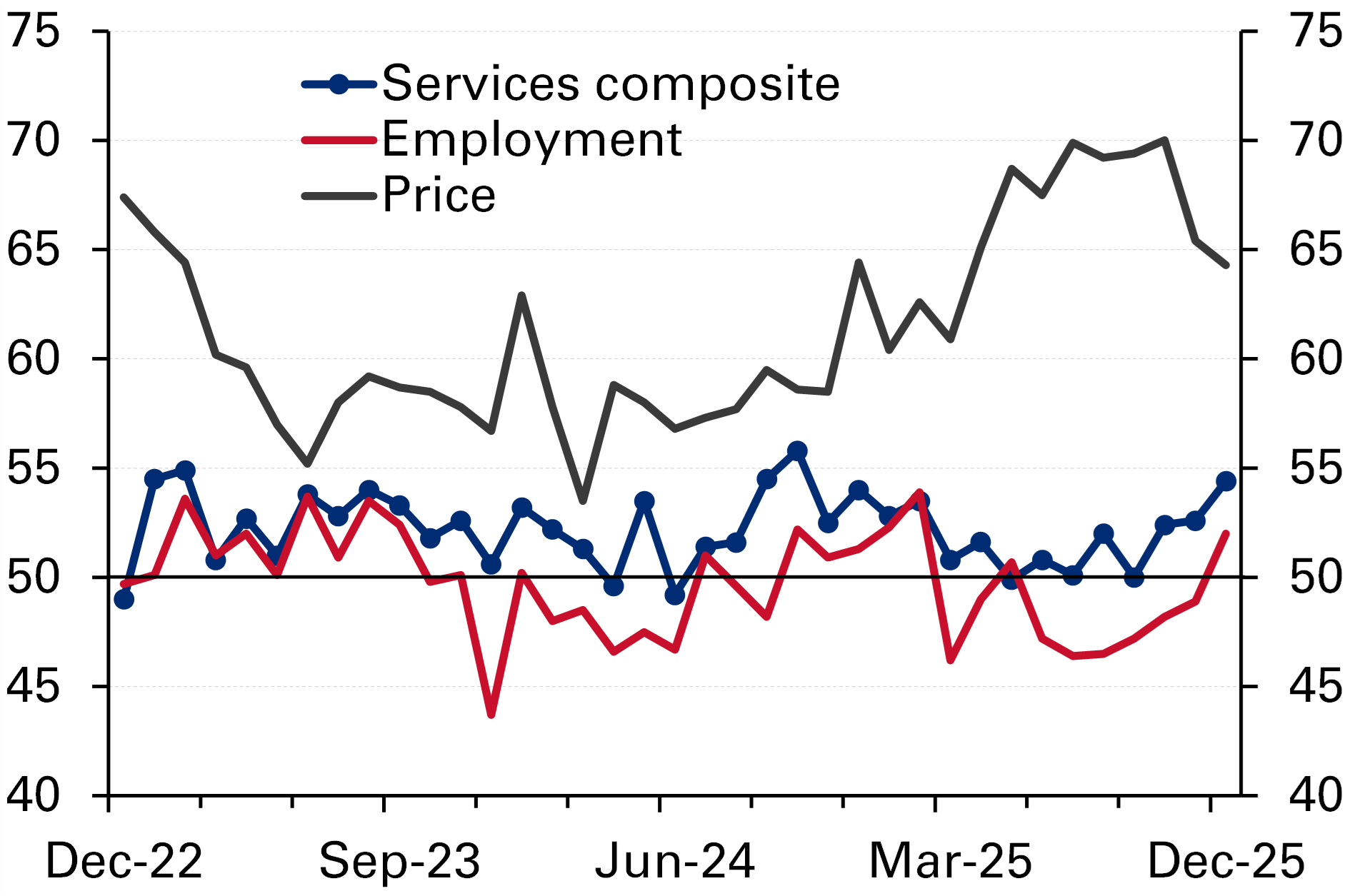
US: Job openings decline to a 14-month low, but ISM services gauge hits a 14-month high. Job openings (as per the JOLTS report) in November fell to a 14-month low of 7.15 million from a downwardly revised 7.45 million in October, with hiring at its lowest since June 2024. However, layoffs also fell as the layoff rate dropped to 1.1% from 1.2% in October, underlining the current decreasing-hiring and low-firing landscape. The quits rate ticked up to 2% from 1.9% but remained modest. Separately, ADP payroll data showed that private sector jobs rebounded by 41K in December after declining by 29K in November. Meanwhile, on a positive note, the ISM services PMI unexpectedly rose to a 14-month high of 54.4 in December from 52.6 in November, recording largely broad-based improvements as the gauges of new orders, exports, and business activity expanded at faster rates, showing strengthening demand. Services firms added jobs for the first time in seven months (the subindex at 52 versus 48.9 in November) while price pressures moderated further though were still elevated (64.3 versus 65.4). December’s sharp improvement in the key services sector indicates that the growth outlook is robust, which will be supported further by the previously-announced tax-cut boost this year.
Eurozone: CPI inflation back at 2.0% y/y in December. A flash reading showed consumer price inflation eased back to the 2.0% y/y target in December, down from 2.1% in November, confirming that inflation was at or near target for most of 2025. Underlying price pressures also eased, with core inflation falling from 2.4% y/y in November to 2.3% in December. That said, the inflation breakdown shows a familiar trend with services posting the strongest annual rise at 3.4%, slightly below November’s 3.5%. Food, alcohol, and tobacco edged up to 2.6% (from 2.4% previously) while non-energy industrial goods increased by just 0.4%. Energy prices fell 1.9% y/y in December (-0.5% in November), a key driver of the headline slowdown. With the ECB forecasting that inflation will remain at or close to target for 2026, the figures reinforce expectations that interest rates will stay on hold for now.
Japan: Cash earnings growth falls to the lowest level in nearly four years. Cash worker earnings in Japan rose by only 0.5% y/y in November, well below October’s downwardly-revised 2.5% figure and consensus expectations of 2.3%. This growth represents the lowest reading in around four years, but was mostly driven by a 17% fall in special payments (versus +6.4% in October), which are mainly volatile one-off bonuses. Real wage growth remained negative for the eleventh consecutive month, standing at -2.8% y/y and deteriorating from October’s mild 0.7% decline. Sustained weak wage growth will complicate BoJ’s plan to further normalize monetary policy, noting that November’s weakness was mostly due to the more volatile components, which also, usually, get revised subsequently.
Egypt: Net foreign assets extend their upward trend, reaching a 69-month high. Net foreign assets (NFAs) of Egypt’s banking sector rose to $23.8 billion in November 2025, marking the highest level since March 2020, just before the COVID-19 shock disrupted global financial markets. According to the Central Bank of Egypt, NFAs held by commercial banks reached $11.9 billion, the strongest position in nearly 12 years. This improvement was supported by the continued strength of Egypt’s main sources of foreign currency, particularly workers’ remittances and tourism revenues, both of which reached historic highs toward the end of 2025. At the same time, NFAs at the central bank increased marginally to $11.9 billion, broadly matching the level recorded by commercial banks. This balanced distribution of foreign assets sends a clear signal that the CBE is maintaining adequate FX support for the banking system as a whole heading into 2026.
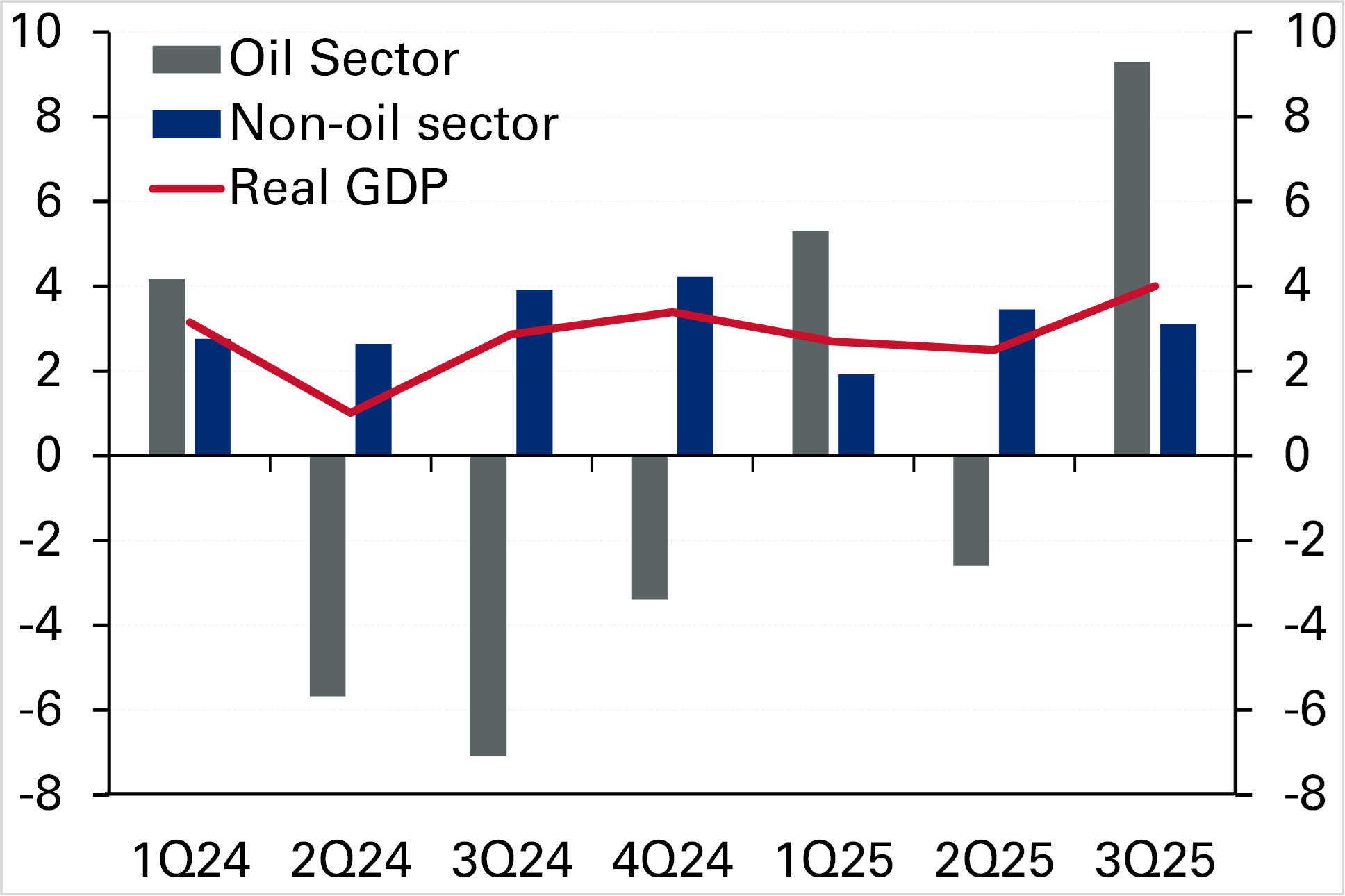
Bahrain: Economic growth accelerates to 4% in Q3 2025, supported by rebounding oil and resilient non-oil activity. Preliminary real GDP data for Q3 2025 showed a notable acceleration in growth to 4% y/y from 2.5% in Q2. This improvement was driven by a strong rebound in oil GDP (+9.3%), which accounts for 15% of real GDP. The pickup reflects a favorable base effect following a large contraction in Q3 2024. Driving the improvement in oil GDP in Q3 was higher crude production at the Abu Saafa offshore field (+18.3% y/y to 147 kb/d on average), which helped offset declines in onshore production (-7.3% y/y to 35 kb/d). Meanwhile, non-oil activity, which represents the bulk of the economy, expanded by a solid but slightly moderating 3.1% y/y in Q3 compared to the previous quarter’s performance (3.5%). Non-oil growth in Q3 was broad-based, with the finance and insurance sector expanding by 5.0% y/y, manufacturing by 3.9%, and construction by 4.4%. Bahrain’s Ministry of Finance and National Economy expects the economy to have grown by 3.1% in 2025 on the back of similar oil (3.0%) and non-oil (3.1%) growth rates and then edge up to 3.3% in 2026, driven by a 3.5% expansion in non-oil activities and 2.1% growth in oil activities. We peg overall GDP growth at a more conservative 2.8% in 2025 and 2.7% in 2026.