
 +965 2292 4888


Daily Economic Update
20.04.2026
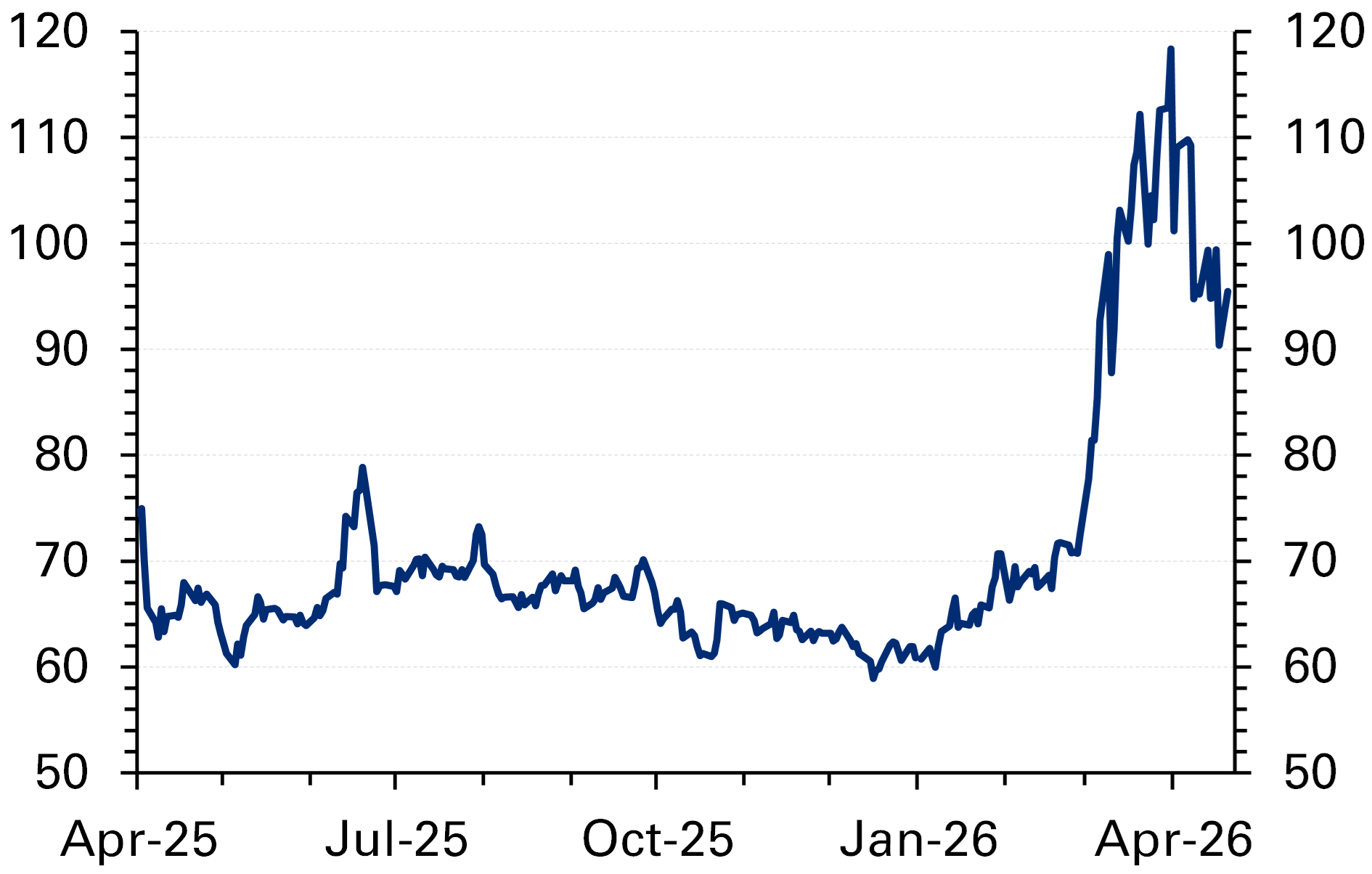
Oil: Prices rebound following Iran’s reclosure of the Strait of Hormuz and tense stand-off with the US. Brent futures were back on the march this morning in Asian markets, advancing 5.6% at the time of writing to $95.5/bbl and reversing most of Friday’s sell off as the US-Iran standoff continues. Following Iran’s reclosure of the Strait over the weekend and its targeting of two India-flagged tankers, the US has since seized for the first time an Iranian vessel attempting to run the US naval blockade, prompting IRGC retaliation in the form of a drone deployment toward American military ships. Despite the renewed escalation, diplomatic channels remain formally open, with a second round of negotiations scheduled for today. The US has confirmed it is sending a delegation that includes Vice President J.D. Vance, though Iran has yet to publicly confirm its participation. The military brinkmanship on both sides, combined with the lack of clarity over Tehran’s engagement in the peace talks, has kept markets on edge. Looking ahead, oil price volatility is likely to remain elevated amid negotiations in Islamabad and head of the expiry on Wednesday of the two-week ceasefire without a diplomatic breakthrough.
Bahrain: Moody’s revises outlook to negative amid war-related risks, rating affirmed at “B2”. Moody’s Investors Service has revised Bahrain’s outlook to negative from stable, while affirming its sovereign rating at “B2”, citing rising risks from the ongoing regional conflict and its impact on already weak fiscal and debt dynamics. The outlook change reflects concerns over disruptions to shipping through the Strait of Hormuz and regional air travel, which are weighing on Bahrain’s key sectors, including oil and aluminum exports as well as tourism. Moody’s highlighted that these pressures could further strain government finances and erode the country’s limited foreign exchange buffers. Bahrain entered the current crisis with an already elevated debt burden, with government debt estimated at around 147% of GDP in 2025, among the highest globally. The economy remains highly exposed to external shocks, given that hydrocarbon revenues account for roughly half of total government revenues, while nearly all crude exports pass through the Strait of Hormuz. The agency noted that prolonged disruptions to trade and energy flows could deepen fiscal vulnerabilities and weigh further on Bahrain’s macroeconomic outlook.
Egypt: Diversifying FDI sources with targeted push to attract Turkish investors with $4–5 billion in the pipeline. Egypt is stepping up efforts to attract foreign direct investment, with an official delegation set to visit Istanbul at the end of June to present $4–5 billion worth of opportunities across textiles, garments, chemicals, logistics, ports, and contracting. The visit will coincide with the annual meeting of the Egypt-Turkey Business Council, where authorities aim to deepen economic ties and position Egypt as a regional manufacturing hub. A key focus will be the Suez Canal Economic Zone, particularly the Qantara West area, which is attracting strong interest from Turkish textile and apparel companies. The council is targeting a significant scale-up in Turkish investments, aiming to reach $15 billion over the coming years. Currently, around 1,700 Turkish companies have invested more than $3 billion in Egypt, with nearly 200 factories operating across key industrial hubs such as 10th of Ramadan City, Sadat City, and the Suez Canal Zone. Rising inflation and increasing labor costs in Turkey are prompting a shift in manufacturing bases, with several large Turkish garment producers, alongside several SMEs, relocating operations to Egypt to benefit from cost competitiveness and strategic location advantages. Beyond capital inflows, this trend is expected to bring technology transfer and improved production standards, supporting Egypt’s broader goal of enhancing industrial capacity and export competitiveness.
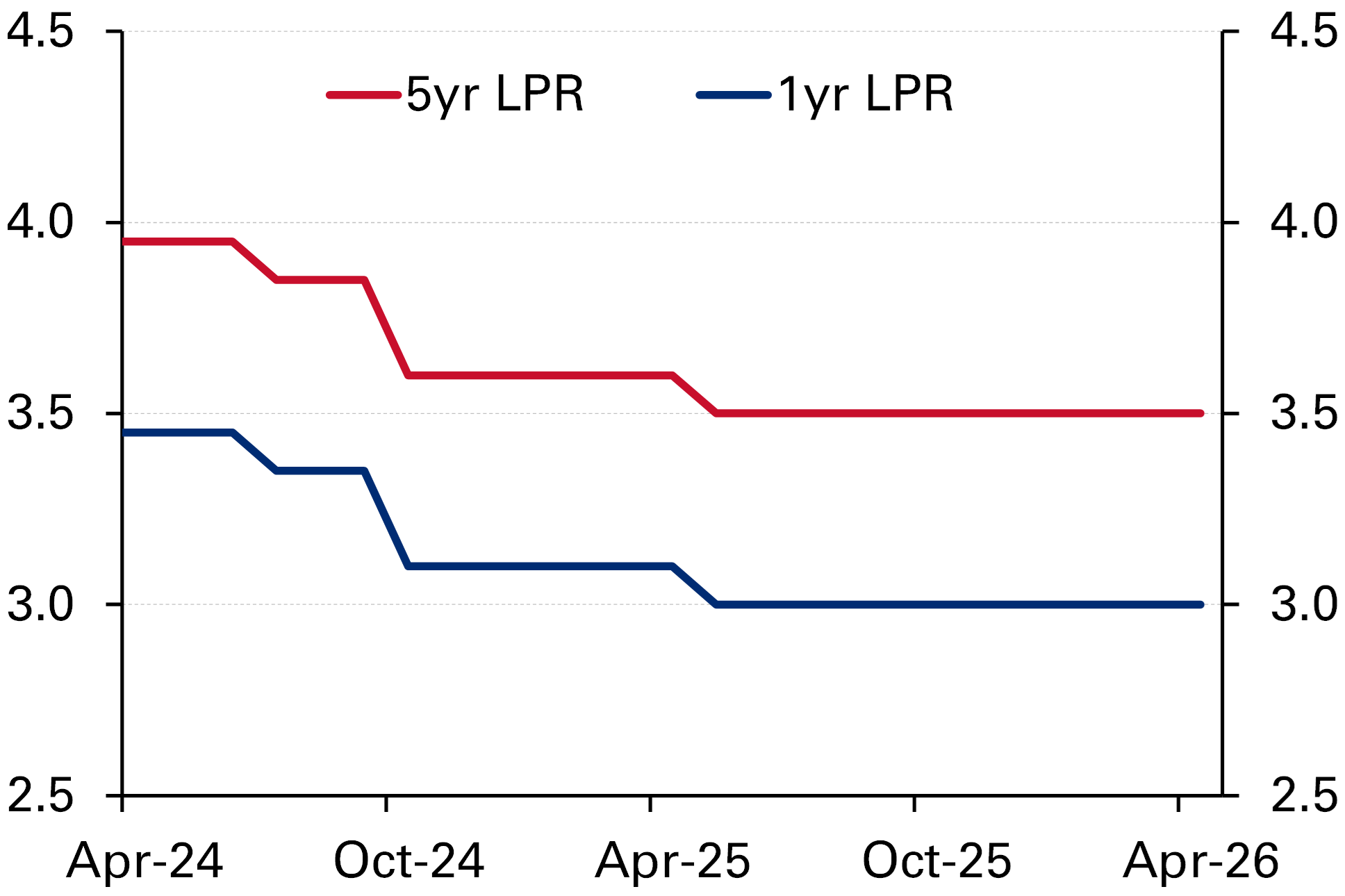
China: Benchmark lending rates left unchanged in April for the eleventh consecutive month. China’s central bank kept its loan prime rates unchanged at the April fixing, holding the 1 year LPR at 3.0% and the 5 year LPR at 3.5% for an eleventh straight month. The decision reflects a continued preference for stability amid the fallout from the Middle East war, rising global energy prices, and persistent domestic/global headwinds. With inflation pressures contained but confidence weak—particularly in property and credit demand—policymakers appear reluctant to push through broad based rate cuts. For now, rates look set to remain on hold, as officials wait for clearer signs that additional easing is needed. As a reminder, last week, China reported GDP growth of 5.0% y/y in Q1, beating expectations, and at the top end of the target range of 4.5%-5% for full-year 2026.
Global: US-Iran negotiations to take center stage ahead of ceasefire deadline, while global flash PMIs and UK/Japan inflation to lead economic news this week. Evolving updates from the upcoming US-Iran negotiations in Islamabad is expected to dominate the news flow and especially ahead of the expiration of the 14-day ceasefire this Wednesday. In the US, the first hearing for Fed Chair nominee Kevin Warsh before the Senate Banking Committee is scheduled for Tuesday, but it is unlikely there will be a vote given that the confirmation is still facing the roadblock related to the Department of Justice’s criminal investigation into Chair Powell. In terms of data releases, March’s retail sales (Tuesday) are expected to climb by 1.3% m/m following an increase of 0.6% in February. The S&P flash PMIs for April (Thursday) are seen improving slightly from March, for manufacturing to 52.5 from 52.3 and for services to 50.1 from 49.8. In the Eurozone, flash PMI releases (Thursday) are expected to soften in April, with the manufacturing index down to 50.9 (51.6 in March) and the services one to 49.9 (50.2 in March). In the UK, the unemployment rate (Tuesday) is seen remaining steady at 5.2% for the three months through February, with regular pay growth moderating to 3.5% y/y from 3.8% for the three months through January. The consensus forecast for March’s CPI inflation (Wednesday) is a headline rate of 3.3% y/y compared with February’s 3% but a steady core rate of 3.2%. The S&P flash PMIs for April (Thursday) are seen falling into contraction territory for both manufacturing (49.5) and services (49.9), down from March’s 51 and 50.5, respectively. Finally in Japan, exports (Wednesday) are projected to rise by 11% y/y in March (4.2% in February) and imports by 7.1% (10% in February). Core CPI inflation (Friday) is seen increasing to 1.8% y/y in March from 1.6% in February.