
 +965 2292 4888


Daily Economic Update
25.11.2026
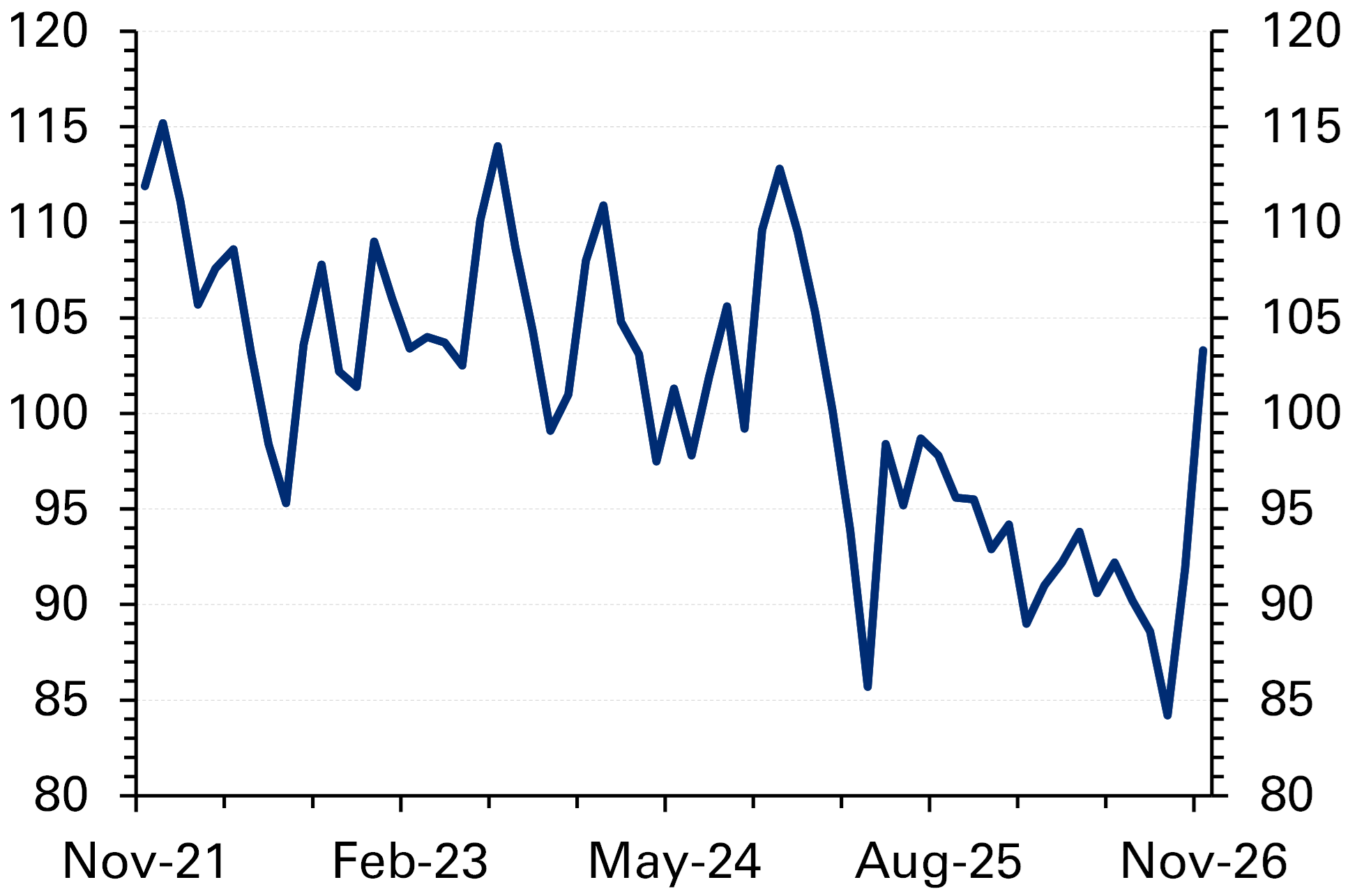
US: Consumer confidence jumps to a 22-month high; administration may soon roll out new tariffs on several large trading partners. The Conference Board Consumer Confidence Index in November jumped to the highest level since January 2025, hitting 103.3 (91.9 in October), beating expectations by a wide margin. The rise was broad-based as both the present situation and the expectations subcomponents recorded sharp increases. Partisanship continues to be a key matter in such surveys with confidence among Democrats and Independents surging in November while that of Republicans falling. The survey period was 1 to 17 November, and hence, the outcome of the midterm elections, in which Democrats scored major wins, has likely had a material impact on the survey’s results. Views about employment conditions markedly improved as a greater number of respondents saw jobs were “plentiful” while the number saying jobs were “hard to get” declined, widening the difference between the two metrics to the most since mid-2025—a key gauge of consumer perception about the labor market. Additionally, consumers were slightly less pessimistic amid potentially lower political uncertainty but continued to be concerned about high inflation. We note that the sharp recovery in consumer confidence follows better labor market prints in recent months, highlighting increased job growth and ongoing low layoffs, along with a pullback in energy prices over the past few weeks, supporting aggregate household consumption ahead. Separately, growth in house prices in September remained largely unchanged from August at a near one-year high of 2.6% y/y, according to the S&P Case Shiller 20-city index. On a monthly basis, prices increased (+0.1%), posting the sixth-straight gain. Finally, according to media reports, the Trump administration is preparing to soon announce additional tariffs on several large trading partners including China and the EU. The new tariffs will likely be country-specific in terms of rates and scope and might be capped at the levels previously agreed as per the latest individual trade deals. The administration is set to conclude its investigation related to unfair trade practices under 301 of the 1974 Trade Act, which lets the president impose tariffs unilaterally on individual countries. The latest moves are not surprising and remain in line with the administration’s resolve to recreate the tariff wall after the Supreme Court cancelled the IEEPA tariffs in February. If confirmed, these additional hikes would broadly reinstate overall tariffs close to the levels that existed prior to the Supreme Court’s verdict.
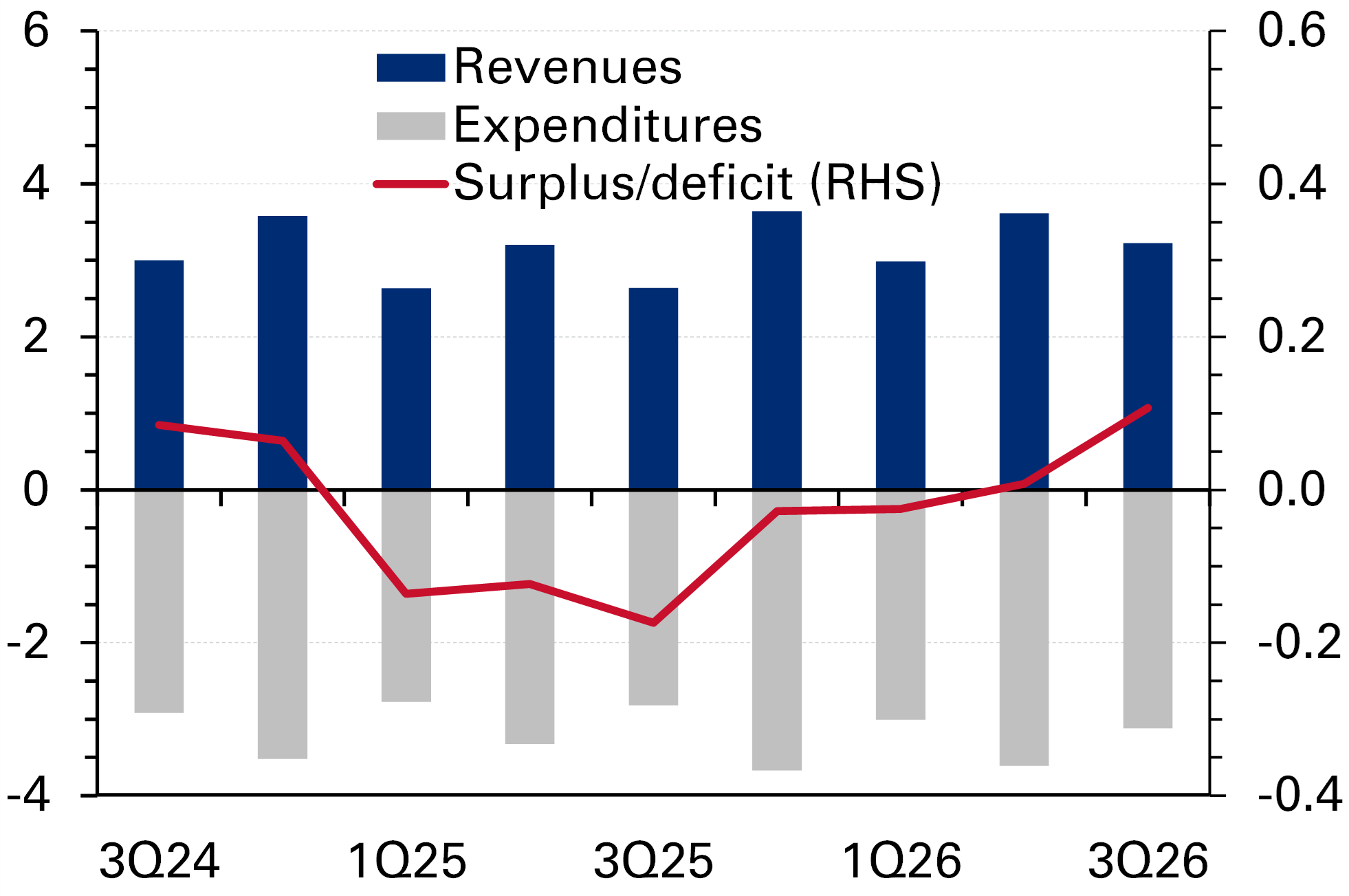
Oman: Q3 fiscal surplus widest in more than 2 years, with revenues outpacing expenditures. The Omani goverment’s fiscal performance strengthened in Q3 2026, with the surplus widening to RO 107 million ($278mn, 1% of pro-rated GDP), according to Ministry of Finance figures. This is the largest quarterly surplus in more than two years and a sizeable increase on Q2’s figure of RO 8 million, which itself followed five consecutive quarterly deficits. The improved fiscal position materialized despite a quarter-on-quarter decline in overall government revenues (-11% q/q), reflecting more the larger drop in government expenditures (-13.6% q/q). Drilling down to look at the figures on an annual basis, hydrocarbon revenues increased by 25% y/y due to higher output and prices (mostly from gas), while non-hydrocarbon revenues rose by 9% y/y, extending a 2-year trend of solid growth thanks to continued non-oil revenue enhancement measures, including an improved tax administration. On the expenditure side, total spending rose by 11% y/y on higher current spending (+7% y/y), partly due to increased support for social, electric, and fuel subsidies, linked to higher costs during the conflict period. Meanwhile investment spending rose by 2.7%, reaching 97% of the full-year budget allocation and bringing 9-month growth to a solid 11% y/y (RO 1.2bn), highlighting the government’s commitment to advancing strategic economic diversification projects. Notably, public debt declined to RO 14.1bn (28% of GDP), more than RO 600mn lower than a year earlier (35% of GDP), highlighting the continued improvement in the fiscal position and prudent debt management efforts. In the first nine months of 2026, public revenues increased by 16% y/y, outpacing a 9% increase in expenditures, resulting in a budget surplus of around RO 90 million, much improved over the deficit of OR 433 million posted over the same period in 2025. The continued improvement in Oman’s fiscal metrics reflects the reform progress made under the medium-term fiscal plan, which has strengthened revenue diversification, enhanced fiscal discipline, and led to a consistent decline in public debt.
Saudi Arabia: Construction costs continue to rise. Construction costs rose by 2.3% y/y in October, according to GASTAT, with non-residential projects recording a larger increase than residential ones. Non-residential construction costs climbed by 2.7%, mainly due to a 5.8% increase in equipment and machinery rental costs, alongside higher energy (+3.0%) and labor (+2.1%) costs. Residential construction costs increased by 2.2% y/y, reflecting higher equipment and machinery rental costs (+4.0%), energy (+3.0%), labor (+1.6%) and basic materials (+1.8%). On a monthly basis, the overall Construction Cost Index was broadly stable, edging up by just 0.1%.