
 +965 2292 4888


Daily Economic Update
20.10.2026
France: Widespread protests trigger sharp market sell-off yesterday. French assets came under significant pressure yesterday after a weekend of widespread protests and riots. The fiscal trajectory continues to be a key concern given a relatively large budget deficit and rising debt burden; France's debt-to-GDP ratio stood at around 116% in 2025, while the budget deficit reached 5.1%. The unrest is prompting investors to reassess France's fiscal and political outlook, with attention turning to the challenges facing the government as it attempts to advance budget reforms ahead of next year's presidential election. Markets reacted negatively yesterday across asset classes with France's CAC 40 falling 1.1%, tracking broader European equities. French government bonds also sold off, with the 10-year yield up by around 9 bps to exceed 4.9% and the spread over German Bunds widening to near 150 bps as investors demanded a higher risk premium to hold French debt. Meanwhile, the developments in France and the spread of protests to some other European cities put the euro under pressure yesterday, falling around 0.2% against the USD.
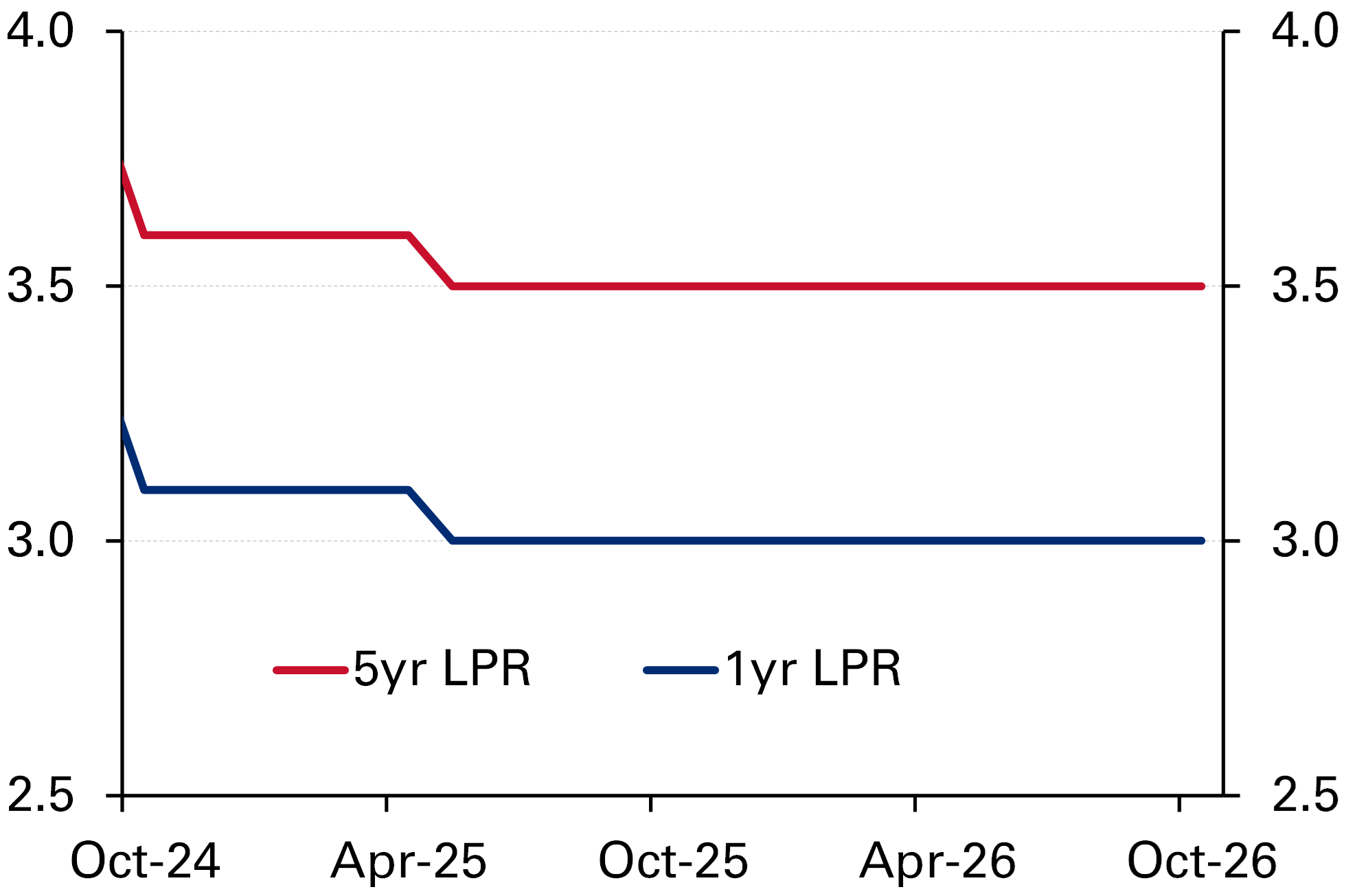
China: PBoC keeps benchmark lending rates unchanged in October as the growth outlook improves. The People’s Bank of China (PBoC) left its benchmark Loan Prime Rates (LPRs) unchanged in October, keeping the one-year LPR at 3.0% and the five-year LPR at 3.5%, in line with expectations. The decision suggests policymakers continue to be comfortable with the current policy stance, particularly after recent data showed growth strengthening to 4.5% y/y in Q3 (from 4.3% in Q2) and tracking for the full-year to be within the government's 4.5%-5.0% target range. While the PBoC is likely to retain an easing bias given persistent weakness in domestic demand, investment, and the property sector, the recent improvement in activity and the earlier rollout of fiscal and credit support measures reduce any urgency for rate cuts.
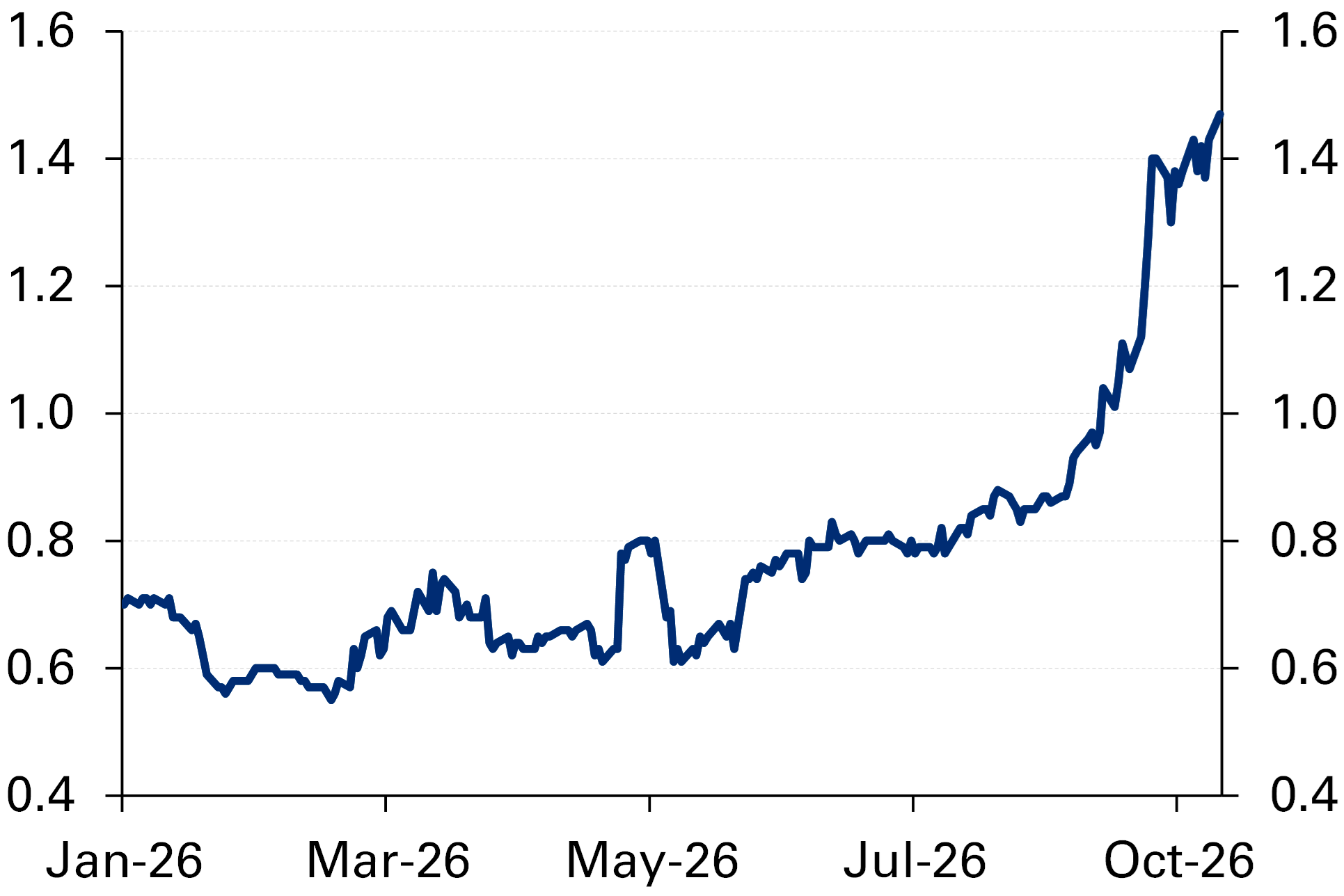
US: Trump sees faltering support within GOP over Russia deal ahead of November mid-terms. President Trumps’s latest deal with Russia to wave sanctions to ease pressure on diesel prices, has seen opposition grow within the GOP. Several Republican Senators and House Representatives have publicly opposed or questioned the approach, especially with the prior enactment of a key bill to further choke Russian oil and other exports (passed by a majority 86-11 vote in the Senate and signed by Trump in September) being postponed just ahead of its effective implementation. While in the past some Republican lawmakers showed frustration with the administration’s policies, the angst now seems widening as Trump’s approval ratings have plunged to near record lows, weakening GOP’s mid-terms election prospects. With the mid-term elections on November 3, polls and prediction markets are indicating a very high probability of a switch in control of the House and decent chances of a flip in the Senate too, both in favor of Democrats. However, with the administration retaining significant powers over several key policies including international relations and trade/tariffs, and Trump’s own veto authority over the legislative branch’s actions (unless overridden with a two-third majority), it seems unlikely that his approach will change much after the new Congress is sworn in. However, if Democrats win at least one of the chambers, the GOP’s ability to pass major legislative actions will be significantly curtailed. Moreover, if Democrats take control of the Senate, that will be a huge setback for Trump as that essentially means the ability to block any new Trump appointee (who requires Senate confirmation) from being confirmed by that body.
Saudi Arabia: Security concerns prompt postponement of major events. The Future Investment Initiative (FII), the Kingdom’s flagship investment conference, has been postponed until 2027 amid rising security concerns following several days of Houthi attacks and air-raid alerts in Riyadh. The event, often named “Davos in the Desert,” was scheduled to take place this month, with reports suggesting organizers had considered hybrid attendance arrangements. The decision signals a shift in approach, as Saudi Arabia had previously kept major events on schedule despite security concerns and lower attendance by international executives. The WPC Energy Congress, for example, proceeded earlier this month, although senior executives from ExxonMobil, TotalEnergies, Shell, and BP reportedly cancelled their attendance. Several other major events have also been postponed. Intersec, the Kingdom’s leading security exhibition, has been moved to October 2027, with organizers citing a review of the situation and prioritizing safety. Two major construction exhibitions, Saudi Build and Saudi Elenex, have been rescheduled from early November in 2026 to 1-4 November 2027. The postponements also include the European Union-Gulf Cooperation Council summit, originally scheduled for 24 October; the PIF Saudi International golf tournament, which was due to take place on 18-21 November but has been shelved indefinitely due to organizational and logistical challenges; and the Urban Cycling World Championships, which were scheduled for 3-7 November in Riyadh will no longer proceed. The growing list of cancellations and postponements highlights how regional security concerns are disrupting Saudi Arabia’s efforts to diversify its economy and boost non-oil activities.