
 +965 2292 4888


Daily Economic Update
08.07.2026
Kuwait: FY 2025/2026 closing account reveals a deficit of KD 7.1 billion. The Ministry of Finance released the state closing account for the 2025-2026 fiscal year, with a deficit of KD 7.1 billion (15% of GDP), the largest in five years, up from a deficit of KD 1.1 billion (2.1% of GDP) in the previous fiscal year. The fiscal outcome is wider than the initial budget estimate, which projected a deficit of KD 6.3 billion. Total revenues fell by 25% y/y to KD 13.6 billion as oil proceeds declined by 29% y/y weighed down by production quotas and lower oil prices, which more than offset a 6% increase in non-oil revenues. Still, oil revenues continued to dominate total revenues with a share of 83% highlighting the need for further diversification efforts. On the expenditure side, current spending rose by 2.8% y/y to KD 21 billion, coming mainly from higher compensation of employees (5%) and miscellaneous outlays (17% y/y) outweighing a reduction in subsidies (-8%). Capital expenditures fell by 4% y/y, the fourth consecutive year of decline, despite notably exceeding the budget allocation by 16%. Overall, the fiscal outcome is an underperformance compared to initial budget estimates, highlighting the continued vulnerability of state finances to volatile oil revenues and the pressing need to accelerate fiscal consolidation plans involving non-oil revenue growth and spending rationalization.
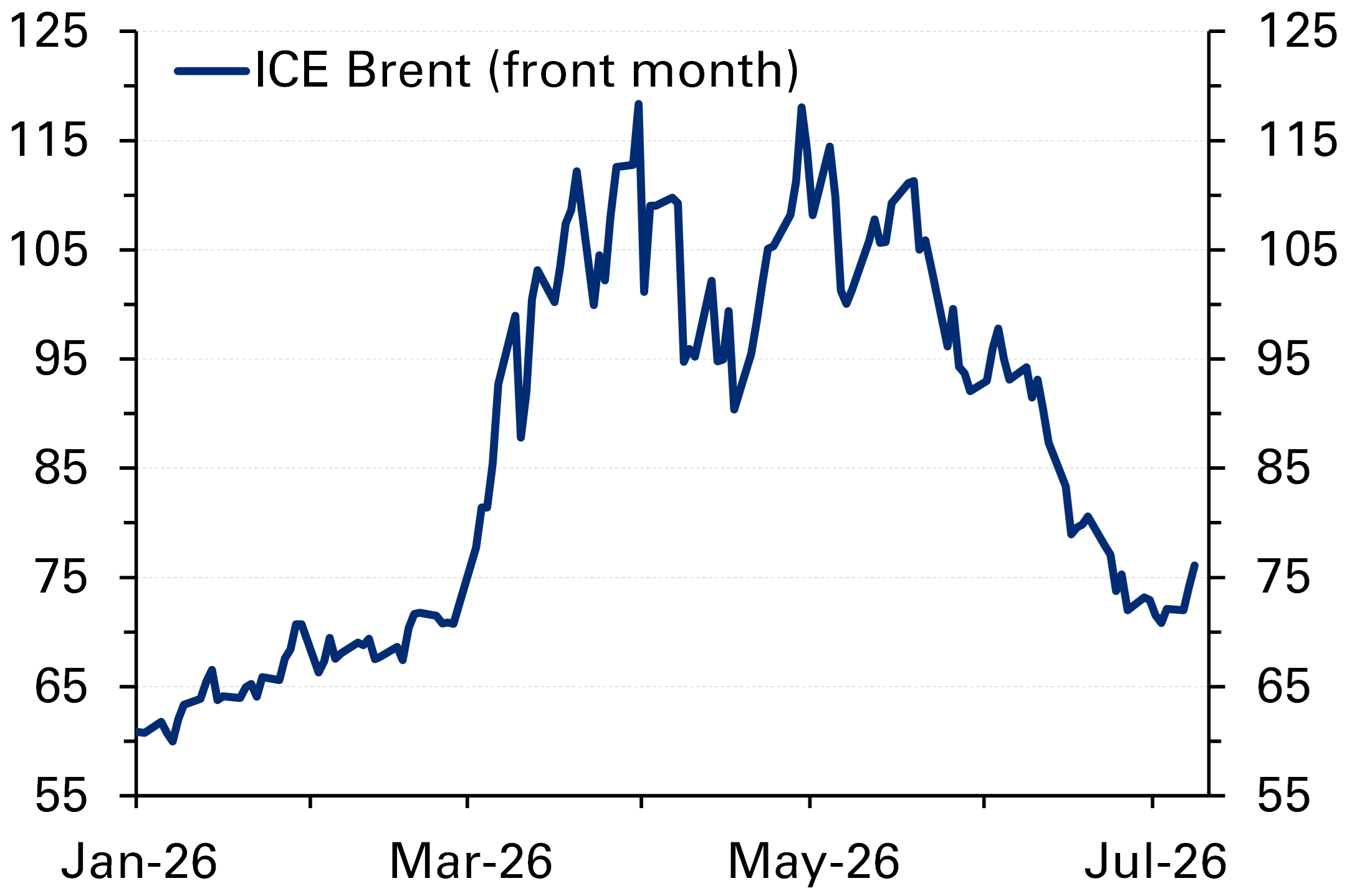
Oil: Rising US-Iran tensions send prices higher. Brent crude futures extended their rebound in Asian trading this morning, rising 2.6% to $76.1/bbl after increasing around 3% on Tuesday. The move reflects a renewed geopolitical risk premium following the escalation in regional tensions. The latest gains follow US airstrikes on Iran after Washington reinstated sanctions on Iranian oil exports yesterday. The US administration linked both actions to Iran's involvement in attacks on LNG carriers and oil tankers transiting the Strait of Hormuz a day earlier. Concerns have intensified further after Iran retaliated with strikes targeting Kuwait and Bahrain, raising the risk of renewed disruptions to Middle Eastern energy supplies. Despite the stronger price action, developments on the physical market side remain bearish. Saudi Arabia has cut its official selling prices for Asian buyers to the lowest level in roughly two decades, offering crude at a discount of $1.5/bbl to the Dubai/Oman benchmark. The aggressive pricing move appears aimed at supporting demand while also helping reduce elevated domestic crude inventories. Saudi Arabia is not alone in offering discounted barrels, however, with other regional producers, including Kuwait, Iraq, and the UAE, also selling crude at discounts relative to the Dubai/Oman benchmark, highlighting the intense competition for the Asian market share.
Egypt: Fuel import bill climbs sharply amid the regional tensions. Egypt’s fuel import bill rose sharply in the first half of 2026, increasing by around 30% y/y to $12.5 billion, compared to $9.6 billion in the same period last year, as the country stepped up purchases of natural gas, crude oil, and petroleum products to meet domestic demand. The increase was driven by a combination of higher import volumes and elevated global energy prices, particularly during the second quarter when regional tensions and disruptions to shipping routes in the Gulf pushed up the cost of LNG cargoes and other fuel imports. Natural gas accounted for the largest share of the increase, reflecting Egypt’s growing reliance on imported LNG to bridge the gap between domestic production and consumption. According to the latest data from the International Gas Union, Egypt’s LNG imports surged by around 259% y/y in 2025, highlighting the country’s transition from a net gas exporter to a sizeable importer in recent years. The sharp rise in energy imports is expected to keep pressure on Egypt’s trade balance and foreign currency needs, while reinforcing the government’s efforts to boost domestic gas production, settle arrears owed to international oil companies, and accelerate investments in the energy sector.
Saudi Arabia: Trade in services softens in Q1 with travel remaining the largest export category. Saudi Arabia’s services exports declined 3% y/y in the first quarter of 2026 to SAR 71 billion, although increased 8% from the previous quarter, according to GASTAT. Travel services remained the Kingdom’s largest services export, generating SAR 44 billion and accounting for around 62% of total services exports. Transportation services ranked second at SAR 10.9 billion, highlighting the continued importance of tourism and travel to Saudi Arabia’s services sector. On the import side, services imports also declined 3% y/y to SAR 111 billion. Transportation services accounted for the largest share of imports at SAR 32 billion, followed by travel services at SAR 21 billion. As a result, Saudi Arabia recorded a services trade deficit of SAR 40 billion in Q1, as imports continued to exceed exports. While trade in services softened on an annual basis, the quarterly rebound suggests activity is gradually recovering. The continued dominance of travel services highlights the growing contribution of tourism in Saudi Arabia’s external sector, although the Kingdom still relies heavily on imported transport and business services, leaving the services trade balance in deficit.
US: New York Fed President sees current monetary policy “well positioned” and does not intend to change his communication style. The New York Fed President, John Williams, (a permanent FOMC voter) sees the current monetary policy as “well-positioned” to achieve the Fed's mandate. This indicates Williams’ current inclination to hold rates steady given his outlook on inflation and the labor market, but also stressing that his monetary policy position will remain data-dependent. He expects the lower energy prices to drive a drop in headline inflation and in some core inflation components over the next few months. He believes that the labor market is stabilizing while economic growth remains solid. On the current important topic of communications, Williams mentioned that he does not plan to change his communications style under new Fed Chair Warsh saying "I regularly give my views on the economic data, the outlook, and how I see monetary policy, not so much forward guidance, but how interest rate policy is positioned relative to the Fed's goals. I plan to continue to do that". Given Chair Warsh’s decision to decrease communication with investors and Fed observers, we believe it is important that other key members of the FOMC are opting to continue openly communicating with Fed observers by explaining their outlook and how they view monetary policy.
UK: Lloyds House Price Index records first monthly increase since February. The Lloyds House Price Index (previously Halifax) rose by 0.2% m/m in June (-0.2% in May), marking the first monthly increase since February. On an annual basis, house prices edged up 0.6% in June (0.5% in May). According to Lloyds, affordability remains stretched for many buyers and the expectation is that the housing market will continue moving at a measured pace. As we have noted before, the near-term outlook for the UK residential property market continues to be broadly muted given an ongoing weak job market and elevated interest rates. However, the lower-than-expected inflation prints recently and the sharp reversal in energy prices have decreased the odds of rate hikes by the BoE and lowered market interest rates, which will support the property market if sustained.