
 +965 2292 4888


Daily Economic Update
19.08.2026
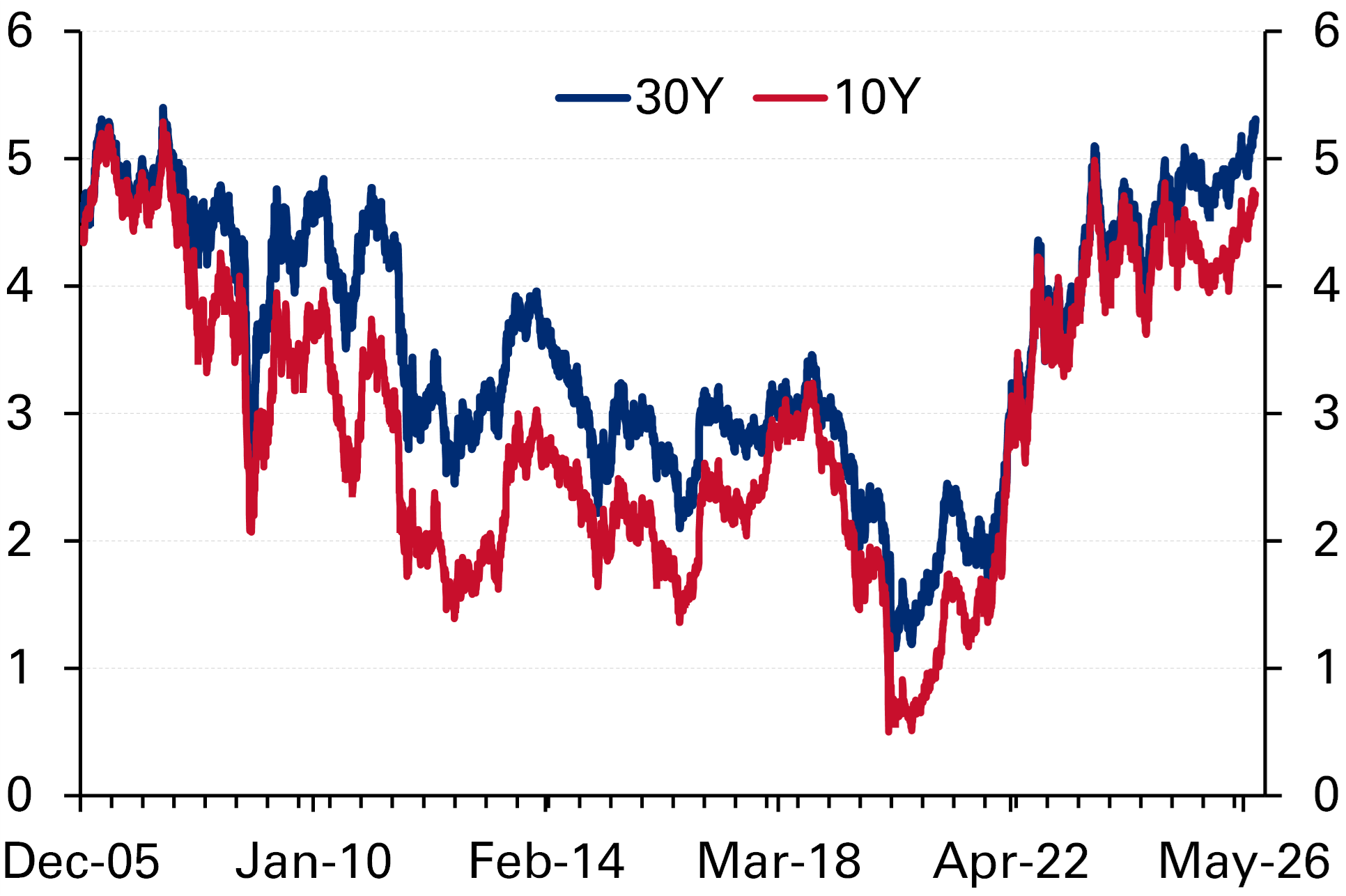
US: Industrial production advances further in July, government bonds still under pressure. Industrial production in July increased 0.2% m/m (1.1% y/y) from an upwardly revised 0.3% (1.1% y/y) expansion in June. Manufacturing, which contributes around three-fourths to total industrial production, also rose 0.2% m/m following a revised increase of 0.3% in June, matching the consensus forecast. Manufacturing output has broadly remained robust this year after a subdued performance in H2 2025, helped by sustained AI/tech-related spending and a renewed push for defense spending. In fact, output of computer and electronics products grew 1.9% m/m in July, up from 0.5% in June, with overall business equipment output increasing by a solid 0.8% m/m, accelerating from 0.4% in June, while defense-related equipment production rose 1.8%. Meanwhile, UST long-end bonds remained under pressure yesterday, edging down slightly on the day but with the 30Y-yield only just off its highest since 2007 of 5.3% reached the day before, and the 10Y-yield hovering close to its highest since January 2025 at 4.7%. The recent rout in the UST bond market reflects market expectations of a higher medium-to-long-term inflation outlook, worsening US fiscal metrics, robust economic growth, an oversupply of long-term bonds from private issuances including AI ‘hyperscalers’ as well as market frustrations with the Fed’s unclear policy stance even when inflation has remained above the Fed’s 2% target for over five years now.
UK: Employment data mixed as payrolls continue to fall, but regular wage growth slightly accelerates. UK payrolls fell by 13K (based on real-time payroll data) in July, matching the revised decline seen in June. We note that monthly payroll figures are usually subject to significant revisions over the subsequent months; still, the overall employment scene remains weak since the rollout of the higher National Insurance Contributions in the 2024 Autumn budget, driving a cumulative 199K drop in total jobs since November 2024. The unemployment rate in April to June remained unchanged at 4.9% from March to May (versus the consensus forecast of 4.8%), along with a steady labor participation rate at 63.9%. However, regular pay growth unexpectedly rose to 3.5% in the April-June period from 3.4% in the March-May period, a four-month high, but total pay growth (including bonus) eased to 4.1% from 4.4% earlier. Finally, vacancies dropped slightly to 707K in May-July, the lowest level in over five years. The latest job prints further confirm continued soft employment conditions but the anticipated reacceleration in inflation over the second half of the year may drive greater caution from Bank of England MPC members. As a reminder, July’s CPI inflation is due today, and the street estimates point to a higher reading of 2.9% y/y, up from June’s 15-month low of 2.6% on repricing of household energy bills and generally higher fuel costs.
China: Authorities widen use of housing provident fund to support economic activity. The authorities are expanding the use of a 10.9 trillion yuan ($1.6 trillion) housing provident fund as part of new measures to support household spending and stabilize the economy amid a deepening slowdown. Under revised regulations effective next month, residents will be able to withdraw savings from the fund not only for home purchases but also for major housing-related expenses such as renovations, while restrictions on using the fund for rent payments will be eased. Authorities will also allow fund managers to invest in policy bank bonds to improve returns and grant the State Council greater flexibility to adjust provident fund mortgage rates. The move comes as China faces weakening consumption, declining home prices, and slower-than-targeted economic growth. With contributions from nearly 180 million workers and employers and assets exceeding outstanding mortgage loans, the provident fund is becoming an increasingly important tool for supporting both the housing market and broader domestic demand. That said, the policy signals Beijing's preference for mobilizing existing domestic savings pools rather than relying solely on large-scale fiscal stimulus, aiming to boost household consumption and housing-related activity while limiting additional pressure on government finances.
Egypt: Acting CBE governor reappointed for a fifth consecutive year. Egypt’s President has renewed the appointment of the acting Governor of the Central Bank of Egypt (CBE) for another one-year term, marking his fifth consecutive year in the role. The decision comes just two days before the CBE’s Monetary Policy Committee (MPC) meeting, at a time when monetary policy remains focused on containing inflation and preserving macroeconomic stability. The extension also comes ahead of several important milestones, most notably the completion of the government’s IMF-supported reform program, which is scheduled to expire in December 2026. Until then, around $18.3 billion in GCC official deposits at the CBE are expected to remain in place, with the option for part of these deposits to be converted into equity investments under agreed arrangements.