
 +965 2292 4888


Daily Economic Update
24.03.2026
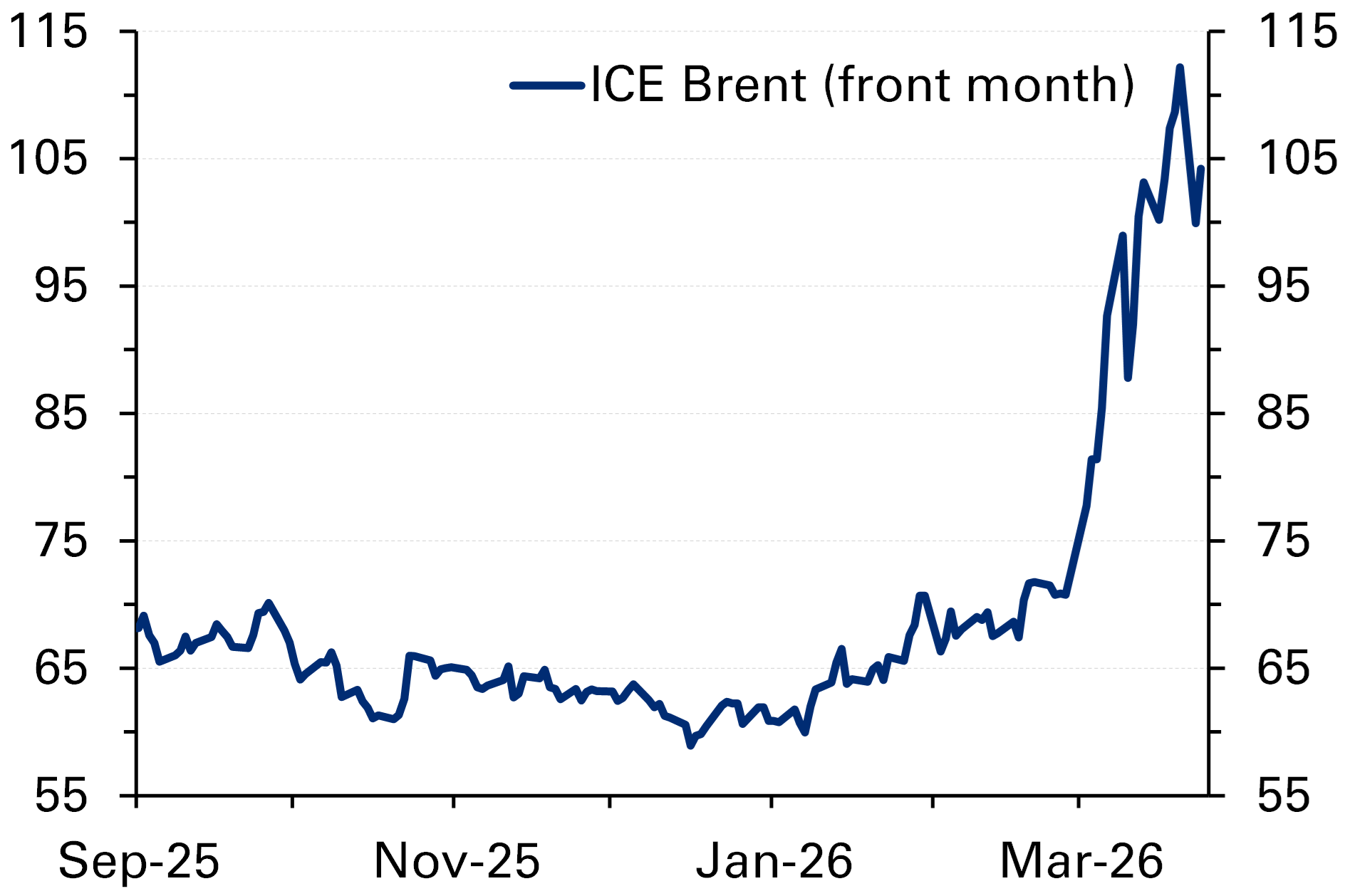
Oil: Prices tumble on Monday after Trump postpones planned Iran energy strikes amid US-Iran peace talks. Brent futures sold off sharply on Monday, dropping almost 11% to settle at $99.9/bbl after US President Trump signaled a five-day delay to planned strikes on Iranian power infrastructure amid “good and productive” negotiations aimed at de escalating tensions in the Middle East. The respite was short-lived, however, with Brent rebounding back over the $100 level to around $104/bbl at the time of writing in early Asian trading, after Iran denied that direct negotiations had taken place and amid a US media report that the position of Gulf allies was hardening towards Iran. President Trump’s announcement yesterday effectively postpones his earlier 48 hour ultimatum to Iran that demanded a reopening of the Strait of Hormuz or face direct attacks on its energy facilities. The shift in tone – combined with media reports suggesting preliminary channels of communication between Washington and Tehran – was interpreted by the market as a material de escalation. Tehran has acknowledged ongoing third party mediation efforts potentially involving Pakistan or Turkey. That settlement capped a week in which Brent posted its strongest close on Friday ($112.9/bbl) since July 2022 (+8.8% w/w), driven by a string of bullish catalysts: Iranian strikes on GCC energy infrastructure; Iraq’s declaration of force majeure on foreign operated oilfields, and reports that the US is preparing to deploy ground troops on Iranian territory. On the supply side, the US administration added another layer of volatility by waiving sanctions on Iranian crude stranded at sea. Treasury Secretary Scott Bessent said roughly 140 mb of Iranian oil on water stores could now be released to the market. However, the figure appears significantly overstated as shipping intelligence firm Kpler estimates the volume closer to 31 mb, reducing the potential bearish impact.
Kuwait: S&P affirms credit rating citing strong fiscal buffers. S&P Global Ratings reaffirmed Kuwait’s AA-/A-1+ sovereign credit rating with a stable outlook, emphasizing the country’s strong net asset position and fiscal buffers through its sovereign wealth fund (KIA), which amount to nearly 490% of GDP. The rating reflects confidence that Kuwait can withstand short-term shocks from the closure of the Strait of Hormuz and regional conflict, which have cut oil production by more than half and slowed growth to a projected 0.8% in 2026 (from 2% in 2025), while widening the fiscal deficit to 17% of GDP (from 8% in 2025). On the downside, prolonged oil export disruptions, heavy reliance on hydrocarbons of over 90% of government revenue, and slow progress on fiscal reforms (such as taxation, spending rationalization, and diversification) could erode fiscal strength and put downward pressure on the country’s ratings. On the upside, if reforms are implemented to expand non-oil revenues, strengthen domestic capital markets, and diversify the economy, the public finances could improve, potentially leading to a rating upgrade within two years. Although Kuwait’s vast sovereign wealth fund provides resilience against immediate geopolitical and economic shocks, the long-term stability of its rating hinges on reform momentum and reducing dependence on oil. The credit rating is of higher significance this year given the increased reliance on debt markets for deficit financing since the approval of the public debt law in March 2025, with the potential to raise borrowing costs in the event of a rating downgrade triggered by a prolonged conflict or delayed reforms.
Egypt: Government rolls out temporary austerity measures as energy costs surge. The Egyptian government is introducing a new set of short-term austerity measures starting next Saturday, aimed at containing the sharp rise in the energy bill amid ongoing regional tensions. The announcement, made by the Prime Minister ahead of the Eid break, reflects efforts to manage costs without triggering a fresh wave of inflation. The measures include earlier closing hours for commercial activities at 9 pm on weekdays and 10 pm on Thursdays and Fridays, reduced public lighting, and the shutdown of government buildings in the New Administrative Capital after working hours. In addition, authorities plan to slow down diesel-intensive projects, with discussions underway on introducing remote working one to two days per week across both public and private sectors. These steps will be implemented for an initial one-month period, after which they will be reassessed. The move comes as Egypt’s monthly natural gas import bill has surged to around $1.7 billion, up from $560 million for the same volumes prior to the escalation. Diesel import prices have also risen sharply, increasing from $665 per ton to $1,604 per ton, amplifying cost pressures across transportation, logistics, and industrial activity. Overall, the measures highlight the government’s attempt to balance fiscal pressures from higher energy costs while containing their pass-through to inflation and economic activity.
Oman: Inflation reached 4-year high in February. Consumer price inflation rose to 2.0% y/y in February 2026, the highest since December 2022, up from a four-month low of 1.4% in January. The higher inflation was mostly driven by a sharp increase in food and beverage prices (2.8% from 0.9%), where vegetables and fruit saw the steepest gains. Other categories also contributed, with still elevated miscellaneous goods and services inflation (+13.4% from 13.2%), and faster inflation in furnishings (+3.0% from 2.6%). Meanwhile, housing, utilities, communication, and tobacco inflation remained stable. On a monthly basis, inflation rose by 0.2% from 0.3% in January. While the ongoing regional conflict may push prices up in the coming period, Oman is less exposed to trade disruptions than some of its neighbors due to its direct access to the Arabian Sea via Duqm port.
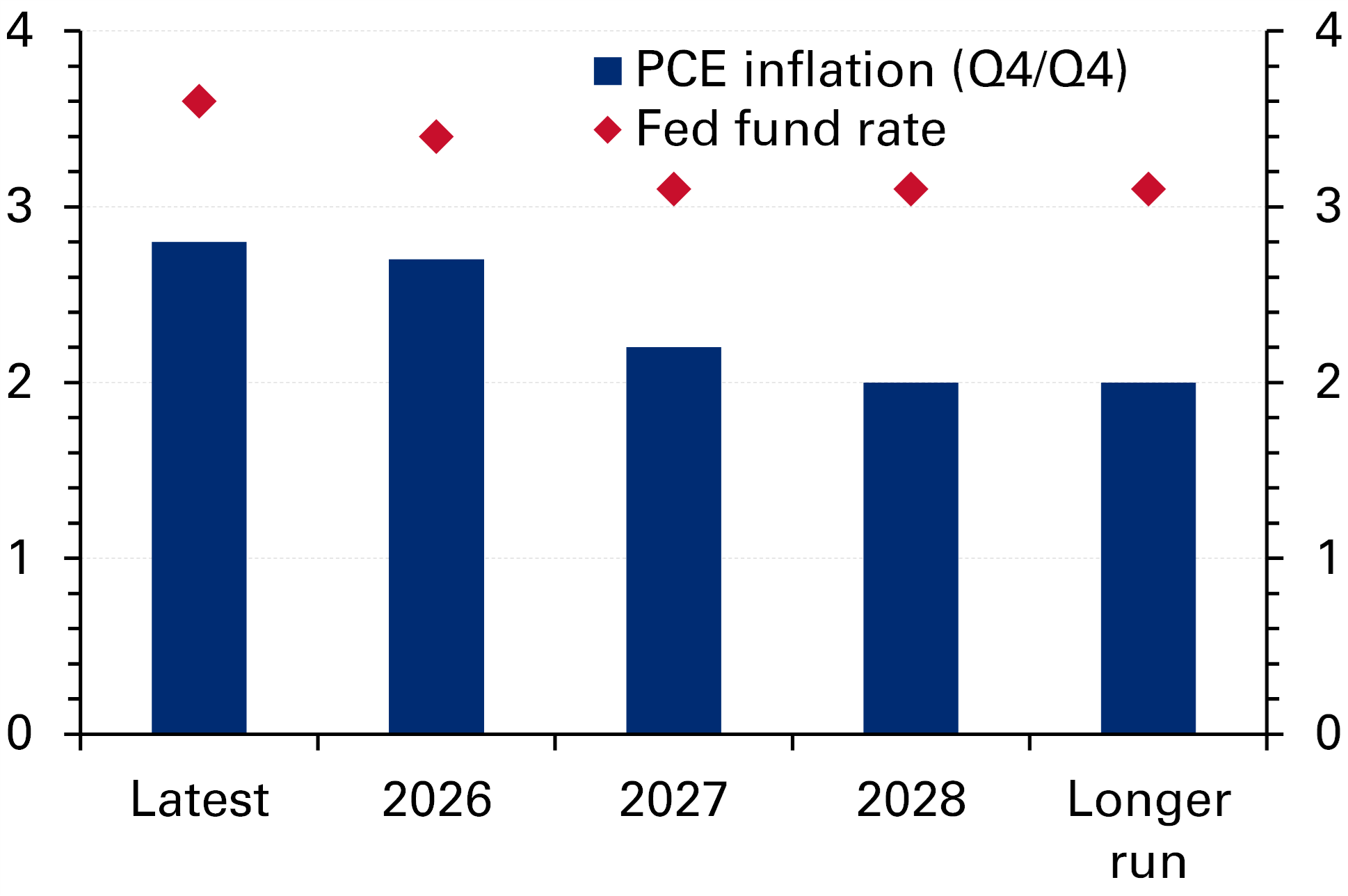
US: FOMC leaves policy rates unchanged noting uncertainty about the Middle East war impact; Chair Powell to stay on Fed board if DoJ investigation is not dropped. The FOMC left the Fed fund target rate unchanged last week at the 3.5-3.75% range in an 11-1 vote, with Governor Miran pitching for a 25-bps interest rate cut. The statement noted the unemployment rate was “little changed in recent months,” and inflation “somewhat elevated” amid uncertain implications for the US economy from the developments in Middle East. Latest median dot-plot projections continued to show one interest rate cut in both 2026 and 2027 though dots mostly moved up somewhat since the FOMC meeting in December, while the longer run interest rate was seen higher at 3.1% from 3% earlier. Projections for PCE inflation (Q4/Q4) were raised to 2.7% for 2026 and 2.2% for 2027 from 2.4% and 2.1% seen in December, with core PCE inflation forecasts also lifted to 2.7% and 2.2% from 2.5% and 2.1% for 2026 and 2027, respectively, reflecting slower transmission of tariffs and the current higher energy price outlook. GDP growth was also seen higher at 2.4% in 2026 and 2.3% in 2027 from 2.3% and 2% previously, while the longer-run growth rate was raised to 2% from 1.8% on expectations of stronger labor productivity growth. Projections for the unemployment rate were mostly unchanged. Chair Powell, in the post-meeting conference, repeatedly emphasized the uncertainty in evaluating “the scope and duration of the potential effects on the economy” from the Middle East war and resulting energy price shock. He blamed tariffs for elevated inflation and repeated his previous stance of their impact being one-time but expressed uncertainty about the exact time frame for their transmission through consumer prices. He cautioned that “if we don’t see that progress [on inflation], then we won’t see the rate cut.” Similar to the meeting in January, Powell mentioned that some FOMC members discussed the possibility of the next move being a rate hike but clarified that “the vast majority of participants don’t see that as their base case,” which is also reflected in the latest dot-plot as no member saw interest rates ending 2026 above the present level. Significantly, Powell stated that he would continue to serve at the Fed until the Department of Justice’s criminal investigation was “well and truly over,” while remaining as a pro tem chair after May until his successor (Kevin Warsh) was confirmed. We think that given near certainty of inflation reaccelerating sharply over the coming months, with some second-round effect of higher energy prices on several other components, the bar is now very high for the Fed to resume policy rate cuts anytime soon. Over the weekend, the futures market saw over 60% chances of an interest rate hike in 2026 but pared that to signal mostly no change in the interest rates on Monday following President Trump’s comments about de-escalation in the military war in the Middle East. Meanwhile, other major central banks also kept policy rates unchanged last week, with the ECB holding at 2.0%, the BoE at 3.75%, and the BoJ at 0.75%, as they assess the inflationary effects of higher energy prices and rising geopolitical risks on their medium-term policy outlooks.
China: Benchmark lending rates left unchanged in March for the tenth consecutive month. China’s central bank left its loan prime rates unchanged in March, holding the one-year LPR at 3.0% and the five-year at 3.5% for a tenth consecutive month, as policymakers balanced the need to support a still fragile recovery against rising global energy costs and lingering domestic headwinds. The decision reflects a preference for policy stability, particularly as higher oil prices stemming from the Middle East war add uncertainty to the inflation outlook and reduce the urgency for broad based monetary easing. Overall, the steady LPR fixings suggest that Beijing is prioritizing a measured stance while monitoring external risks, property sector stress, and the impact of earlier targeted support measures before considering further rate adjustments.