
 +965 2292 4888


Daily Economic Update
12.04.2026
Oil: US-Iran negotiations fail to reach an agreement amid nuclear program sticking point. Peace talks in Islamabad between the US and Iran to settle the conflict and thrash out a longer-term agreement that sees the Strait of Hormuz reopen permanently and settles Iran’s contentious nuclear enrichment program concluded without an agreement this morning. US Vice President JD Vance announced in a press conference earlier that after 21 hours of negotiations, the first bilateral, high-level sit-down between the two sides since the 1979 revolution, that the US and Iran were still too far apart on the key issue of nuclear enrichment, while Iranian media also cited differences on the Strait of Hormuz and the removal of existing nuclear materials from the country. Details have not been provided yet on which issues the two countries were at least prepared to find some common ground on. In our view, a quick agreement was always going to be exceptionally difficult since Iran and the US were using as the starting point for negotiations their own maximalist 10 and 15-point plans, respectively, and given the lack of trust between the two sides. As of now, there are no fixed plans for a further round of talks but we see another round as probable. Oil prices, having closed lower last week with Brent dropping almost 13% w/w (Thursday to Friday) to $95.2/bbl, will likely open higher on Monday to reflect the higher risk premium including the potential resumption of hostilities should no progress be made before the expiry of the two-week truce period. Markets may take some comfort though from an increase in tanker traffic through the Strait, with two Chinese supertankers and a Greek oil tanker, carrying a combined 6 mb of crude of Saudi and Iraqi crude, successfully traversing the strait on Saturday.
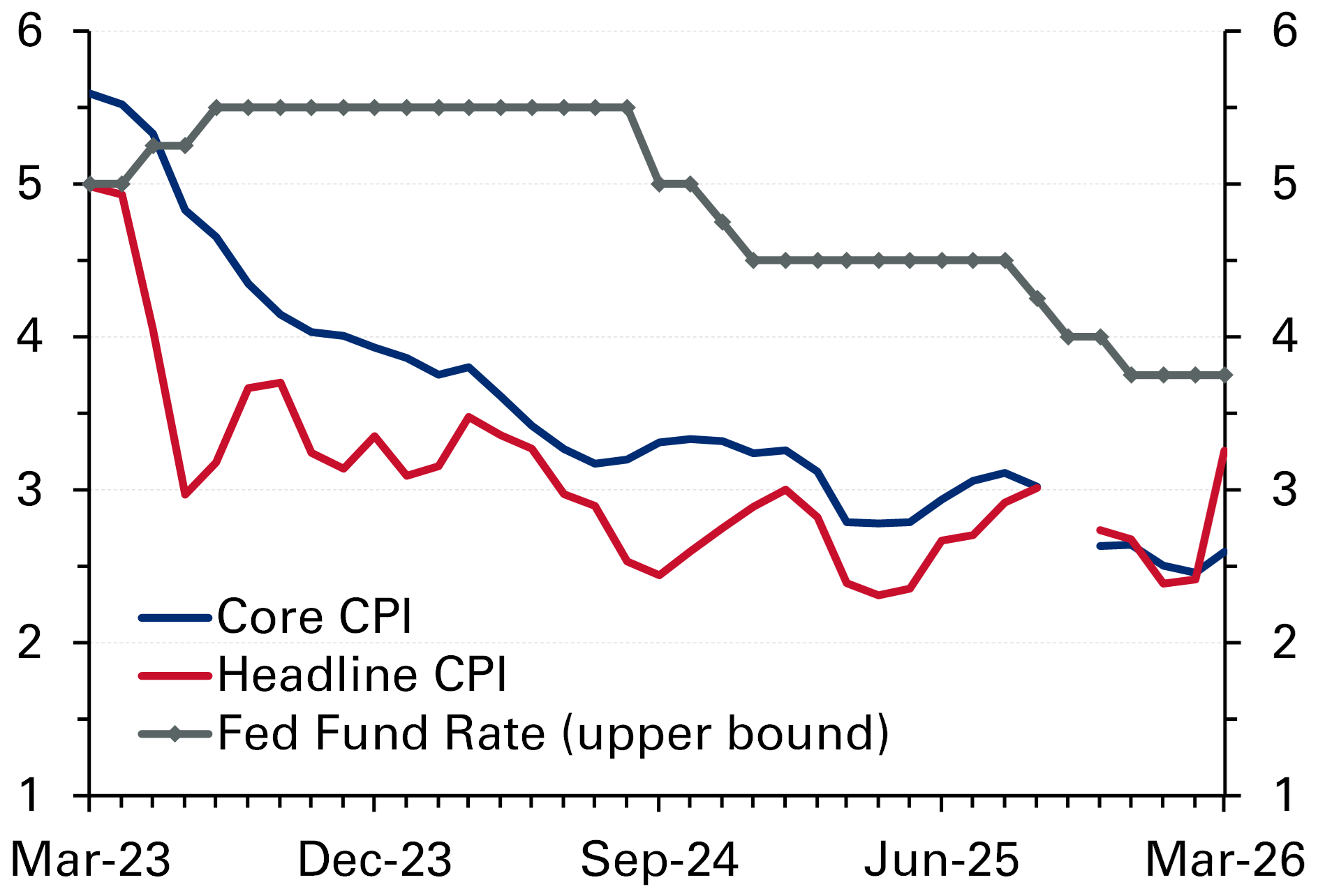
US: CPI inflation surges in March on higher energy prices and the core rate also ticks up; will likely remain elevated over the coming months. CPI inflation in March surged given the fallout from the Middle East war and resulting higher energy prices. The headline rate rose to a nearly two-year high of 3.3% y/y (0.9% m/m) from 2.4% in February as energy goods prices soared by over 21% m/m. Rising costs of energy products also drove a 14.9% y/y (2.7% m/m) increase in airfares. Core inflation ticked up to 2.6% y/y from 2.5%. Excluding food and energy, goods inflation stood at 1.2% y/y, up from 1% in February, but the rise in durable goods was unchanged from February at 0.1%. Looking ahead, consumer price inflation is expected to remain elevated over the coming months given high energy prices and their second-round effects on other inflation components. Market reaction after the release of the March CPI prints was broadly muted with the ceasefire-related developments between the US and Iran and the resumption of energy flows through the Strait of Hormuz remaining as the overriding concerns. The futures market is currently signaling an over 70% probability of no change in the Fed fund target rate by the end of 2026. Separately, PCE inflation in February, before the war in the Middle East began, was steady at 2.8% y/y but the core rate edged down to 3% from 3.1%. On a monthly basis, both stood at an elevated 0.4%. Finally, GDP growth in Q4 was further revised down to 0.5% (annualized) from the 0.7% estimated previously and sharply down from 4.4% in Q3, impacted by the record-long government shutdown during the quarter. Real final sales to private domestic purchasers was also marked down, but to a still relatively robust 1.8% (versus 1.9% in the previous estimate) from 2.9% in Q3.
China: PPI inflation turns positive after being in deflation for more than three years. Producer prices increased by 0.5 y/y in March (-0.9% in February), the first annual increase since late 2022. This was broadly in line with expectations and was driven by a surge in energy prices as well as the ongoing efforts by the authorities to crack down on severe price competition. Meanwhile, CPI inflation softened to 1% y/y in March from a three-year high of 1.3% in February, impacted by seasonal factors. Looking ahead, with the ongoing elevated energy prices and now increasing producer prices, CPI inflation is set to drift higher in the coming months.
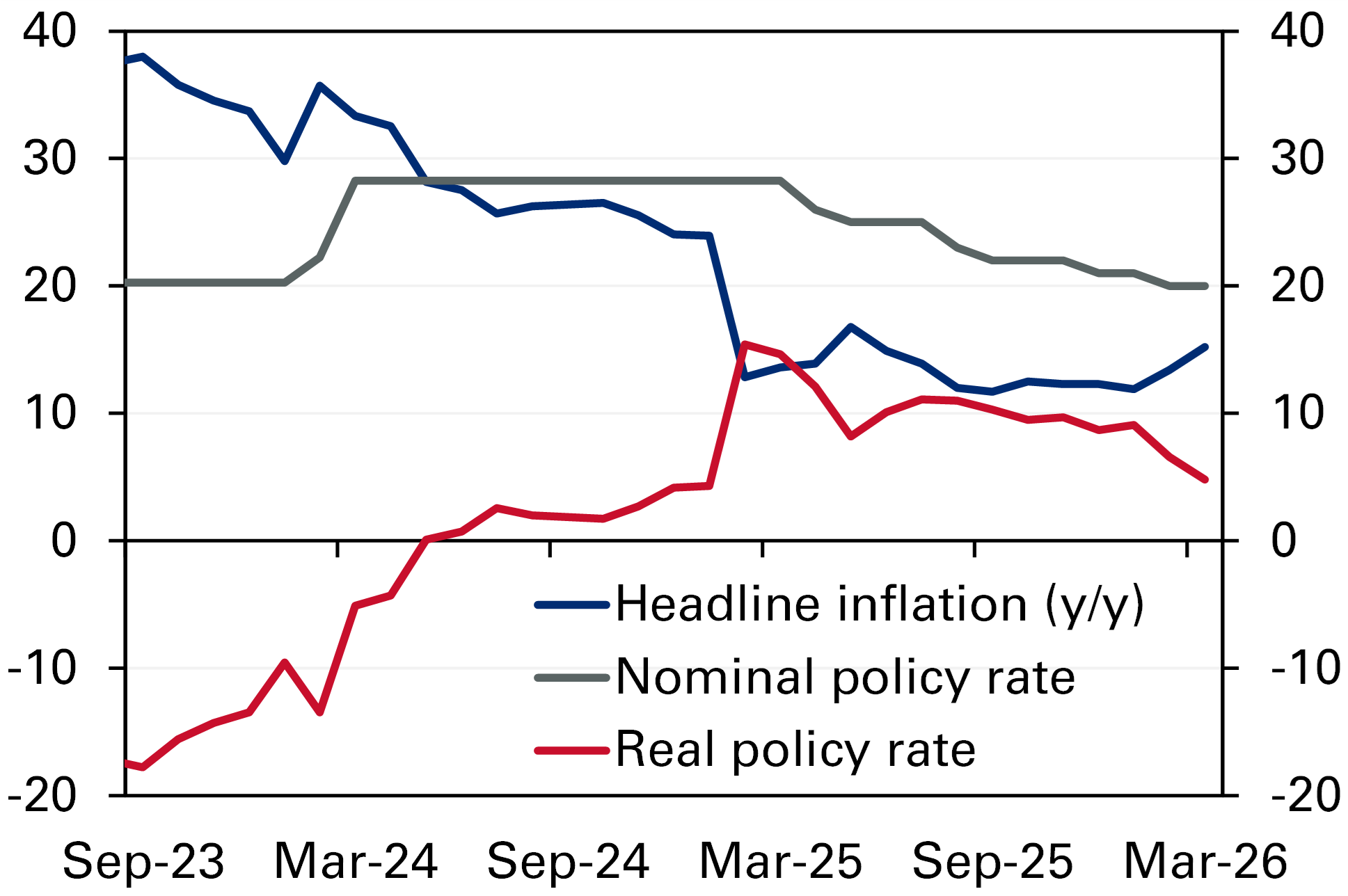
Egypt: Inflation accelerates further in March as S&P affirms stable outlook. Egypt’s inflation continued its upward trend for the second consecutive month in March, reflecting mounting pressures from regional developments and rising energy costs. According to CAPMAS, urban inflation rose to 15.2% y/y (+3.2% m/m), up from 13.4% y/y (+2.8% m/m) in February. Core inflation also picked up, reaching 14% y/y (+2% m/m), compared to 12.7% y/y (+3% m/m) in February, as per the Central Bank of Egypt, indicating broad-based price pressures across the economy. The main driver behind the monthly increase was the transport component, which surged from +0.2% m/m in February to +9.8% m/m in March, reflecting the pass-through from higher global oil prices and the recent domestic fuel price hike. In addition, food inflation accelerated to +4.7% m/m, driven largely by rising vegetable prices, while housing and utilities increased by +3.3% m/m. Despite the inflationary uptick and ongoing external pressures, S&P Global Ratings affirmed Egypt’s sovereign credit rating at B with a stable outlook. The agency acknowledged the country’s significant financing needs and elevated debt levels but noted that these risks are mitigated by continued progress on economic reforms and sustained support from international and regional partners. However, structural challenges persist, particularly related to public debt levels, debt servicing costs, and the economy’s sensitivity to global financial conditions, including interest rates and capital flows.
Saudi Arabia: Industrial production moderates in February ahead of geopolitical escalation. Saudi Arabia’s industrial production growth eased in February, even before the impact of the recent regional escalation began to materialize. Output rose by 8.9% y/y, down from a more than three-year high of 10.8% in January, according to data from GASTAT. The moderation was driven mainly by slower growth in oil-related activities, which expanded by 11.5% y/y, compared to 13.2% in January. This was largely due to softer output in both coke and refined petroleum products and crude oil and natural gas extraction. At the same time, non-oil industrial activity also decelerated, growing by 2.4% y/y versus 4.9% in the previous month. The slowdown was led by weaker performance in manufacturing and water-related services, while electricity, gas, and utilities returned to contraction after strong growth in January. On a monthly basis, industrial production declined by 0.2%, following a 0.5% drop in January, pointing to a gradual loss of momentum. Overall, the February data suggest that industrial activity was already cooling prior to the regional conflict. With geopolitical tensions now weighing on supply chains and demand, further moderation in industrial output is likely in the coming months.