
 +965 2292 4888


Daily Economic Update
04.03.2026
US/Middle East: Trump pledges to facilitate energy trade through the Strait of Hormuz. US President Trump has pledged to facilitate ship passage through the crucial Strait of Hormuz and ease bottlenecks on the supply of energy. This would be done by offering ships insurance against transit via a US government finance agency “at a very reasonable price”, and potentially even using the US navy to escort oil tankers through the waterway. Insurance cover has dried up or escalated dramatically in cost (in some reports five-fold) following Iranian threats to set ablaze transiting ships with reportedly at least 5 ships having been attacked so far and around 150 tankers anchored around the Strait. This is contributing to the ongoing spike in oil prices, which have risen further in Asian trading this morning to almost $84/bbl (Brent) from yesterday’s close of $81.4/bbl. Some 20 mb/d of oil (crude and refined) normally passes through the Strait and around 10 billion cubic feet per day of LNG trade, with only limited amounts able to be re-routed. Most of the GCC’s energy exports head to Asia and reflecting the economy’s vulnerability to a prolonged interruption of energy shipments, China’s foreign ministry yesterday urged all parties to safeguard vessel transit through the Strait. Further highlighting the risk to oil trade, Iraq announced it has begun shutting in output at its largest fields, Rumaila and West Qurna 2, with around 1.2 mb/d already offline as storage facilities approach capacity. Local officials indicated that up to 3 mb/d could be taken offline if disruptions persist.
US/Europe: Amid the ongoing conflict, higher inflation worries and wider economic uncertainty drive pullback in financial markets. Global financial markets have reacted sharply after the start of the military conflict in the Middle East that has reignited higher inflation worries and sparked wider economic uncertainty. In the US, the S&P 500 shed 0.9% yesterday, having dropped almost 2.5% intra-day, with yields on 10Y UST rising by around 12 bp since the conflict began last weekend. Noting these developments, Minneapolis Fed President Neel Kashkari (an FOMC voting member) cautioned that “it’s just too soon to know what imprint this has on inflation and for how long,” and expressed uncertainty about his previous call of one interest rate cut in 2026. New York Fed President John Williams (also a voting member) stated that the market reaction is reasonably muted so far but he would wait to see “how big of effect does that have on the US and how persistent those effects are in terms of price stability.” Though he empathized that if inflation followed his anticipated path, “further reductions in the federal funds rate will eventually be warranted,” with tariffs driving “one-off effects on prices.” The futures market has further trimmed the probability of two Fed interest rates this year to less than 60% from almost 80% last week before hostilities commenced. Similarly, European economies are also significantly exposed to fluctuations in oil and gas prices and disruptions to energy flows from the GCC, which also saw sharp increases in benchmark yields, with those on the 10Y government bonds up 22 bps in the UK and 12 bps in Germany since Friday. In equity markets, the Eurostoxx 50 is down 6% so far this week, and Japan’s Nikkei 225 is down almost 8% week-to-date as of this morning amid a broad sell-off across Asia.
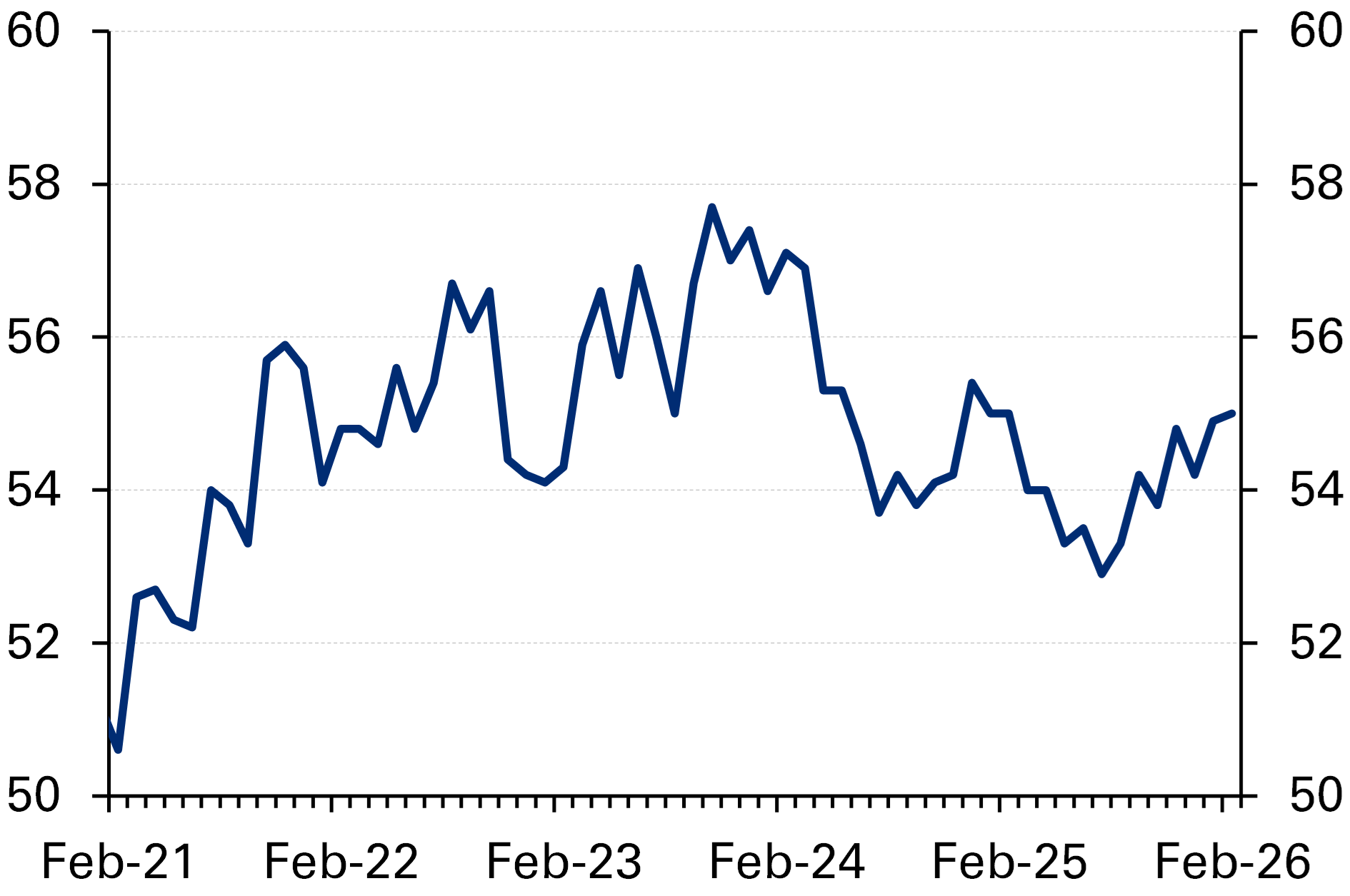
UAE: Non-oil business activity logged its highest increase since April 2024. The PMI edged up to 55.0 in February, slightly above January’s 54.9 and marking its strongest reading in a year, signaling a robust improvement in non oil private sector business conditions. The upturn was underpinned by rapid expansions in both business activity and new orders, with output rising at its fastest pace since April 2024 and new order growth remaining sharply elevated, driven by firm domestic demand, increased tourism, expanding e commerce channels, and rising interest in AI related products. However, the expansion in export orders remained modest. Input prices moderated to show the softest increase since last October, supported by lower fuel prices while output prices saw a marginal increase on stronger demand. Meanwhile, the Dubai PMI continued to expand at 54.6 in February, though slightly softer than January’s 55.9. All these figures of course take no account of the current conflict in the region which will be recorded next month. As well as the direct impact of the attacks from Iran including on refining facilities and the disruption to regular business activity and sentiment, temporary precautionary measures introduced by the UAE authorities in early March including financial market closures and the suspension of most commercial flights will hit operations in the aviation, logistics and tourism related activity. The relaxation of some of these measures starting today (March 4) should assist economic activity and alleviate some pressures on the transport sector and supply chains. The ongoing conflict also presents a source of external uncertainty, primarily through the potential impact on the aviation sector, investor sentiment and trade flows especially oil and gas transit through the Strait of Hormuz.
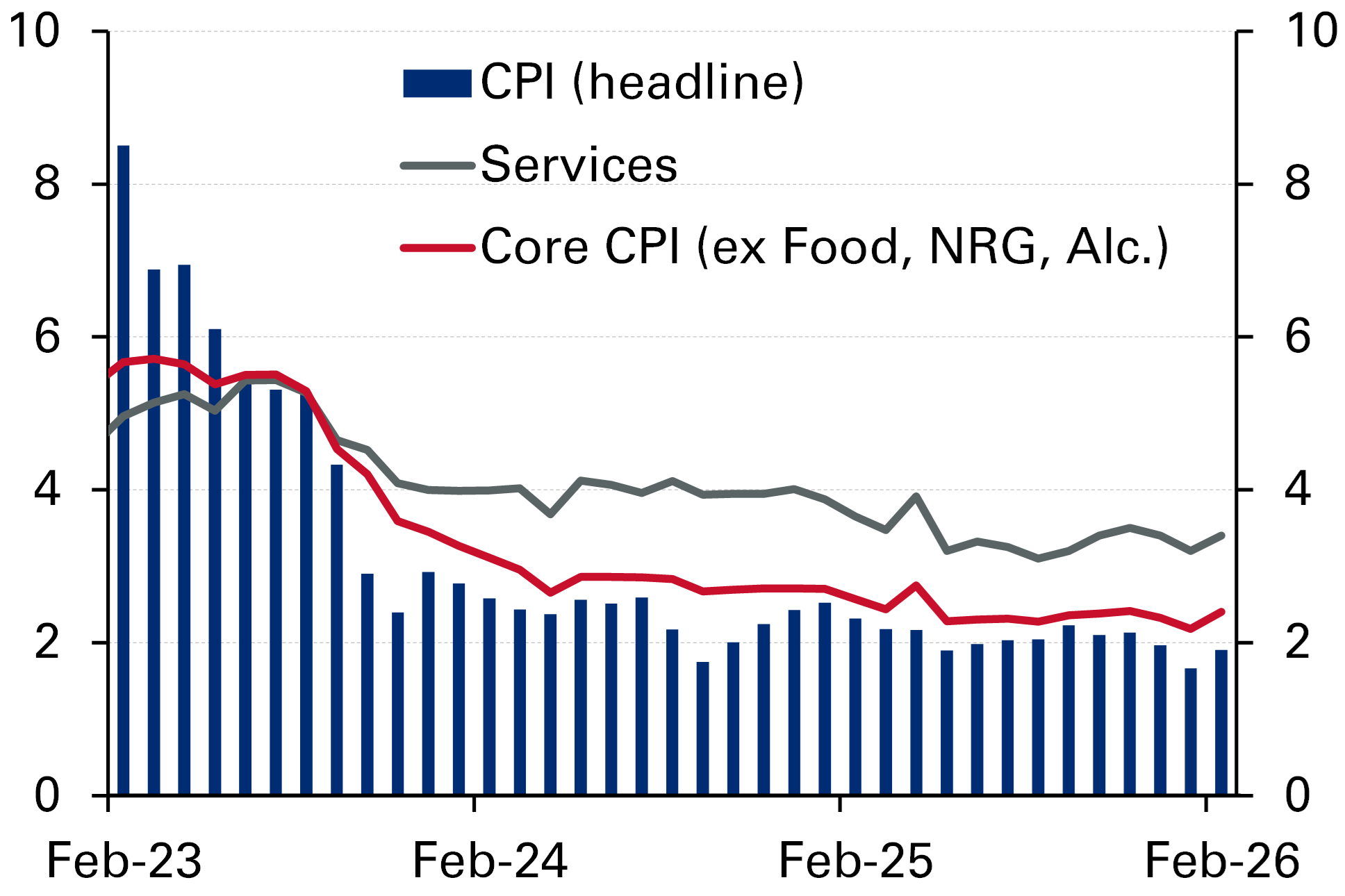
Eurozone: CPI inflation edges up to a higher-than-expected 1.9% y/y in February and bound to increase much further if energy price shock is sustained. Consumer price inflation rose in February, reaching 1.9% y/y from 1.7% in January, according to Eurostat’s latest flash estimate. This was higher than expectations (1.7%) and is a firming in price dynamics after several months of cooling. Core inflation ticked up to a higher than expected 2.4% y/y (2.2% in January), the highest in three months. The component breakdown shows services inflation increasing to 3.4% y/y in February (3.2% in January), food, alcohol & tobacco holding steady at 2.6%, non-energy industrial goods rising to 0.7% (from 0.4%), and energy remaining a drag at -3.2% y/y, though less negative than January’s -4.0%. Despite the pickup in the headline rate, inflation remains close to the ECB’s 2% target, and the bank had forecast inflation to average 1.9% in Q1 and in full-year 2025. However, the military conflict in the Middle East and an extended closure of the Strait of Hormuz will significantly alter the inflation outlook, driven by the energy price shock. As a reminder, in 2022, the energy price shock contributed to inflation surpassing 10% during that year.
UK: OBR downgrades UK GDP growth forecast for 2026 to 1.1%; spike in energy prices alters BoE rate cut outlook. Chancellor Reeves presented the annual Spring Statement yesterday. However, unlike past years, the Statement did not deliver any new policy changes as Reeves had earlier promised. The Office for Budget Responsibility (OBR) also provided the latest economic projections, fully incorporating the policy changes from last November’s Autumn Budget. It downgraded the GDP growth forecast for 2026 to 1.1% from 1.4% projected earlier but saw stronger growth of 1.6% in both 2027 and 2028 from 1.5% previously. However, the OBR warned that these forecasts did not consider fallouts from the ongoing military conflict in the Middle East that ”could have very significant impacts on the global and UK economies,” making the projections less relevant if the conflict prolongs. For now, the latest forecasts left a higher fiscal headroom of £23.6 billion by FY29-30 to meet the self-imposed fiscal rule of balancing current spending and tax revenues versus £21.7 billion seen in November, helped by lower interest costs. However, since the conflict began last week, yields on UK 10Y gilts have risen by around 23 bps (to close to 4.5%) that, if sustained, will shrink the headroom. The fiscal deficit is projected at 4.3% of GDP in FY25-26 and 3.6% in FY 26-27 versus 4.5% and 3.5% seen earlier. We note that the UK’s dependence on oil and gas exports from the GCC is very minimal (less than 2% of UK’s total energy imports), with around 60% of total energy needs met domestically, which somehow shields the UK from any disruptions to oil and gas flows from the GCC. However, if the recent spike in oil and gas prices persists for an extended period, it will have a substantial impact on UK consumer price inflation and accordingly, policy interest rates; the futures market now sees only one BoE rate cut by the end of 2026, down from two seen previously.
China: Manufacturing PMI slips in February, as factory operations were disrupted by the extended Lunar New Year holiday. The official manufacturing PMI slipped to 49.0 in February (49.3 in January), marking a second consecutive month of contraction as factories paused production during the extended Lunar New Year holiday and underlying domestic demand remained soft. New orders also weakened further, falling to 48.6 from 49.2 in January. Meanwhile, the non-manufacturing PMI edged up slightly to 49.5 in February (49.4 in January), but remained below the 50 threshold, reflecting muted services activity and a continued slump in construction despite a temporary holiday related boost to travel and entertainment. The composite PMI fell to 49.5 in February (49.8 in January), its lowest reading since December 2022, indicating that overall activity continued to moderate at the start of the year. Seasonal factors linked to the longest Lunar New Year break on record are distorting the numbers somehow, yet the underlying picture remains one of persistent demand weakness and limited recovery momentum ahead of the Two Sessions policy announcements.