
 +965 2292 4888


Daily Economic Update
11.03.2026
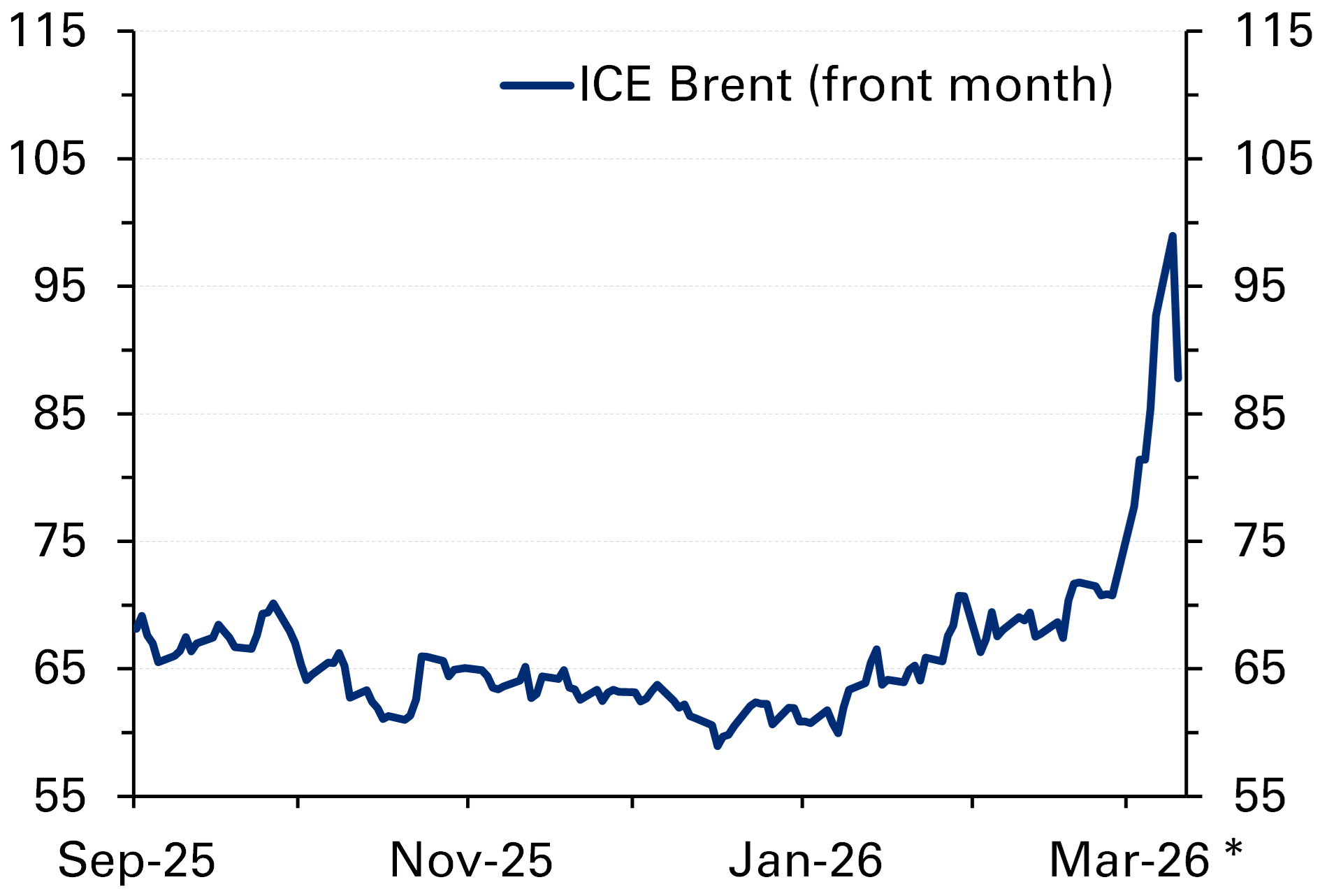
Oil: Prices decline further on US administration messaging and SPR release proposals. Brent futures closed sharply lower on Tuesday (and further from their Monday intraday high), dropping more than 11% d/d—the most since March 2022—to $87.8/bbl as the US administration signalled that the war could be drawing to a close and the IEA proposed the largest ever release of oil from G7 strategic reserves. Market de-risking was catalyzed after President Trump's comments on Monday that the "war is complete” were followed by conciliatory remarks from Israel's foreign minister yesterday when he stated that Israel is not seeking an endless war with Iran and later after US Energy Secretary Chris Wright posted on X that the US Navy had successfully escorted an oil tanker through the Strait of Hormuz. The latter’s post was quickly deleted, however, and the White House denied that such an action had taken place. President Trump also sent out contradictory messages, first stating that Iran had not mined the Strait of Hormuz and then warning the Iranians to remove any mines that they had placed. Inconsistent messaging from the US administration in recent days has significantly stoked volatility. Meanwhile, the G-7 stopped short of agreeing to an SPR release in their meeting yesterday, instead tasking the IEA with assessing market conditions before taking action. The IEA is proposing a release of 182 mb of crude from OECD members’ strategic reserves, the largest in history and exceeding the SPR release in 2022. The G-7 is expected to decide on this proposal later today at a meeting chaired by France's President Macron. Nevertheless, any release would not begin immediately, as decisions regarding total volumes, country allocations, and timing would require further coordination among participating countries. In regional news, ADNOC shut down its 922 kb/d Ruwais refinery, the largest in the Middle East and the fourth largest in the world, due to a fire caused by a drone strike. Its closure adds to a series of energy infrastructure disruptions linked to the conflict. Separately, OPEC is expected to release its monthly oil market report today, in which recent geopolitical developments are likely to feature prominently.
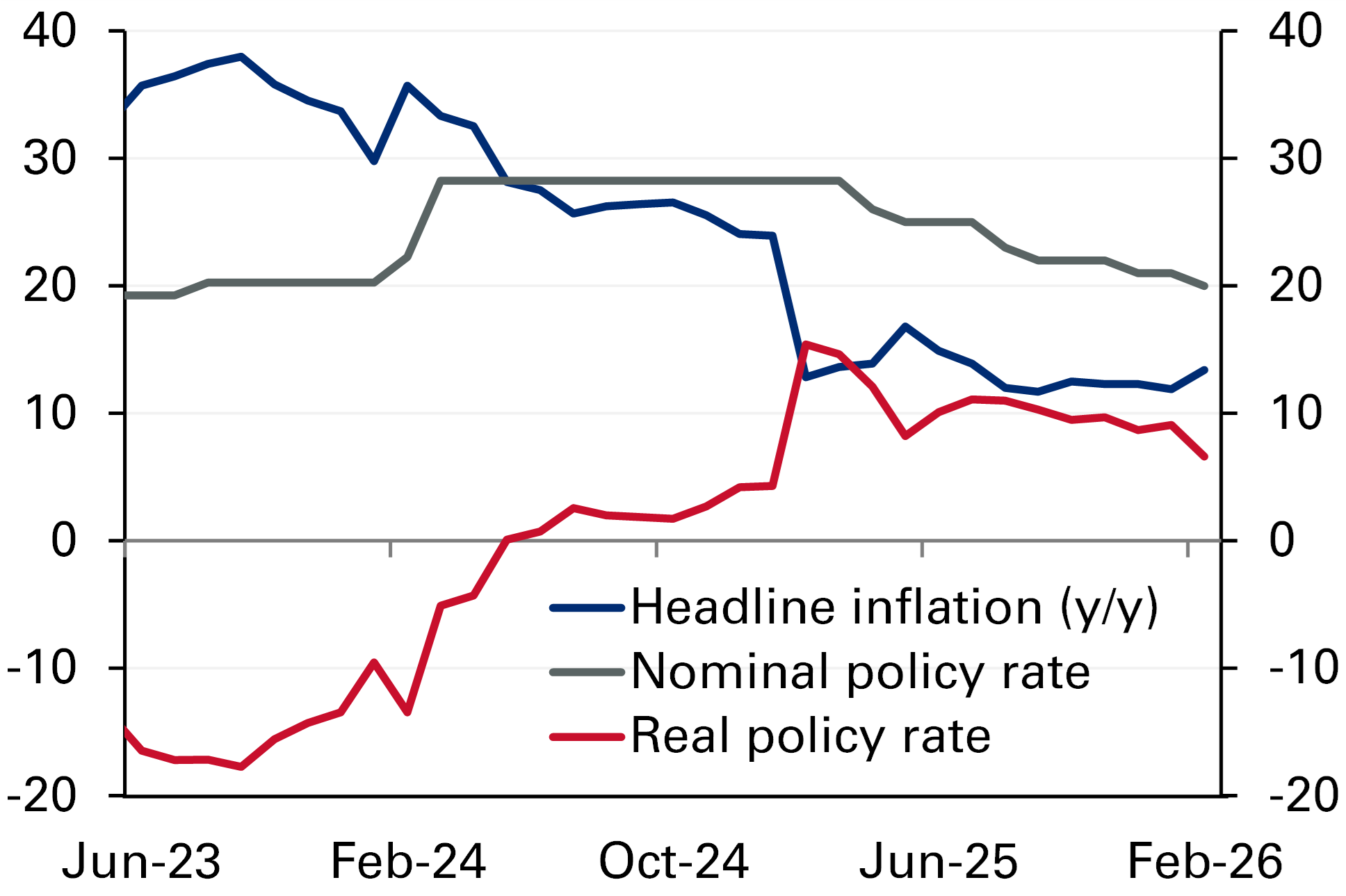
Egypt: Inflation rises in February on Ramadan seasonality and mounting cost pressures. Urban inflation accelerated to 13.4% y/y (+2.8% m/m) in February from 11.9% (+1.2% m/m) in January, according to the latest data from CAPMAS. The increase was largely driven by seasonal price pressures associated with Ramadan. Food and non-alcoholic beverages rose 4.6% y/y (+2.8% m/m), reflecting stronger seasonal demand, while tobacco prices increased 15.7% y/y (+3.2% m/m). Education costs also jumped 18.7% y/y (+18.7% m/m) at the start of the spring semester. Meanwhile, imputed rent, a major component of the CPI basket, continued its strong rise, recording 49.5% y/y (+2.9% m/m) in February. Core inflation, which excludes volatile and regulated items, also picked up to 12.7% y/y (+3% m/m) in February, compared with 11.2% y/y (+1.2% m/m) in January, according to the Central Bank of Egypt. Looking ahead, inflationary risks appear tilted to the upside in the short term due to spillover effects on energy prices and import costs from the regional conflict. The government’s recent fuel price hike, implemented earlier than planned following sharp fluctuations in global oil prices, is likely to feed into inflation readings in March and April as it passes through the economy. Nonetheless, a favorable base effect could keep the annual inflation rate within the 14–19% range over the coming months.
Saudi Arabia: Industrial activity expanded at the fastest rate in nearly three years, in pre-conflict January. Saudi industrial production accelerated sharply in January, recording its fastest annual growth in nearly three years, at 10.4% y/y, according to the latest data from GASTAT. This was the third consecutive month of acceleration and the strongest expansion since the authority introduced the updated data series in 2023. The strong performance was largely driven by oil-related activities, which account for roughly 75% of the industrial production index. Oil sector output expanded by 12.5% y/y, the fastest pace since the current statistical series began. This reflects the increase in Saudi oil production since roughly mid-2025 before OPEC+ paused further production hikes in Q1 2026. In contrast, non-oil industrial activity moderated slightly, easing to 5.3% y/y in January from 5.7% in December, largely due to slower expansion in the manufacturing sector, where growth decelerated to 5.7% y/y from 7.8% in the previous month. This moderation broadly aligns with recent business survey data. The January reading of the Purchasing Managers’ Index indicated that non-oil private sector activity continued to expand, although at its slowest pace in six months, despite still solid domestic demand supported by stronger customer activity and new projects rollouts.
US: Existing home sales unexpectedly rise in February, but affordability remains a key concern. Existing home sales in February rose 1.7% m/m, supported by a sustained easing in mortgage rates, which have fallen from 7%+ (30Y fixed) in January last year to around 6-6.1% now. Moderating mortgage rates and high house prices are also encouraging owners to list their homes for sale in the market as inventory of unsold units was up 2.9% m/m. Nonetheless, despite improving, affordability continues to be a key concern for many potential buyers amid elevated house prices, still-high mortgage rates and slowing wage growth as activity in the existing home market remains significantly below the pre-Covid level.
Japan: February PPI softens to the lowest in nearly two years. Producer price inflation (PPI) slowed to 2% y/y in February, lower than consensus expectations (2.1%) and down from 2.3% in January. February’s print is the third in a row to show moderating PPI inflation, which has now eased to its lowest in nearly two years. This follows a steady moderation in consumer price inflation in the past few months and is welcome news for the Bank of Japan, which meets next week. While the recent increase in energy prices is a key negative, some positives out of Japan recently have been real wage growth turning positive in January and Q4 GDP growth being revised higher to 0.3% q/q from 0.1% previously.